Posts Tagged book review
book review: Lonesome Lies Before Us
Posted by Amy Steele in Books on June 13, 2017
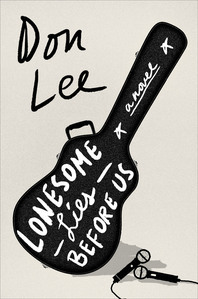
Lonesome Lies Before Us by Don Lee. W.W. Norton| June 6, 2017| 336 pages | $26.95| ISBN: 978-0-393-60881-6
RATING: *****/5*
Despite talent, alt-country/Americana musician Yadin Park’s musical career never took off due to his insecurities, lack of charisma and stage presence and then Meniere’s disease, a debilitating hearing disorder. Being a musician, an artist of any kind isn’t an easy profession. The music industry and the entertainment industry subsist mostly on the youth. It’s easy to age out of the music industry as it places a premium on youth and beauty and not always talent. Of course to maintain longevity one must possess talent. The entertainment industry can afford to be fickle as support then drop artists that don’t pull in money. How long does someone want to scrape by in hopes of quitting the day job? It’s infrequent that someone can do that. As author Don Lee stated at a recent book reading at Newtonville Books: “You have to have a certain amount of luxury and leisure to pursue those arts.” It’s true. While the starving artist sounds romantic, in reality it’s not comfortable or feasible for most people long-term.
“It was a relief, really, to be out of the music business. He was glad to be done with it. He was satisfied with his life in Rosarita Bay—quiet and anonymous, with no ambitions other than to make an honest living and have a roof over his head and be with Jeanette and her family. He’d been certain that he would never return to making music again. That was why the emergence of the new songs had been such a surprise to him.”
As a child, Yadin listened to his father’s LPs—Emmylou Harris, Townes Van Zandt, Gram Parsons, John Prine. [For authenticity, Lee worked with indie musician Will Johnson who wrote some lyrics which appear in the novel.] He became drawn to these sad, expressive songs. Lee writes: “All these songs about longing, regret, and betrayal, about broken hearts and belated apologies, about drinking, cheating, and leaving, about the lonely road and cheap motels and drifters, dreamers, outcasts, and the forlorn—they changed Yadin in ways he could not express yet could feel.” Living in Chapel Hill, he soon joined a band but wasn’t thrilled about performing and most artists need to tour. He became romantically involved with his bandmate Mallory Wicks. After a record label signed the band, Yadin became overwhelmed and soon left completely.
Now living in California and working for a carpeting company, Yadin recently started writing and recording songs again. His girlfriend Jeanette Matsuda, laid off from a salaried position years ago, cleans hotel rooms. Both Yadin and Jeanette gave up career goals and remain a bit stagnant and settled in simple lives which don’t particularly satisfy them. Lee writes: “Without quite realizing it, she had fallen into a persistent low-grade funk over the years, which became more pronounced when she was laid off and then was being rejected for job after job. Incessantly she would interrogate the choices and decisions she had made, and had convinced herself that she was a failure, a loser. She had crimped inward, fearful that if she exposed herself she would be ridiculed and betrayed.” Lee said that last decade’s financial crisis influenced this novel. He wanted to write about privilege and class. He also explained: “There are a lot of working class Asians and you never see them portrayed in books.”
One day Mallory Wicks, now a well-known actress and musician, checks in to Jeanette’s hotel. Yadin visits Mallory and she suggests they collaborate together. She knows he’s talented and that she has the celebrity power but not that much talent. Her star power wanes and she knows that a strong new album might bring her back into the spotlight. As this happens, both Yadin and Jeanette find themselves doing quite a bit of existential examination. Is this all there is? How did we get here? Have I accomplished enough? Am I happy? Am I where I want to be or need to be? How can I live a fulfilling and satisfying life? As someone middle-aged re-evaluating her path, this novel resonated with me. In Yadin and Jeanette’s unfulfilled goals and unrealized ambitions, I see my own failings. This line in particular: “She could only mourn the life she had been unable to create.” How many people remain in comfortable yet unsatisfying relationships in order to avoid being alone?
“Granted, there wasn’t a lot of passion between them, and this was chiefly her fault, she knew. Both had been in love just once in their lives, while very young, and both had been heartbroken. Neither had ever married, nor had been in a relationship of any significant length. They might have been together more out of attrition than anything resembling ardor, but they cared for each other, they helped each other, they were companions. It was enough for Jeanette, and she had hoped it would be enough for Yadin, but lately she had begun to worry that it wasn’t.”
It’s a powerful novel with phenomenal writing and quiet, intense characterizations. As a music critic and book critic, novels about musicians always appeal to me. This novel draws the same emotions as aI also adored Don Lee’s gorgeous novel The Collective. One of my favorite authors, Lee’s writing dazzles me.
–review by Amy Steele

Share this:

book review: The Fact of a Body
Posted by Amy Steele in Books on May 29, 2017
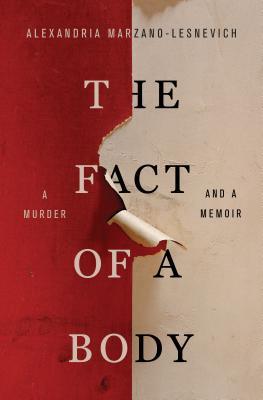
The Fact of a Body by Alexandria Marzano-Lesnevich. Flatiron Books| May 2017| 336 pages | $26.99| ISBN: 978-1-250-08054-7
RATING: ****/5*
Some people are true crime fanatics. I’ve read In Cold Blood and some other true crime books but don’t often gravitate toward them. Memoir appeals to me and that’s what drew me to The Fact of a Body. I also may or may not have wanted to go to law school.
Both a memoir and a true crime book, The Fact of a Body is a riveting page-turner but also a disturbing read I had to step away from a few times. To apply to Harvard Law School, Alexandria Marzano-Lesnevich wrote the admissions essay about her opposition to the death penalty. During a summer internship at a New Orleans law firm, Marzano-Lesnevich begins to question that stance when she’s tasked to the re-trial of convicted murderer and child molester Ricky Langley. He’s been on death row for years. Not only does her research cause Marzano-Lesnevich to question the death penalty it also brings up her own past family trauma.
Meticulous research and painstaking detail allow readers into the life and crime of Ricky Langley as well as into Marzano-Lesnevich’s terrifying childhood when her grandfather molested her and her sister. Now a law student, she wants to comprehend the why and how. Her grandfather got away with it. Ricky got sentenced to death row. While it could be academic and legal in tone, it’s a compelling, shocking, devastating, frightening and phenomenal read. There’s this chilling line: “The room where now, in the closet, Jeremy Guilory’s body stands rigid, wedged in, wrapped in the blue blanket from Ricky’s bed, a white trash bag covering his head and shoulders.” Or this: “The camera doesn’t linger. It catches the blond hair and then falters in the face of the boy. But on Jeremy’s lip right now—too small for the camera to catch, and no one’s looking at him that closely, no one wants to look at a boy that closely—there is a single dark pubic hair.” Marzano-Lesnevich balances the narrative and the facts just so. It’s a truly powerful reconciliation of past and present.
–review by Amy Steele
FTC Disclosure: I received this book for review from Flatiron Books.
Alexandria Marzano-Lesnevich will be in conversation with Kristen Radtke on Thursday, June 1, 2017 at Brookline Booksmith

Share this:

book review: The Leavers
Posted by Amy Steele in Books on May 4, 2017
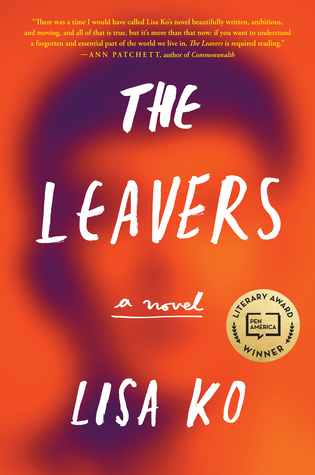
The Leavers by Lisa Ko. Algonquin Books| May 2017| 338 pages | $25.95| ISBN:
RATING: *****/5*
An intense mediation on race, culture, identity, sense of place and belonging, The Leavers by Lisa Ko is a gorgeous and thoughtfully written debut novel that should resonate with progressives and allow others insight into the struggles of undocumented immigrants. It’s not that they don’t want to follow protocol. It’s often that they have few choices. It’s the story of what happens when Deming Guo’s mother Polly, an undocumented Chinese immigrant, fails to return from her job at a nail salon. She just vanishes. She doesn’t contact the family. No one knows if she’s been deported or if she just took off. As a single mother she struggled to cover expenses as a nail technician. After a month or so, her boyfriend’s sister sends Deming off to a foster home in the suburbs where two dogged white professors adopt Deming and change his name to Daniel Wilkinson. They mean well and want Daniel to have the best educational opportunities afforded to him. They want him to have choices for his future.
The story’s told from Daniel’s perspective as well as that of his mother Polly. Daniel struggles to fit in at this white enclave in upstate New York. He doesn’t do well in school and he develops a gambling problem. His parents aren’t happy and Daniel moves to Manhattan to live with a friend and join his band. Although Daniel is now in his late teens he still wonders why his mother abandoned him and never tried to find him. This definitely affects the relationship with his parents as well as his ability to figure out where he fits in. He often thinks about his birth mother and wonders why she doesn’t care enough about him to track him down. That’s enough to make a young man become wayward and develop a gambling addiction.
In the United States, Polly had created a challenging but routine life for herself. She lived with her son and a boyfriend named Leon. Ko writes: “I didn’t want a small, resigned life, but I also craved certainty, safety. I considered suggesting to Leon that we marry other people, legal citizens, for the papers, and after a few years we could divorce our spouses and marry each other.” Now back in her homeland China, she lives a rather comfortable life working as an English teacher. She’s married and lives in a nice apartment. Readers also finally discover what happened when Polly went to work that day at the nail salon. Polly went through a horrific ordeal after ICE placed her in a camp for illegal immigrants. The harsh and nearly inhumane conditions could easily break someone down. It was shocking to read about these middle-of-nowhere holding facilites. Just harsh.
Debut author Lisa Ko said that this novel was inspired by real-life stories of undocumented immigrant women whose United States-born children were ultimately taken from them and raised by American families. She states: “With The Leavers, I want to decenter the narrative of transracial adoption away from that of the adoptive parents.” It’s an important topic when our current president wants to keep people from entering the country as well as crack down on undocumented immigrants, even ones living quiet hard-working lives who have young American-born children.
READ THIS NOVEL. It provides insight and empathy in the plight of immigrants in this country. It’s utterly heartbreaking yet often optimistic and shows resilience among the characters. I can’t recommend this novel enough. Lisa Ko utilizes lovely prose, a riveting story-line and relatable, flawed characters to highlight the challenges immigrants face today.
–review by Amy Steele
FTC Disclosure: I received this book for review from Algonquin.
Lisa Ko will be reading at Harvard Book Store on Wednesday, May 17 at 7pm.
Share this:

book review: When You Find Out the World Is Against You
Posted by Amy Steele in Books on May 3, 2017
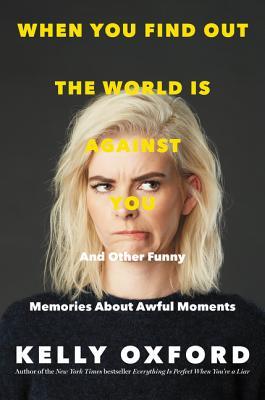
When You Find Out the World is Against You by Kelly Oxford. Dey St.| April 2017| 310 pages | $26.99| (ISBN13: 9780062322777
RATING: ***/5*
Kelly Oxford is described as “the famed blogger, named one of Rolling Stone’s Funniest People on Twitter… one of the most followed and beloved Twitter celebrities.” Sometimes tweets can transfer to writing essays but often the short, pithy style at which one excels on Twitter can’t be transformed into a detailed essay. This collection is definitely hit or miss. It’s an easy quick read and sometimes an essay collection is cool as you can skip around and pick it up here and there to read an essay. Most of these type essays aren’t for me. I’m not one that finds humor in every situation. The essays on parenting definitely didn’t appeal to me and it’s not that I don’t read about parents. I do. it needs to be a well-written and compelling piece. The essays on anxiety are pretty good and I wish there were more of those. I think maybe she tackled too many subjects here. I prefer intellectual/existential essays.
I’d tangentially heard of Kelly Oxford but I don’t think I follow her on twitter. I’m aware of the #NotOkay hashtag campaign. creating a trending hashtag seems the pinnacle of online social media success. If your tweets, Instagram pics or Facebook posts don’t go viral then what’s the point to even post them? It seems that way at least. I respect and appreciate that Kelly Oxford created this hashtag which allowed women to feel safe in reporting their stories of sexual abuse after the Donald Trump/Billy Bush tape. She wrote: “I immediately open my Twitter account and see everyone tweeting about this. This is huge. This leaked tape is demanding a response.” Then: “My tweet is instantly being retweeted, but I feel like what I wrote isn’t as clear as I want it to be. So I tweet again.” Later she tweets another and says: “If no one responds, I’ll delete that tweet.” So if nobody immediately responds it’s not worth tweeting? this mindset I don’t comprehend. I tweet a lot. I’m sure my tweets get seen but they’re not always liked or RTed. That’s the way it goes. On people’s bios you see them say that they started such and such hashtag. I’m not jealous of this.
Here are a few good quotes:
on her father: “Whisker burn was his nice way, with skin abrasion, of telling me it was time to get up. I put up with it, because I worried this could be my only interaction with him for the day.”
being a hypochondriac and frequent visitor to doctors: “When I was eight, I’d stolen several thousand of those long Q-Tip strep-throat things from under that sink, you know, to practice swabbing my throat at home, to rid myself of the gag it caused.” (useful in many ways)
on anxiety: “When I reached the top of the stairs, I instantly felt panic. Like from the very pit of my soul I felt I was worthless and everyone knew it and I would never every climb out and feel better. That even if I did climb out, it would still be as terrible as it felt right at that moment. I felt like I was jailed inside by own sick body and my body was definitely going to kill me.”
–review by Amy Steele
FTC Disclosure: I received this book for review from William Morrow.
Share this:

book review: Lady Cop Makes Trouble
Posted by Amy Steele in Books on December 19, 2016
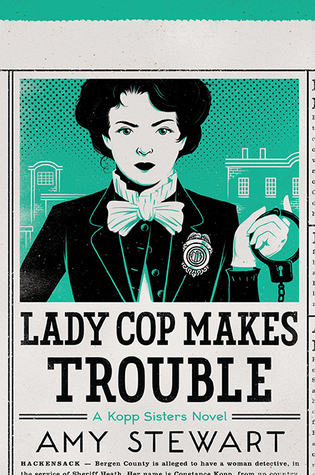 Lady Cop Makes Trouble by Amy Stewart. Houghton Mifflin Harcourt| September 2016| 320 pages | $26.00| ISBN: 978-0-544-40994-1
RATING: ***/5*
This was an overall fun and enjoyable read. I didn’t read the debut Kopp Sisters novel Girl Waits with Gun so maybe it wasn’t a good idea to read the second book. I do think that even in a series each book should be a stand-alone that anyone can pick up to read and figure out what’s going on. Despite not knowing the case from the first novel which did carry over to this novel–at least in consequences for Constance Kopp and her position as deputy sheriff—I could mostly piece together what I needed. The youngest sister Fleurette confused me at first and I didn’t know if she was a daughter or niece. I absolutely admire and appreciate that Amy Stewart found clips in which to base this case and that Constance Kopp was a real person. Stewart explained, “I’m lucky enough to have a huge treasure trove of newspaper clippings covering 1914 and 1915. Constance was in the paper all the time. This book covers one particular incident that made headlines nationwide: the pursuit of a convicted criminal.” This is a delightful description of Constance’s duties for the New Jersey sheriff’s department: “I wasn’t just a chaperone for wayward girls. I carried a gun and handcuffs. I could make an arrest, just like any deputy. I earned a man’s salary. People did find it shocking and I didn’t mind that one bit.” Constance stands as a strong, determined female working in the male-dominated field of law enforcement. She doesn’t seem deterred when men don’t know how to speak with her or how to react to her as she carries out her varied responsibilities. She lives with her sisters, Fleurette and Norma, in the countryside in New Jersey. Norma seems content to raise homing pigeons and not venture far from home. Fleurette dreams of the stage and for now acts in a local production. The sisters look out for one another and serve as sounding boards for each other. Not having sisters it seems a wonderful thing. This case didn’t quite enthrall me enough for a mystery/thriller, fortunately the strong female lead makes up for my lack of interest and sometimes confusion in the case. I rooted for Constance and her sisters to fight the system and to fight sexism.
–review by Amy Steele
FTC Disclosure: I received this book for review from Houghton Mifflin Harcourt.
Share this:

book review: Pull Me Under
Posted by Amy Steele in Books on November 2, 2016
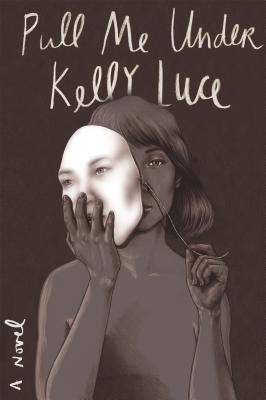
Pull Me Under by Kelly Luce. Farrar, Straus and Giroux| November 2016| 272 pages | $26.00| ISBN: 9780374238582
RATING: *****/5*
At the novel’s beginning, twelve year old Chizuru Akitani, the Japanese American daughter of acclaimed violinist Hiro Akitani, fatally stabs a classmate. She’s bullied in school for one of the most common reasons children tease other children, she’s different– she’s a hafu—Japanese for mixed blood [“Hafu implied my Japanese-ness was the only part of me that mattered, that there would never be enough.”] and fat. Her American-born mother commits suicide. Her father didn’t spend that much time with her (or her mom). She suppressed anger for as long as she could until she was pushed too far by the bully. It’s explained like this: “I noticed at a young age—four years old, five—a dark presence in my chest, a blackness, clinging to the back of my heart. Mostly the thing lay dormant and I could put it out of my mind. But occasionally it swelled like an infected gland. These were the times I felt hurt or angry, the sensations so closely linked that I never separated them until a therapist pointed out the difference. My anger was an organ.”
The haunting story unfolds methodically revealing details. Chizuru serves time in a juvenile detention facility, must denounce her Japanese citizenship, changes her name to Rio and moves to the United States to attend college. She reinvents herself while rarely looking back on her past. Rio strives to blend in and succeeds. This seems quite a positive and mindful manner in which to exist. Rio becomes a runner—“I’d found a way to soothe that curdled feeling of anxiety; when I ran, the bad things fell away.” She becomes a nurse, marries her college boyfriend and has a daughter. She’s the good wife, good mother, and good employee. Of her life in Colorado: “I feel like what I am: a thirty-eight-year-old mother and wife with a retirement fund and a house in the suburbs and a Volvo. My life has been built for safety.” While in the United States, many might present several various facades for various relationships or settings, there’s a name for it in Japan—“Interactions revolve around honne and tatemae. Honne is what you really think and feel; tatemae, like the façade of a building, is the face you show to the world.” Globally, women are expected to suppress emotions, feelings and thoughts. Perhaps more so in Japan than in the United States although it’s clear per societal standards and the general zeitgeist that outspoken women and poorly behaved women rarely get rewarded compared to male counterparts.
Decades later, Rio returns to Japan to reconcile her present with her past and perhaps embrace forgiveness. Her husband and daughter know nothing about her past. Rio reflects: “Sal doesn’t know all of me. Maybe this is true of all husbands and wives; after all, there are inaccessible places in each of us. Places few would understand, and marriage, I’ve come to believe, is about finding someone who understands the right things without digging up the wrong ones.” At her father’s funeral she reunites with a former teacher, a New Zealand-native named Danny. When Danny says she’s going on a pilgrimage through Japan’s numerous temples, Rio decides to tag along. Along the trail, the women start hiking with a young law student named Shinobu. What Rio discovers about herself as well as her father may affect her life back in the United States.
“I can be hafu, if I want; I can always find someone to call me incomplete. But I can be whole, too; I can be unsplit and complete in the fragmented way that a life is a life.”
Pull Me Under is an exquisitely dark psychological thriller which examines identity and place through its compelling protagonist and story. It’s easy to empathize with Rio and understand her motivations to minimize her Japanese ancestry. Author Kelly Luce provides detailed descriptions –“Ryozenji is all worn stone and dark, weathered wood. A pond with a fountain sits in the middle. Goldfish swarm the edge where an old woman tosses bread. She pinches off a piece and holds it out. A white and orange spotted fish jumps fully out of the water.”–and fascinating cultural elements—“I fill my basket with the candies I loved as a kid: sesame sticks, caramel frogs, tubes of sugar decorated with astrological signs.” Every aspect of this novel creatively allows readers to become fully absorbed from beginning to end.
–review by Amy Steele
FTC Disclosure: I received this book for review from Farrar, Straus and Giroux.
Share this:

book review: Future Sex
Posted by Amy Steele in Books, Uncategorized on October 17, 2016

Future Sex by Emily Witt. Farrar, Straus and Giroux| October 2016| 210 pages | $25.00| 9780865478794
RATING: *****/5*
“I had not chosen to be single but love is rare and it is frequently unreciprocated. Without love I saw no reason to form a permanent attachment to any particular place. Love determined how humans arrayed themselves in space.”
Technology changes everything. It changes how we meet people and it changes how we interact with others. There’s more sexual fluidity and experimental sex than in the past because of both changing ideologies as well as the ability to remain anonymous online if one chooses to indulge in one’s fantasies. Whatever you fancy you’re likely to find it. However, society still expects people to couple up to have families. Author Emily Witt writes: “If every expression of free sexuality by a woman would be second-guessed, it left men as the sole rational agents of sexual narrative. The woman was rarely granted the heroic role of seducer. If a woman pursued a strictly sexual experience, she was seen as succumbing to the wishes of the sovereign subject.” We live in a rampant rape culture. Women also get slut-shamed for wanting and pursuing sex. Can someone subsist outside of a monogamous relationship? Does everyone need to be part of a couple? This book strongly suggests that it’s not essential although how far outside the cultural norms must one go to be happy? Witt explains: “I supposed that since then I had been nonmonogamous in the sense of sometimes having sex with several different people within a specific period of time. As I said this both the idea of counting people and the idea of grouping them within a time frame seemed arbitrary. This was just my life: I lived it and sometimes had sex with people. Sometimes I wanted to commit to people, or they to me, but in the past two years no such interests had fallen into alignment.” Future Sex reads as a fascinating sociological study on sexuality that delves into orgasmic mediation, internet porn, webcams, Burning Man and polyamory. Witt combines personal experience with research and reporting in a darkly amusing, honest and real manner. Witt investigates sites I’d barely heard of: Chaturbate; Porn Hub; Kink.com; Fetlife. She attends an orgasmic mediation workshop [looked up on YouTube and there are tutorials] and travels to Burning Man. She interviews tons of people such as polyamorous Google employees, the founder of OKCupid, a 19-year-old webcammer as well as a woman who creates female-centered porn. Witt doesn’t make a spectacle of what may be absurd. Instead she writes analytically, astutely with brevity and a sharp edge.
–review by Amy Steele
FTC Disclosure: I received this book for review from Farrar, Straus and Giroux.
Emily Witt will be at Harvard Book Store on Monday, October 17, 2016
Share this:

book review: We Were Feminists Once
Posted by Amy Steele in Books on October 11, 2016
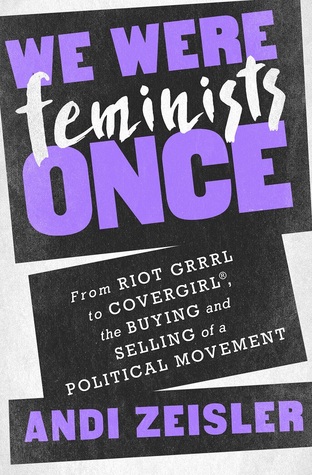
We Were Feminists Once by Andi Zeisler. Public Affairs| May 2016| 285 pages | $26.99| ISBN: 9781610395892
RATING: ****/5*
Andi Zeisler, founding editor of Bitch Media, provides a history of feminism in mainstream pop culture and whether or not it benefits the feminist movement. She writes: “This increasingly looks not like a world that has finally emerged into fully realized feminism, but like a world in which we are letting a glossy, feel-good feminism pull focus away from deeply entrenched forms of inequality.” In the past few years, legislators in various states have decreased women’s health care and threatened women’s right to make choices about their own bodies, sexuality and chose whether or not to give birth. Women do not have pay equity. Must I even mention this country’s prevalent rape culture? I list feminist on my social media bios and my dating profiles. So there are questions such as: “what type of feminist are you?” and “do you shave your legs/armpits etc?” and comments such as “no wonder you can’t get/keep a man.” I could go on but won’t. Zeisler delves into advertising, film, television, music. Meticulously researched, analyzed and thoughtfully presented, this is a must-read.
On film: “If there’s any silver lining here, it’s that more people than ever are talking about Hollywood’s woman problem as pattern behavior, rather than movie-by-movie shortcomings.”
On “this is what a feminist looks like” t-shirts: “The appeal of the slogan was easy to interpret: after all, too many people find the biggest roadblock to embracing feminism is in its unflattering optic legacy. Hags, dykes, ugly, unshaven, angry, finger-pointing, furious women—such adjectives and images have been encoded as the truth of what ‘feminism’ represented for so long that it’s begun, sadly to feel natural.
On celebrity feminism: “The fascination with Beyonce’s feminism, the urge to either claim her in sisterhood or discount her eligibility for it, speaks to the way that a focus on individuals and their choices quickly obscures the larger role that systems of sexism, racism, and capitalism play in defining and constraining those choices.”
–review by Amy Steele
FTC Disclosure: I received this book for review from Public Affairs.
Share this:

book review: Commonwealth
Posted by Amy Steele in Books on October 8, 2016
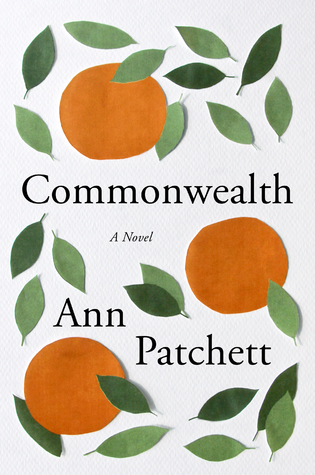
Commonwealth by Ann Patchett. Harper| September 2016| 241 pages | $27.99| ISBN: 978-0-06-240353-7
RATING: ****/5*
What may have been an innocent kiss at a summer party leads to breaking up two families and cobbling together another in best-selling author Ann Patchett’s new novel Commonwealth. As she’s so deftly done in previous novels [Bel Canto, Run, State of Wonder] she writes humorously and movingly about seemingly disparate individuals connected by a shared experience. Bert Cousins and Beverly Keating move from California to Virginia along with Beverly’s two daughters Caroline and Franny. When the girls return from visiting their father in California, Patchett writes: “Beverly dropped to her knees to hug them but they were nothing but ghosts. Caroline wanted to live with her father. She begged for it, she pleaded, and year after year she was denied. Caroline’s hatred for her mother radiated through the cloth on her pink camp shirt as her mother pressed Caroline to her chest. Franny on the other hand simply stood there and tolerated the embrace. She didn’t know how to hate her mother yet, but every time she saw her father crying in the airport she came that much closer to figuring it out.” Oh divorce. . I’m a child of divorce but don’t have a blended family nor do I maintain relationships with my siblings or step-cousins.
Bert’s four children—Cal, Holly, Jeanette and Albie—remain with their mother but visit Virginia each summer. The six children bond over a disdain for their parents. Patchett writes: “The six children held in common one overarching principle that cast their potential dislike for one another down to the bottom of the minor leagues: they disliked their parents. They hated them.” They roam about without parental guidance and get themselves into varying degrees of trouble. The divorce of course affects each child differently. Cal, the oldest, leads the pack carrying a gun because that’s what one does in Virginia apparently. The children also give the littlest boy Albie allergy meds [telling him they are Tic Tacs] to knock him out so he won’t get underfoot. Many children of the 60s, 70s and 80s explored without constant adult supervision. A friend and I took our horses swimming in a man-made pond until the developers complained.
After Cal’s sudden death one summer, the children see less of each other. Spanning 50 years, Patchett develops the characters into adulthood where other events bring the step-siblings back together at times. Caroline, who diligently studied an LSAT book her father gave her for Christmas during childhood and her teen years, become an attorney. Jeanette lives in New York with her doctor husband. Albie is the most transient and troubled of them all. Holly escaped everything to a Buddhist community in Switzerland where she spends her days meditating. When her mom visits, Patchett paints a vivid picture of Holly’s chosen lifestyle and her mom’s discomfort yet willingness to participate in order to see her daughter. There’s much focus on Franny, who I loved. She doesn’t quite know what she wants to do with herself and to that I can definitely relate. Patchett writes: “For someone who had no skills and no idea what she wanted to do with her life other than read, cocktail waitressing was the most money she could make while keeping her clothes on.” While working, she meets the author Leon Posen, decades older than her, whom she greatly admires. They become lovers and she tells him about that summer and he writes a best-selling novel about it. Two decades later when the film version hits theaters, Franny is married with stepchildren and she and Caroline visit their father, Fix, now in his 80s and dying from cancer and take him to see the film.
The novel deftly traverses between different time periods as readers discover what happened to Cal and what everyone’s now doing as an adult. Some characters and scenes resonate more than others. It’s quite a large and unwieldy cast of characters and some of them can get lost in the pages. At times I became slightly slowed down by remembering how one character connected to another. In these characters readers will find some commonality, some connection and that makes the novel thoroughly readable and satisfying.
–review by Amy Steele
FTC Disclosure: I received this book for review from Harper Collins.
Share this:

book review: Leaving Lucy Pear
Posted by Amy Steele in Books on September 25, 2016
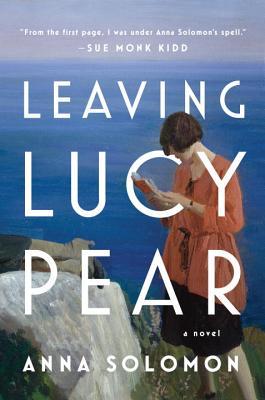
Leaving Lucy Pear by Anna Solomon. Viking| July 2016| 319 pages | $26.00| ISBN: 9781594632655
RATING: *****/5*
An engrossing and gorgeous work of historical fiction, this novel effectively weaves together issues of class, feminism, wealth, power, mental illness and motherhood. The setting: Cape Ann, Massachusetts, a working class fishing community as well as a lovely coastal summer getaway for Boston’s wealthy. In 1917, the unwed teenage daughter of a wealthy family abandons her newborn daughter under a pear tree outside her uncle’s estate on Cape Ann. A decade later, Beatrice finds herself unexpectedly reunited with the Irish woman raising the determined and spunky Lucy Pear. Emma Murphy presents a business proposal to the local quarry owner and mayoral candidate, Josiah Story, and soon the mother of nine and wife to an alcoholic fisherman finds herself involved in an affair with this wealthy man. He sets her up with a job helping Beatrice take care of her elderly uncle. Beatrice is an activist but also dealing with mental illness. She married a gay man and chooses to spend the majority of her time with her uncle on Cape Ann instead of with her husband in Boston. Author Anna Solomon writes: “She lived with her uncle instead of her husband. She didn’t play piano. She hadn’t lasted a semester at college. She had abandoned her baby! She had failed to recover.” In many ways I could relate to Beatrice and this made for compelling reading. Solomon created characters with depth and fallibility– characters in which many readers should find commonality. Lucy decides to get work alongside her brothers at the quarry by dressing as a boy. She’s determined to raise enough money to escape her abusive adopted father and move to Canada where her older brother lives. With her dark curly hair, Lucy realizes she’s different than her siblings. Solomon writes: “Emma wondered if Lucy was dumb because then keeping Lucy could pass for a kind of selflessness. But Lucy turned out not to be at all dumb, only even-tempered and kind. She had the steady energy of a woman by the time she was eight, along with a boy’s knack for physical work, for pieces and parts and how they fit together, how things worked.” A native of Cape Ann, Massachusetts, Solomon effectively creates a distinctive sense of place. Leaving Lucy Pear is an outstanding novel.
–review by Amy Steele
FTC Disclosure: I received this book for review from Viking.
Share this:

About Me

covering mostly music and books. focus on alternative/indie and women in music, literature and the arts. feminist. vegan. mostly alternative, a bit bohemian. Masters in journalism from Boston University. BA from Simmons College.



Entertainment Realm by Amy Steele is licensed under a Creative Commons Attribution-Noncommercial-No Derivative Works 3.0 United States License.
Based on a work at entertainmentrealm.comCopyright © 2009. All writing, unless otherwise noted, by Amy Steele.
 ENTERTAINMENT REALM
You must be logged in to post a comment.