Posts Tagged book review by Amy Steele
book review: The Quintland Sisters
Posted by Amy Steele in Books on March 7, 2019
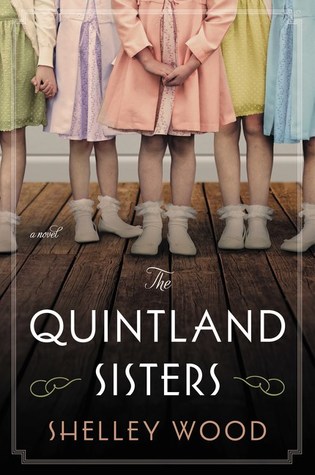
The Quintland Sisters by Shelley Wood. William Morrow| March 5, 2019| 384 pages | $15.99| ISBN: 978-0-06-283909-1
RATING: *****
“Their similarity to one another is eerie, even with nothing but their tiny heads poking out of their blankets. All of them have black hair and long, dark eyelashes, too thick, it seems, for their sunken cheeks. The longer I watched them, the more I could see that each one of them has something distinct, something to tell her apart from her sisters. I took out my scribble book in the hopes of capturing them. The one that came first has one eyelid bigger than the other. The second has a tiny crinkle in the upper cusp of her right ear. The third has the smallest nose, and the fourth has the most hair, which seems to curl in the opposite direction from that of her sisters. The fifth and last—she has nothing that looks markedly different, but she is the only one with any wriggle in her.”
Long before Kate Plus Eight or the Octomom, there were the Dionne Quintuplets, the first quintuplets to survive their infancy. They were born in French-speaking, rural Canada in 1934. Their parents had five other children. They were shamed for it. People also sent money and fan mail. The government took custody of the girls, leading to many disputes over the years. A doctor and his crew of nurses took over care of the girls.
The Quintland Sisters tells the story of the first few years of the quintuplets lives from the perspective of a young woman, Emma Trimpany, who works as a nurse to the girls. Born with a large birthmark on her face, Emma is used to being overlooked and disregarded. “This is something I’ve managed to pull off my whole life, to make myself invisible and unremarkable—no mean task with a crimson stain covering half my face.” Her mother sends her over with the midwife the night that the quints are born, thinking it might be a suitable profession for her disfigured daughter.
Emma gets sent to nursing school so that she’s properly trained to assist in their care. She becomes attached to the girls and friendly with several nurses, particularly Yvonne Leroux (known to everyone as Ivy), who she remains friends with even after she leaves. Emma enjoys drawing and this turns into a side-gig as she sells pictures of the girls to advertisers. Someone suggests she apply to art school and it seems this smart and determined young woman will find contentment. The story unfolds through journal entries, letters and news reports.
“I am the one the girls turn to now. A stubbed toe, a puzzling toy, a masterpiece of finger painting that requires praise and admiration—it’s me they seek out. Nurse Noel is the game master who won’t take no for an answer, Miss Beaulieu is the instructor with strict rules and plastic smile. Nurse Sylvie Dubois is the latest practical nurse they’ve brought in to help with all the record-keeping and measurements—she has not yet earned the girls’ trust, let alone their affection, although she is cheery and pretty. Meanwhile Mme. Dionne has been scarce since the autumn, every since Nurse Nicolette’s departure, and I haven’t seen M. Dionne since that awful moment in the courtroom. How ridiculous, but also wonderful, that I, who have always insisted I was not cut out for motherhood, have ended up as a de facto mother of five.”
It’s fascinating to read about their care. Can you imagine caring for so many infants? It definitely takes a team. No one even believed they’d survive past the first week. It was humorous to read the doctor and some of the nurses commenting on the likelihood of the girls’ survival. They gave one of the girls rum to “stimulate” her heart. Before they received a shipment of breast milk, the girls were fed a mix of corn syrup, cow’s milk and boiled water. They kept records of everything.
The quintuplets generated income from visitors as well as through endorsements. It’s not a new Instagram era thing to earn money this way. There was a court case between several corn syrup companies to determine who would have exclusivity. [“The ridiculous thing is, we don’t even feed the babies corn syrup. Dr. Blatz believes sugar in any form is bad for children. I should tell that to the newspapers.”] Several films were made about them. There was a custom-built playground that allowed for spectators. There were 6,000 daily visitors! Celebrities such as Amelia Earhart visited. They sold souvenirs! It was a real money-making business. Unfortunately, not everyone cared for the girls and their future. Celebrity and money attract deceitful people wanting to take advantage of the situation. Many nefarious incidents occurred over the years.
It’s a meticulously researched novel and why I’m a fan of historical fiction. I love having a fictional character introduce me to real people and actual events. I really want to know what happened to the quintuplets as adults. What were their lives like at that time?I made myself not Google while reading. But I’m intrigued and need to investigate.
Share this:

book review: Any Means Necessary
Posted by Amy Steele in Books on March 6, 2019
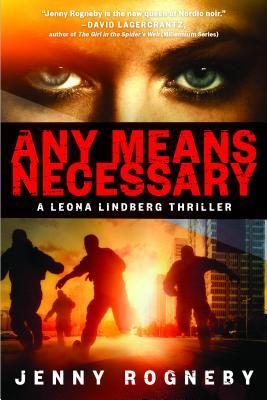
Any Means Necessary by Jenny Rogneby. Other Press| February 2019| 442 pages | $16.99| ISBN: 978-1590518847
RATING: ****/5*
“I had my reasons for living like that. I had done it because I knew society doesn’t accept nonconformity. If you deviate from the cookie-cutter norm, you are left out in the cold. Worthless. From there on out, you’re on your own.”
When a terrorist survives a suicide bombing outside the Swedish Parliament building, he will only talk to police investigator Leona Lindberg. He’s insistent on it. She’s tasked to find out why the former member of the French Foreign Legion did it and if there will be other attacks throughout the city.
After work, Leona also gathers a bunch of criminals to teach them how to beat the system. She’s providing them with inside information on police tactics and the best tips to outwit them. To take minimal risks for maximum gains. She carefully selected them to participate in this program of sorts because she’s looking for a reliable crew to carry out a major theft.
I found Leona to be extremely compelling. She’s an outsider, she’s smart and she’s rogue. Leona’s in that gray zone. She’s a fairly good person doing bad things. She’s had it rough over the past few years. She lost custody of her daughter to her ex-husband. Rogneby definitely makes readers see both sides of the situation. Even if you don’t like Leona, you’ll empathize with her. Why is she doing what she’s doing? Will she be caught? How will it affect her career in the police department?
There’s definitely a slow burn with this novel. The Nordic setting makes it uber appealing. I don’t read a lot of thrillers but this one appealed to me because author Jenny Rogneby brings a unique perspective through her experience as an investigator with the Stockholm City Police Department.
–review by Amy Steele
FTC Disclosure: I received this book for review from Other Press.
Share this:

book review: Learning to See and The Eulogist
Posted by Amy Steele in Books on February 6, 2019
When it’s done well, historical fiction transports you to a particular time, place and setting through the eyes of its characters. The best historical fiction makes me want to learn more about the period or the characters. I try to refrain from googling while reading a book but if I’m itching to look something up, I know the author succeeded in transporting me to another time. That’s one of my favorite genres. Two compelling novels came out recently which center around independent and unconventional women, one real and one fictional.
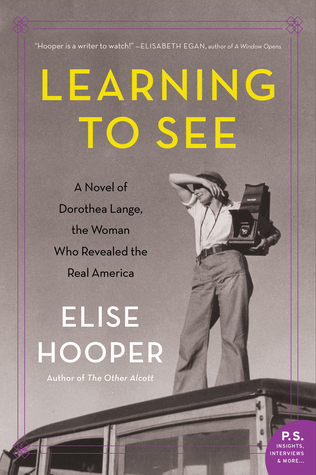
Learning to See focuses on Dorothea Lange and her photography in the 1930s. I’m familiar with Dorothea Lange’s Dust Bowl photographs but not much else. In this thoroughly researched novel, author Elise Hooper brings readers into Lange’s world. Told from Lange’s point-of-view, the novel follows her burgeoning career as a photographer at a time when women weren’t pursuing careers, they were focusing on raising children. After moving to San Francisco with a friend, Lange finds work at a photography shop. She soon opens her own portrait studio and amasses clients. She’s friends with a group of photographers and artists which includes Ansel Adams. She marries rather volatile artist Maynard Dixon. They travel to Arizona so that Dixon can work on some painting. Lange notes: “Our first few days were spent examining the terrain, so different from everything I’d ever known: wide sweeps of empty desert, soaring sky, endless clouds. It felt timeless, nothing like the city. The simple geometry of the landscape’s lines and bold shouts of color left me awed. During each sunrise and sunset, under a sky bruised with purples and rippling with flames, the desert was reborn. The air thrummed with possibility.” Lange is an independent, strong woman determined to use her skills to benefit others in a deeper manner than merely taking pretty portraits. Navigating her way as a working mother, wife and professional photographer, Lange faces many challenges including her husband’s alcoholism and affairs. When her marriage and the nation’s economy begin to decline, she decides to take a position with the government taking pictures of the country’s disenfranchised, the photographs she’s known for today. She photographs migrant workers and Japanese Americans in camps during World War II. Hooper effectively allows readers the opportunity to see the time period through Lange’s lens.
Learning to See by Elise Hooper. William Morrow| January 22, 2019| 384 pages | $15.99| ISBN: 978-0-06-291035-6
RATING: ****/5*
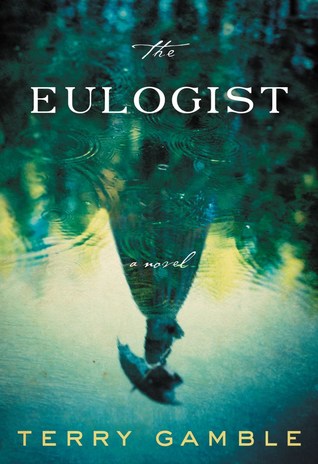
This wasn’t on my radar but the title and cover intrigued me so I started reading it one day and became completely absorbed by it. After immigrating to the United States from Ireland, three siblings forge their path in antebellum Cincinnati in The Eulogist. James establishes a successful candle-making business, free spirit Erasmus becomes a traveling preacher and independent, open-minded Olivia challenges a conventional life. These dissimilar siblings function like the id (Erasmus), ego (Olivia) and superego (James). I became completely charmed by Olivia, by her loyalty, curiosity and determination. She attends lectures by feminists and abolitionists and questions women’s expected roles during that time: “That summer of 1829, culture and curiosity came over the city like the quickening of a maiden’s heart. Cincinnati was overrun by fanatics and intellectuals trying to make their case: Caldwell’s discourse on phrenology; Miss Fanny Wright on slavery and marriage; Dr. Alexander Campbell and Robert Owen battling the fundamental relationship between godliness and goodliness.” She’s not particularly interested in marriage [“I have never been one to pine for marriage, nor did motherhood enchant me. As I saw it, marriage was a function of economic dependence, and wrongly, too, since women rarely had money of their own.”] or starting a family. She does end up marrying a doctor who she falls in love with after spending time with him performing autopsies and doing research on corpses. When he dies, Olivia returns with his body to Kentucky to find her brother-in-law heavily involved in slavery. She’s determined to save a young black woman who has been living fairly free in Ohio from being returned as her brother-in-law’s property. She enlists the assistance of both her brothers. Through detailed descriptions and strong character development, I found myself completely engrossed. Taking place in the decades preceding the Civil War, slavery was illegal in Ohio, the first state created from the Northwest Ordinance of 1787. Ohio was active in the Underground Railroad. I recently found a family tree my grandmother created which traces several generations in Ohio and I’d like to conduct research someday to see if any of my ancestors had any involvement in the Underground Railroad.
The Eulogist by Terry Gamble. William Morrow| January 22, 2019| 320 pages | $26.99| ISBN: 978-0-06-283991-6
RATING: ****/5*
–review by Amy Steele
Share this:

book review: Good Riddance
Posted by Amy Steele in Books on February 4, 2019
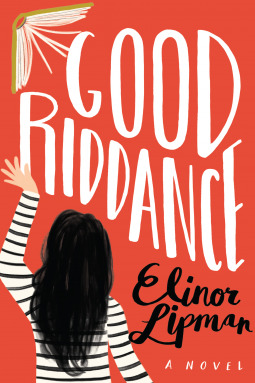 Good Riddance by Elinor Lipman. Houghton Mifflin Harcourt| February 5, 2019| 304 pages | $25.00| ISBN: 978-0-544-80825-6
RATING: 4.5/5*
–review by Amy Steele
“I used to have a husband, from a marriage that was a bad idea from the start. Now I can advise others: Never marry a man who proposes too early.”
When Daphne discards her deceased mother’s yearbook, a neighbor decides she’s going to make a documentary about what she discovers in it. One person’s trash is another’s treasure, particularly an enterprising someone looking to advance her career. Daphne’s mother, June, was a teacher and yearbook advisor for the Class of 1968 who attended every class reunion and kept detailed notes about the students in the yearbook. Seemingly everyone had a crush on Daphne’s mother at this New Hampshire high school. June had an affair with a student after he graduated. Daphne attends a reunion as a fact-finding mission and this man, now a state representative, claims to be Daphne’s biological father. Daphne introduces herself to her tablemates in this manner: “I was bamboozled into a loveless marriage because my husband wouldn’t inherit his grandparents’ money while he was still single.” Daphne hasn’t had the best of luck in relationships. She’s self-deprecating and aware of her challenges and somewhat resigned. She’s completely surprised when she embarks on a tryst with her cute younger neighbor, an actor. She ends up having lots of fun and confides in him. It’s just the ego boost she needs. I found Daphne to be quite genuine and relatable. Her father seems like a great dad. The news that someone else might be her biological father, leads Daphne to have bouts of doubt: “My not sleeping great had to do with the ugly breaking news that my entire existence was based on a lie. Shouldn’t I have been warned of inheritable diseases that might be down the road? Or told to work harder in high school because I could apply as a legacy to Dartmouth? Such were the 2 a.m. agitations of a dispossessed daughter.” Will these new discoveries affect Daphne’s relationship with the only father she’s ever known? Between studying online to become a pastry chef, hooking up with her neighbor and helping her father navigate his recent move to New York, Daphne attempts to thwart her plans to expose her mother’s personal life. Author Elinor Lipman (The Inn at Lake Divine, On Turpentine Lane) successfully contrasts the idiosyncrasies of small town New England with sprawling Manhattan. Lipman is a master of clever, amusing novels with quirky central characters. Her novels are guaranteed delightful fun reading. I love her writing and creativity so much that I received an advanced copy in October and devoured it right away. It’s the ideal anti-Valentine’s read.
FTC Disclosure: I received this book for review from Houghton Mifflin Harcourt.

Share this:

book review: Blood Highway
Posted by Amy Steele in Books on August 6, 2018
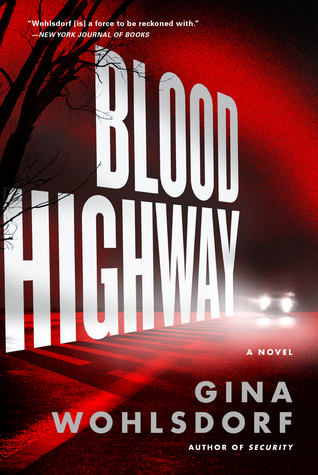
Blood Highway by Gina Wohlsdorf. Algonquin| August 7, 2018| 320 pages | $16.95| ISBN: 978-1-61620-563-8
RATING: 3.5/5*
–review by Amy Steele
Scrappy teenager Rainy Cain knows how to fend for herself even though she’s still in high school. She manages to be independent and to present herself a certain way so that no one will ask too many questions. She’s been through an awful lot in her life and she’s yet to graduate from high school. She’s developed protective coping mechanisms that enable her survival. Her severely mentally ill mother neglected her long ago. They still live in the same house but don’t communicate with each other (sounds like me and my stepfather). After her mother commits suicide, Rainy’s felon father, recently released from prison, kidnaps her in hopes that she’ll lead him to money that he believes her mother hid when he was sent off to prison for a series of armed robberies. He’s a violent, ruthless man. Rainy wasn’t even aware he existed. Blaine, a seemingly good guy and police officer, with more in common with Rainy than one might suspect, pursues them. I love this sentence about Blaine: “His interior was this packed, cluttered museum of guilt and regret.” Author Gina Wohlsdorf spent a decade writing the novel. When she started she wasn’t that much older than her central character, strong-willed and determined feminist Rainy. As I dove into this thriller, which really skirts into horror, I didn’t know what was going on for quite a bit but the compelling writing kept me reading. There’s a cinematic edginess to the characters and this riveting and scary cross-country chase.
FTC Disclosure: I received this book for review from Algonquin.
Share this:

book review: My Year of Rest and Relaxation
Posted by Amy Steele in Books on August 6, 2018
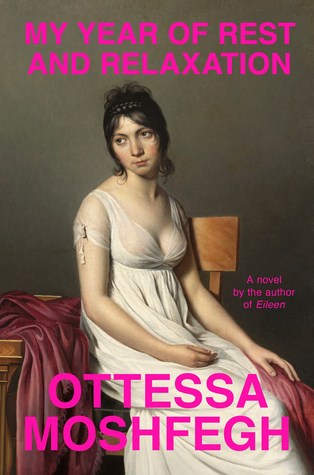 My Year of Rest and Relaxation by Ottessa Moshfegh. Penguin Press| July 2018| 289 pages | $26.00| ISBN: 978-0-525-52211-9
RATING: *****/5*
–review by Amy Steele
“Oh, sleep, nothing else would ever bring me such pleasure, such freedom, the power to feel and move and think and imagine, safe from the miseries of my waking consciousness.”
Before I discovered yoga and meditation I would often isolate from the world by downing a bunch of pills. After a bad break-up, I spent three weeks consuming solely Diet Coke and Klonipin. Not advisable but I wanted to shut everything out as quickly as possible and for as long as possible. It was inherently easier to sleep through the misery in hopes I’d eventually feel better. It wasn’t the best coping mechanism. In case anyone’s wondering, I no longer drink soda and rarely rely on Klonipin. I still have terrible agoraphobia and anxiety but numbing myself isn’t going to fix that and there are much more productive uses of my time.
Everything appealed to me about the novel My Year of Rest and Relaxation, from the title to the cover—a portrait of a sullen Victorian woman—to the description to this sentence in the opening paragraph: “I’d get two large coffees with cream and six sugars each, chug the first one in the elevator on the way back up to my apartment, then sip the second one slowly while I watched movies and ate animal crackers and took trazodone and Ambien and Nembutal until I feel asleep again.”
The novel focuses on a 24-year-old Columbia University graduate in the year 2000 in New York City and her intention to essentially hibernate through the year with pharmaceutical assistance. She’s recently lost her art gallery job. Her parents died while she was in school. Her on-again-off-again relationship with a guy who works on Wall Street doesn’t satisfy. So what’s so bad that she needs to shut out the world. She explains: “I can’t point to any one event that resulted in my decision to go into hibernation. Initially I just wanted some downers to drown out my thoughts and judgments, since the constant barrage made it hard not to hate everyone and everything, I thought life would be more tolerable if my brain were slower to condemn the world around me.”
She lives in an inherited apartment with few financial concerns. Her friend Reva, who she met in college, stops in once a week for a wellness check. Of Reva: “I don’t know what it was about Reva. I couldn’t get rid of her. She worshipped me, but she also hated me. She saw my struggle with misery as a cruel parody of her own misfortunes. I had chosen my solitude and purposelessness, and Reva had, despite her hard work, simply failed to get what she wanted—no husband, no children, no fabulous career.” She spends any waking hours watching movies, particularly those starring Whoopi Goldberg and Harrison Ford. She also finds questionable psychiatrist who unwittingly assists her sleep plans by prescribing an arsenal of drugs.
“I went to the bathroom and took stock of the medicine cabinet, counting all my pills on the grimy tile floor. In all, I had two Ambien but thirty more on the way, twelve Rozerem, sixteen trazodone, around ten each of Ativan, Xanax, and Valium, Nembutal, and Solfoton, plus single digit amounts of a dozen random medications that Dr. Tuttle had prescribed only once…”
One might wonder how an entire novel could revolve around this subject. Author Ottessa Moshfegh delves into the narrator’s past—her previous relationships, her family, her relationship with Reva, as well as her aspirations as an artist. About her parents: “And I’d feel sorry for myself, not because I missed my parents, but because there was nothing they could have given me if they’d lived. They weren’t my friends. They didn’t comfort me or give me good advice. They weren’t people I wanted to talk to. They barely even knew me.”
Dark humor, a self-deprecating tone and astute details and brilliant writing makes this novel work so well. There are strong Sylvia Plath vibes throughout. If you’ve dealt with mental illness, a major loss or being an outcast then you’ll likely appreciate this character. I found her to be immensely relatable. It’s a complicated, challenging world and some of us find solace in darkness.
FTC Disclosure: I received this book for review from Penguin Press.
Share this:

book review: ANY MAN
Posted by Amy Steele in Books on July 2, 2018

Any Man by Amber Tamblyn. Harper Perennial| June 2018| 304 pages | $15.99| ISBN: 0978-0-06-268892-7
RATING: *****/5*
“But more than any of that, as you know, I loathe feminists. It’s by no small miracle that all feminists in America haven’t been stoned to death by now. I’m just telling you the truth. Feminists are pollution, taking a stance, against what exactly, no one in their right mind knows. They are angry, bitter, saggy chauvinists masquerading as supportive, loving sisters.”
If you’re looking for an intense, intelligent and engulfing feminist thriller, you must read ANY MAN. Author Amber Tamblyn challenges rape culture and the problematic treatment of victims and glorification of violence and misogyny through this thriller about a female serial rapist. The novel follows six men: an English teacher, a struggling standup comedian, a bi-racial web designer, a high school student, an alt-right media personality and a transgender man. A uniquely irreverent and impressively original novel, social commentary and crime thriller meld with insightful, sharp prose and diverse writing styles. She weaves in tweets, poetry, internet chat room, a radio talk show. She also flips everything one expects in thriller. [As a companion read, I recommend Dead Girls by Alice Bolin– an essay collection addressing society’s infatuation with violence against women]. Whether she’s using tweets or poetry or an internet chat room or journal entries, it grabs you from the first page and is impossible to put down. If you’re a woman who has been attacked on social media or elsewhere for expressing her opinion, you’ll really get it. Tamblyn wrote an opinion piece for The New York Times, “I’m Done with Not Being Believed,” which cemented her place among influential feminists who are changing the narrative around trauma and victimization. I found myself nodding and smiling and cringing and marking passages while proclaiming Tamblyn’s genius and reading as fast as possible.
RATING: *****/5*
Amber Tamblyn will be at Harvard Bookstore on July 24, 2018.
–review by Amy Steele
Share this:

book review: There are No Grown-Ups
Posted by Amy Steele in Books on May 29, 2018

There are No Grown-Ups: A Midlife Coming-of-Age Story by Pamela Druckerman. Penguin Press| May 29, 2018| 274 pages | $27.00| ISBN: 978-1-59420-637-5
RATING: *****/5*
–review by Amy Steele
“What are the forties? It’s been my custom not to grasp a decade’s main point until it’s over, and I’ve squandered it. I spend my twenties scrambling in vain to find a husband, when I should have been building my career as a journalist and visiting dangerous places before I had kids. As a result, in my early thirties I was promptly fired from my job at a newspaper. That freed me up to spend the rest of my thirties ruminating on grievances and lost time.”
I don’t have much of a career or a personal life. I have no long-term partner and by choice, I have no children. I live in the suburbs and I’m pretty miserable and frustrated. Maybe it could be much worse. Author Pamela Druckerman writes in the introduction: “Obviously, the forties depend on the beholder, and on your family, your health, your finances and your country.” Reading Druckerman’s amusing, thoughtful and moving memoir made me feel a bit less alone. It’s comforting that someone else has had the same thoughts I’ve had about middle age and aging. Everyone goes through it. Maybe some better than others. Does everyone go through a midlife crisis? Probably not. I’m definitely a late bloomer so there’s that although in the end it won’t matter. Also we have greater longevity so maybe you can fuck up more.
Exploring the social, psychological and biological aspects of one’s forties, Durckerman combines topical research with her astute and amusing observations and experiences. She writes about her journalism career, her engagements as a speaker, battling cancer, her marriage and children as well as general thoughts on what one should be doing at a certain age. In the essay How to Turn Forty, she writes: “But I still don’t feel like a grown-up, in part because I haven’t found my tribe.” I feel the same. In the past year, I joined a yoga studio but I’m wedging myself into places I’ll never fit.
Each chapter is titled How to ___. Some of the chapters include: How to Find Your Calling, How to Choose a Partner, How to Turn Forty, How to Raise Children, How to Plan a Menage a Trois, How to Have a Midlife Crisis, How to Be Jung, How to Get Dressed, How to Age Gracefully, How to Think in French and How to Make Friends. Each chapter ends with little jokes which start with Your Know You’re in Your forties when… Two great ones: You know you’re in your forties when … You’re not considering Botox, but you are considering bangs.” And “You know you’re in your forties when . . . You no longer care (or remember) how many people you slept with.” I hooked up with a much younger guy who seemed quite annoyed that I’d had so many more sexual partners than him. I stopped counting at a certain point because it really doesn’t matter.
“We’ve actually managed to learn and grow a bit. After a lifetime of feeling like misfits, we realize that more about us is universal than not. (My unscientific assessment is that we’re 95 percent cohort, 4 percent unique.) The seminal journey of the forties is from “everyone hates me” to “they don’t really care.”
The essays on midlife crisis and that address wisdom and intelligence are particularly interesting. Druckerman brings in some Jung theory. She discusses cultural differences. As an expat loving in Paris, she writes from a unique perspective. Druckerman lives in Paris with her British husband and French children. French women are much more glamorous and elegant than Americans. I participated in a French exchange program in the 80s and I remember how stylish in navy and black the mom always appeared.
When she traveled to Brazil to speak at a conference, she noted: “Crying is the mark of a successful gathering in Brazil and a sign that you’re connected.” It’s challenging to make new friends as you get older. Are they your own friends or other parents at your children’s school or the spouses of your partner’s colleagues? She also compares Eastern culture to Western culture. Asians are high context and understand they need to comprehend interaction of everyone involved to fully understand something. Americans are (not surprisingly) low context. Americans are mostly concerned with themselves, on individuals. Quelle surprise.
Druckerman wrote a NYT column entitled “What You Learn in Your 40s” and its popularity led to four years researching and writing this memoir. If you’re in or near your forties you’ll definitely find many simpatico elements in this memoir. If you’re younger maybe it should eliminate some of the stigmas associated with aging.
Pamela Druckerman will be at Brookline Booksmith on Wednesday, May 30 at 7pm.
Share this:

book review: A Theory of Love
Posted by Amy Steele in Books on May 21, 2018
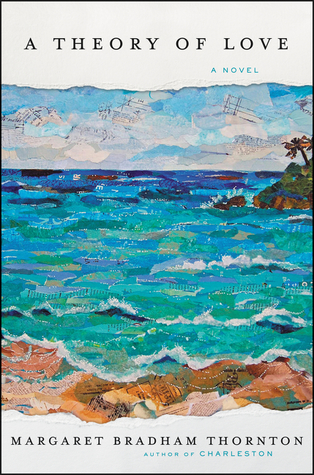
A Theory of Love by Margaret Bradham Thornton. Ecco| May 2018| 275 pages | $27.99| ISBN: 978-0-06-274270-4
RATING: ****/5*
–review by Amy Steele
“Bermeja was the name given to the eight-mile stretch along Mexico’s Pacific coast halfway between Puerto Vallarta and Acapulco. Surrounded by a thirty-six-thousand-acre nature preserve, Bermeja was referred to as the land where nobody was born and nobody died. Protected by high cliffs and jungles and wetlands, it was often separated on its eastern boundary by flooding rivers.”
Although the couple in this novel hasn’t fabricated a relationship, A Theory of Love reminded me of Glimpses of a Moon, one of my favorite novels by Edith Wharton. In it, a young couple decides to marry so that they can travel around on an extended honeymoon staying at their friends’ lovely homes. In A Theory of Love, Helen, a British journalist, meets lawyer turned financier Christopher while she’s on assignment in Bermeja. He’s there for a bit of relaxation on his surfboard. Author Margaret Bradham Thornton takes readers to Bermeja, Saint Tropez, London, Sussex, Fontainbleu, Chamonix, Tangier, Milan, Havana and New York.
She’s a journalist in the trenches and he’s interacting with financial elite. That could be why the relationship doesn’t fare well. Could also be the jetset nature of their relationship. His company is rather new and he’s working long days, seven days a week and isn’t able to invest the time in the relationship that Helen desires. Perhaps they’d have fared better if they’d worked out these logistics before marrying. Isn’t that what you’re supposed to do? Figure out where you want to live and if you’re both morning people or night owls and if you want to have children and such.
The characteristics which attract them to each other may be the details that drive them apart in the end. I particularly enjoyed the ritzy scenes. They’re elaborate but not grossly obscene. For instance, Christopher’s mother is involved in equestrian affairs: “She finds talented working students and gives them good horse to ride, and that works for a while until she feels they have been disloyal or unappreciative, and then that relationship falters.” They attend a fancy dinner party hosted by a French businessman (he’s CEO of his family’s chemical company) and his artist wife Penelope–“She was a photographer, and while she spent more time on the decoration of her seven houses than on her photography, she had resisted the cliched hallmarks of the wealthy wife and dressed in a bohemian style.”
Helen wants everything upfront and laments that she didn’t know everything about Christopher before they married which seems impossible and also rather dull. If you already know each other than what do you talk about? Christopher is in the let’s see what happens mode. Thornton writes: “He had come to value, maybe even cherish, a sense of patience—of letting things play themselves out. Perhaps his ability to see how things would develop or unravel allowed him this equanimity. He understood that events had their own interval sense of motion.”
Thornton writes: “She was thinking about how they seemed to be moving away from each other and wondering why neither one of them tried to do anything about it. there were times when it felt as if he had lost her, as if he were thinking so intensely about what was in front of him that he would forget her, as if his mind were emptied of all thoughts of her.”
Sounds like mindfulness to me and honestly, I didn’t particularly like either character but that’s never been essential to my enjoyment of a novel. A good writer makes you continue to read despite the characters. I liked their non-relationship relationship and pondering if they’re getting what they feel they should from each other. There’s mysterious elements to it all. In addition, Christopher thinks his business partner may be involved in illegal activity and as Helen faces an unexpected pregnancy, he’s engulfed in an investigation. This novel effectively ponders attraction and love while languishing in beautiful scenery and prose. It’s a wonderful indulgence and escape.
FTC Disclosure: I received this book for review from Ecco.
Share this:

book review: I Really Didn’t Think This Through
Posted by Amy Steele in Books on May 3, 2018
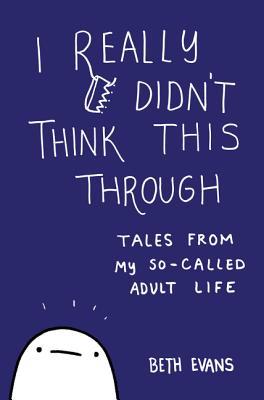
I Really Didn’t Think This Through by Beth Evans. William Morrow| May 2018| 172 pages | $14.99| ISBN: 978-0-06-279606-6
RATING: ****/5*
Like many others, I discovered Beth Evans on Instagram. The millennial has a quarter of a million followers and posts cartoons about mental health and navigating adulthood. In this book, Evans writes about her struggles with depression, anxiety and OCD and intersperses comics throughout. It’s amusing and touching and honest. She delves into her experiences with bullying, self-harm, dating and how she manages her anxiety while maintaining a bit of a social life. She shares what happened when she first realized she might have depression. She reminds readers to practice self-love and self-care and to ask for help if you need help. With stigmas surrounding mental illness, it’s crucial that people keep sharing their experiences. In her comics and through her words, people will realize that they’re not alone and perhaps find some solace in similar experiences. People may also realize that it’s okay to struggle with mental illness and it’s okay to not have it all figured out. May is Mental Health Awareness Month and this is a perfect reminder to take care of yourself.
On anxiety:
“For those unfamiliar with anxiety attacks, it’s kind of like being shoved off a ledge without being able to scream. It’s a silent takeover during which your body decides what’s going to happen, and all logic is tossed aside. What makes it even more challenging is that it sometimes happens in public. Then, not only do you have to figure out how to take care of yourself, but you have to try not to alarm those around you.”
“Anxiety is a powerful thing, and when it decides to strike, it can take many different, often demoralizing forms. Suddenly the only thing you can focus on is the absolute, fundamental sense of dread and upset storming inside you. When I’m anxious, I become obsessed with keeping everyone around me calm. It’s almost like the minute I start to feel bad, I need to focus on someone else instead of on what’s happening to me.”
Taking it one day at a time:
“And sometimes that’s all we can really hope for—the feeling of staying afloat. When things really suck, staying afloat seems pretty good. Sometimes it’s okay to celebrate just being here, because that in itself is an accomplishment. Some days I’m just going about my business, like walking around Target, and I’ll think, How on earth did I pick up all these broken shards and function like a normal person today?”
Self care:
“Sometimes we get caught up in the idea that self-love has to be thinking we’re great 100 percent of the time. Often it’s something much less exciting, like treating ourselves with respect or holding our brains back a bit when we want to attack ourselves. In a world where we’re taught to be one kind of perfect or another, something seeing beauty in the imperfection is the best thing we can do.”
Recognizing that perfection is impossible:
“I think one of the hardest sentiment to wrap by head around is that I’m an all right human being. So often my brain screams that I’m the worst of the worst, and I constantly judge myself for past interactions and failures. I also need constant reassurances form those around me that I’m not a horrible person, which, honestly, is grating for everyone around involved.”
–review by Amy Steele
FTC Disclosure: I received this book for review from William Morrow.
Share this:

About Me

covering mostly music and books. focus on alternative/indie and women in music, literature and the arts. feminist. vegan. mostly alternative, a bit bohemian. Masters in journalism from Boston University. BA from Simmons College.



Entertainment Realm by Amy Steele is licensed under a Creative Commons Attribution-Noncommercial-No Derivative Works 3.0 United States License.
Based on a work at entertainmentrealm.comCopyright © 2009. All writing, unless otherwise noted, by Amy Steele.
 ENTERTAINMENT REALM
You must be logged in to post a comment.