Posts Tagged book review by Amy Steele
book review: Girl Ghosted
Posted by Amy Steele in Books on August 15, 2017
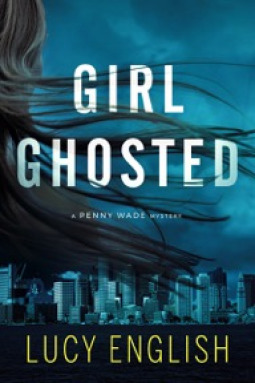
Girl Ghosted by Lucy English. New Sun Press| August 15, 2017| 285 pages| ISBN: 9780692882238
RATING: ****/5*
Social worker Penny Wade connects with a guy she met online but then doesn’t hear from him. Has he ghosted Penny? Ghosting occurs when someone abruptly ceases all communication with a person they’ve dated. It’s the worst. In my experience men are terrible at communicating and it’s easier for them to just not communicate at all. Most women appreciate respect and honesty. Penny reflects: “It takes months, if not years, to get to know someone well enough to decide on a partnership. Maybe. Or maybe you can know kind of quickly.” My therapist has said that to me a few times after telling me I bail on guys I’m dating too early. I think that being in my 40s I know what I like and what I don’t like. While I’m open to letting a relationship develop as it will, I’m not going to invest a ton of time in an unworkable situation.
Relatable conversation between Penny and her roommate:
[Penny] “Is he hot?”
[Gloria] “Pretty hot.”
“Smart?”
“Very.”
“Thoughtful?”
“Yep. He makes suggestions about what we should do but lets me know he’s open to other ideas. I like it when guys take a little initiative instead of saying ‘what d’ya wanna do?’ you know?”
Yeah. I definitely know. And you learn some stuff from their ideas and also how they react if you suggest adjustments.”
Penny’s a friendly, determined, earnest 30something who works for Community Counseling Services which often assists the Department of Children and Families (DCF). Penny’s tasked with investigating a neglect case involving a young mother named Ashley and her two children, eight-year-old Olivia and six-year-old Noah. School administrators reported that the children were “dirty, hungry, and often missed school.”
Author Lucy English worked as a sociology professor and she provides extensive detail and an authenticity to this case and Penny’s work. This novel appealed to me with its focus on the germane subject of online dating as well as its Boston setting. English peppers the novel with plenty of Boston area locations such as Henrietta’s Table in Harvard Square, Mela in the South End, Kickstand Café in Arlington, Granary Tavern in the financial district, Trade on the waterfront, the New England Aquarium and Panificio Bakery on Charles Street. Penny visits some prime spots.
This is the third novel in the Penny Wade mystery series and the first I’ve read. It definitely reads as a stand-alone. There’s plenty of character development and description which allows readers to become invested in Penny, her work and her social life. Her supervisor Nathan gives Penny sage dating advice: “What if you started with evaluating a man’s ability to see and love you for who you are, to communicate well, to practice give-and-take. If he doesn’t get gold stars on those, you move on, no matter how good-looking or otherwise compelling he is.” Absolutely. It’s challenging but it’s the best thing to do. Wish I’d learned it in my 30s instead of my 20s. After reading Girl Ghosted I’d absolutely read another Penny Wade mystery.
–review by Amy Steele

Share this:

book review: Morningstar
Posted by Amy Steele in Books on August 4, 2017
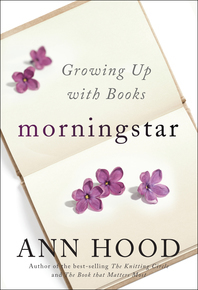
Morningstar: Growing Up with Books by Ann Hood. W.W. Norton| August 2017| 192 pages| $22.95| ISBN: 9780393254815
RATING: ****/5*
I meandered my way through these essays because that’s generally what I do with essays and short stories. I read one, read something else and then read another. It’s quite a thoughtful mediation on reading and growing up with books. Ann Hood [Comfort, The Obituary Writer] recalls memorable and influential books. Hood writes: “How can I describe what reading gave me? An escape from my lonely school days, where girls seemed to speak a language I didn’t understand. A glimpse into the possibilities of words and stories. A curiosity about the world and about people—the young Amelia Earhart seeing her first airplane, Helen Keller’s silent world, Nancy Drew solving mysteries, David Copperfield surviving the streets of Victorian London.” She provides plenty of insight into her personal life, family and growing up in a mill town outside Providence, Rhode Island. I’ve read some of the books mentioned and will likely read many others she referenced. Bookworms will find much in which to relate in these essays. She writes: “…whatever book it is, it falls into your hands at just the right moment when you need to read it. It transforms you. Perhaps it lifts you up when you are at your lowest; perhaps it shows you what love is, or what it feels like to lose love; perhaps it brings you places far away or shows you how to stay put when you need to.” When I finished these essays I semi-smiled and nodded knowingly about the power in reading and the comfort one finds within the pages of books.
on Marjorie Morningstar:
“Maybe that’s why i reread it every year. Maybe. as time beats me up and grief or loneliness or a new kind of bittersweet melancholy take hold, I need to remind myself to keep going, keep reaching, to not forget the girl who believed she could have everything and anything at all.”
On The Bell Jar:
“An immediate bestseller, Plath’s story of beautiful, brilliant Esther Greenwood’s breakdown spoke to my generation. The minds of women were just being discussed openly as feminism soared. Questions of career, sex, marriage, and finding yourself were, I suspect, what kept me up at night.”
On The Grapes of Wrath:
“When I finished reading The Grapes of Wrath, so many things about writing a novel became clear to me. Plot. Character. Conflict. Escalating stakes. Metaphor. The Grapes of Wrath begins with a drought and ends with a flood.”
–review by Amy Steele
FTC Disclosure: I received this book for review from W.W. Norton.
Share this:

book review: Impressions of Paris
Posted by Amy Steele in Books on August 3, 2017
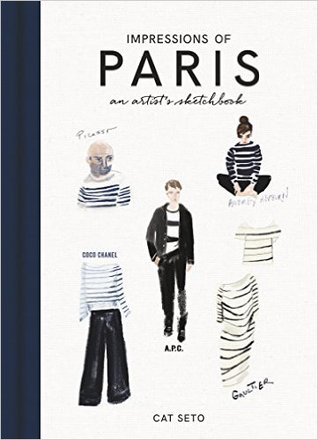
Impressions of Paris by Cat Seto. Harper Design| April 2017| 176 pages | $19.99| ISBN: 9780062493071
RATING: *****/5*
A lovely adult picture book. The perfect gift for someone who appreciates art and beautiful things. Cat Seto sketches her way through museums, cafes, gardens, bookstores and the streets of Paris. Recalling her time in Paris through watercolor illustrations, she divides the book into four chapters: color; pattern; perspective and rhythm. There’s a reason so many creative types find inspiration in Paris. Culture, art, architecture. There’s art in everything from the buildings to the food to the streets to the fashion and to the residents.
Seto shares her personal experiences and connections to Paris as well as various art principles. It’s a combination memoir and art class within these pages. My strongest memories of Paris include chocolate crepes, art museums and impressive buildings. And eating Chocolat chaud and French bread for breakfast every morning.
On Le Boutique de Saint-Paris: “I have sketchbooks filled with etchings of flowers, and many a pattern has emerged from these tiny discoveries.” On Jardin des Plantes: “I was going to visit the Jardin des Plantes for only a few minutes. I instead spent days there, sketching among all the wanderers, art students, and schoolchildren.” Whether you’ve visited Paris or long to visit, this striking book provides a wonderful examination of the artistic sensibility that attracts so many artists, authors and musicians to the City of Light.
Cat Seto is a San-Francisco-based artist and the founder and creative director of the stationary collection Ferme a Papier. She holds a BFA in painting and an MFA in fiction/creative writing from the University of Michigan.
–review by Amy Steele
FTC Disclosure: I received this book for review from Harper Collins.

Share this:

book review: The Nakano Thrift Shop
Posted by Amy Steele in Books on July 20, 2017
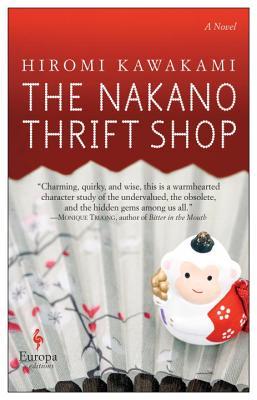
The Nakano Thrift Shop by Hiromi Kawakami. Europa Editions| June 2017| 240 pages | $16.00| ISBN: 978-160-945-399-2
RATING: ****/5*
“Takeo arrived, again smelling of soap. For a moment, I wondered if I ought to have taken a shower, but I quickly pushed that thought aside, since had I done so, he might have thought I was expecting something. This was what made love so difficult. Or rather, the difficult thing was first determining whether or not was what I wanted.”
Such a gem of a novel. Author Hiromi Kawakami brings layers and depth to seemingly ordinary, routine lives. Lots of interesting characters plus solid descriptions to create strong setting & sense of place. I appreciated the novel as it allowed me to experience Japan –from the rainy season to love hotels–through these characters. The novel focuses on twenty-something Hitomo who works part-time at the thrift shop. Kawakami writes: “With its second-hand goods (not antiques), Mr. Nakano’s shop was literally filled to overflowing. From Japanese-style dining tables to old electric fans, from air conditioners to tableware, the shop was crammed with the kind of items found in a typical household from the 1960s or later.” Hitomo sort of dates her aloof co-worker Takeo and builds bonds with shop owner Mr. Nakano and his artist sister Masayo. Her relationship with Takeo reminded me of my current on-again/off-again situation. She’s intrigued by Takeo and attracted to him. Does she need to know what kind of relationship she’s going to have with her co-worker? Some people, most of society, feel the need to label something, to put it into a box, cross things off a list. Few people (including Takeo and this guy I was seeing) are willing to allow something to unfold organically and mindfully. You can make plans for the future and have goals but you can also enjoy the moment. Relatable: “We were so different from each other in the first place—it’s not surprising that two people with nothing in common would end up like this, I thought to myself as I threw caution to the wind and continued to steal glances at Takeo’s face.” Also relatable: “When I thought about the idea of spending the rest of my life like this—going through my days I a fog of anxiety and fear—I felt so depressed I could have laid down on the ground and gone to sleep right then and there. But despite all that, I loved Takeo. When I scrutinized love, I still found myself in a world that felt empty.” On her boss Mr. Nakano’s lover: “’The Bank’ was pretty. To call her a beauty might have been going too far, but she had a delicate complexion—she seemed to be wearing hardly any make-up yet her skin was flawless. Her eyes might have been narrow but her nose was straight. There was something inexplicably vibrant about her lips. At the same time, she had purity about her.” Besides beautiful, thoughtful writing, I’m often attracted to the Europa book covers. Look at that cover! Book design credit goes to Emanuele Ragnisco.
–review by Amy Steele
FTC Disclosure: I received this book for review from Europa Editions.
Share this:

book review: Made for Love
Posted by Amy Steele in Books on July 6, 2017
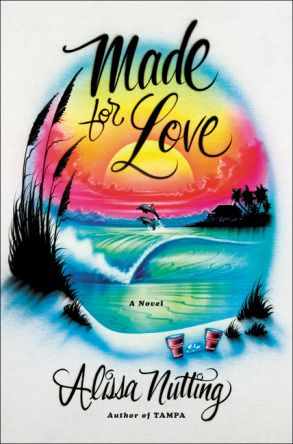
Made for Love by Alissa Nutting. Ecco| July 2017| 320 pages | $25.99| ISBN: 978-0-06-228055-8
RATING: *****/5*
“During her marriage, she sometimes visited her father just so she could feel better about her life when she left. A trip to his home always made a pretty convincing argument that his gruff personality, heavy flaws, and the shortcoming of her childhood that his present-day existence kept freshly resurrected in her memory were fixed roadblocks that would prevent her from ever experiencing true joy, so her choices and lack of personal ambition or work ethic or relative sobriety didn’t really have to matter.”
So much to love about this novel. It’s smart, a bit bawdy, immensely clever, introspective and observational. Hazel recently left her tech billionaire husband, Byron Gogol, and moved in with her father at a trailer park for senior citizens. Her father, who just received his mail-order sex doll Diane, isn’t all that thrilled to have a new roommate. Hazel wants to start over but Byron isn’t going to make it easy.
The marriage seems a compromise. Byron wanted a wife and Hazel wanted an escape from what she assumed would be a rather dead-end life. Author Alissa Nutting writes: “Her life was going to be different from what she’d thought. This had felt sad and she wasn’t sure why, because she’d always planned on having a terrible life. But familiar terrors: loneliness, paycheck-to-paycheck ennui, unsatisfying dates with people a lot like her whom she wouldn’t enjoy because she did not enjoy herself.” She met Byron while in college and they married fairly quickly. His power and wealth dazzled her. He seemed both delighted by her and intrigued by her. [“Here was the thing: Hazel had not delighted her parents, ever. Nor had she delighted herself.” And then . . . “Hazel had never intrigued her parents or herself either.”] She’s been with him for a decade and over the years he’s become more controlling and Hazel’s been limited. During the marriage he’s kept tight tabs on his wife through technological surveillance and tracking. Hazel reached her limit when he planned to connect them via brain chips in a “mind-meld.” Byron’s methods to track down and bring his wife back become intense, severe and threatening. Hazel realizes she must make drastic measures or this megalomaniac will control her for the rest of her life. Or he’ll kill her. Neither appeals to her.
“It was easy to get along with him because she acted like a mood ring, always agreeing with what he found great and what he found intolerable.”
Technology connects us in a plethora of ways yet also disconnects us by making in-person communication less frequent and less necessary in many situations. It’s rare to find someone that has absolutely no social media presence. And if you do it’s just a bit suspect. How can one possibly keep up on news, politics, entertainment, celebrities and college friends without twitter, Facebook and Instagram. We rely on technology for both our professional and social lives. When you end a relationship there’s generally tons of data out there on social media to remind you of that relationship or make it difficult to move on. Plus how are relationships defined in the age of social media?
There’s a blunt honesty, offbeat humor and near absurdity in Nutting’s writing. It’s easy to relate to Hazel’s predicament and moods. Most readers will find solace in both her determination to begin anew and her frustrations in allowing the relationship to continue as long as it did. She’s not afraid to tackle unpleasant or taboo subjects [Nutting’s previous novel Tampa focused on a teacher-student romance] nor does she hold herself back in delving into these topics. In this novel it’s wealth and sex and loneliness and relationships. There’s the strange and humorous relationship between her father and his sex doll Diane. He treats the doll like a person. He’s content with her company.
In her marriage, Hazel felt lonely and isolated. She felt sad and detached. Nutting writes: “But Hazel hoped now that after so many bad years of internal and external surveillance, of cohabitation with someone she’d grown to hate and fear alike, the absence of sadness might feel something like contentment, or close enough. At one point she meets a guy in a dive bar named Liver who tells her: “I just meet women in this bar. Mainly they use me to help them reach bottom. I’m like a brick they grab onto midair. Sleeping with me helps them admit their lives have become unmanageable. They realize they want and deserve something more, and then their recovery process can begin. I get laid in the meantime. Win-win.” Sounds quite like the last few lowbrow working-class guys I’ve dated.
The perfect blend of absurd and genuine, Made for Love is one of the best novels I’ve read this year.
–review by Amy Steele
FTC Disclosure: I received this book for review from Harper Collins.
Share this:

book review: Lonesome Lies Before Us
Posted by Amy Steele in Books on June 13, 2017
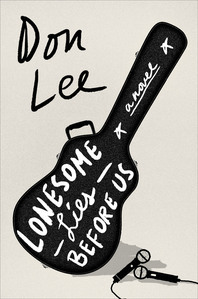
Lonesome Lies Before Us by Don Lee. W.W. Norton| June 6, 2017| 336 pages | $26.95| ISBN: 978-0-393-60881-6
RATING: *****/5*
Despite talent, alt-country/Americana musician Yadin Park’s musical career never took off due to his insecurities, lack of charisma and stage presence and then Meniere’s disease, a debilitating hearing disorder. Being a musician, an artist of any kind isn’t an easy profession. The music industry and the entertainment industry subsist mostly on the youth. It’s easy to age out of the music industry as it places a premium on youth and beauty and not always talent. Of course to maintain longevity one must possess talent. The entertainment industry can afford to be fickle as support then drop artists that don’t pull in money. How long does someone want to scrape by in hopes of quitting the day job? It’s infrequent that someone can do that. As author Don Lee stated at a recent book reading at Newtonville Books: “You have to have a certain amount of luxury and leisure to pursue those arts.” It’s true. While the starving artist sounds romantic, in reality it’s not comfortable or feasible for most people long-term.
“It was a relief, really, to be out of the music business. He was glad to be done with it. He was satisfied with his life in Rosarita Bay—quiet and anonymous, with no ambitions other than to make an honest living and have a roof over his head and be with Jeanette and her family. He’d been certain that he would never return to making music again. That was why the emergence of the new songs had been such a surprise to him.”
As a child, Yadin listened to his father’s LPs—Emmylou Harris, Townes Van Zandt, Gram Parsons, John Prine. [For authenticity, Lee worked with indie musician Will Johnson who wrote some lyrics which appear in the novel.] He became drawn to these sad, expressive songs. Lee writes: “All these songs about longing, regret, and betrayal, about broken hearts and belated apologies, about drinking, cheating, and leaving, about the lonely road and cheap motels and drifters, dreamers, outcasts, and the forlorn—they changed Yadin in ways he could not express yet could feel.” Living in Chapel Hill, he soon joined a band but wasn’t thrilled about performing and most artists need to tour. He became romantically involved with his bandmate Mallory Wicks. After a record label signed the band, Yadin became overwhelmed and soon left completely.
Now living in California and working for a carpeting company, Yadin recently started writing and recording songs again. His girlfriend Jeanette Matsuda, laid off from a salaried position years ago, cleans hotel rooms. Both Yadin and Jeanette gave up career goals and remain a bit stagnant and settled in simple lives which don’t particularly satisfy them. Lee writes: “Without quite realizing it, she had fallen into a persistent low-grade funk over the years, which became more pronounced when she was laid off and then was being rejected for job after job. Incessantly she would interrogate the choices and decisions she had made, and had convinced herself that she was a failure, a loser. She had crimped inward, fearful that if she exposed herself she would be ridiculed and betrayed.” Lee said that last decade’s financial crisis influenced this novel. He wanted to write about privilege and class. He also explained: “There are a lot of working class Asians and you never see them portrayed in books.”
One day Mallory Wicks, now a well-known actress and musician, checks in to Jeanette’s hotel. Yadin visits Mallory and she suggests they collaborate together. She knows he’s talented and that she has the celebrity power but not that much talent. Her star power wanes and she knows that a strong new album might bring her back into the spotlight. As this happens, both Yadin and Jeanette find themselves doing quite a bit of existential examination. Is this all there is? How did we get here? Have I accomplished enough? Am I happy? Am I where I want to be or need to be? How can I live a fulfilling and satisfying life? As someone middle-aged re-evaluating her path, this novel resonated with me. In Yadin and Jeanette’s unfulfilled goals and unrealized ambitions, I see my own failings. This line in particular: “She could only mourn the life she had been unable to create.” How many people remain in comfortable yet unsatisfying relationships in order to avoid being alone?
“Granted, there wasn’t a lot of passion between them, and this was chiefly her fault, she knew. Both had been in love just once in their lives, while very young, and both had been heartbroken. Neither had ever married, nor had been in a relationship of any significant length. They might have been together more out of attrition than anything resembling ardor, but they cared for each other, they helped each other, they were companions. It was enough for Jeanette, and she had hoped it would be enough for Yadin, but lately she had begun to worry that it wasn’t.”
It’s a powerful novel with phenomenal writing and quiet, intense characterizations. As a music critic and book critic, novels about musicians always appeal to me. This novel draws the same emotions as aI also adored Don Lee’s gorgeous novel The Collective. One of my favorite authors, Lee’s writing dazzles me.
–review by Amy Steele
Share this:

book review: The Fact of a Body
Posted by Amy Steele in Books on May 29, 2017
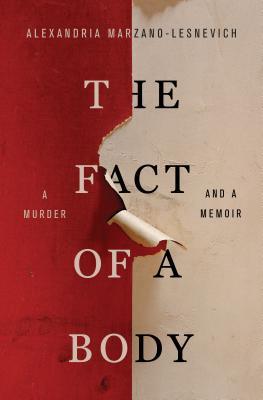
The Fact of a Body by Alexandria Marzano-Lesnevich. Flatiron Books| May 2017| 336 pages | $26.99| ISBN: 978-1-250-08054-7
RATING: ****/5*
Some people are true crime fanatics. I’ve read In Cold Blood and some other true crime books but don’t often gravitate toward them. Memoir appeals to me and that’s what drew me to The Fact of a Body. I also may or may not have wanted to go to law school.
Both a memoir and a true crime book, The Fact of a Body is a riveting page-turner but also a disturbing read I had to step away from a few times. To apply to Harvard Law School, Alexandria Marzano-Lesnevich wrote the admissions essay about her opposition to the death penalty. During a summer internship at a New Orleans law firm, Marzano-Lesnevich begins to question that stance when she’s tasked to the re-trial of convicted murderer and child molester Ricky Langley. He’s been on death row for years. Not only does her research cause Marzano-Lesnevich to question the death penalty it also brings up her own past family trauma.
Meticulous research and painstaking detail allow readers into the life and crime of Ricky Langley as well as into Marzano-Lesnevich’s terrifying childhood when her grandfather molested her and her sister. Now a law student, she wants to comprehend the why and how. Her grandfather got away with it. Ricky got sentenced to death row. While it could be academic and legal in tone, it’s a compelling, shocking, devastating, frightening and phenomenal read. There’s this chilling line: “The room where now, in the closet, Jeremy Guilory’s body stands rigid, wedged in, wrapped in the blue blanket from Ricky’s bed, a white trash bag covering his head and shoulders.” Or this: “The camera doesn’t linger. It catches the blond hair and then falters in the face of the boy. But on Jeremy’s lip right now—too small for the camera to catch, and no one’s looking at him that closely, no one wants to look at a boy that closely—there is a single dark pubic hair.” Marzano-Lesnevich balances the narrative and the facts just so. It’s a truly powerful reconciliation of past and present.
–review by Amy Steele
FTC Disclosure: I received this book for review from Flatiron Books.
Alexandria Marzano-Lesnevich will be in conversation with Kristen Radtke on Thursday, June 1, 2017 at Brookline Booksmith
Share this:

book review: The Leavers
Posted by Amy Steele in Books on May 4, 2017
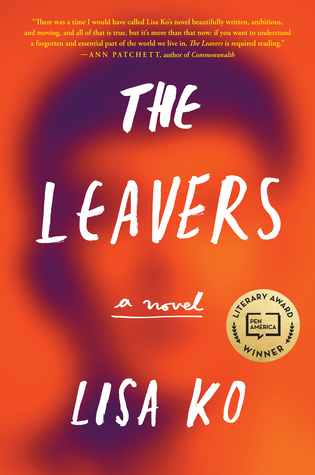
The Leavers by Lisa Ko. Algonquin Books| May 2017| 338 pages | $25.95| ISBN:
RATING: *****/5*
An intense mediation on race, culture, identity, sense of place and belonging, The Leavers by Lisa Ko is a gorgeous and thoughtfully written debut novel that should resonate with progressives and allow others insight into the struggles of undocumented immigrants. It’s not that they don’t want to follow protocol. It’s often that they have few choices. It’s the story of what happens when Deming Guo’s mother Polly, an undocumented Chinese immigrant, fails to return from her job at a nail salon. She just vanishes. She doesn’t contact the family. No one knows if she’s been deported or if she just took off. As a single mother she struggled to cover expenses as a nail technician. After a month or so, her boyfriend’s sister sends Deming off to a foster home in the suburbs where two dogged white professors adopt Deming and change his name to Daniel Wilkinson. They mean well and want Daniel to have the best educational opportunities afforded to him. They want him to have choices for his future.
The story’s told from Daniel’s perspective as well as that of his mother Polly. Daniel struggles to fit in at this white enclave in upstate New York. He doesn’t do well in school and he develops a gambling problem. His parents aren’t happy and Daniel moves to Manhattan to live with a friend and join his band. Although Daniel is now in his late teens he still wonders why his mother abandoned him and never tried to find him. This definitely affects the relationship with his parents as well as his ability to figure out where he fits in. He often thinks about his birth mother and wonders why she doesn’t care enough about him to track him down. That’s enough to make a young man become wayward and develop a gambling addiction.
In the United States, Polly had created a challenging but routine life for herself. She lived with her son and a boyfriend named Leon. Ko writes: “I didn’t want a small, resigned life, but I also craved certainty, safety. I considered suggesting to Leon that we marry other people, legal citizens, for the papers, and after a few years we could divorce our spouses and marry each other.” Now back in her homeland China, she lives a rather comfortable life working as an English teacher. She’s married and lives in a nice apartment. Readers also finally discover what happened when Polly went to work that day at the nail salon. Polly went through a horrific ordeal after ICE placed her in a camp for illegal immigrants. The harsh and nearly inhumane conditions could easily break someone down. It was shocking to read about these middle-of-nowhere holding facilites. Just harsh.
Debut author Lisa Ko said that this novel was inspired by real-life stories of undocumented immigrant women whose United States-born children were ultimately taken from them and raised by American families. She states: “With The Leavers, I want to decenter the narrative of transracial adoption away from that of the adoptive parents.” It’s an important topic when our current president wants to keep people from entering the country as well as crack down on undocumented immigrants, even ones living quiet hard-working lives who have young American-born children.
READ THIS NOVEL. It provides insight and empathy in the plight of immigrants in this country. It’s utterly heartbreaking yet often optimistic and shows resilience among the characters. I can’t recommend this novel enough. Lisa Ko utilizes lovely prose, a riveting story-line and relatable, flawed characters to highlight the challenges immigrants face today.
–review by Amy Steele
FTC Disclosure: I received this book for review from Algonquin.
Lisa Ko will be reading at Harvard Book Store on Wednesday, May 17 at 7pm.
Share this:

book review: A Piece of the World
Posted by Amy Steele in Books on March 5, 2017
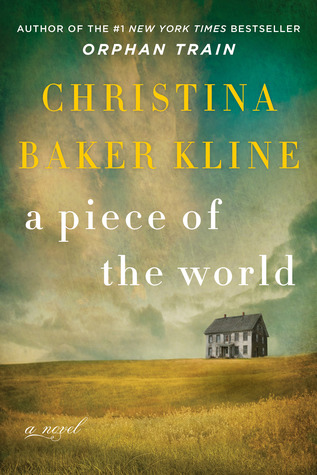
A Piece of the World by Christina Baker Kline. William Morrow| February 2017| 309 pages | $27.99| ISBN: 978-0-06-235626-0
RATING: 4.5/5*
“Do our natures dictate the choices we make, I wonder, or do we choose to live a certain way because of circumstances beyond our control? Perhaps these questions are impossible to tease apart because, like a tangle of seaweed on a rock, they are connected at the root. I think of those long-ago Hathorns, determined beyond all reason to leave the past behind—and we, their descendants, inheritors of their contrarian tenacity, sticking it out, one generation after the next, until every last one of us ends up in the graveyard at the bottom of the field.”
In the gorgeous and mysterious 1948 masterpiece Christina’s World, Andrew Wyeth depicts a woman crouching on a hill looking toward a weathered farm house. Looking at the painting, one might wonder whether the woman is coming or going. She seems far away and in such a twisted, crouching position with her hair blowing a bit in the wind. I never knew that Wyeth painted this on a farm in Maine. Author Christina Baker Kline creates a riveting story of the artist’s muse. Christina Olson lives a rather solitary, quiet and isolated existence in the small coastal town of Cushing, Maine on her family’s farm with her brother. Christina lived at a particular time in particular circumstances and suffered an illness as a child which led to increasingly physical debility. At school she develops an affinity for Emily Dickinson’s poetry. Her father insists she quit school after eighth grade to help on the farm. Christina wanted to be a teacher. When young painter Andrew Wyeth asks if he can paint the farm, Christina and her brother welcome the distraction and attention.
This masterful work of historical fiction—told through first-person narrative– allows readers to feel Christina’s pain, disappointment and glimmers of hope throughout. In her youth, Christina dates a young man who summers nearby. But after several years he becomes engaged to another woman. He never intended to foray into a serious relationship with Christina. She’s devastated as she’s looking to be understood and accepted and just seen by somebody. Something many people seek. Readers feel empathy for Christina but not pity. She’s resilient and resourceful. She’s managing her situation. Writing with exquisite detail, Kline transports us to Maine and effectively moves from 1940 to the early 1900s to reveal the personal history of the woman immortalized by a classic American work of art.
–review by Amy Steele
FTC Disclosure: I received this book for review from William Morrow.
Share this:

book review: Exit West
Posted by Amy Steele in Books on March 5, 2017
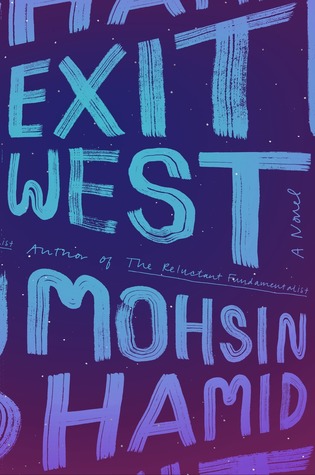
Exit West by Mohsin Hamid. Riverhead Books| March 7, 2017| 231 pages | $26.00| ISBN: 978-0-7352-1217-6
RATING: 4.5/5*
After finishing college, Nadia questions her faith and decides, to her family’s dismay and disdain, to move out on her own– “She secured a room of her own atop the house of a widow, a record player and small collection of vinyl, a circle of acquaintances among the city’s free spirits, and a connection to a discreet and nonjudgmental female gynecologist.” Nadia enjoys her independence as much as possible: she works at an insurance company; smokes pot and does shrooms and maintains connections through social media. She soon meets Saeed and they clandestinely date and slowly fall in love as the country and everything they know crumbles around them. They both work their different jobs during the day and meet at night at cafes and then at Nadia’s apartment. She throws down a black robe for him to put on and enter the apartment without raising suspicions or backlash about a single woman entertaining a male visitor. Slowly the country becomes less safe. Nadia and Saeed lose their jobs. Then it becomes impossible to communicate. Author Mohsin Hamid writes: “But one day the signal to every mobile phone in the city simply vanished, turned off as if by flipping a switch. An announcement of the government’s decision was made over television and radio, a temporary antiterrorism measure, it was said, but with no end date given. Internet connectivity was suspended as well.” Nadia and Saeed decide to escape the country as refugees.
First they land at a refugee camp in Mykonos —“It was said in those days that the passage was both like dying and like being born, and indeed Nadia experienced a kind of extinguishing as she entered the blackness and a gasping struggle as she fought to exit it, and she felt cold and bruised and damp as she lay on the floor of the room at the other side, trembling and too spent at first to stand, and she thought, while she strained to fill her lungs, that this dampness must be her own sweat.” They then move on to London –“It was here that Saeed and Nadia found themselves in those warmer months, in one of the worker camps, laboring away. In exchange for their labor in clearing terrain and building infrastructure and assembling dwellings from prefabricated blocks, migrants were promised forty meters and a pipe: a home on forty square meters of land and a connection to all the utilities of modernity.” They finally end up in Marin, California– “Saeed made it a point to smile with Nadia, at least sometimes, and he hoped she would feel something warm and caring when he smiled, but what she felt was sorrow and the sense that they were better than this, and that together they had to find a way out.”
The couple drifts apart despite their best attempts to stay together. It’s an attempt to keep something familiar nearby, to keep their country in their hearts. They adapted to their new country and living situations in varied ways—Nadia relishes the personal freedom while Saeed becomes focused on religion– which makes their relationship untenable and unsustainable. A beautiful, thoughtful, intelligent novel about refugees that couldn’t be timelier. Using mystical realism, Hamid tells a potent and poetic story of love and freedom in this short novel. Lovely reflections on connectivity and choice and circumstances. Hamid beautifully contemplates very human desires to achieve, to thrive, and to share oneself in order to make sense of an often nonsensical, violent and cruel world. It’s absolutely essential reading.
–review by Amy Steele
Mohsin Hamid will be reading at Harvard Book Store on Wednesday, March 8 at 7pm.
FTC Disclosure: I received this book for review from Penguin Random House.
Share this:

About Me

covering mostly music and books. focus on alternative/indie and women in music, literature and the arts. feminist. vegan. mostly alternative, a bit bohemian. Masters in journalism from Boston University. BA from Simmons College.



Entertainment Realm by Amy Steele is licensed under a Creative Commons Attribution-Noncommercial-No Derivative Works 3.0 United States License.
Based on a work at entertainmentrealm.comCopyright © 2009. All writing, unless otherwise noted, by Amy Steele.
 ENTERTAINMENT REALM
You must be logged in to post a comment.