STEELE INTERVIEWS: Joanna Luloff
Posted by Amy Steele in Books, Interview on July 16, 2018
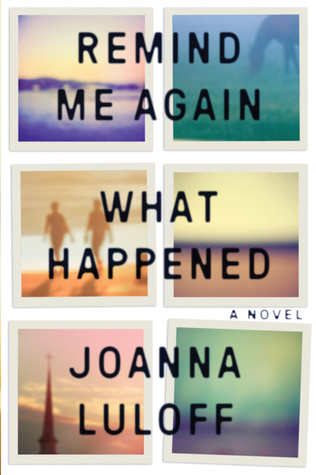
While on assignment in India, Clare, an international journalist, becomes stricken by an illness which destroys her memory. Once back in the states she’s forced to rely on her husband Charlie and her best friend Rachel to reconstruct the past and her memories. Does she remember specifics of her marriage and her friendship, the things that sustain these relationships? Claire senses that something isn’t right but doesn’t know if it’s her marriage or her friendship or a combination. Can she even trust Charlie and Rachel. The novel is effectively told in different points of view and jumps back and forth from present to past and back again.
I spoke with author Joanna Luloff by phone earlier this month.
Amy Steele: Where did you get the idea for this novel?
Joanna Luloff: My mom and I talked about her memory loss and how she had to borrow other people’s memories. A lot of years later when I was actually in graduate school, we started to have this correspondence where I would send her a photograph and I’d ask her what she saw in it and she’d do the same for me. I also did an experimental project for a class that I was taking.
I became more interested in the people surrounding someone with memory loss and how it affects them. To lose the confirmation from other people. The story got shifted away from just a person with memory loss to those people surrounding that person and it started to shift away from my family into fictional characters and what it meant to gradually recover their love for each other and the secrets and all this conflict.
Amy Steele: A lot of times you want to let things go from the past and live in the present but obviously there are certain connections which affect how you’re fitting in with certain people.
Joanna Luloff: The idea that memory is very subjective anyway. We frame the story as we remember it. My brother and I have very different recollections of the same event. As a fiction writer, I love to elaborate and add to the story. I know my stories are often changed through imagination.
Sometimes I think you can rewrite and event or create the situation you’d want to have or rework a situation/ investigate it.
Amy Steele: Did you prefer writing a certain character?
Joanna Luloff: I probably had the easiest time writing Rachel’s character because she gets to be an observer and be on neutral ground but she also has her own secrets. She sees so much so it was fun. And Charlie might have been the hardest because he’s a man from England. I lived in England for a really short time and I was really struck by the reserved politeness and stoicism. I tried to channel a bit of that restraint which British men seem to have.
Amy Steele: Do you think writing his character was the greatest challenge in the overall writing of the novel?
Joanna Luloff: I think the biggest challenge I had was not about character or voice but the structure. I needed to figure out the story’s chronology. For Claire, obviously her memories were super jumbled and the characters are constantly moving from the present to the past. My first drafts of the novel were disjointed.
Amy Steele: I was skeptical of everyone involved. How do you organize? How long did it take you to write the novel?
Joanna Luloff: It didn’t take me a long time to write the first draft. I was at least able to knock out the basic foundation of the book. It was a lot of revisions and layering in the mystery or base suspicion of what the truth might be.
I wrote it out longhand and it worked out well because I was able to rip out pages and lay them out on the floor and play around with what needed to go where and I think it helped to be able to see it in different forms. Once that was in place then I did some adding and subtracting where I thought there needed to be more questioning of the character. I was able to play a bit more with how much the characters were withholding from each other, why they were doing that, all the secrecies and the past injuries to layer in eventually.
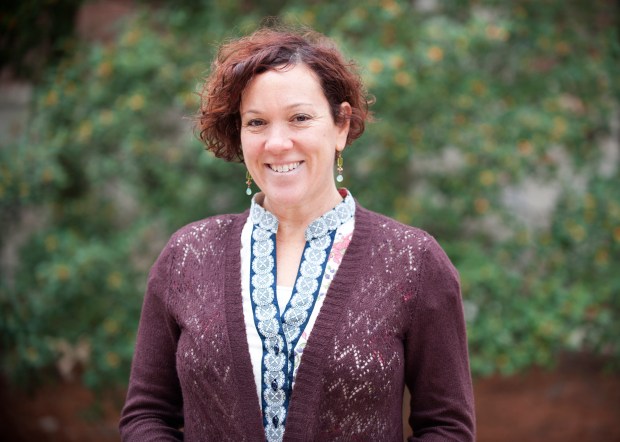
Joanna Luloff received her MFA from Emerson College and her PhD from University of Missouri. She teaches at the University of Colorado.
She’ll be appearing at Harvard Book Store on Monday, July 16, 2018.
Share this:

STEELE INTERVIEWS: author Meredith Jaeger
Posted by Amy Steele in Books, Interview on July 9, 2018
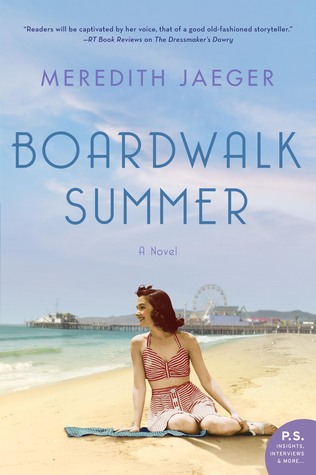
Boardwalk Summer is the perfect summer novel and not just because its title includes summer. The novel features two timelines of young women in Santa Cruz. In 1940, Violet Harcourt is crowned Miss California and wants to pursue a film career in Hollywood. In 2007, Marisol Cruz begins working for the Santa Cruz Museum of Art & History for its Beach Boardwalk Centennial Celebration. While doing research she discovers Violet Harcourt’s obituary and becomes intrigued.
“With her light skin and dazzling green eyes, Lily likely wouldn’t experience the same level of discrimination that Mari had. In fact, most kids at Lily’s preschool thought she was white. Your father is white, Mari had offered to Lily in explanation. Her whole body tensed whenever Lily asked about her dad.”
As the novel unfolds, readers discover the connection between the women. Marisol learns that Violet knew her late grandfather Ricardo who worked as a performer on the Santa Cruz Boardwalk. Both women face varied obstacles in pursuing their goals. Violet’s possessive husband keeps close ties on her. She’d entered the pageant without his knowledge. The prize included a screen test. Marisol struggles as a Latinx single mother who had to give up her academic aspirations to care for her daughter. She also doesn’t have a relationship with her daughter’s father although they both live in Santa Cruz.
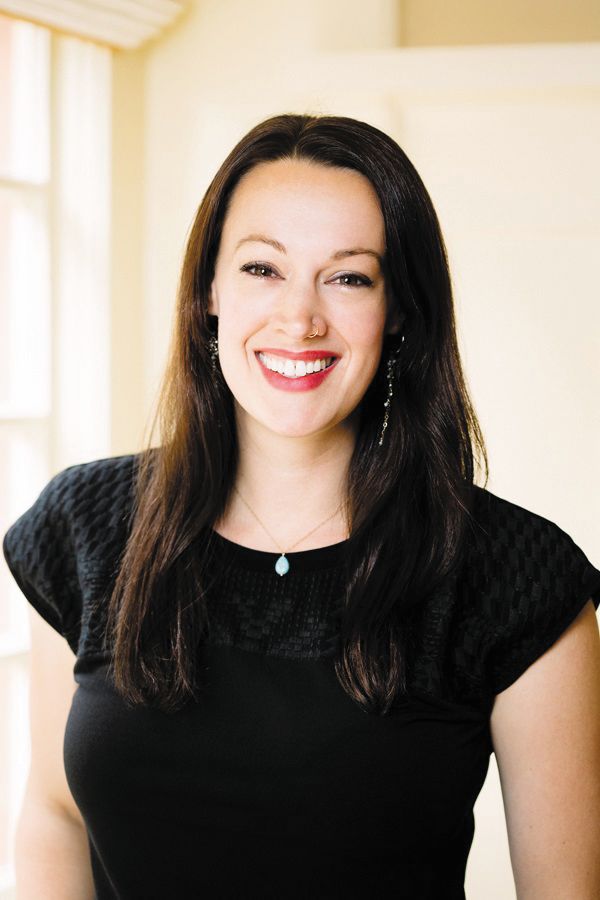
There are plenty of twists and the novel topically delves into domestic violence, sexual assault, immigration and racial discrimination. It’s the perfect novel to sink into at the beach or at a café. Author Meredith Jaeger takes readers to Santa Cruz during two different time periods and effectively links the women. As a graduate of University of California, Santa Cruz, Jaeger is familiar with the setting. I recently spoke with her about Boardwalk Summer.
Amy Steele: Where did you get the idea for this novel?
Meredith Jaeger: I got the idea for this novel from a newspaper article in the San Francisco Chronicle titled “Santa Cruz Beach Boardwalk’s Lively History Lives on.” It featured a photograph of the Santa Cruz Beach Boardwalk archivist standing in a windowless room full of boxes and memorabilia collected over a century. The archivist was standing in front of a photograph of the first ever Miss California pageant held on the beach in Santa Cruz in 1924. That gave me the idea of Violet being a participant in the pageant. Also, as soon as I saw that windowless room, I had an image of my modern character, Mari, coming into contact with one of the artifacts from the Boardwalk (Violet’s obituary) and unraveling a 70-year-old mystery.
Amy Steele: You went to UC Santa Cruz and grew up in the Bay Area, how did that influence you? Were you drawn to the place and setting and then added the characters or did you come up with the characters first?
Meredith Jaeger: I love to write what I know and I’m influenced by the world around me. Growing up in the Bay Area, I often visited the Santa Cruz Beach Boardwalk. I have fond memories of riding the Giant Dipper rollercoaster and the Looff Carousel as a kid (and eating funnel cake!). It’s the oldest surviving amusement park in California, so any old timer will tell you all about their favorite childhood memories at The Boardwalk. I choose my setting first, and then the characters populate that setting. Because I set my first novel The Dressmaker’s Dowry in San Francisco, I wanted to set my second in Santa Cruz, a breathtakingly beautiful place I was once lucky enough to call home. I like to write dual narrative fiction, so Mari and Violet came into my head as soon as I knew where my story would take place.
Amy Steele: How much do you draw from your own personal experience do you bring in and how much research do you do?
Meredith Jaeger: I wrote two novels that were never published before I sold The Dressmaker’s Dowry. Those novels drew heavily from my personal experience because I think it’s natural to do that when you’re first starting out as a writer. My novels now are influenced by places I’ve lived and issues I’ve read about, but they don’t necessarily feature things that have happened to me in real life. I put a lot of research into my work, involving hours of reading historic newspaper articles which have been scanned into the California Digital Newspaper Collection online, watching YouTube clips of films, advertisements or anything I can find from the era I’m researching, reading library books and poring over old photographs.
Amy Steele: In your notes at the end you say that you weren’t initially interested in Hollywood’s Golden Age until your editor suggested it and then you became intrigued by its “dark underbelly.” Could you explain a bit more how that aspect captivated you and work into Violet’s journey?
Meredith Jaeger: My editor was the one to suggest that Violet should go to Hollywood. Growing up in California and being in close proximity to Hollywood, it never held the sort of magic for me that it might for other people. When I was eighteen, I took a Greyhound bus to West Hollywood with my friends to go to a Halloween party on Sunset Boulevard and I definitely saw the sleazy side of Tinsel town! (I made out with a B-list celebrity that night). I’m drawn to the gritty underbelly of cities in contrast to their glitz and glamour. With my first novel, The Dressmaker’s Dowry, which is set in Victorian Era San Francisco, the photojournalist Jacob Riis and his nineteenth century photographs of impoverished New Yorkers living in tenements inspired me. With Boardwalk Summer, I took my memories of Sunset Boulevard and then combined them with research from a fabulous book called The Story of Hollywood by Gregory Paul Williams. Everything I describe about Hollywood Boulevard from the scam artist agents to the panhandlers, to the disheveled men wearing advertisements for plays and psychic shops posing as churches came from my research. The second aspect to Hollywood’s dark underbelly comes in the form of powerful men in the industry committing sexual assault. I worked this into Violet’s journey and it was very timely in terms of the #MeToo movement.
Amy Steele: You bring in many topical themes including the immigrant experience, domestic violence, single mothers. Why did you want to write about these issues?
Meredith Jaeger: Social justice is important to me. Though I’m not an immigration lawyer or a social worker, I have the ability to reach readers through my books and to potentially open their eyes to what’s going on in our country. It can be so painful to watch the atrocities taking place that it’s tempting to look away. But I urge readers to look closely at themselves and how their actions impact the world. I’m the daughter of an immigrant, so the immigrant experience will always be important to me. The link between mass shootings and men with a history of violence against women is something I find very disturbing. According to the Bureau of Justice statistics, an estimated 45% of female homicide victims were killed by an intimate partner in 2007. I hope readers will be encouraged to read not only my books (I’m a white cisgender woman fully aware of my privilege), but also books by marginalized authors: people of color, LGBTQ authors and authors with chronic illness and disability. Reading opens your mind.
Amy Steele: Did the story unfold as you wrote it or do your map it out ahead of time?
Meredith Jaeger: I mapped it out ahead of time. I used to be a pantser (as in flying by the seat of my pants!) but because my first two novels never found me an agent and never sold, I have since turned into a plotter! I write out a detailed synopsis and chart out my story on butcher paper so that I can visualize the dramatic action. I use Post-Its for different character arcs and I have different colors for each character. I admire anyone who can successfully allow the story to unfold without plotting.
Amy Steele: I like the 1940/ 2007 connections and POVs. You used first person for Violet and third person for Mari. Why did you decide on that?
Meredith Jaeger: Before I signed with my agent, Jenny Bent, I sent her my dual narrative POV novel The Dressmaker’s Dowry. She suggested I change one of the voices to third person to help differentiate them. Jenny is a fantastic agent and she gives great advice, so it was a tip that I stuck with for Boardwalk Summer!
Amy Steele: What attracts you to writing historical fiction?
Meredith Jaeger: I’m a very nostalgic person. I find myself staring at old houses, or antiques, and wondering about the people who once lived there, who once owned these things, and what their lives were like. I love how writing historical fiction gives me the opportunity to lose myself in the past. And the fashion! Though I’m grateful we live in an age where I can wear flip-flops and yoga pants to the grocery store, I love researching the incredible fashions of the late 1800s and early 20th century. I go a little nuts on Pinterest.
Amy Steele: What’s your greatest writing challenge?
Meredith Jaeger: Finding the time! I worked full-time for a San Francisco startup when I wrote my first novel, so I was only able to write on weekends. Now I’m the mother of a very feisty almost two-year-old, and that presents its own challenges. I plot so heavily because it means I don’t get writer’s block, and I can make the most of the time I do have, when I get a few hours during my daughter’s nap, or I have a babysitter.
Amy Steele: When and where do you write?
Meredith Jaeger: I write at home, in the library or in a café, and I write whenever I can! I write when I have a babysitter for my daughter, and I write whenever I have an uninterrupted stretch of free time, like getting my car serviced. They have Wi-Fi at the dealership and coffee, so what’s not to love?
Amy Steele: What’s on your summer TBR?
Meredith Jaeger: Something In The Water by Catherine Steadman, The Lost Family by Jenna Blum, The Masterpiece by Fiona Davis, Sold on a Monday by Kristina McMorris, Fruit of the Drunken Tree by Ingrid Rojas Contreras and If You Leave Me by Crystal Hana Kim. (And the other books on my shelf I haven’t gotten to!)
Share this:

book review: ANY MAN
Posted by Amy Steele in Books on July 2, 2018
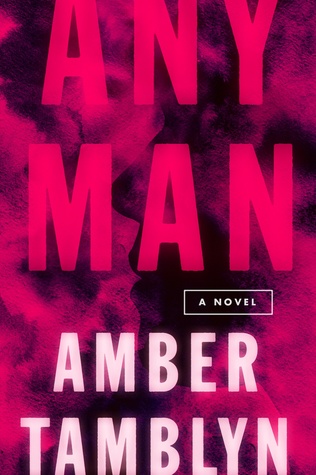
Any Man by Amber Tamblyn. Harper Perennial| June 2018| 304 pages | $15.99| ISBN: 0978-0-06-268892-7
RATING: *****/5*
“But more than any of that, as you know, I loathe feminists. It’s by no small miracle that all feminists in America haven’t been stoned to death by now. I’m just telling you the truth. Feminists are pollution, taking a stance, against what exactly, no one in their right mind knows. They are angry, bitter, saggy chauvinists masquerading as supportive, loving sisters.”
If you’re looking for an intense, intelligent and engulfing feminist thriller, you must read ANY MAN. Author Amber Tamblyn challenges rape culture and the problematic treatment of victims and glorification of violence and misogyny through this thriller about a female serial rapist. The novel follows six men: an English teacher, a struggling standup comedian, a bi-racial web designer, a high school student, an alt-right media personality and a transgender man. A uniquely irreverent and impressively original novel, social commentary and crime thriller meld with insightful, sharp prose and diverse writing styles. She weaves in tweets, poetry, internet chat room, a radio talk show. She also flips everything one expects in thriller. [As a companion read, I recommend Dead Girls by Alice Bolin– an essay collection addressing society’s infatuation with violence against women]. Whether she’s using tweets or poetry or an internet chat room or journal entries, it grabs you from the first page and is impossible to put down. If you’re a woman who has been attacked on social media or elsewhere for expressing her opinion, you’ll really get it. Tamblyn wrote an opinion piece for The New York Times, “I’m Done with Not Being Believed,” which cemented her place among influential feminists who are changing the narrative around trauma and victimization. I found myself nodding and smiling and cringing and marking passages while proclaiming Tamblyn’s genius and reading as fast as possible.
RATING: *****/5*
Amber Tamblyn will be at Harvard Bookstore on July 24, 2018.
–review by Amy Steele

Share this:

show preview: Screaming Females at ONCE Somerville on Saturday, July 7
Posted by Amy Steele in Music on July 2, 2018
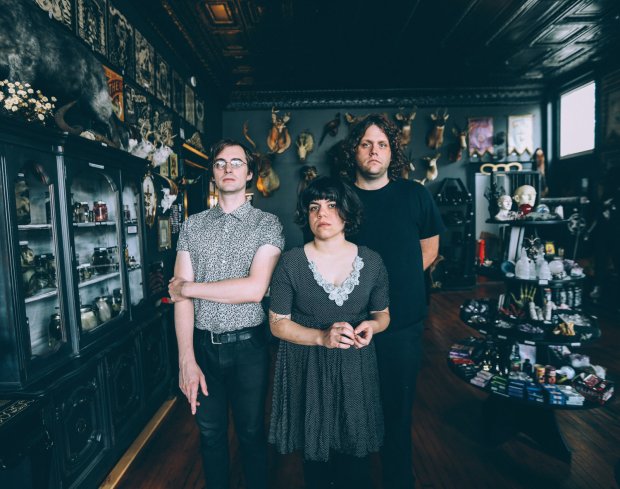
if you’re looking to rock out this holiday weekend, indie punk trio Screaming Females will be playing in Somerville in support of their seventh studio album, All at Once, which came out earlier this year. The New Jersey band worked with producer Matt Bayles (Pearl Jam, Mastodon) and modeled the album after a salon-style gallery show. They wanted the new album to capture the spontaneity and energy of one of their live shows.
Drummer Jarrett Dogherty said: “When you’ve been a band for 12 or 13 years, the resources can dry up and you just go back to what feels comfortable. The other option is that you develop stuff that a younger band would not have been able to do.”
$15, Saturday, July 7, 8:30 p.m., ONCE Lounge and Ballroom, 160 Highland Avenue, Somerville, https://www.oncesomerville.com/.
Share this:

new music: Phantastic Ferniture
Posted by Amy Steele in Music on June 7, 2018
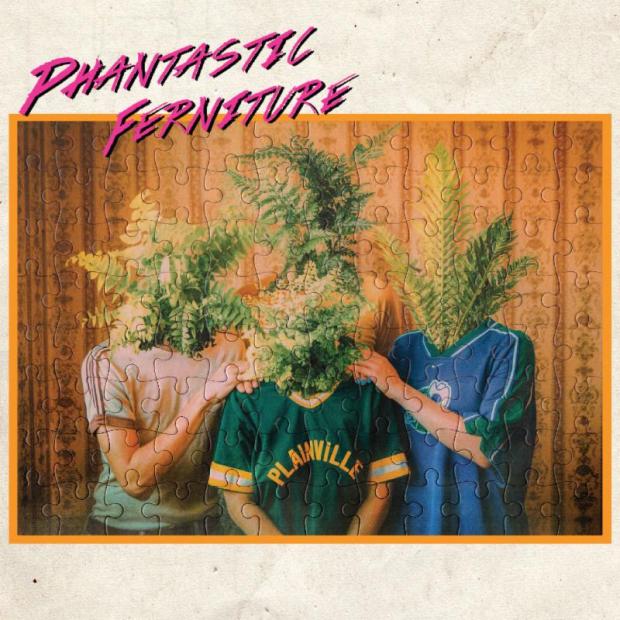
Phantastic Ferniture, “Gap Year”
heavy indie guitar propels this captivating song with vox that sound like Juliana Hatfield.
Sydney, Australia solo artists Julia Jacklin, Elizabeth Hughes and Ryan Brennan decided it might be fun to form a band while celebrating Jacklin’s 24th birthday.
Jacklin said: “Ryan never played drums in bands, Liz had never been a lead guitarist, Tom didn’t play bass and I’d never just sung before.”
Hughes added: “We wanted a low level of expertise, because a lot of good music comes from people whose passion exceeds their skill.”
Phantastic Ferniture’s self-titled debut album will be out July 27, 2018 on Transgressive.
Share this:

new music: Isla Craig
Posted by Amy Steele in Music on June 7, 2018
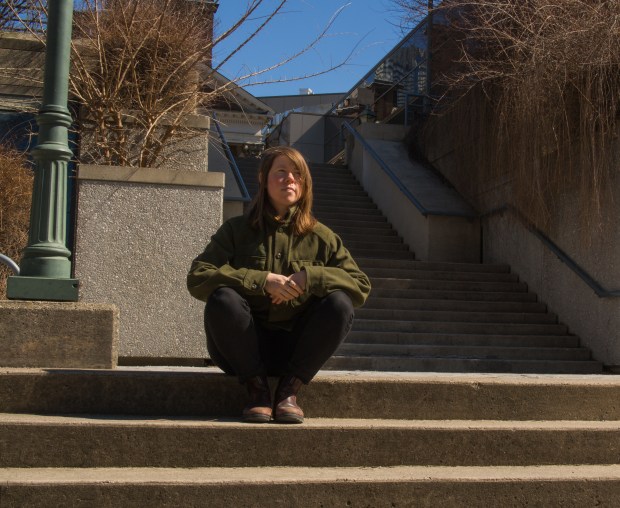
Isla Craig , “Love Song”
–a gorgeous, meditative song with ethereal vocals and varied instrumentation with organ, saxophone, bass and synth. It’s a dreamy eclectic soundscape, a genuine auditory treat. I’m looking forward to hearing the entire album from the Toronto-based multi-dimensional vocalist and songwriter.
The Becoming, the third album from Isla Craig, will be released on June 22, 2018 on Pleasence Records.
Track List:
- Intro
- The Becoming
- Out Of A Dream
- Love Song
- I’m Lost
- Faraway Blue
- Who Am I
- The Becoming (reprise)
- Bird Of Paradise
- There Is A Hole
- Messages (garden Edition)
- Gregory
Share this:

new music: Salim Nourallah
Posted by Amy Steele in Music on May 31, 2018

If you’re in the mood for some moody indie rock, check this out.
Singer/songwriter Salim Nourallah will be releasing a double-album, Somewhere South of Sane, this fall on Palo Santo Records. Nourallah calls it “the work of a functional crazy person.” The Dallas, Texas-based musician plans to put out four pre-album “bundles” that will include tracks from the album as well as previously recorded but unreleased material or acoustic re-workings of tracks from past albums. Each bundle will be accompanied by new online video content.
Bundle one, entitled North and set for release on June 1, 2018, will include a track from Somewhere South of Sane (“Relief”) as well as a re-recording of 2015’s “The Bullies Are Back” and the devastatingly beautiful “Totally Lost.”
Bundle two, entitled West, is set for release on June 29, 2018. Included on this release are two tracks that will also appear on Somewhere South of Sane – “Moving Man” and “Going Through The Motions,” as well as a bonus track from the album sessions called “We Were Made to Fall Apart.” The video accompanying this bundle is a clip for the song “Moving Man,” shot entirely by Nourallah’s 8-year-old and 14-year-old kids. It will premiere the week of June 25th.
“I took my sweet time making Somewhere South of Sane,” Nourallah says, “so I figured why not continue the trend and methodically enjoy the pre-release months? I also had almost an entire extra album’s worth of tracks I left off because a triple record felt excessive. I will be releasing that bonus material in each of the pre-album bundles we roll out.”
Share this:

new music: Rubblebucket, Jenn Champion
Posted by Amy Steele in Music on May 31, 2018
Rubblebucket, “Fruity”
–a wonderful happy/sad song with cool bouncy beat and wistful vocals. The Brooklyn band’s new album, Sun Machine, will be out August 24, 2018.
Rubblebucket is:
Kalmia Traver – lead vocals/baritone saxophone
Alex Toth – trumpet/vox
Dandy McDowell – bass
Maddie Rice – guitar
Adam Dotson – trombone
Jenn Champion, “Time to Regulate”
–a beautiful collision of sweet vocals and deep beats from the Seattle indie pop artist. She said: “Sometimes you are sad and you just want to dance about it.” The full-length album Single Rider,will be released Friday, July 13, 2018.
Share this:

book review: There are No Grown-Ups
Posted by Amy Steele in Books on May 29, 2018

There are No Grown-Ups: A Midlife Coming-of-Age Story by Pamela Druckerman. Penguin Press| May 29, 2018| 274 pages | $27.00| ISBN: 978-1-59420-637-5
RATING: *****/5*
–review by Amy Steele
“What are the forties? It’s been my custom not to grasp a decade’s main point until it’s over, and I’ve squandered it. I spend my twenties scrambling in vain to find a husband, when I should have been building my career as a journalist and visiting dangerous places before I had kids. As a result, in my early thirties I was promptly fired from my job at a newspaper. That freed me up to spend the rest of my thirties ruminating on grievances and lost time.”
I don’t have much of a career or a personal life. I have no long-term partner and by choice, I have no children. I live in the suburbs and I’m pretty miserable and frustrated. Maybe it could be much worse. Author Pamela Druckerman writes in the introduction: “Obviously, the forties depend on the beholder, and on your family, your health, your finances and your country.” Reading Druckerman’s amusing, thoughtful and moving memoir made me feel a bit less alone. It’s comforting that someone else has had the same thoughts I’ve had about middle age and aging. Everyone goes through it. Maybe some better than others. Does everyone go through a midlife crisis? Probably not. I’m definitely a late bloomer so there’s that although in the end it won’t matter. Also we have greater longevity so maybe you can fuck up more.
Exploring the social, psychological and biological aspects of one’s forties, Durckerman combines topical research with her astute and amusing observations and experiences. She writes about her journalism career, her engagements as a speaker, battling cancer, her marriage and children as well as general thoughts on what one should be doing at a certain age. In the essay How to Turn Forty, she writes: “But I still don’t feel like a grown-up, in part because I haven’t found my tribe.” I feel the same. In the past year, I joined a yoga studio but I’m wedging myself into places I’ll never fit.
Each chapter is titled How to ___. Some of the chapters include: How to Find Your Calling, How to Choose a Partner, How to Turn Forty, How to Raise Children, How to Plan a Menage a Trois, How to Have a Midlife Crisis, How to Be Jung, How to Get Dressed, How to Age Gracefully, How to Think in French and How to Make Friends. Each chapter ends with little jokes which start with Your Know You’re in Your forties when… Two great ones: You know you’re in your forties when … You’re not considering Botox, but you are considering bangs.” And “You know you’re in your forties when . . . You no longer care (or remember) how many people you slept with.” I hooked up with a much younger guy who seemed quite annoyed that I’d had so many more sexual partners than him. I stopped counting at a certain point because it really doesn’t matter.
“We’ve actually managed to learn and grow a bit. After a lifetime of feeling like misfits, we realize that more about us is universal than not. (My unscientific assessment is that we’re 95 percent cohort, 4 percent unique.) The seminal journey of the forties is from “everyone hates me” to “they don’t really care.”
The essays on midlife crisis and that address wisdom and intelligence are particularly interesting. Druckerman brings in some Jung theory. She discusses cultural differences. As an expat loving in Paris, she writes from a unique perspective. Druckerman lives in Paris with her British husband and French children. French women are much more glamorous and elegant than Americans. I participated in a French exchange program in the 80s and I remember how stylish in navy and black the mom always appeared.
When she traveled to Brazil to speak at a conference, she noted: “Crying is the mark of a successful gathering in Brazil and a sign that you’re connected.” It’s challenging to make new friends as you get older. Are they your own friends or other parents at your children’s school or the spouses of your partner’s colleagues? She also compares Eastern culture to Western culture. Asians are high context and understand they need to comprehend interaction of everyone involved to fully understand something. Americans are (not surprisingly) low context. Americans are mostly concerned with themselves, on individuals. Quelle surprise.
Druckerman wrote a NYT column entitled “What You Learn in Your 40s” and its popularity led to four years researching and writing this memoir. If you’re in or near your forties you’ll definitely find many simpatico elements in this memoir. If you’re younger maybe it should eliminate some of the stigmas associated with aging.
Pamela Druckerman will be at Brookline Booksmith on Wednesday, May 30 at 7pm.
Share this:

book review: A Theory of Love
Posted by Amy Steele in Books on May 21, 2018
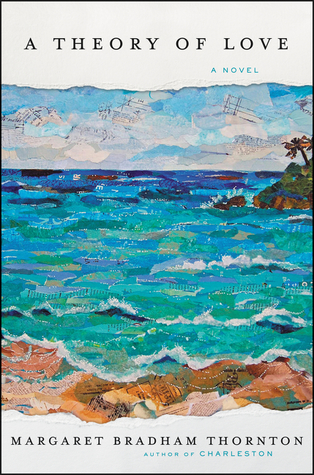
A Theory of Love by Margaret Bradham Thornton. Ecco| May 2018| 275 pages | $27.99| ISBN: 978-0-06-274270-4
RATING: ****/5*
–review by Amy Steele
“Bermeja was the name given to the eight-mile stretch along Mexico’s Pacific coast halfway between Puerto Vallarta and Acapulco. Surrounded by a thirty-six-thousand-acre nature preserve, Bermeja was referred to as the land where nobody was born and nobody died. Protected by high cliffs and jungles and wetlands, it was often separated on its eastern boundary by flooding rivers.”
Although the couple in this novel hasn’t fabricated a relationship, A Theory of Love reminded me of Glimpses of a Moon, one of my favorite novels by Edith Wharton. In it, a young couple decides to marry so that they can travel around on an extended honeymoon staying at their friends’ lovely homes. In A Theory of Love, Helen, a British journalist, meets lawyer turned financier Christopher while she’s on assignment in Bermeja. He’s there for a bit of relaxation on his surfboard. Author Margaret Bradham Thornton takes readers to Bermeja, Saint Tropez, London, Sussex, Fontainbleu, Chamonix, Tangier, Milan, Havana and New York.
She’s a journalist in the trenches and he’s interacting with financial elite. That could be why the relationship doesn’t fare well. Could also be the jetset nature of their relationship. His company is rather new and he’s working long days, seven days a week and isn’t able to invest the time in the relationship that Helen desires. Perhaps they’d have fared better if they’d worked out these logistics before marrying. Isn’t that what you’re supposed to do? Figure out where you want to live and if you’re both morning people or night owls and if you want to have children and such.
The characteristics which attract them to each other may be the details that drive them apart in the end. I particularly enjoyed the ritzy scenes. They’re elaborate but not grossly obscene. For instance, Christopher’s mother is involved in equestrian affairs: “She finds talented working students and gives them good horse to ride, and that works for a while until she feels they have been disloyal or unappreciative, and then that relationship falters.” They attend a fancy dinner party hosted by a French businessman (he’s CEO of his family’s chemical company) and his artist wife Penelope–“She was a photographer, and while she spent more time on the decoration of her seven houses than on her photography, she had resisted the cliched hallmarks of the wealthy wife and dressed in a bohemian style.”
Helen wants everything upfront and laments that she didn’t know everything about Christopher before they married which seems impossible and also rather dull. If you already know each other than what do you talk about? Christopher is in the let’s see what happens mode. Thornton writes: “He had come to value, maybe even cherish, a sense of patience—of letting things play themselves out. Perhaps his ability to see how things would develop or unravel allowed him this equanimity. He understood that events had their own interval sense of motion.”
Thornton writes: “She was thinking about how they seemed to be moving away from each other and wondering why neither one of them tried to do anything about it. there were times when it felt as if he had lost her, as if he were thinking so intensely about what was in front of him that he would forget her, as if his mind were emptied of all thoughts of her.”
Sounds like mindfulness to me and honestly, I didn’t particularly like either character but that’s never been essential to my enjoyment of a novel. A good writer makes you continue to read despite the characters. I liked their non-relationship relationship and pondering if they’re getting what they feel they should from each other. There’s mysterious elements to it all. In addition, Christopher thinks his business partner may be involved in illegal activity and as Helen faces an unexpected pregnancy, he’s engulfed in an investigation. This novel effectively ponders attraction and love while languishing in beautiful scenery and prose. It’s a wonderful indulgence and escape.
FTC Disclosure: I received this book for review from Ecco.
Share this:

About Me

covering mostly music and books. focus on alternative/indie and women in music, literature and the arts. feminist. vegan. mostly alternative, a bit bohemian. Masters in journalism from Boston University. BA from Simmons College.



Entertainment Realm by Amy Steele is licensed under a Creative Commons Attribution-Noncommercial-No Derivative Works 3.0 United States License.
Based on a work at entertainmentrealm.comCopyright © 2009. All writing, unless otherwise noted, by Amy Steele.
 ENTERTAINMENT REALM
You must be logged in to post a comment.