Archive for category Books
book review: Before Everything
Posted by Amy Steele in Books on August 3, 2017
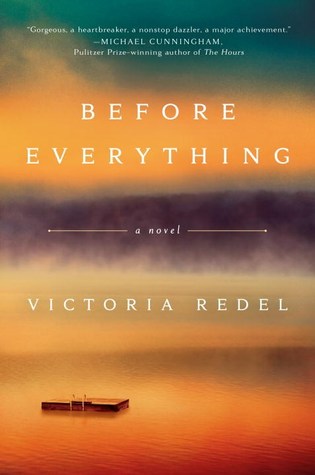 Before Everything by Victoria Redel. Viking| June 2017| 288 pages | $26.00| ISBN: 9780735222571
RATING: ***/5*
In hospice for cancer, Anna’s old childhood friends gather at her house. Before Everything moves from present to past to provide the reader with details about each woman’s connection to Anna. Comfort, support and nostalgia connect this group of friends. Each woman has a specific relationship with Anna and with each other and then as a group. There’s the group think and then the individual’s thoughts. Whenever the novel veered into the precious and perfect I lost interest. Lovely crisp writing kept me reading. Author Victoria Redel powerfully chronicles Anna’s battle with cancer and hospice care and dying. This aspect of the novel interested me most. On fear of dying: “That was what Helen had never asked, what over all these years of treatment and periods of health Helen and The Old Friends have trained themselves not to ask. It was a tacit agreement. The answer was too obvious; it loomed in each moment’s specific worry.”
Despite caring so much there’s still a level of competition between the friends: “But Helen knows the answer. She’s known it since she arrived two weeks ago and began her adamant petition to pull Anna from hospice. She knew it back at the pond when she agreed to help Anna if Anna asked. Helen’s job all these years was to keep Anna away from fear and close to the yes. But Anna is not afraid. Again, Anna is doing something before Helen. It has always been this way. Boys. Drugs. Marriage. Children. Even the pregnancy that Anna ended. Over and over. Anna went first. Now this.”
I appreciated the realistic description of outsider views of these old friends: “He was glad for her yelp. Any dose of dark humor was better than all the treacly concern he heard from her visitors.” A newer friend thought: “The Old Friends. Whatever they called themselves, there was always a pecking order. Pretty pathetic considering the circumstance.” When my friend’s mom fought cancer, some of her friends kind of pushed my mom away when my mom wanted to help. I can’t imagine still being so connected to childhood friends. At every phase of my life I’ve lost friends and made new friends. I maintained friendships with high school friends into college and some college friends post-college and sure I am still connected to some high school and college friends via Facebook but if I really needed someone would these friends be there for me? The novel started strong and petered out toward the end. It seemed too much, these women and their near perfect lives and near perfect friendships. At the last high school reunion I attended a friend said that it was impossible to know what other classmates had endured despite outward appearances to the contrary. I get it. Unfortunately, I lost a connection to the various characters.
FTC Disclosure: I received this book for review from Viking.

Share this:

book review: The Nakano Thrift Shop
Posted by Amy Steele in Books on July 20, 2017
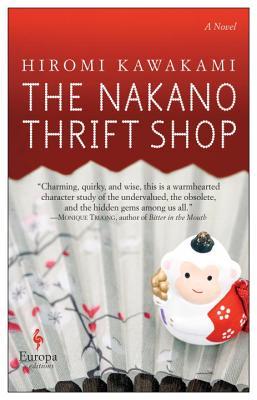
The Nakano Thrift Shop by Hiromi Kawakami. Europa Editions| June 2017| 240 pages | $16.00| ISBN: 978-160-945-399-2
RATING: ****/5*
“Takeo arrived, again smelling of soap. For a moment, I wondered if I ought to have taken a shower, but I quickly pushed that thought aside, since had I done so, he might have thought I was expecting something. This was what made love so difficult. Or rather, the difficult thing was first determining whether or not was what I wanted.”
Such a gem of a novel. Author Hiromi Kawakami brings layers and depth to seemingly ordinary, routine lives. Lots of interesting characters plus solid descriptions to create strong setting & sense of place. I appreciated the novel as it allowed me to experience Japan –from the rainy season to love hotels–through these characters. The novel focuses on twenty-something Hitomo who works part-time at the thrift shop. Kawakami writes: “With its second-hand goods (not antiques), Mr. Nakano’s shop was literally filled to overflowing. From Japanese-style dining tables to old electric fans, from air conditioners to tableware, the shop was crammed with the kind of items found in a typical household from the 1960s or later.” Hitomo sort of dates her aloof co-worker Takeo and builds bonds with shop owner Mr. Nakano and his artist sister Masayo. Her relationship with Takeo reminded me of my current on-again/off-again situation. She’s intrigued by Takeo and attracted to him. Does she need to know what kind of relationship she’s going to have with her co-worker? Some people, most of society, feel the need to label something, to put it into a box, cross things off a list. Few people (including Takeo and this guy I was seeing) are willing to allow something to unfold organically and mindfully. You can make plans for the future and have goals but you can also enjoy the moment. Relatable: “We were so different from each other in the first place—it’s not surprising that two people with nothing in common would end up like this, I thought to myself as I threw caution to the wind and continued to steal glances at Takeo’s face.” Also relatable: “When I thought about the idea of spending the rest of my life like this—going through my days I a fog of anxiety and fear—I felt so depressed I could have laid down on the ground and gone to sleep right then and there. But despite all that, I loved Takeo. When I scrutinized love, I still found myself in a world that felt empty.” On her boss Mr. Nakano’s lover: “’The Bank’ was pretty. To call her a beauty might have been going too far, but she had a delicate complexion—she seemed to be wearing hardly any make-up yet her skin was flawless. Her eyes might have been narrow but her nose was straight. There was something inexplicably vibrant about her lips. At the same time, she had purity about her.” Besides beautiful, thoughtful writing, I’m often attracted to the Europa book covers. Look at that cover! Book design credit goes to Emanuele Ragnisco.
–review by Amy Steele
FTC Disclosure: I received this book for review from Europa Editions.
Share this:

book review: Made for Love
Posted by Amy Steele in Books on July 6, 2017
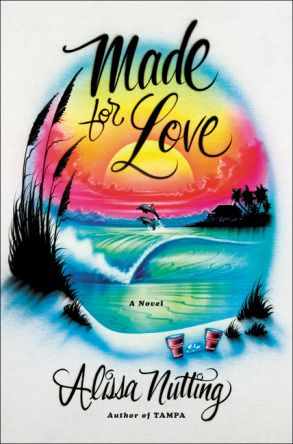
Made for Love by Alissa Nutting. Ecco| July 2017| 320 pages | $25.99| ISBN: 978-0-06-228055-8
RATING: *****/5*
“During her marriage, she sometimes visited her father just so she could feel better about her life when she left. A trip to his home always made a pretty convincing argument that his gruff personality, heavy flaws, and the shortcoming of her childhood that his present-day existence kept freshly resurrected in her memory were fixed roadblocks that would prevent her from ever experiencing true joy, so her choices and lack of personal ambition or work ethic or relative sobriety didn’t really have to matter.”
So much to love about this novel. It’s smart, a bit bawdy, immensely clever, introspective and observational. Hazel recently left her tech billionaire husband, Byron Gogol, and moved in with her father at a trailer park for senior citizens. Her father, who just received his mail-order sex doll Diane, isn’t all that thrilled to have a new roommate. Hazel wants to start over but Byron isn’t going to make it easy.
The marriage seems a compromise. Byron wanted a wife and Hazel wanted an escape from what she assumed would be a rather dead-end life. Author Alissa Nutting writes: “Her life was going to be different from what she’d thought. This had felt sad and she wasn’t sure why, because she’d always planned on having a terrible life. But familiar terrors: loneliness, paycheck-to-paycheck ennui, unsatisfying dates with people a lot like her whom she wouldn’t enjoy because she did not enjoy herself.” She met Byron while in college and they married fairly quickly. His power and wealth dazzled her. He seemed both delighted by her and intrigued by her. [“Here was the thing: Hazel had not delighted her parents, ever. Nor had she delighted herself.” And then . . . “Hazel had never intrigued her parents or herself either.”] She’s been with him for a decade and over the years he’s become more controlling and Hazel’s been limited. During the marriage he’s kept tight tabs on his wife through technological surveillance and tracking. Hazel reached her limit when he planned to connect them via brain chips in a “mind-meld.” Byron’s methods to track down and bring his wife back become intense, severe and threatening. Hazel realizes she must make drastic measures or this megalomaniac will control her for the rest of her life. Or he’ll kill her. Neither appeals to her.
“It was easy to get along with him because she acted like a mood ring, always agreeing with what he found great and what he found intolerable.”
Technology connects us in a plethora of ways yet also disconnects us by making in-person communication less frequent and less necessary in many situations. It’s rare to find someone that has absolutely no social media presence. And if you do it’s just a bit suspect. How can one possibly keep up on news, politics, entertainment, celebrities and college friends without twitter, Facebook and Instagram. We rely on technology for both our professional and social lives. When you end a relationship there’s generally tons of data out there on social media to remind you of that relationship or make it difficult to move on. Plus how are relationships defined in the age of social media?
There’s a blunt honesty, offbeat humor and near absurdity in Nutting’s writing. It’s easy to relate to Hazel’s predicament and moods. Most readers will find solace in both her determination to begin anew and her frustrations in allowing the relationship to continue as long as it did. She’s not afraid to tackle unpleasant or taboo subjects [Nutting’s previous novel Tampa focused on a teacher-student romance] nor does she hold herself back in delving into these topics. In this novel it’s wealth and sex and loneliness and relationships. There’s the strange and humorous relationship between her father and his sex doll Diane. He treats the doll like a person. He’s content with her company.
In her marriage, Hazel felt lonely and isolated. She felt sad and detached. Nutting writes: “But Hazel hoped now that after so many bad years of internal and external surveillance, of cohabitation with someone she’d grown to hate and fear alike, the absence of sadness might feel something like contentment, or close enough. At one point she meets a guy in a dive bar named Liver who tells her: “I just meet women in this bar. Mainly they use me to help them reach bottom. I’m like a brick they grab onto midair. Sleeping with me helps them admit their lives have become unmanageable. They realize they want and deserve something more, and then their recovery process can begin. I get laid in the meantime. Win-win.” Sounds quite like the last few lowbrow working-class guys I’ve dated.
The perfect blend of absurd and genuine, Made for Love is one of the best novels I’ve read this year.
–review by Amy Steele
FTC Disclosure: I received this book for review from Harper Collins.

Share this:

STEELE INTERVIEWS: Hallie Ephron
Posted by Amy Steele in Books, Interview on July 3, 2017

“Vanessa looked back and forth between the photograph and the doll. The doll in Janey’s arms was the right size. It had on a similar long while dress and what was left of its blond hair was tied with a thin ribbon. But the resolution was nowhere near sharp enough to see whether the doll in the picture had a dimple like the one on the mantle, and the wig on the real doll was too threadbare to make a comparison.”
While playing in the yard forty years ago, Lissie’s younger sister Janey went missing. Lis feels guilty and responsible. They’ve never found out what happened to Janey that day. Every year on the anniversary of the sister’s disappearance, their mother, Miss Sorrel, places an ad in the local paper with a picture of the one-of-a-kind porcelain doll Janey had with her when she went missing in hopes that she’ll find answers. This year, the doll returns and it sets off new theories and a few leads into Janey’s disappearance. Someone must know what happened to Janey decades ago.
Set in a fictional South Carolina town, Hallie Ephron’s latest novel–You’ll Never Know, Dear— explores three generations of women and the aftermath of a devastating event. Miss Sorrel makes dolls which look like the little girls who own them. There’s a certain creepiness to porcelain dolls. Her daughter Lis moved home after getting divorced. Lis’s daughter, Vanessa, conducts research on dreams and PTSD in graduate school.
I spoke with Hallie Ephron last month by phone.
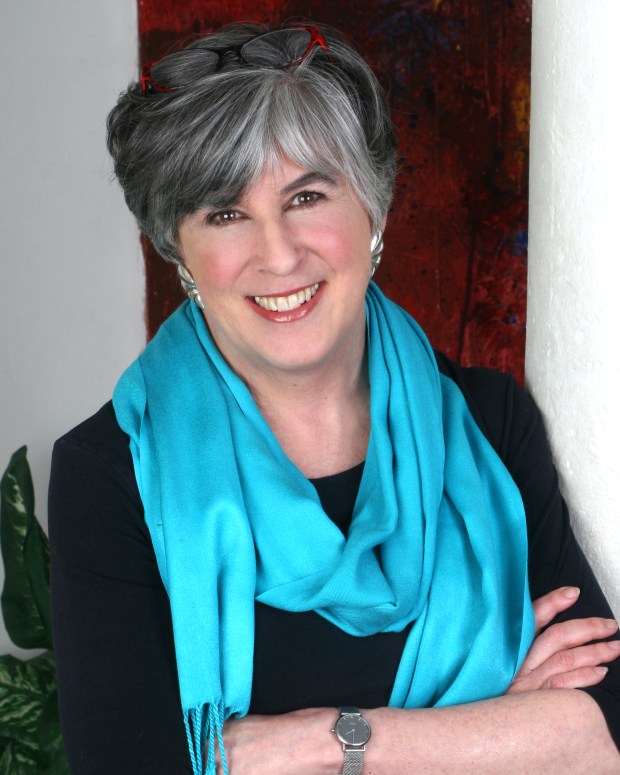
Amy Steele: As the book’s set in the south, what kind of research did you do?
Hallie Ephron: I’d been in the south very little. In South Carolina you find a lot of wealthy northerners there for the warmth of the winter season. I‘d been to Beaufort– a beautiful riverfront southern town– it’s where they filmed Forrest Gump. It’s a very colorful and beautiful place. I wrote half of it coasting on my memories and then realized I needed to go down and spend a few days with my camera and tape recorder. I spent four days absorbing it. The way that the marsh grass is a matted surface on the water, pecan trees … all the details went into the book. I’d already created my characters and I added details. The big thing I learned is that Beaufort has its own storied past. I fictionalized it so I wouldn’t be tethered to the true history of the place.
Amy Steele: Your parents being screenwriters, how did that influence your writing?
Hallie Ephron: I spent a lot of time not writing. I have three writing sisters and I was going to be the one who wouldn’t write. It took a long time to cave and I don’t think I would have if I didn’t have the genes. It’s a hard slog getting good enough to be published. I think my books are fairly cinematic. That’s from a kid growing up in Hollywood in a house that was movie-oriented. I was afraid I wouldn’t be good enough and I had to be old enough not to care. It took me a lot of time to get confident. There is a story in being a sister and a mother, in the everyday.
Amy Steele: You wrote about three generations of women. What did you like about that?
Hallie Ephron: I like writing about family and generations. I think we’re each so formed by our generation but you’re also formed by your relationship to your family. I particularly like writing older women. I think they’re often caricatured. Especially women over 60 or 70. I take a special pleasure in writing them as human beings with weaknesses. I liked writing Miss Sorrell. She’s kind of a tart individual.
Amy Steele: What do you like about writing in the mystery/thriller genre?
Hallie Ephron: I like figuring it out. I like the click when I figure it out. I usually don’t know the ending when I begin.I just know the set-up. Then I write all the complications, setbacks and challenges and all the while I try to think what does it look like is going on and what do I think is going on. I think in this book the mystery isn’t so much whodunit. I think the reader will realize halfway through who the villain is. But what are the motivations? What are the secrets they’re hiding? That’s what I try to figure out as I work my way to the end.
Amy Steele: How do you organize the novel or your writing?
Hallie Ephron: I have multiple time lines. I think of each character as having a life before the book began and after the book ends. I make a table where each character has a column and the rows are years. I plot the characters in their slots– when they were born and where they went to school– and see where the characters are as their lives progress as well as as the novel progresses. This novel I think takes place over three or four weeks so I do a drilled down version so that I know where the characters are. Even if the reader doesn’t know, I know.
Amy Steele: Do you come up with the characters first or the plot idea?
Hallie Ephron: The first thing I knew is that there would be doll parts. What does that mean? If there were doll parts there would be a doll maker. And who would she be. The story and the character go back and forth as I go along.
Amy Steele: What was the greatest challenge in writing this novel?
Hallie Ephron: I started with two narrators: Lis and Vanessa. I knew I couldn’t be in Miss Sorrel’s head because she knows too much. That was the 20someting and the 40something. I started to ask myself who’s story is this, who’s the protagonist and the answer can’t be both of them. I realized it had to be Lis. She’s the one who lost her sister. She’s the one who had to find her. Lis is the hero. It worked.
Amy Steele: What kind of books do you read?
Hallie Ephron: I read lots of books. I’m reading The Mothers. I just finished Joe Finder’s book. I read lots of books on South Carolina. I powered my way through Pat Conroy’s books. I don’t like horror. I don’t like romance.
You can catch Hallie Ephron speaking about You’ll Never Know, Dear at these events [for more events see her website]:
July 9, 2017
Rockport Public Library
Rockport, Mass.
July 11, 2017
Ferguson Library
Annual Women’s Fiction Night
Stamford, Conn.
July 27, 2017
Maynard Public Library
Maynard, Mass.
August 22, 2017
Bacon Free Library
Natick, Mass.

Share this:

book review: Lonesome Lies Before Us
Posted by Amy Steele in Books on June 13, 2017
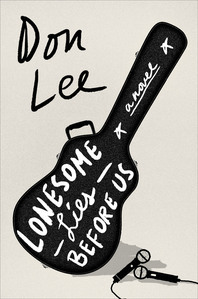
Lonesome Lies Before Us by Don Lee. W.W. Norton| June 6, 2017| 336 pages | $26.95| ISBN: 978-0-393-60881-6
RATING: *****/5*
Despite talent, alt-country/Americana musician Yadin Park’s musical career never took off due to his insecurities, lack of charisma and stage presence and then Meniere’s disease, a debilitating hearing disorder. Being a musician, an artist of any kind isn’t an easy profession. The music industry and the entertainment industry subsist mostly on the youth. It’s easy to age out of the music industry as it places a premium on youth and beauty and not always talent. Of course to maintain longevity one must possess talent. The entertainment industry can afford to be fickle as support then drop artists that don’t pull in money. How long does someone want to scrape by in hopes of quitting the day job? It’s infrequent that someone can do that. As author Don Lee stated at a recent book reading at Newtonville Books: “You have to have a certain amount of luxury and leisure to pursue those arts.” It’s true. While the starving artist sounds romantic, in reality it’s not comfortable or feasible for most people long-term.
“It was a relief, really, to be out of the music business. He was glad to be done with it. He was satisfied with his life in Rosarita Bay—quiet and anonymous, with no ambitions other than to make an honest living and have a roof over his head and be with Jeanette and her family. He’d been certain that he would never return to making music again. That was why the emergence of the new songs had been such a surprise to him.”
As a child, Yadin listened to his father’s LPs—Emmylou Harris, Townes Van Zandt, Gram Parsons, John Prine. [For authenticity, Lee worked with indie musician Will Johnson who wrote some lyrics which appear in the novel.] He became drawn to these sad, expressive songs. Lee writes: “All these songs about longing, regret, and betrayal, about broken hearts and belated apologies, about drinking, cheating, and leaving, about the lonely road and cheap motels and drifters, dreamers, outcasts, and the forlorn—they changed Yadin in ways he could not express yet could feel.” Living in Chapel Hill, he soon joined a band but wasn’t thrilled about performing and most artists need to tour. He became romantically involved with his bandmate Mallory Wicks. After a record label signed the band, Yadin became overwhelmed and soon left completely.
Now living in California and working for a carpeting company, Yadin recently started writing and recording songs again. His girlfriend Jeanette Matsuda, laid off from a salaried position years ago, cleans hotel rooms. Both Yadin and Jeanette gave up career goals and remain a bit stagnant and settled in simple lives which don’t particularly satisfy them. Lee writes: “Without quite realizing it, she had fallen into a persistent low-grade funk over the years, which became more pronounced when she was laid off and then was being rejected for job after job. Incessantly she would interrogate the choices and decisions she had made, and had convinced herself that she was a failure, a loser. She had crimped inward, fearful that if she exposed herself she would be ridiculed and betrayed.” Lee said that last decade’s financial crisis influenced this novel. He wanted to write about privilege and class. He also explained: “There are a lot of working class Asians and you never see them portrayed in books.”
One day Mallory Wicks, now a well-known actress and musician, checks in to Jeanette’s hotel. Yadin visits Mallory and she suggests they collaborate together. She knows he’s talented and that she has the celebrity power but not that much talent. Her star power wanes and she knows that a strong new album might bring her back into the spotlight. As this happens, both Yadin and Jeanette find themselves doing quite a bit of existential examination. Is this all there is? How did we get here? Have I accomplished enough? Am I happy? Am I where I want to be or need to be? How can I live a fulfilling and satisfying life? As someone middle-aged re-evaluating her path, this novel resonated with me. In Yadin and Jeanette’s unfulfilled goals and unrealized ambitions, I see my own failings. This line in particular: “She could only mourn the life she had been unable to create.” How many people remain in comfortable yet unsatisfying relationships in order to avoid being alone?
“Granted, there wasn’t a lot of passion between them, and this was chiefly her fault, she knew. Both had been in love just once in their lives, while very young, and both had been heartbroken. Neither had ever married, nor had been in a relationship of any significant length. They might have been together more out of attrition than anything resembling ardor, but they cared for each other, they helped each other, they were companions. It was enough for Jeanette, and she had hoped it would be enough for Yadin, but lately she had begun to worry that it wasn’t.”
It’s a powerful novel with phenomenal writing and quiet, intense characterizations. As a music critic and book critic, novels about musicians always appeal to me. This novel draws the same emotions as aI also adored Don Lee’s gorgeous novel The Collective. One of my favorite authors, Lee’s writing dazzles me.
–review by Amy Steele
Share this:

book review: The Fact of a Body
Posted by Amy Steele in Books on May 29, 2017
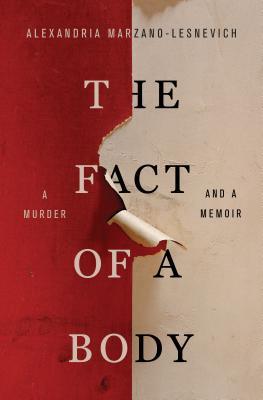
The Fact of a Body by Alexandria Marzano-Lesnevich. Flatiron Books| May 2017| 336 pages | $26.99| ISBN: 978-1-250-08054-7
RATING: ****/5*
Some people are true crime fanatics. I’ve read In Cold Blood and some other true crime books but don’t often gravitate toward them. Memoir appeals to me and that’s what drew me to The Fact of a Body. I also may or may not have wanted to go to law school.
Both a memoir and a true crime book, The Fact of a Body is a riveting page-turner but also a disturbing read I had to step away from a few times. To apply to Harvard Law School, Alexandria Marzano-Lesnevich wrote the admissions essay about her opposition to the death penalty. During a summer internship at a New Orleans law firm, Marzano-Lesnevich begins to question that stance when she’s tasked to the re-trial of convicted murderer and child molester Ricky Langley. He’s been on death row for years. Not only does her research cause Marzano-Lesnevich to question the death penalty it also brings up her own past family trauma.
Meticulous research and painstaking detail allow readers into the life and crime of Ricky Langley as well as into Marzano-Lesnevich’s terrifying childhood when her grandfather molested her and her sister. Now a law student, she wants to comprehend the why and how. Her grandfather got away with it. Ricky got sentenced to death row. While it could be academic and legal in tone, it’s a compelling, shocking, devastating, frightening and phenomenal read. There’s this chilling line: “The room where now, in the closet, Jeremy Guilory’s body stands rigid, wedged in, wrapped in the blue blanket from Ricky’s bed, a white trash bag covering his head and shoulders.” Or this: “The camera doesn’t linger. It catches the blond hair and then falters in the face of the boy. But on Jeremy’s lip right now—too small for the camera to catch, and no one’s looking at him that closely, no one wants to look at a boy that closely—there is a single dark pubic hair.” Marzano-Lesnevich balances the narrative and the facts just so. It’s a truly powerful reconciliation of past and present.
–review by Amy Steele
FTC Disclosure: I received this book for review from Flatiron Books.
Alexandria Marzano-Lesnevich will be in conversation with Kristen Radtke on Thursday, June 1, 2017 at Brookline Booksmith
Share this:

book review: The Leavers
Posted by Amy Steele in Books on May 4, 2017
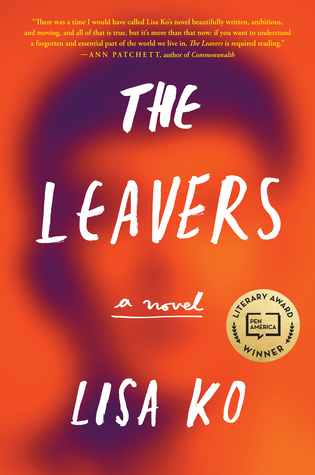
The Leavers by Lisa Ko. Algonquin Books| May 2017| 338 pages | $25.95| ISBN:
RATING: *****/5*
An intense mediation on race, culture, identity, sense of place and belonging, The Leavers by Lisa Ko is a gorgeous and thoughtfully written debut novel that should resonate with progressives and allow others insight into the struggles of undocumented immigrants. It’s not that they don’t want to follow protocol. It’s often that they have few choices. It’s the story of what happens when Deming Guo’s mother Polly, an undocumented Chinese immigrant, fails to return from her job at a nail salon. She just vanishes. She doesn’t contact the family. No one knows if she’s been deported or if she just took off. As a single mother she struggled to cover expenses as a nail technician. After a month or so, her boyfriend’s sister sends Deming off to a foster home in the suburbs where two dogged white professors adopt Deming and change his name to Daniel Wilkinson. They mean well and want Daniel to have the best educational opportunities afforded to him. They want him to have choices for his future.
The story’s told from Daniel’s perspective as well as that of his mother Polly. Daniel struggles to fit in at this white enclave in upstate New York. He doesn’t do well in school and he develops a gambling problem. His parents aren’t happy and Daniel moves to Manhattan to live with a friend and join his band. Although Daniel is now in his late teens he still wonders why his mother abandoned him and never tried to find him. This definitely affects the relationship with his parents as well as his ability to figure out where he fits in. He often thinks about his birth mother and wonders why she doesn’t care enough about him to track him down. That’s enough to make a young man become wayward and develop a gambling addiction.
In the United States, Polly had created a challenging but routine life for herself. She lived with her son and a boyfriend named Leon. Ko writes: “I didn’t want a small, resigned life, but I also craved certainty, safety. I considered suggesting to Leon that we marry other people, legal citizens, for the papers, and after a few years we could divorce our spouses and marry each other.” Now back in her homeland China, she lives a rather comfortable life working as an English teacher. She’s married and lives in a nice apartment. Readers also finally discover what happened when Polly went to work that day at the nail salon. Polly went through a horrific ordeal after ICE placed her in a camp for illegal immigrants. The harsh and nearly inhumane conditions could easily break someone down. It was shocking to read about these middle-of-nowhere holding facilites. Just harsh.
Debut author Lisa Ko said that this novel was inspired by real-life stories of undocumented immigrant women whose United States-born children were ultimately taken from them and raised by American families. She states: “With The Leavers, I want to decenter the narrative of transracial adoption away from that of the adoptive parents.” It’s an important topic when our current president wants to keep people from entering the country as well as crack down on undocumented immigrants, even ones living quiet hard-working lives who have young American-born children.
READ THIS NOVEL. It provides insight and empathy in the plight of immigrants in this country. It’s utterly heartbreaking yet often optimistic and shows resilience among the characters. I can’t recommend this novel enough. Lisa Ko utilizes lovely prose, a riveting story-line and relatable, flawed characters to highlight the challenges immigrants face today.
–review by Amy Steele
FTC Disclosure: I received this book for review from Algonquin.
Lisa Ko will be reading at Harvard Book Store on Wednesday, May 17 at 7pm.
Share this:

book review: When You Find Out the World Is Against You
Posted by Amy Steele in Books on May 3, 2017
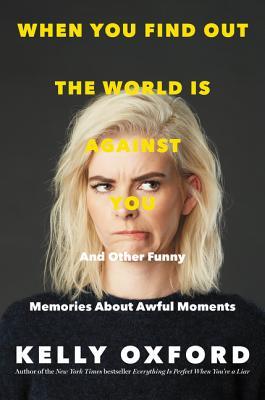
When You Find Out the World is Against You by Kelly Oxford. Dey St.| April 2017| 310 pages | $26.99| (ISBN13: 9780062322777
RATING: ***/5*
Kelly Oxford is described as “the famed blogger, named one of Rolling Stone’s Funniest People on Twitter… one of the most followed and beloved Twitter celebrities.” Sometimes tweets can transfer to writing essays but often the short, pithy style at which one excels on Twitter can’t be transformed into a detailed essay. This collection is definitely hit or miss. It’s an easy quick read and sometimes an essay collection is cool as you can skip around and pick it up here and there to read an essay. Most of these type essays aren’t for me. I’m not one that finds humor in every situation. The essays on parenting definitely didn’t appeal to me and it’s not that I don’t read about parents. I do. it needs to be a well-written and compelling piece. The essays on anxiety are pretty good and I wish there were more of those. I think maybe she tackled too many subjects here. I prefer intellectual/existential essays.
I’d tangentially heard of Kelly Oxford but I don’t think I follow her on twitter. I’m aware of the #NotOkay hashtag campaign. creating a trending hashtag seems the pinnacle of online social media success. If your tweets, Instagram pics or Facebook posts don’t go viral then what’s the point to even post them? It seems that way at least. I respect and appreciate that Kelly Oxford created this hashtag which allowed women to feel safe in reporting their stories of sexual abuse after the Donald Trump/Billy Bush tape. She wrote: “I immediately open my Twitter account and see everyone tweeting about this. This is huge. This leaked tape is demanding a response.” Then: “My tweet is instantly being retweeted, but I feel like what I wrote isn’t as clear as I want it to be. So I tweet again.” Later she tweets another and says: “If no one responds, I’ll delete that tweet.” So if nobody immediately responds it’s not worth tweeting? this mindset I don’t comprehend. I tweet a lot. I’m sure my tweets get seen but they’re not always liked or RTed. That’s the way it goes. On people’s bios you see them say that they started such and such hashtag. I’m not jealous of this.
Here are a few good quotes:
on her father: “Whisker burn was his nice way, with skin abrasion, of telling me it was time to get up. I put up with it, because I worried this could be my only interaction with him for the day.”
being a hypochondriac and frequent visitor to doctors: “When I was eight, I’d stolen several thousand of those long Q-Tip strep-throat things from under that sink, you know, to practice swabbing my throat at home, to rid myself of the gag it caused.” (useful in many ways)
on anxiety: “When I reached the top of the stairs, I instantly felt panic. Like from the very pit of my soul I felt I was worthless and everyone knew it and I would never every climb out and feel better. That even if I did climb out, it would still be as terrible as it felt right at that moment. I felt like I was jailed inside by own sick body and my body was definitely going to kill me.”
–review by Amy Steele
FTC Disclosure: I received this book for review from William Morrow.
Share this:

book review: societal expectations and the 40something woman in the novels who you think i am and All Grown Up
Posted by Amy Steele in Books on April 2, 2017

who you think i am by Camille Laurens. Other Press| March 2017| 208 pages | $14.95| ISBN: 978-1-59051-832-8
RATING: ****/5*
FTC Disclosure: I received this book for review from Other Press.
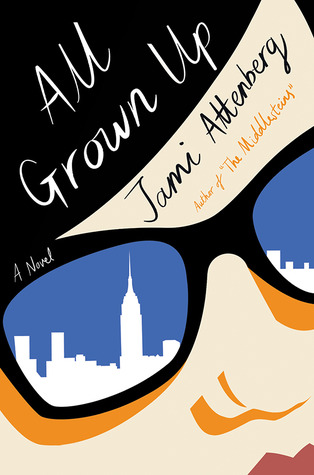
All Grown Up by Jami Attenberg. Houghton Mifflin| March 2017| 208 pages | $25.00| ISBN: 978-0-544-82424-9
RATING: *****/5*
FTC Disclosure: I received this book for review from Houghton Mifflin Harcourt.
I decided to review these books together as they focus on how society makes 40something women about their life choices. Both characters in who you think I am and All Grown Up question their place in a patriarchal society where they choose not to check off the boxes like most people. These women aren’t embracing motherhood and being partnered up. They question their value and place in society. Both novels read as feminist meditations on how unmarried women over 40 contribute to society and where they might fit in when societal standards dictate woman over 40 aren’t supposed to be living independent and solitary lives.
In reading these novels I found both characters possessed qualities to which I could completely relate: the odd woman out who chooses that less-traveled path. Perhaps these women aren’t completely satisfied with their imperfect lives but they’re doing their best and they’re fighting stereotypes along the way. Both women aren’t quite sure where they belong. Both women strive to be comfortable in their bodies. By literary standards one would define these characters as unlikable. Both are easily relatable in varied ways. I’ve never been married and don’t have children and don’t always feel grown up despite being in my 40s just like Andrea Bern in All Grown Up. Like Claire Millecam in who you think I am I often feel undervalued, unwanted and misunderstood. Also I’ve done a considerable amount of online dating/ meeting men online. Both women approach their circumstances in different manners. Authors Camille Laurens and Jami Attenberg utilize a sharp, witty tone to make these immensely readable and provocative novels. Both novels, although short, are packed with insight and intelligence.
“I wasn’t interested in being seen, or even seen in a good light. I wanted to be recognized. For someone to say: there she is!” – who you think i am
In who you think I am, Claire Millecam, a 48-year-old divorced teacher, poses as a 20something online in order to befriend a younger man who happens to be her boyfriend’s friend. They end up having a relationship and later on her catfishing, I guess you could call it, gets exposed. Claire flipped the switch on what someone expected of her and created the woman that she felt she needed to be at that time.
The beginning of the novel opens with Claire speaking to a therapist in a mental health facility. Claire’s quite angry and frustrated that women over 40 aren’t seen or heard or valued by society. At one point Claire tells her therapist: “women are condemned—by force or by contempt, to die. That’s a fact, everywhere, all the time: men teach women to die. From north to south, fundamentalist or pornographic, it’s the sole same tyranny. Existing only in their eyes, and dying when they close their eyes.”
This intriguing, intelligent, unique novel is a meditation on age, beauty standards, relationships and mental illness from a feminist perspective. It’s also an examination of online dating. Writer Camille Laurens allows Claire’s story unfold through the eyes of Claire, her therapist and her younger lover. About her lover, Claire shares: “I was used to more intellectual connection with me, I was one of those people who wonder how anyone can live without reading Proust.” Claire’s psychiatrist falls in love with her and this is what he reveals: “She touches me and captivates me, yes, I’m a captive. I want to see her. . . And I like being there for her. I’d like to bandage her wounds. She may be mad after all, in the way we understand the word. Certainly. But it’s the mad who heal us, isn’t it?”
“But most days I can’t see through the pain to the truth.”—All Grown Up
In All Grown Up, Andrea Bern gave up her dreams to be an artist to take a salaried position in advertising. She lives in an apartment in New York. Her friends are getting married and having children. She rotates through lovers. She does drugs. She feels pain while living somewhat messily and unapologetically. She’s in a safe spot professionally and socially which fits her goals and interests. Her work isn’t challenging but it’s steady and consistent. She isn’t committed to any one man and maintains her independence. She’s coping and she’s living a life that makes sense to her. In the meantime, everyone she knows seems to be changing their lives or moving around and doing new things while she remains in the same place doing what she’s pretty much always done. Her brother and sister-in-law move to rural New Hampshire to care for their terminally ill child. Andrea’s mother moves up there to help them leaving Andrea feeling abandoned. This brilliantly written novel features deft characterizations and dark humor.
“I don’t see myself as having anything conventional. But still I date. I fuck. I see.” She adds: “People architect new lives all the time. I know this because I never see them again or they move to new cities or even just to new neighborhoods or you hate their spouse or their spouse hates you or they start working the night shift or they start training for a marathon or they stop going to bars or they start going to therapy or they realize they don’t like you anymore or they die. It happens constantly. It’s just me. I haven’t built anything new. I’m the one getting left behind.” When Andrea’s friend goes through a divorce: “Then she calls me and she’s crying and we talk for a while about her marriage and while I am sad that my friend is sad, it makes me happier than ever that I’ve never been married and never will be, because marriage sounds like a goddamn job and why would I want another one of those?” And of her sister-in-law in New Hampshire: “Gun racks, Trump lawn signs, and no bookstores. She has to get into a car and drive everywhere.” Andrea also recognizes an alternate reality: “sometimes I cry, too, for who I was as an artist and what my life could have been like if only I had kept going. I weep for my lost identities. I weep for my possibilities.”
Share this:

STEELE INTERVIEWS: Dan Chaon
Posted by Amy Steele in Books, Interview on March 14, 2017
Reasonably settled in Cleveland, Ohio, psychologist Dustin Tillman learns that his adopted brother, Rusty, will imminently be released from prison. DNA evidence cleared Rusty, who received a life sentence for the murder of Dustin’s parents and aunt and uncle. While mentally preparing himself for Rusty’s release, a patient draws Dustin into a potential serial murder case involving the drowning of drunk area college students. Dustin becomes progressively focused on this case as memories churn from that evening he violently lost his parents. What does Dustin remember and how accurate are his memories? How did this sensational murder and trial in the 1980s affect Dustin and his surviving family members? Ill Will is a riveting, contemplative thriller about memory and deception. Past and present collide in a dark, disturbing and creepy manner.
Dan Chaon is the author of Stay Awake, Await Your Reply, You Remind Me of Me, Fitting Ends and Among the Missing. He teaches creative writing at Oberlin College.
We recently spoke by phone about Ill Will.

Amy Steele: Where did you get the idea for this novel?
Dan Chaon: There was an urban legend in Minnesota and Wisconsin. My brother-in-law went to school at the University of Wisconsin and he told me the there were all of these mysterious drownings of these drunken bros and the college kids all thought it was a serial killer. I thought it was cool. I put it on the back burner. It was the early 2000s that I heard that story. It got tangled up in this other story I was writing—this brother that gets out of prison. Then I thought: ‘can I have two murders in the same book or not/’ and they start to knit together after a while.
Amy Steele: You write from different points of view. Is that difficult and why did you decide to write in that way?
Dan Chaon: I have always liked novels that do that. Kate Atkinson’s Case Histories or Tom Perrotta’s Little Children. It’s a really good technique and for someone who came to the novel having started out as a story writer, that makes sense to me because it helps me to compartmentalize. Thematically because this book is so much about deception and multi-bookends of the same story, it made sense that we saw the story from different eyes.
Amy Steele: You went from writing short stories to writing novels and you also teach writing. How did that influence you? It’s a long novel but a page-turner. I read it quickly and I read it on the Kindle which I don’t like that much.
Dan Chaon: And it looked okay on the Kindle with the weird things. The typographical things. Random House put a front note on the Kindle edition so people know the Kindle isn’t glitching.
Amy Steele: I still don’t understand the columns. I don’t understand why you did that.
Dan Chaon: I wanted to create this effect where multiple things were happening at once. I liked that idea of having almost a split-screen thing. The sophomore in college in me was really thrilled by it. I thought it looked cool. It has parallels across and down. I feel good about it. I know some readers will be like: ‘Hmm. Pretentious. Weird.” But I don’t care.
Amy Steele: It provides more information. You have the text messages and all this other stuff.
Dan Chaon: That felt organic. It’s part of our daily life. Sometimes you shouldn’t do things that are too contemporary and date the book and make it less universal. It’s true to some extent that texting maybe in five years won’t be a thing or people won’t use Facebook as much any more. If you leave it out you’re leaving out a big chunk of what it’s like to be alive today.
Amy Steele: You have to stay true to the time period and be representing whatever time it is.
Dan Chaon: I also feel like there’s something about that mode of communication that fits with the elliptical quality of the book. It feels like it fits with the mood of the book. All those ghostly floating balloons on the page.
Amy Steele: It’s really dark. How did you get to that point? [note: asks the woman who is extremely dark in mood and interests]. I feel like your other work wasn’t as dark.
Dan Chaon: Oh really. You think this is the darkest?
Amy Steele: It’s pretty dark. Have you read David Vann? I really like David Vann. Very dark.
Dan Chaon: David Vann’s dark feels heavier and more serious in some ways. There’s an element here that’s a little more playful. I think Aaron is often funny and Rusty’s funny. There’s still a more playful quality to this than any of my other novels. It’s both darker and a little more comic in some weird way.
Amy Steele: How do you keep track of different characters and flipping back and forth with the time? Did you know how it would end up?
Dan Chaon: There were definitely surprises along the way. I did a timeline for when everybody was born and different stuff happened because it’s covering 30 years. I knew I wanted to have multiple points of view so I blocked it out so each character would have their own section. And then I started to write the different sections and see how they rubbed up against each other. The second section with Dustin as a kid was the first section I wrote. Aaron came late in a weird way and I wasn’t expecting him to be such a huge part of the story until I feel in love with his voice.
I also felt really compelled to write about heroin addiction. It’s really been a scourge here. My students have friends that are overdosing and it seems like it suddenly has become this middle-class thing and it wasn’t when I was growing up it– like Kurt Cobain but not college kids. Something about Aaron’s voice and the way he was dealing with grief was really compelling to me. In the end I ended up giving him half the book when I was originally just planning on him having one section.
Amy Steele: You came up with the idea and dropped the characters into the situation.
Dan Chaon: The premise or idea is there and then the characters grow up around that. The twins–Kate and Wave–there’s a lot of various places that they come from and to some extent my family makes fun of me because there are avatars or parallels. I am a widower. I was raising two teenage boys. My sister said, “You just did this weird thing where you killed your whole family and turned yourself into this creepy sucker.” And I said, “Yeah that’s how fiction works.”
Amy Steele: You based a lot of this on people you know?
Dan Chaon: I wouldn’t say it’s based on their personalities. If you’ve been to my house, Dustin clearly lives in my house. Aaron clearly lives in my younger son’s bedroom. Dustin is not me and Aaron and Dennis aren’t my sons in terms of personality. Kate is definitely not my sister in terms of personality. There’s an element of me and my family in this even though the whole thing is fictional. You always have to have a touchstone of some sort.
Amy Steele: What did you like best about writing this novel?
Dan Chaon: I always wanted to write a straight up crime novel. I read a lot of serial killer books when I was in college. It was during that time that every other book was a serial killer book. I thought I really want to do this. It was fun to take that form and mess around with it and play in that playground. That was exciting and fun for me.
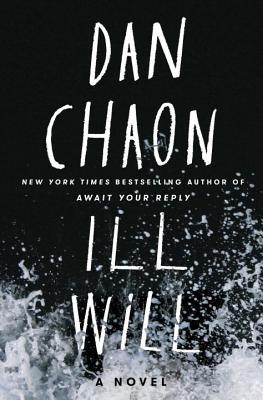
Ill Will by Dan Chaon. Ballantine Books | March 2017| 480 pages | $14.99| ISBN: 9780345476043
Share this:

-
You are currently browsing the archives for the Books category.
About Me

covering mostly music and books. focus on alternative/indie and women in music, literature and the arts. feminist. vegan. mostly alternative, a bit bohemian. Masters in journalism from Boston University. BA from Simmons College.



Entertainment Realm by Amy Steele is licensed under a Creative Commons Attribution-Noncommercial-No Derivative Works 3.0 United States License.
Based on a work at entertainmentrealm.comCopyright © 2009. All writing, unless otherwise noted, by Amy Steele.
 ENTERTAINMENT REALM
You must be logged in to post a comment.