Archive for category Books
book review: ANY MAN
Posted by Amy Steele in Books on July 2, 2018

Any Man by Amber Tamblyn. Harper Perennial| June 2018| 304 pages | $15.99| ISBN: 0978-0-06-268892-7
RATING: *****/5*
“But more than any of that, as you know, I loathe feminists. It’s by no small miracle that all feminists in America haven’t been stoned to death by now. I’m just telling you the truth. Feminists are pollution, taking a stance, against what exactly, no one in their right mind knows. They are angry, bitter, saggy chauvinists masquerading as supportive, loving sisters.”
If you’re looking for an intense, intelligent and engulfing feminist thriller, you must read ANY MAN. Author Amber Tamblyn challenges rape culture and the problematic treatment of victims and glorification of violence and misogyny through this thriller about a female serial rapist. The novel follows six men: an English teacher, a struggling standup comedian, a bi-racial web designer, a high school student, an alt-right media personality and a transgender man. A uniquely irreverent and impressively original novel, social commentary and crime thriller meld with insightful, sharp prose and diverse writing styles. She weaves in tweets, poetry, internet chat room, a radio talk show. She also flips everything one expects in thriller. [As a companion read, I recommend Dead Girls by Alice Bolin– an essay collection addressing society’s infatuation with violence against women]. Whether she’s using tweets or poetry or an internet chat room or journal entries, it grabs you from the first page and is impossible to put down. If you’re a woman who has been attacked on social media or elsewhere for expressing her opinion, you’ll really get it. Tamblyn wrote an opinion piece for The New York Times, “I’m Done with Not Being Believed,” which cemented her place among influential feminists who are changing the narrative around trauma and victimization. I found myself nodding and smiling and cringing and marking passages while proclaiming Tamblyn’s genius and reading as fast as possible.
RATING: *****/5*
Amber Tamblyn will be at Harvard Bookstore on July 24, 2018.
–review by Amy Steele

Share this:

book review: There are No Grown-Ups
Posted by Amy Steele in Books on May 29, 2018

There are No Grown-Ups: A Midlife Coming-of-Age Story by Pamela Druckerman. Penguin Press| May 29, 2018| 274 pages | $27.00| ISBN: 978-1-59420-637-5
RATING: *****/5*
–review by Amy Steele
“What are the forties? It’s been my custom not to grasp a decade’s main point until it’s over, and I’ve squandered it. I spend my twenties scrambling in vain to find a husband, when I should have been building my career as a journalist and visiting dangerous places before I had kids. As a result, in my early thirties I was promptly fired from my job at a newspaper. That freed me up to spend the rest of my thirties ruminating on grievances and lost time.”
I don’t have much of a career or a personal life. I have no long-term partner and by choice, I have no children. I live in the suburbs and I’m pretty miserable and frustrated. Maybe it could be much worse. Author Pamela Druckerman writes in the introduction: “Obviously, the forties depend on the beholder, and on your family, your health, your finances and your country.” Reading Druckerman’s amusing, thoughtful and moving memoir made me feel a bit less alone. It’s comforting that someone else has had the same thoughts I’ve had about middle age and aging. Everyone goes through it. Maybe some better than others. Does everyone go through a midlife crisis? Probably not. I’m definitely a late bloomer so there’s that although in the end it won’t matter. Also we have greater longevity so maybe you can fuck up more.
Exploring the social, psychological and biological aspects of one’s forties, Durckerman combines topical research with her astute and amusing observations and experiences. She writes about her journalism career, her engagements as a speaker, battling cancer, her marriage and children as well as general thoughts on what one should be doing at a certain age. In the essay How to Turn Forty, she writes: “But I still don’t feel like a grown-up, in part because I haven’t found my tribe.” I feel the same. In the past year, I joined a yoga studio but I’m wedging myself into places I’ll never fit.
Each chapter is titled How to ___. Some of the chapters include: How to Find Your Calling, How to Choose a Partner, How to Turn Forty, How to Raise Children, How to Plan a Menage a Trois, How to Have a Midlife Crisis, How to Be Jung, How to Get Dressed, How to Age Gracefully, How to Think in French and How to Make Friends. Each chapter ends with little jokes which start with Your Know You’re in Your forties when… Two great ones: You know you’re in your forties when … You’re not considering Botox, but you are considering bangs.” And “You know you’re in your forties when . . . You no longer care (or remember) how many people you slept with.” I hooked up with a much younger guy who seemed quite annoyed that I’d had so many more sexual partners than him. I stopped counting at a certain point because it really doesn’t matter.
“We’ve actually managed to learn and grow a bit. After a lifetime of feeling like misfits, we realize that more about us is universal than not. (My unscientific assessment is that we’re 95 percent cohort, 4 percent unique.) The seminal journey of the forties is from “everyone hates me” to “they don’t really care.”
The essays on midlife crisis and that address wisdom and intelligence are particularly interesting. Druckerman brings in some Jung theory. She discusses cultural differences. As an expat loving in Paris, she writes from a unique perspective. Druckerman lives in Paris with her British husband and French children. French women are much more glamorous and elegant than Americans. I participated in a French exchange program in the 80s and I remember how stylish in navy and black the mom always appeared.
When she traveled to Brazil to speak at a conference, she noted: “Crying is the mark of a successful gathering in Brazil and a sign that you’re connected.” It’s challenging to make new friends as you get older. Are they your own friends or other parents at your children’s school or the spouses of your partner’s colleagues? She also compares Eastern culture to Western culture. Asians are high context and understand they need to comprehend interaction of everyone involved to fully understand something. Americans are (not surprisingly) low context. Americans are mostly concerned with themselves, on individuals. Quelle surprise.
Druckerman wrote a NYT column entitled “What You Learn in Your 40s” and its popularity led to four years researching and writing this memoir. If you’re in or near your forties you’ll definitely find many simpatico elements in this memoir. If you’re younger maybe it should eliminate some of the stigmas associated with aging.
Pamela Druckerman will be at Brookline Booksmith on Wednesday, May 30 at 7pm.
Share this:

book review: A Theory of Love
Posted by Amy Steele in Books on May 21, 2018
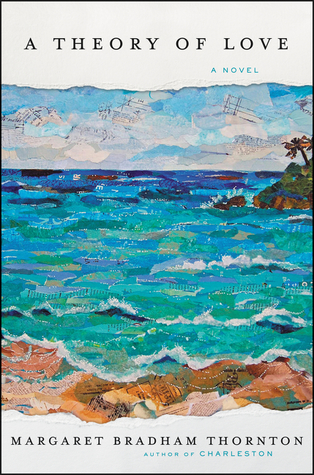
A Theory of Love by Margaret Bradham Thornton. Ecco| May 2018| 275 pages | $27.99| ISBN: 978-0-06-274270-4
RATING: ****/5*
–review by Amy Steele
“Bermeja was the name given to the eight-mile stretch along Mexico’s Pacific coast halfway between Puerto Vallarta and Acapulco. Surrounded by a thirty-six-thousand-acre nature preserve, Bermeja was referred to as the land where nobody was born and nobody died. Protected by high cliffs and jungles and wetlands, it was often separated on its eastern boundary by flooding rivers.”
Although the couple in this novel hasn’t fabricated a relationship, A Theory of Love reminded me of Glimpses of a Moon, one of my favorite novels by Edith Wharton. In it, a young couple decides to marry so that they can travel around on an extended honeymoon staying at their friends’ lovely homes. In A Theory of Love, Helen, a British journalist, meets lawyer turned financier Christopher while she’s on assignment in Bermeja. He’s there for a bit of relaxation on his surfboard. Author Margaret Bradham Thornton takes readers to Bermeja, Saint Tropez, London, Sussex, Fontainbleu, Chamonix, Tangier, Milan, Havana and New York.
She’s a journalist in the trenches and he’s interacting with financial elite. That could be why the relationship doesn’t fare well. Could also be the jetset nature of their relationship. His company is rather new and he’s working long days, seven days a week and isn’t able to invest the time in the relationship that Helen desires. Perhaps they’d have fared better if they’d worked out these logistics before marrying. Isn’t that what you’re supposed to do? Figure out where you want to live and if you’re both morning people or night owls and if you want to have children and such.
The characteristics which attract them to each other may be the details that drive them apart in the end. I particularly enjoyed the ritzy scenes. They’re elaborate but not grossly obscene. For instance, Christopher’s mother is involved in equestrian affairs: “She finds talented working students and gives them good horse to ride, and that works for a while until she feels they have been disloyal or unappreciative, and then that relationship falters.” They attend a fancy dinner party hosted by a French businessman (he’s CEO of his family’s chemical company) and his artist wife Penelope–“She was a photographer, and while she spent more time on the decoration of her seven houses than on her photography, she had resisted the cliched hallmarks of the wealthy wife and dressed in a bohemian style.”
Helen wants everything upfront and laments that she didn’t know everything about Christopher before they married which seems impossible and also rather dull. If you already know each other than what do you talk about? Christopher is in the let’s see what happens mode. Thornton writes: “He had come to value, maybe even cherish, a sense of patience—of letting things play themselves out. Perhaps his ability to see how things would develop or unravel allowed him this equanimity. He understood that events had their own interval sense of motion.”
Thornton writes: “She was thinking about how they seemed to be moving away from each other and wondering why neither one of them tried to do anything about it. there were times when it felt as if he had lost her, as if he were thinking so intensely about what was in front of him that he would forget her, as if his mind were emptied of all thoughts of her.”
Sounds like mindfulness to me and honestly, I didn’t particularly like either character but that’s never been essential to my enjoyment of a novel. A good writer makes you continue to read despite the characters. I liked their non-relationship relationship and pondering if they’re getting what they feel they should from each other. There’s mysterious elements to it all. In addition, Christopher thinks his business partner may be involved in illegal activity and as Helen faces an unexpected pregnancy, he’s engulfed in an investigation. This novel effectively ponders attraction and love while languishing in beautiful scenery and prose. It’s a wonderful indulgence and escape.
FTC Disclosure: I received this book for review from Ecco.
Share this:

book review: I Really Didn’t Think This Through
Posted by Amy Steele in Books on May 3, 2018
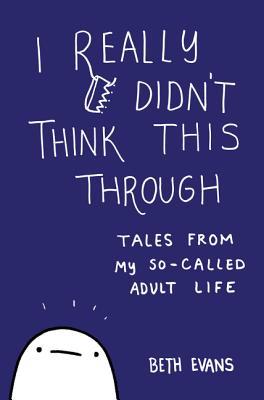
I Really Didn’t Think This Through by Beth Evans. William Morrow| May 2018| 172 pages | $14.99| ISBN: 978-0-06-279606-6
RATING: ****/5*
Like many others, I discovered Beth Evans on Instagram. The millennial has a quarter of a million followers and posts cartoons about mental health and navigating adulthood. In this book, Evans writes about her struggles with depression, anxiety and OCD and intersperses comics throughout. It’s amusing and touching and honest. She delves into her experiences with bullying, self-harm, dating and how she manages her anxiety while maintaining a bit of a social life. She shares what happened when she first realized she might have depression. She reminds readers to practice self-love and self-care and to ask for help if you need help. With stigmas surrounding mental illness, it’s crucial that people keep sharing their experiences. In her comics and through her words, people will realize that they’re not alone and perhaps find some solace in similar experiences. People may also realize that it’s okay to struggle with mental illness and it’s okay to not have it all figured out. May is Mental Health Awareness Month and this is a perfect reminder to take care of yourself.
On anxiety:
“For those unfamiliar with anxiety attacks, it’s kind of like being shoved off a ledge without being able to scream. It’s a silent takeover during which your body decides what’s going to happen, and all logic is tossed aside. What makes it even more challenging is that it sometimes happens in public. Then, not only do you have to figure out how to take care of yourself, but you have to try not to alarm those around you.”
“Anxiety is a powerful thing, and when it decides to strike, it can take many different, often demoralizing forms. Suddenly the only thing you can focus on is the absolute, fundamental sense of dread and upset storming inside you. When I’m anxious, I become obsessed with keeping everyone around me calm. It’s almost like the minute I start to feel bad, I need to focus on someone else instead of on what’s happening to me.”
Taking it one day at a time:
“And sometimes that’s all we can really hope for—the feeling of staying afloat. When things really suck, staying afloat seems pretty good. Sometimes it’s okay to celebrate just being here, because that in itself is an accomplishment. Some days I’m just going about my business, like walking around Target, and I’ll think, How on earth did I pick up all these broken shards and function like a normal person today?”
Self care:
“Sometimes we get caught up in the idea that self-love has to be thinking we’re great 100 percent of the time. Often it’s something much less exciting, like treating ourselves with respect or holding our brains back a bit when we want to attack ourselves. In a world where we’re taught to be one kind of perfect or another, something seeing beauty in the imperfection is the best thing we can do.”
Recognizing that perfection is impossible:
“I think one of the hardest sentiment to wrap by head around is that I’m an all right human being. So often my brain screams that I’m the worst of the worst, and I constantly judge myself for past interactions and failures. I also need constant reassurances form those around me that I’m not a horrible person, which, honestly, is grating for everyone around involved.”
–review by Amy Steele
FTC Disclosure: I received this book for review from William Morrow.
Share this:

book review: Lemon Jail
Posted by Amy Steele in Books on April 19, 2018
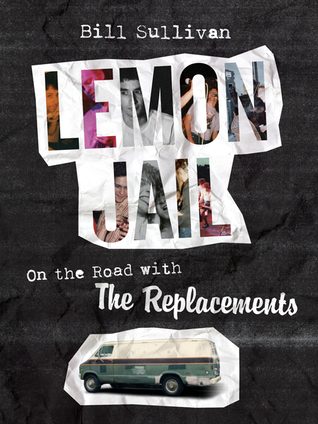
Lemon Jail by Bill Sullivan. University of Minnesota Press| April 2017| 160 pages | $22.95| ISBN: 978-1-5179-0169-1
RATING: ***/5*
“When we arrived in a town on tour I would take flyers from the club and cruise the area handing them to any young people who would take them. My promotion theory consisted of one thing: guys wanted to go where women were, and women wanted to go where guys were. the better looking the boy or girl the better chance they would sway other people. I was skinny and cute with guyliner, so I could easily slip across gender lines.”
I like The Replacements and appreciated the band’s music but don’t know that much about them. This memoir isn’t the best way to find out that much about the band. This isn’t a tell-all. There’s mention of drinking and drugs and sexual encounters but not with salacious detail. It’s also not about specific albums or songs. It’s a non-sequential tour memoir by one of the band’s roadies, Bill Sullivan, who went on to be tour manager for many music acts including Bright Eyes, Spoon, Cat Power and Yo La Tengo. It’s his experience and recollection which makes for an interesting read. As a Boston-based music journalist, I appreciate the details about touring in Boston in particular. He mentions lots of popular venues such as The Rat in Kenmore Square. He writes: “The last show on the itinerary for the first tour was in Boston at the Rat in Kenmore Square. Boston is well known as a confusing city to navigate even with GPS. For us, in 1983, we would just look for the Citgo sign and keep turning toward it. The Rat itself played host to so many cool bands it’s impossible to list them. The stage was stocked with speakers and lights, and they didn’t care if you turned up.” Lemon Jail reminds me of a long piece I wrote about touring with The Charlatans in the 90s. The bibliophile/book nerd appreciates the font, the cover, the paper quality and overall look and feel of this book.
–review by Amy Steele
FTC Disclosure: I received this book for review from University of Minnesota Press.
Share this:

book review: Eventide
Posted by Amy Steele in Books on April 18, 2018
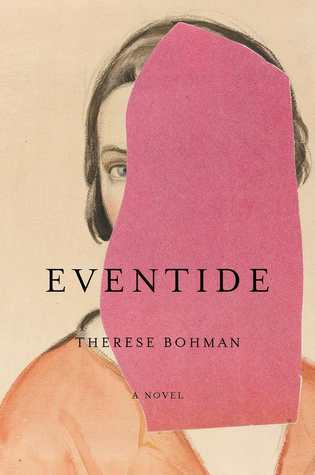
EVENTIDE by Therese Bohman. Other Press| April 2018| 191 pages | $15.95| ISBN: 978-159051-893-9
RATING: *****/5*
“She didn’t love Stockholm, and she probably never would. Every time someone said they loved Stockholm, she assumed they were lying. She regarded the city as a necessity, often an unpleasant one, but she also thought that everything it was accused of was probably true—snootiness, fearfulness, coldness, regimentation. She had never really felt at home here, but she had never really been unhappy either. Much the same could be said of her life as a whole.”
With an emphasis on culture and art, Eventide is a meditation on solitude, success and meaningfulness. Working in a male-dominated field, art history professor Karolina Andersson begins working as thesis advisor to a male student who claims to have discovered new works of art by a female artist in the early twentieth century. He’s attractive and intriguing to Karolina who recently ended a long relationship and finds herself wondering if she wasted her prime years with this man and if she’s even doing what will make her the most fulfilled. She’s plateaued in her career and doesn’t have as much interest in it as she had when she was younger. As a woman who also wasted many years in a bad relationship, who never married or had children and in her late 40s, I found myself completely commiserating with Karolina. Author Therese Bohman writes: “Her ability to emphasize quickly with other people was the quality that had most frequently led to her being hurt.” Or writes: “Maybe she actually was tragic, one step away from living in the gutter, wandering around the city in a woolly hat and shouting at people.” Or this: “She wanted to give her body to men who definitely didn’t deserve her mind.” The novel strongly traverses through academia and the art world while illuminating both the personal and professional life, desires and challenges for this woman. Society sometimes doesn’t know what to do with a woman of a certain age who failed to check off the boxes along the way. Bohman writes about educated, smart, disappointed single women over 40 so brilliantly that I’m a massive fan and will read anything she writes. I loved her novel The Other Woman and quickly devoured Eventide. I read it in a day in early January. Realistic, observant, dark and macabre in the best way, Eventide is a dazzling novel.
Share this:

book review: Girls Burn Brighter
Posted by Amy Steele in Books on March 19, 2018

Girls Burn Brighter by Shobha Rao. Flatiron Books| March 2018| 304 pages | $25.99| ISBN: 978-1-250-07425-6
RATING: *****/5*
–review by Amy Steele
Girls Burn Brighter is a devastating, provocative and beautiful novel which illuminates the horrific reality of sex trafficking and domestic abuse. Growing up in an impoverished village in India, Savitha and Poornima lack choices such as furthering their education. Instead, they’re expected to marry young and start families. After Poornima’s mother dies, she’s expected to care for her father and younger siblings. Which she’d rather do than be shipped off to marry. The bright spot remains the strong friendship that Savitha and Poornima established. They create saris on looms which Poornima’s father owns. The women initially think that they might be able to succeed on their own and not have to agree to an arranged marriage. Savitha’s independent spirit and veracity inspires Poornima. Together the women become determined to forge a better reality. Although these women face repeated horrific abuse at the hands of men, author Shobha Rao makes readers both root for the women and wonder what they’ll do next to escape their predicament.
“She walked to the edge of the terrace and looked at the first stars, and she thought of how many years she had left to live. Or maybe she had none at all. It was impossible to know. But if she didn’t die tonight, if she didn’t die within the amount of time a human being can readily foresee, can honestly imagine (a day? a week?), What, she wondered, will I do with all those years?”
In one of the worst betrayals and examples of abuse, Poornima’s father, a nasty alcoholic, rapes Savitha. Villagers sadly require that she marry him. She runs away. Soon after, Poornima enters into an arranged marriage with an awful man and family who treats her like a servant. Her husband and his mother “accidently” burned Poornima’s face with cooking oil, leaving her with terrible scarring—“And if she had ever been pretty, she certainly wasn’t anymore. She stepped closer, and then she raised her hands to her face and removed the bandages, one by one. The left side of her face and neck were just as she imagined them, or worse: flaming red, blistered, gray and black on the edges of the wide burn, the left cheek hollow, pink, silvery, and wet, as if it’d been turned inside out.” Someone has the audacity to tell her that as long as she has “proper breasts” her husband won’t leave her. This reminds me of a dark, wonderful film called Lady Macbeth where the man made his young wife face the wall while he penetrated her. She flees the situation, determined to find her friend.
Many of us have been used/abused/disrespected by men. So what keeps us going? What motivates us every day and brings us moments of joy? Connection. Many will relate to these women and their bond as well as their will to thrive in some way in this bitter, brutal world that devalues women.
“And now, she realized, that’s all she’d ever be in the eyes of men: a thing to enter, to inhabit for a time, and then to leave.”
Savitha gets drugged and forced into prostitution. She’s locked in a room and required to service numerous men daily in a brothel. There’s a particularly disgusting moment when they want to sell Savitha to a wealthy man in the Middle East with a proclivity for amputees. They amputate Savitha’s arm but then the man decides on someone else. Savitha gets shipped off to Seattle to clean houses. She’s told if she tries to leave or tell anyone about her situation that there will be dire consequences for her and her family back in India.
“Savitha was seated in front of his desk, but she still slumped. She was tired. She was tired of deals. Every moment in a woman’s life was a deal, a deal for her body: first for its blooming and then for its wilting; first for her bleeding and then for her virginity and then for her bearing (counting only sons) and then for her widowing.”
A resourceful and determined Poornima ends up working as a bookkeeper for the sex traffickers. She’d managed to pick up enough from studying her husband’s spreadsheets. She learns that Savitha might be in Seattle so she makes plans to get there. She enrolls in an English class and secretly obtains a passport. Soon she convinces the people she works with to let her be a chaperone when they ship girls off to other countries. Apparently, they make most of their money by selling girls to wealthy men in the Middle East and United States. After several years, a reunion with her friend no longer seems farfetched.
Women have long been viewed as a commodity in many parts of the world, particularly in impoverished Third World countries like India. There’s also a vast disparity between the wealthy and the poor in India which seems to be happening in the United States with the middle class disappearing. According to the United Nations Office of Drugs and Crime, “the most common form of human trafficking (79%) is sexual exploitation. The victims of sexual exploitation are predominantly women and girls. Surprisingly, in 30% of the countries which provided information on the gender of traffickers, women make up the largest proportion of traffickers. In some parts of the world, women trafficking women is the norm. The second most common form of human trafficking is forced labour (18%), although this may be a misrepresentation because forced labour is less frequently detected and reported than trafficking for sexual exploitation.”
This novel made me, and likely many other readers, realize that my situation could be far worse. I have very little to keep me going some days and can’t imagine being part of a sex trafficking operation. Girls Burn Brighter takes readers into that shadowy world. With the #MeToo and #TimesUp movements, there’s a cultural shift for women. If men can get away with taking advantage of women they’ll find a way. We’re developing better ways to combat it. We must support one another. We must speak up for injustices and brutality.
Shobha Rao will be at Brookline Booksmith on Wednesday, March 21, 2018.
FTC Disclosure: I received this book for review from Flatiron Books.
Share this:

book review: Tangerine
Posted by Amy Steele in Books on March 12, 2018

Tangerine by Christine Mangan. Ecco| March 20, 2018| 320 pages | $26.99| ISBN: 978-0-06-279213-6
RATING: ****/5*
–review by Amy Steele
“It is in these moments—when the air is thick and hot, threatening—that I can close my eyes and inhale, when I can smell Tangier again. It is the smell of a kiln, of something warm, but not burning, almost like marshmallows, but not as sweet. There is a touch of spice, something vaguely familiar, like cinnamon, cloves, cardamom even, and then something else entirely familiar.”
With another March snowstorm predicted for New England, most of us are more than ready to welcome spring and warm weather. Set in Morocco in 1956, Tangerine is the perfect antidote to winter restlessness. It’s super interesting for Americans to be in this North African country on the brink of its sovereignty. Alice moved to Tangiers with her new husband. She’s still acclimating when her former college friend Lucy makes a surprise visit.
During college something pushed the roommates apart, to such a degree that Alice isn’t happy to see her. They met at Bennington College which in itself provides lots of information for the novel’s characters. Alice is from a wealthy British family while Lucy is a scholarship student from a neighboring town in Vermont. Alice’s mother graduated from Bennington and then moved to England and married a Brit. Apparently the two immediately hit is off with Alice treating Lucy as she would her wealthy peers. Of their friendship, Lucy thinks: “The relationship that Alice and I had formed after only a few short weeks, the partiality that we felt for one another—it went beyond any rational description. Affinity, I decided, was a good enough start.” This sets up a perfect scenario for jealousy and competition and obsession. As open-minded as Alice might be, her circumstances provide her with a level of comfort which Lucy won’t have. It becomes increasingly clear that Lucy feels romantically attracted to Alice, that she’s become possessive of Alice and she becomes upset when Alice doesn’t feel the same.
They bond over their tragic childhoods and become inseparable friends until Alice’s new boyfriend pushes them apart. Lucy grows jealous that Alice spends more time with the boyfriend than she does with her. That boyfriend dies in a car accident. But was it really an accident or something more sinister? Lucy enjoys the perks of her friendship with Alice: “I had shaken my head then, had told myself no, I could not be made to go back, to return to my full little life, a life of obscurity, of mediocrity.
Generally overwhelmed by Tangier, Alice remains in her apartment most days. She warily ventures out once a week to the market. She doesn’t even know what her husband does for work. The couple met and married rather quickly. John seems to be the standard scoundrel, a good-looking manipulative man Of John: “John was bad at money, he had once told me with a grin, and at the time, I had smiled thinking he meant that he didn’t care about it, that it wasn’t a concern for him. What it really meant, I soon learned, was that his family’s fortune was nearly gone, just enough remained to keep him well dressed, so that he could play at pretending to still claim the wealth he once had, that he had been born into and still felt was rightfully his.” At one point, John admits to Lucy: “We need each other, Alice and I. Haven’t you already figured that out? I need her money—well maybe not need, perhaps appreciate would be the better word. And she needs me to keep her out of the looney bin.” Lucy manages to encourage Alice to venture out and explore the city, to drink mint tea at a cafe, to walk around and to even hear music and a nightclub. When John disappears, it forces Alice to delve into that dark incident in the past and question her friend’s motives. “It seemed to hang: thick and humid. Languid. That would be the right word to describe it, I decided.” This novel unfolds in a languid manner. Author Christine Mangan wrote her PhD thesis on gothic literature and her expertise translates to a smart, engrossing read.
FTC Disclosure: I received this book for review from Ecco.
Share this:

book review: An American Marriage
Posted by Amy Steele in Books on February 10, 2018
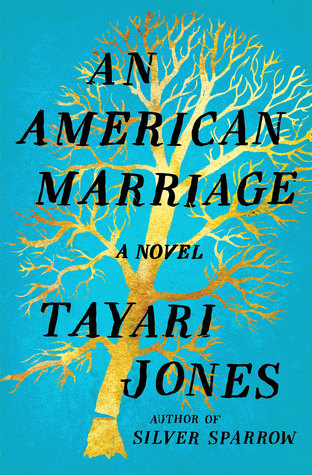
An American Marriage by Tayari Jones. Algonquin Books| February 2018| 320 pages | $26.95| ISBN: 978-1-61620-134-0
RATING: 4.5/5*
“Ours was a love story, the kind that’s not supposed to happen to black girls anymore.”
As its title suggests, this is a novel about marriage. About an American marriage. about the institution of marriage and how it fits or does not fit individual aspirations and dispositions. Recently married couple Celestial and Roy have promising careers in Atlanta—Celestial as an artist and Roy in business. Celestial earned an advanced art degree in New York. She’s focused and determined to excel in the art world. Both she and Roy graduated from historically black colleges. Growing up with wealthy parents affords Celestial the ability to pursue her creative endeavors. Marriage often doesn’t align with a creative spirit.
“Celestial was a tricky woman to figure out; she almost didn’t marry me although I never doubted her love. For one thing, I made a couple of procedural errors with my proposal, but more than that, I don’t think she planned on getting married at all. She kept this display she called a “vision board,” basically a corkboard where she tacked up words like prosperity, creativity, passion! There was also magazine picture that showed what she wanted out of life. Her dream was for her artworks to be part of the Smithsonian, but there was also a cottage on Amelia Island and an image of the earth as seen from the moon.”
While visiting Roy’s parents in a small Louisiana town, Roy gets arrested and he’s sent to prison soon after. Celestial turns to Andre, her oldest and closest friend, for emotional support. Andre actually introduced Roy to Celestial during college. Celestial becomes immensely successful creating dolls.
Roy argues his innocence and remains focused on a return to Atlanta. He and Celestial exchange letters at least initially. Being in prison fuels Roy with self-doubt about the tenacity of his marriage. It’s difficult to maintain a relationship through letters and limited visiting time. Roy helps other prisoners write letters/emails to earn a bit of income and respect. The sections which focus on Roy’s prison time prove to be at turns upsetting and frightening. Roy meets his biological father in prison. After several years, Roy’s conviction finally gets overturned and he returns to Atlanta.
“A dozen of us were released that day. For a young cat, no more than twenty, a family waited with metallic balloons shaped like Christmas ornaments; a little boy wearing a red rubber nose squeezed the bulb on a bicycle horn, somehow causing the nose to glow. Another dude didn’t have anybody. He didn’t look left or right but walked straight to the gray van that would carry him to the bus station, as though pulled by a leash. All the rest were picked up by women; some mamas, others wives or girlfriends.”
At its core it’s a novel about the black experience. About what it means to be black in America. According to the NAACP, African Americans comprised 34% of the 6.8 million correctional population in 2014. African Americans are incarcerated at a rate of 5 times that of white Americans. It’s a reality that black Americans will be more likely to know someone in prison or be personally affected by the criminal justice system. It’s a reality that black men get targeted and get wrongfully accused or generally screwed over by the system.
As the novel progresses, the strong, vibrant writing allows readers to become absorbed in Celestial and Roy’s marriage and relationship as well as their relationship to their friends and family. Through these characters, author Tayari Jones explores family and love by delving into step-parenting, wandering biological fathers, fidelity and abandonment. How does the type of family the characters grew up in affect them as adults.
This is a beautifully written and thoughtful novel that should elicit some fascinating discussions. Oprah recently named An American Marriage her next book club pick. Tayari Jones will be at Harvard Book Store on Monday, February 12 at 7pm.
–review by Amy Steele

Share this:

book review: The Days When Birds Come Back
Posted by Amy Steele in Books on January 25, 2018

The Days When Birds Come Back by Deborah Reed. Houghton Mifflin Harcourt| January 2018| 272 pages | $24.00| ISBN: 978-0-544-81735-7
RATING: 4.5/5*
“Happiness had confused her ever since. It pulled like an adhesion across her chest, had no give, and burned. It made her anxious and fazed, and only afterward, when some distance was afforded her, could she feel pleasure in the form of relief. Joy was no better, coming for her with a deep roiling in the gut. The idea that she was not entitled to anything good had taken hold.”
After her recent divorce and loss of her grandparents, June returns from living abroad to the Oregon coast. Being back in the house in which she grew up elicits memories and regrets. June hires Jameson for restoration work during the summer. They’re connected in unexpected ways (because expected ways wouldn’t make for a compelling read). Jameson lost his twin boys in a random shooting. He and his wife currently foster a child they hope to adopt. June is a writer and an alcoholic and has been unable to write for quite some time. Author Deborah Reed writes about June, “She had lived a fairly solitary life since childhood, and grew up to spend her working life alone, yet a sense of loneliness seemed attached to everything now. She felt small, vulnerable, as if the world had expanded without warning, everything exposed and raw, distorted, like looking through a crooked aperture that was meant to remain closed.” I relate to June and this solitary existence. But as much as we might choose to be alone that doesn’t mean we want to relinquish connections to others.
When June was young, her father killed himself and perhaps that’s why June turned to alcohol? There must be a reason why people became alcoholics and addicts. It’s not simply liking something or liking the taste of something. It’s more about numbing one’s thoughts and feelings or forgetting something. There’s both romanticism and tragedy associated with drinking: “She imagined shelves of liquor down in Wheeler, all those beautiful glass bottles, such lovely works of art, every one filled with a promise, a story, gifts to be opened and shared in celebration of love and life, holidays filled with peace and joy. How pretty they were, how delightfully they kept company with each other in those colorful rows. The darker stories they housed, like genies, had not been let loose, and at first glance were nowhere to be seen. Where were the blackouts and bruises? Where was the infidelity and depression? Show me divorce and broken bones and lost careers, June thought. Show me the troubled children at the bottom of every bottle.” Powerful and astute. The carefree, celebratory times people relate to drinking become easily eclipsed by horrendous tragedy and loss. It’s impossible to move beyond addiction and tragedy without addressing its core. By expressing her vulnerabilities and weaknesses and recognizing her faults and flaws, June becomes an empathetic character. As Jameson knocks down walls he finds things which make June re-examine her relationship with her late father and grandparents. As June remembers, Jameson also delves into something which has burdened him for a long time. They slowly find connection and empathy in each other. This is a gorgeous, quiet and melancholy novel about understanding and belonging.
In addition to presenting these complicated characters and their budding friendship, Reed writes lovely descriptions, such as: “Hydrangea, lavender, and euphorbia encircled the immediate area of the house, and out to the sides of each property spread a thick cluster of trees, acres of conifers casting long shadows from the sun. The familiar, acidic scent of pine reached him in waves, the way it used to every morning when he opened the patio doors and stepped out with a cup of coffee to watch the juncos and towhees vie for the feeder.” What a clear, pretty picture that paragraph conjures. I’ve never been to Oregon yet this novel and the brilliant writing transports me there.
–review by Amy Steele
FTC Disclosure: I received this book for review from Houghton Mifflin Harcourt.
Share this:

-
You are currently browsing the archives for the Books category.
About Me

covering mostly music and books. focus on alternative/indie and women in music, literature and the arts. feminist. vegan. mostly alternative, a bit bohemian. Masters in journalism from Boston University. BA from Simmons College.



Entertainment Realm by Amy Steele is licensed under a Creative Commons Attribution-Noncommercial-No Derivative Works 3.0 United States License.
Based on a work at entertainmentrealm.comCopyright © 2009. All writing, unless otherwise noted, by Amy Steele.
 ENTERTAINMENT REALM
You must be logged in to post a comment.