Archive for category Books
book review: The Last September
Posted by Amy Steele in Books on September 18, 2015
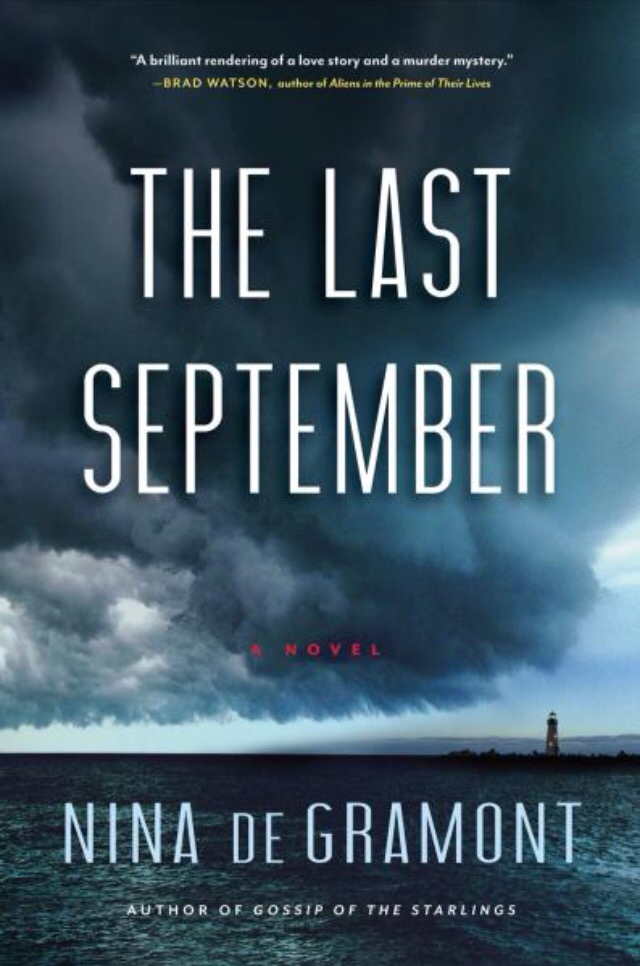
<em>The Last September</em> By Nina de Gramont.
Algonquin Books| September 15, 2015| 307 pages |$25.95| ISBN: 978-1-61620-133-3
rating: *****/5*
Years ago I read the wonderful short story collection Of Men and Cats by Nina de Gramont. This is the first novel I’ve read in some time that I wanted to read and read and read and not switch over to another book for a bit. The setting is mostly New England: Amherst; Cape Cod; Maine. It starts with a murder. Someone murdered Brett’s husband Charlie. “What did I know about the way my life would change in a matter of hours? Absolutely nothing. Murder. It’s a word out of potboilers and film noir. It leaps from the TV screen during police dramas or the evening news. It doesn’t sound real. It’s nothing you ever think will have to do with you.”
While Brett comes to terms with her husband’s death and wonders who killed him—all signs point to the schizophrenic brother—author Nina de Gramont takes us back to explore how Brett and Charlie met, as well as complications in their marriage mostly due to Charlie’s infidelity and inability to keep a job. Brett lived with Charlie in a seaside cottage on the Cape. Meant for seasonal occupation, it’s her husband Charlie’s summer home. Brett fell in love with Charlie during college when they spent one magical night together skiing under the stars in Colorado. Brett had been friends with Charlie’s brother Eli. But Eli suffered a scary and devastating breakdown which scared Brett and he subsequently left college for treatment.
Years later Brett runs into Charlie on Cape Cod with her fiancé Ladd [who knows Charlie’s family] and the two pick up as if time never passed. “Anyone could have told me, and I knew even as I moved forward: This whole thing was a mistake. A disastrous mistake. Charlie had already rejected me once. And now I was leaving Ladd, breaking off my engagement, for a man who hadn’t even said he loved me and maybe never would. Charlie was scattered, penniless, jobless. Who knew what he even aspired to, as far as character, as far as life?”
Charlie remains close to Eli and constantly protects and rescues Eli –when he’s off meds or finds himself off the rails– which makes Brett both wary and uncomfortable. “It took several seconds to recognize Eli. In my mind, he had separated into two different people: the great friend who’d always had my back and the scary stranger who appeared one night, and then disappeared, taking the original one with him. Now there seemed a third one, barely recognizable across those distant years and miles.”
Brett becomes consumed by Charlie. Her world revolves around Charlie. Brett works to complete a PhD in 19th century poetry while Charlie doesn’t even read. There are numerous connections to Emily Dickinson throughout as Brett studies 19th century poetry and lived across the street in Amherst from the Dickinson home.
It’s a devastating and destructive relationship. Brett loses her sense of self when she’s with Charlie. “And I didn’t just love him. I loved him enough to stop caring about anything else. I loved him enough to wreck my life. I loved him the way you dream about being loved, when you don’t even know you’re dreaming.” But is that enough to keep them happy and together. Is Brett more devoted to Charlie than Charlie to Brett? Did Eli really kill the brother who loved and cared for him unconditionally or is there a third party involved?
Nina de Gramont writes excellent characters and a dazzling storyline involving mental illness, family, infidelity, relationships, love and murder. The Last September is one of the best books I’ve read this year. It’s a masterful mediation on relationships.
–review by Amy Steele
<em>FTC Disclosure: I received this book for review from Algonquin Books.</em>
Share this:

book news: The Inn at Lake Devine making Off-Broadway debut
Posted by Amy Steele in Books on September 17, 2015
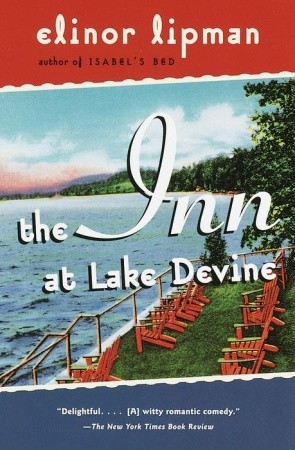
Exciting news! one of my all-time favorite books The Inn at Lake Devine by Elinor Lipman makes it’s Off-Broadway debut this fall beginning October 7. ROAD TRIP anyone?
The Inn at Lake Devine
At Shetler Studios, Theatre 54
244 West 54th St., 12th Floor
between Broadway and 8th Avenues, NYC.
Share this:

book review: ISIS: The State of Terror
Posted by Amy Steele in Books on September 16, 2015

ISIS: The State of Terror By Jessica Stern and J.M. Berger.
Ecco| March 2015| 385 pages |$34.99| ISBN: 978-0-06-239554-2
rating: 3.5/5*
“Terrorism is psychological warfare. Its most immediate goals are to bolster the morale of its supporters and demoralize and frighten its victims and their sympathizers. For the audience, the radius of fear dwarfs that of injury and death. Terrorists also aim to make us overreact in fear. While they don’t always get what they want, terrorists often succeed at two vital goals: spreading fear and provoking negative policies.”
Are you confused between Sunni and Shi’a branches of Islam? “Though the comparison is imperfect for a number of reasons, it can be helpful to think of Shi’a Islam as being analogous to Roman Catholicism and Sunni Islam as being analogous to Protestantism.” ISIS is anti-Sunni Muslim. Do you understand the appeal of ISIS for many radical Muslims? Are you confused by a caliphate? Do you want to know why Al Queda distanced itself from ISIS? For one reason, Osama bin Laden studied business in college while former ISIS leader Abu Musab al Zarqawi dropped out of school in the ninth grade. Zarqawi “a Jordanian thug-turned-terrorist brought a particularly brutal and sectarian approach to his understanding of jihad.” Current ISIS leader Abu Omar al Baghdadi holds a doctorate in Islamic culture and Shariah law. Do you wonder how ISIS recruits, particularly Westerners? What can the United States and other Western nations do to stop or suppress ISIS? The authors suggest: “Rather than trying to displace ISIS with an external force, we should consider efforts to cut off its ability to move fighters, propaganda, and money in and out of the regions it controls, weakening its ability to use brute force and extreme violence to keep the local population in check.”
Author Jessica Stern lectures on terrorism at Harvard University. She is a member of the Hoover Institution Task Force on National Security and Law and served on the Clinton administration’s National Security Council staff. She wrote Denial: A Memoir in Terror, Terror in the Name of God, Why Religious Militants Kill and The Ultimate Terrorists. Author J.M. Berger is a nonresident fellow with the Brookings Institution and wrote Jihad Joe: Americans Who Go to War in the Name of Islam.
This exhaustively researched and expertly written book chronicles the beginning of ISIS, what its followers and members believe and its messages and plans. This detailed account should enlighten those confused by the terrorist group. I wish there’d been a bit more on how ISIS recruits using Twitter. That chapter disappointed me. I wanted to know how and why Westerners are drawn to such a brutal group. I wanted interviews or information on more Westerners in ISIS or formally in ISIS. That’s what fell short for me. Despite majoring in Political Science in college, ISIS and other Islamic and religious terrorist organizations perplex me. This book helped me to understand a bit more.
Some highlights:
–“Bin Laden and his early followers were mostly members of an intellectual, educated elite, while Zarqawi was a barely educated ruffian with an attitude.” [pg. 16]
–“The Sunni and Shi’a branches of Islam had split soon after the death of Muhammad over the issue of who should succeed the Prophet of Islam as leader of the Muslims, or caliph. Sunnis believe that the caliph can be chosen by Muslim authorities. Shi’ites believe that the caliph must be a direct descendant of the Prophet through his son-in-law and cousin Ali.” [pg. 19]
–“Jihadists who get out of U.S. detention develop a kind of aura when reintegrated into their home communities . . . making it easier for them to recruit others, or to symbolize defiance against a Western power.” [pg. 36]
–ISIS is well-funded. “Most agreed its cash reserves ran into the hundreds of milions of dollars, perhaps even a billion, and by November, some estimated it was generating $1 million to $3 million per day . . .” [pg. 46] Most of ISIS’s revenue came from taxing local populations, looting, sale of antiquities and oil smuggling.
–The coalition to fight ISIS in Syria includes: United States, France, Australia, Canada, Germany, the Netherlands and Bahrain, Jordan, Saudi Arabia, Turkey, Qatar and the United Arab Emirates—all Sunni-majority countries.
–17, 000 foreign fighters have traveled to Syria and Iraq to join jihadi groups. Supporters of ISIS span the globe and include those in the United States, Canada, Europe, Australia, India, Afghanistan and Pakistan. [pg. 200]
–“Western returnees have been horrified by what they saw in the Islamic State and appear to have little interest in attacking their home countries, at least for now.” [pg. 201]
–ISIS is obsessed and driven by the end of days. Over 50% of Muslims believe in this end time/ Day of Judgment. Mostly in Afghanistan, Iraq, Tunisia and Malaysia. “Why is ISIS’s obsession with the end of the world so important for us to understand? For one thing, violent apocalyptic groups tend to see themselves as participating in a cosmic war between good and evil, in which ordinary moral rules do not apply.” [pg. 224]
–review by Amy Steele
FTC Disclosure: I received this book for review from Ecco.

purchase here: ISIS: The State of Terror

Share this:

STEELE INTERVIEWS: author Alex Dolan
Posted by Amy Steele in Books, Interview on September 14, 2015
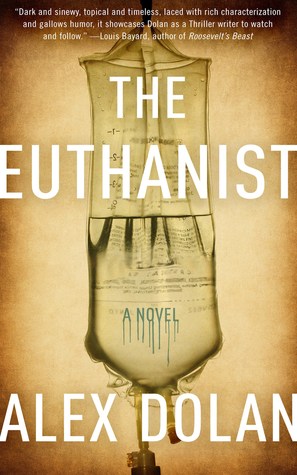
Paramedic and firefighter Kali volunteers as part of the right-to-die movement. she helps the terminally ill die. Despite her youth, the twenty-something Kali knows what she’s doing—she’s worked 27 cases in a few years– yet her most recent case finds her flipped and handcuffed to the bed. Turns out Leland Moon, who works in law enforcement, tricked Kali into thinking he’s terminally ill and wants her help. Is it a sting? Leland needs something from Kali and it’s dark and involved and Kali might not be willing to do it but her other choice would be jail.
The Euthanist encompasses the hot button topic of euthanasia along with child abductions and abuse. Intriguing topics along with complex characters drive this dark riveting thriller. Once I started reading, I couldn’t stop. It’s smart, well-researched and at times amusing. All the right elements for a solid thriller.
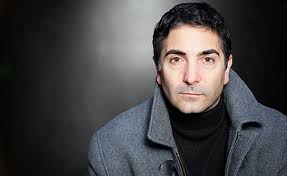
Author Alex Dolan grew up in Boston and now lives in the San Francisco Bay area. He received a masters in strategic communications from Columbia University and has worked in Sub-Saharan Africa among other interesting locales. Dolan’s also a musician and recorded four albums. I recently spoke with Alex Dolan by phone.
Amy Steele: I volunteered on the Massachusetts Death with Dignity ballot question and I’ve worked in healthcare and elder care. Euthanasia interests me. How did you decide to write a novel about it?
Alex Dolan: My dad passed away a few years ago. He was a healthy guy and he had ARDS (acute respiratory distress syndrome) which is a glorified staph infection that shuts down your lungs. It was so random. We didn’t have the time to prepare mentally. My dad had a living will in place. He’d already thought about this stuff. I didn’t have a living will until this happened. But I thought what happens if you get to this point and there is no quality of life? I started to do more digging and wanted to know who does this kind of work? Kevorkian pops up a lot but there are other more prominent figures who are academics. I read what they wrote. I watched documentaries. I intentionally didn’t approach people directly on this because it’s such sensitive subject matter. Where I’m normally very much a primary research kind of guy, for a lot of this I just ended up reading and watching as much as I could to find out what sort of person would gravitate toward this sort of work.
I feel like the character who came out of this, the character I wanted to create was very different and very vibrant from a lot of people I saw. She would realistically be around death all the time and wanted to be a part of it but wasn’t Grim Reaper-y. Someone young and strong. Idealistic and relatively self-assured in the work she was doing. Someone who was a realist not a Florence Nightingale or [Jack] Kevorkian. It started with what I went through with my dad but there’s the real question of who would do this. And not in a judgmental way. This kind of work that’s outside the law in almost every case. It’s like hospice care. There’s something really traumatic about being exposed to death and being willing to put yourself in the position to see someone go through it. It takes a lot of courage for someone to go through it. And you have to be willing to go to jail to bring this mercy to someone. That’s intriguing to me.
Amy Steele: Why a female protagonist and what were the challenges of writing from a female point-of-view?
Alex Dolan: My association with the death with dignity movement was with Kevorkian. He was the face of the movement for better or worse. I actually have a lot of respect for him. But to a certain degree he was this somber stoic character. I wanted to have somebody who was the exact opposite of that. I wanted people to think differently about what this work really meant. Rather than somebody who personified an angel of death, I wanted somebody younger and physically formidable, who used her body a lot and wasn’t an academic.
I don’t think there’s a whole lot of difference between men and women in terms of the fundamental things they want. There’s a lot more similar characteristics than differences. People want love and respect and sex and money and community and friendships. That doesn’t change if you’re a man or a woman. The primary drives that would motivate a character don’t change that much. There are some factors I get to play with by Kali being a woman and the antagonist being a man. The tension is different than if it were two women or two men. A lot of my intimate relationships have been with women—friendships or intimate relationships—I feel like I’ve gotten to know women better than guys.
Amy Steele: Kali is very strong and independent and physically you made her strong. She’s in a male-dominated career as a firefighter/paramedic. What was involved in her character development?
Alex Dolan: Part of it was me thinking I’m somebody who loves a good read and loves something that’s exciting. And I like strong characters anyway–their mind and their body. The nature of this story too; I tend to put my characters through a lot of punishment. I think I grew up reading a lot of mythology where the central hero gets beat up a lot. They learn and they grow through suffering. I wanted someone who could take that punishment, so somebody who was already strong. I gravitate toward people I think have a certain amount of inner strength.
It also resulted from research. When I thought about the kind of person who could do this kind of work, I didn’t want a doctor who’d been doing this for 30 years who was so rigid in his or her ways who wouldn’t question it. I wanted it to be somebody younger who had some medical experience but wasn’t an expert. I wanted the person to be fallible. So I thought it could be a paramedic or EMT. A lot of paramedics are also firefighters. A lot of the calls for firefighters are medical calls. That interested me. To become a firefighter you have to be in great shape. The physical aptitude test to get in is tough. I interviewed female firefighters and these are people who are really strong people. These are people who are going to crime scenes and putting themselves in danger. Things can get ugly quick. And there’s a gray area around the ambulance. What happens in the ambulance stays in the ambulance. There’s a law that an M.D. must declare a death. Many of my interviewees said there’s a saying that nobody dies in an ambulance. There’s a line being biological death when someone dies in the ambulance and legal death when a doctor calls it. Doing something outside the law but considered a mercy killing wouldn’t be outside someone’s scope of experience in that situation.
Amy Steele: You brought in several other dark themes with childhood abuse/trauma and abduction. Did that just develop or how well did you plan out your writing?
Alex Dolan: I outline a lot. I tend to derail easily so if don’t outline it’ll be easy for me to go off on a 20 page exposition. For me it’s easier to rework a story outline then to go through a draft and realize major elements aren’t working. I did know how it was going to end. I went down that path of bringing in the abduction subplot. The protagonist is doing things that some people would find questionable. I wanted to find a villain that was morally reprehensible. The details in the book are largely drawn from actual cases.
Amy Steele: The [redacted so as not to give it away] scene in chapter seven. That was gnarly.
Alex Dolan: That was a bit much. The running blades. Way before Oscar Pistorius became a killer the image of him running on those running blades was quite heroic. Cindy is an interesting character, a secondary character. I know a lot of people who’ve survived childhood trauma. I find that some people button themselves up and protect themselves and build a psychological shell so that can’t get hurt again and there are people who tap into their inner strength and whether that’s a mask or not is up to debate. They end up become driven by that [trauma]. She’s someone who feels she needs to rise above it to make up for lost time.
Amy Steele: Why did you decide to bring a law enforcement official into the novel in Leland Moon?
Alex Dolan: She was breaking the law so the ultimate threat for her is somebody who can put her in jail. It took me a long time to settle on having him be a law enforcement official. I didn’t want the scene to be contrived. I researched what it took to be a veteran law enforcement official. What informed the backbone of Leland is that I watched a lot of YouTube videos and FBI agents have a superiority complex that they have to be this smart and tough to get into this branch of law enforcement. For Leland to want to do what he does in the first few chapters, you have to have a lot of guts and confidence in your ability. Someone who’s actually in the Bureau would actually think they’re that much better than the person they’re trying to catch.
Amy Steele: Have you always been interested in writing thrillers?
Alex Dolan: I don’t read a lot of genre thrillers. A lot of what attracts me is the voice. I think Joyce Carol Oates writes a mean thriller. There was a book she wrote last year called Carthage. Her stuff is totally accessible. She writes horror that’s creepier than Steven King. I tend to read a lot of literary fiction that delves into subject matter that interests me. You’re putting people in situations that are untenable situations. I also have a soft spot for horror. You’re putting someone in a horrible situation and you see what happens to that person. Thrillers can uncover the best that people have to offer. That’s when people can rise above and be the best they can be.
Amy Steele: What do you like about Kali and Leland?
Alex Dolan: I like that [Kali] is driven. She is doing what she does to ease suffering. She has her own guilt from stuff that happened as a teenager but she’s not doing this for glorification. There’s a nobility but a humility. For Leland, I like Leland’s smarts. I respect that fact that he’s working on other people’s behalf. His motivation is similar but he’s willing to throw people under the bus to do what’s right. That I don’t agree with. Kali has a mentor and she doesn’t want those people to get into physical or legal problems. I like Leland’s drive. His acumen is notable. He’s very good at what he does. His morality is a little foggier and I question his judgment sometimes.
Share this:

book review: This is Your Life, Harriet Chance!
Posted by Amy Steele in Books on September 12, 2015
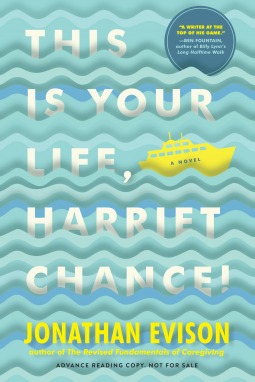
This is Your Life, Harriett Chance! By Jonathan Evison.
Algonquin| September 2015| 304 pages| $25.95| ISBN: 978-1-61620-261-3
Rating: ****/5*
Dazzling quick read. Harriet Chance, a jagged edged and flawed woman [who wants to read about perfection?], finds out surprising news after her husband’s death. She takes the Alaskan cruise her husband paid for and planned with her daughter as an unexpected and rather undesirable travel companion. Of her daughter: “It breaks Harriet’s heart that Caroline squandered every opportunity, that she sabotaged her life with bad decisions.” I haven’t read that many authors that memorably chronicle old age or convincingly can write an older character. Muriel Spark [Memento Mori] comes to mind. It’s impressive that Jonathan Evison deftly gets into the mindset of a 78-year-old female character. Evison brings Harriet Chance to the reader during various ages in her life with candor and wit. Using a game show voice the narrator takes Harriet Chance back and forth from present to past to describe what occurred during her lifetime. The paths she chose. The paths she didn’t. The results. It’s about parenting and partnering and navigating life’s messiness and pitfalls. The edgy tone makes this novel superbly inventive, unique and fast-paced. Of Harriet Chance in her 20s: “All these years later, they’re still slapping your fanny around the office. Your salary doesn’t stretch that far. The work is exhausting. As both a woman and an assistant, you’re expected to work harder.” I like Harriet Chance in her early years– a scrappy survivor with realistic expectations. By 78, Harriet’s rather resigned yet remains unapologetic and opinionated. Can she and her daughter come to terms with each other now? This is a delightful, brutally honest novel that will keep you turning pages.
–review by Amy Steele
FTC Disclosure: I received this book for review from Algonquin Books.
purchase copy here: This Is Your Life, Harriet Chance!

Share this:

book review: The Fall of Princes
Posted by Amy Steele in Books on September 6, 2015

The Fall of Princes By Robert Goolrick
Algonquin Books| August 25, 2015|304pages |$25.95| ISBN: 978-1-61620-420-4
Rating: ****/5*
“That’s when you retire, they reply with that bland smile. When you reach the age of forty, or your portfolio reaches forty million. That’s when you get away clean and get your life back. What’s left of it.”
Full of attitude and 80s excess similar to Bright Lights, Big City, Bonfire of the Vanities and the recent film The Wolf of Wall Street. It’s a riches to rags story told in riveting, unapologetic semi-autobiographical style by Robert Goolrick. During the 80s, Wall Street reigned with money and power. Alongside the wealth were excessive drug use, partying and sexism. Rooney worked on Wall Street in his 30s and hung with a hotshot gang. When he suddenly loses his job, he loses everything including his sense of self and his marriage. Rooney recalls: “When it came time to fire me, it took our man behind Napoleon’s desk, three people from HR, my immediate supervisor, and four lawyers.” He finds himself on the outside and working at a bookstore. He looks back with a bit of remorse and plenty of bravado [“Forgive me for thinking that I was better than you will ever be. Forgive me for thinking equaled a kind of moral superiority.”] in an honest and raw manner. A dizzily addictive read with every word and every page fueled by events that only could happen among the immensely wealthy with loose moral standards, endless pockets and a hunger for everything pleasurable.
–review by Amy Steele
FTC Disclosure: I received this book for review from Algonquin Books.

Share this:

book review: The Art of Crash Landing
Posted by Amy Steele in Books on September 6, 2015
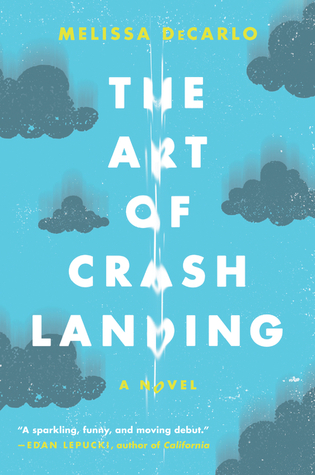
The Art of Crash Landing By Melissa DeCarlo.
Harper Paperbacks| September 8, 2015| 416 pages |$15.99| ISBN: 978-0-06-239054-7
Rating: ***/5*
Fantastic cover and title. Promising premise: 30-year-old Mattie Wallace fears that since she’s broke and pregnant she may become just like her alcoholic mother. Her only possessions she keeps in several garbage bags. When her grandmother dies, Mattie travels from Florida to a small town in Oklahoma to retrieve her inheritance. The introduction to Mattie: “I fire up the Malibu, put in a Black Keys CD, and light a cigarette with shaking hands. Three drags later I remember why I quit smoking. Slamming on the brakes, I open the car door and lean out to retch, depositing my half a Slim Jim and an earlier glass of orange juice in the middle of an oily puddle.” Pregnant, malnourished and brazen, she’s quite the scrappy fighter.
Mattie’s perception of small town Gandy: “I wake, sweating, the sun shining straight on my face. I check the time; it’s almost eight. Grabbing the pillowcase that holds my toiletries, I climb out of the car and look around. I’m on what seems to be the outer edge of one of those quaint, redbrick downtowns. The kind where it looks like you’re in a Leave It to Beaver episode until you notice that all the shop windows are covered in paper, and the only thriving businesses are attorneys, bail bondsmen, pawnshops, and payday loans places.”
While there she meets various people who may or may not figure into her mom’s downfall. Apparently Mattie’s mom hastily left the small town under mysterious circumstances. There’s the genuine paraplegic attorney, a librarian named Fritter, her grandmother’s abrasive neighbor JJ and the handsome alcoholic Father Barnes. Mattie begins to unravel details about her mother’s past and reasons for fleeing her small town and attempting to erase her poor decisions through excessive drinking.
Author Melissa DeCarlo moves into the past to explain Mattie’s experiences with her mother. It’s a rocky debut novel about a rocky life. Started slow, picked up and slowed again. Character development creeps along and little tension or suspense exists where it seems needed. Did I particularly care about what would happen? The novel requires more editing as it’s too long at 400 pages. I thought I’d relate to straightening oneself out after poor decisions and misfortunes. I skimmed it at parts but wanted to find out the facts.
Unless you planned some serious career at age 12 most people face challenges in their past. Single moms and divorced parents aren’t that unusual anymore. It’s not all negative. Despite several troubled connections, Mattie maintains an endearing relationship to her former stepfather Queeg. While rough around the edges and uneducated, Mattie’s as savvy as anyone from Florida, land of criminals and slackers, can be. She seems rather earnest in uncovering details about her mom’s life and its connection to her own.
–review by Amy Steele
FTC Disclosure: I received this book for review from Harper Collins.
purchase at Amazon: The Art of Crash Landing: A Novel (P.S.)

Share this:

September Boston-area Book Readings of Note
Posted by Amy Steele in Books on September 2, 2015
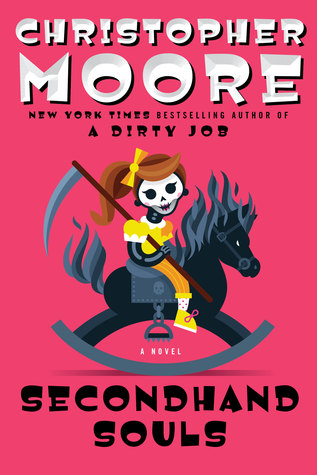
Christopher Moore
Secondhand Souls
Brookline Booksmith
At Coolidge Corner Theatre
Wednesday, September 2 at 6pm
read my interview with Christopher Moore
Jill Bialosky
The Prize
Harvard Book Store
Thursday, September 10 at 7pm
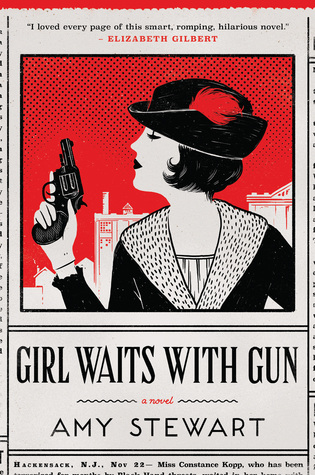
Amy Stewart
Girl Waits with Gun
Harvard Book Store
Friday, September 11 at 7pm
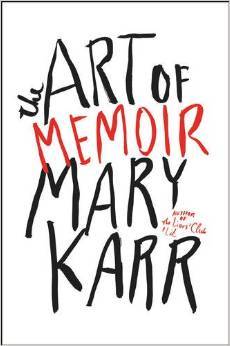
Mary Karr
The Art of Memoir
Monday, September 14 at 6pm
Harvard Book Store at Brattle Theatre

Ann Beattie
The State We’re In: Maine Stories
Harvard Book Store
Tuesday, September 15 at 7pm
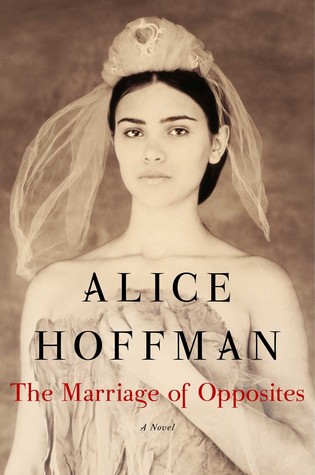
Alice Hoffman
The Marriage of Opposites
Newtonville Books
Thursday, September 17 at 7pm

Salman Rushdie
Two Years Eight Months and Twenty-Eight Nights
Harvard Book Store at First Parish Church
Monday, September 21 at 7pm
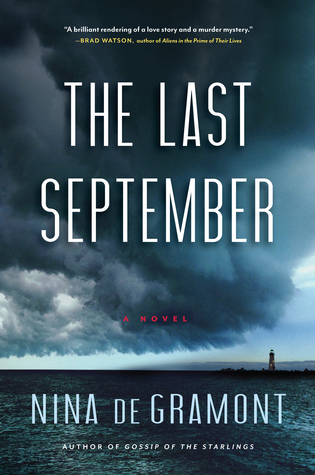
Nina de Gramont
The Last September
Porter Square Books
Monday, September 21 at 7pm
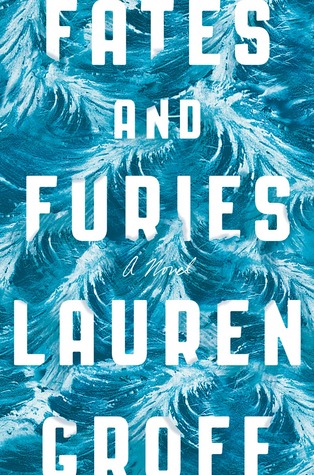
Lauren Groff
Fates and Furies
Harvard Book Store
Tuesday, September 22 at 7pm
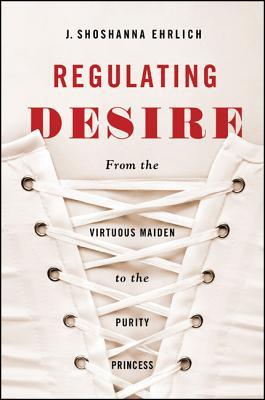
J. Shoshanna Ehrlich
Regulating Desire
Harvard Book Store
Friday, September 25 at 3pm

Elizabeth Gilbert
Big Magic
Harvard Book Store
Friday, September 25 at 7pm

Michael I. Bennett, MD and Sarah Bennett
F*ck Feelings: One Shrink’s Practical Advice for Manageing All Life’s Impossible Challenges
Brookline Booksmith
Tuesday, September 29 at 7pm
Jojo Moyes
After You
Brookline Booksmith
Wednesday, September 30 at 7pm
Share this:

book review: A Remarkable Kindness
Posted by Amy Steele in Books on August 29, 2015
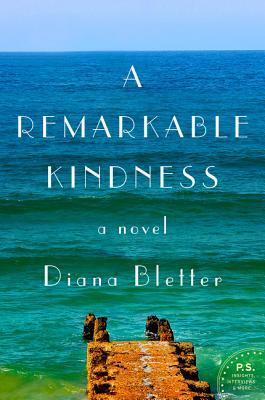
A Remarkable Kindness By Diana Bletter.
William Morrow| August 2015|394 pages |$14.99| ISBN: 978-0-06-238244-3
Rating: ***/5*
Four women develop a friendship in an Israeli coastal town in 2006. Their bond builds by their involvement in a burial circle as well as by supporting each other through various life choices. Lauren, a maternity nurse, moved from Boston to live with her Israeli husband. Emily, a recently-divorced friend of Lauren’s, decides to move to Israel for a change. Aviva moved to Israel for intelligence work and struggles with the loss of both her husband and son. Rachel, a recent college graduate from Wyoming, moved to Israel to pursue altruistic goals.
While there seems to be much promise, it’s rather disappointing at times. First, there’s not nearly enough about the burial circle work. The burial circle is a ritualistic ceremony to prepare bodies for burial. These women don’t particularly bond through that. If author Diana Bletter wanted that to be the focus she needed to delve further into every aspect about it and she didn’t. The women gathered occasionally for a burial circle and it didn’t add any emotional value. Second, these women don’t have particularly strong bonds or friendships. Instead they’re rather surfacy and they seem only friends because they live in the same small village. When a war erupts instead of becoming engulfed in the stress which combat entails, it seemed a blip among these women’s efforts to live happily. None of them are happy living in Israel and many make plans to move back to the states as soon as possible.
Author Diana Bletter is an American who moved to Israel and lives in a seaside town with her husband and children and is a member of a burial circle. She writes from her own experience and perhaps that’s why the novel disappointed me. I anticipated details about the burial circle and support for the title. I only kept reading because I searched for further connections which failed to emerge.
–review by Amy Steele
FTC Disclosure: I received this book for review from William Morrow.

Share this:

STEELE INTERVIEWS: author Christopher Moore [Secondhand Souls]
Posted by Amy Steele in Books, Interview on August 25, 2015
Secondhand Souls By Christopher Moore.
William Morrow| August 25, 2015|352 pages |$26.99| ISBN: 978-0-061779787
In Secondhand Souls, the sequel to New York Times bestselling author Christopher Moore’s A Dirty Job, the souls of the dead are mysteriously disappearing in San Francisco. People are dying without their souls being collected. No one knows who is stealing them and why and most importantly where the souls are going. Death Merchant Charlie Asher, trapped in the body of a fourteen-inch-tall “meet” waits while his Buddhist nun girlfriend Ashley [“She was a Buddhist nun who had been given the lost scrolls of the Tibetan Book of the Dead and she could do things that no one else on earth could do, but she couldn’t do what Charlie wanted her to.”] finds him a new body to serve as host.
A diverse crew bands together to solve the mystery of the missing souls: the seven-foot-tall death merchant Minty Fresh; retired policeman turned bookseller Alphonse Rivera [“He’d peacefully taken an early retirement from the force, opened the bookstore, and set about reading books, drinking coffee, and watching the Giants on the little television in the shop. Nothing had happened at all.”]; the Emperor of San Francisco and his dogs, Bummer and Lazarus; and Lily, the former Goth girl [“She sighed, a tragic sigh that she didn’t get to use much anymore since she’d been forced by a brutal society to behave like a grown-up, and since she’d lost weight, most of her mopey Goth clothes didn’t fit, so she was almost never dressed for tragic sighing.”].
It’s zany and sharp with outrageous characters and a clever storyline and dark humor. I didn’t read A Dirty Job and perhaps I should’ve done. I’ll absolutely read another Christopher Moore. I’ve heard great things about Sacre Bleu.
Recently Christopher Moore took the time to answer some questions.

author Christopher Moore
Amy Steele: Why did you want to write a sequel to A Dirty Job?
Christopher Moore: My readers kept requesting it and I was at a place in my schedule where I wanted to write another book set in San Francisco, since I live there and wouldn’t have to travel for research.
Amy Steele: Do you like writing series or sequels? You have the “love series.”
Christopher Moore: I don’t mind writing them, but in a way they feel more difficult than writing a solo book because I’m so conscious of not wanting to write the same book twice.
Amy Steele: What’s the most challenging aspect of writing a sequel?
Christopher Moore: To have new things happen to the characters, give them new problems to solve and not just replicate those I created in the previous book.
Amy Steele: How did you come up with this idea about death and soul collection?
Christopher Moore: I had been caring for my dying mother, then a couple of years later, helped with the care of my wife’s mother, and I thought I had something to say about death and dying. The transfer of souls was just something I thought was goofy, although it’s based a bit in Buddhist theology.
Amy Steele: Who is your favorite character in Secondhand Souls and why?
Christopher Moore: The Yellow Fellow, a mysterious and magical gentleman who is all dressed in yellow and drives a ’49 Buick.
Amy Steele: Where did the idea come for the Squirrel People?
Christopher Moore: From the work of an artist named Monique Motil. She actually creates sculptures like the squirrel people, making them out of real animal parts and making elaborate costumes for them. I saw her creatures in a gallery when I was researching A Dirty Job and I asked her if she’d be okay with me putting them in a book, giving them personalities. She loved the idea, so I created them.
Amy Steele: How did you get into writing?
Christopher Moore: I read a lot as a kid and was pretty good at writing stories for school from the age of 12 or so, so I just pursued it, on and off, until I started making a living at it.
Amy Steele: What do you like best about being a novelist?
Christopher Moore: Being able to pick a subject or a place I’m interested in and make that my job for a couple of years. I’ve been able to do some terrific things because I chose to write books about a given place or subject.
Amy Steele: San Francisco is very much a character in your novel. How do you incorporate the city in such a seamless, intriguing manner?
Christopher Moore: It’s not hard. San Francisco, like most of the great cities of the world, has a real personality, with all the different facets of a human personality, so I just treat the city that way. I also have great affection for the city, so it’s easy to write about it.
Amy Steele: Do you come up with characters or plot first?
Christopher Moore: Sort of at the same time. A Dirty Job started with this line in a notebook about fifteen years ago. “A guy who’s a hypochondriac gets the job of being Death.” So you sort of have plot and character in that one line, or at least the start of it. Most of the books start with a similar notion. The minor characters are created because I need someone to do something or say something to make the story work.
Amy Steele: Do you write from an outline or free form it and allow characters and story development to be organic?
Christopher Moore: It depends on the story. Some of my books are based in history, and real historic events, so I have a timeline I have to work within. Sacré Bleu, my book about the French Impressionists, was that way. I had to figure where everyone was at any given time and thread the story through history, so those are pretty tightly outlined. Other books, like A Dirty Job, are way, more organic, and I’ll just have bits and pieces that will fit in somewhere. The structure will suggest itself as I go along, so I will end up with an outline for at least the last third. I don’t rewrite a lot, so I can’t afford to go down the wrong road for very long, so some planning has to be done as I work.
Amy Steele: An Instagram friend wants to know what Shakespearean play you will turn into a book next and will you write any more stories from the Bible?
Christopher Moore: I don’t know about doing anymore Bible stories, but I wanted to do a new book with Pocket. I can’t say the play, but it’s one of the comedies this time.
Amy Steele: Another friend Ashley asks if you prefer to write historically-based/literary characters or developing your own? I want to know about the challenges in writing both.
Christopher Moore: I like putting my own characters among historical characters or characters drawn from the Bible or Shakespeare. Although writing dialogue for Toulouse-Lautrec was great fun in Sacre Bleu.
Amy Steele: What’s on your nightstand to read now?
Christopher Moore: Savages by Don Winslow, World War Moo by Michael Logan, and If He Hollars, by Chester Himes.
Christopher Moore will be reading for Brookline Booksmith at the Coolidge Corner Theatre at 6pm on September 2.

Share this:

-
You are currently browsing the archives for the Books category.
About Me

covering mostly music and books. focus on alternative/indie and women in music, literature and the arts. feminist. vegan. mostly alternative, a bit bohemian. Masters in journalism from Boston University. BA from Simmons College.



Entertainment Realm by Amy Steele is licensed under a Creative Commons Attribution-Noncommercial-No Derivative Works 3.0 United States License.
Based on a work at entertainmentrealm.comCopyright © 2009. All writing, unless otherwise noted, by Amy Steele.
 ENTERTAINMENT REALM
You must be logged in to post a comment.