Archive for category Interview
STEELE INTERVIEWS: singer/guitarist Stephen Ramsay
Posted by Amy Steele in Interview, Music on February 16, 2011

Dreamy/ shoegazing indie pop band Young Galaxy are Montreal-based Stephen Ramsay [vocals/guitar] and Catherine McCandless [vocals/keyboards] and Stephen Kamp [bass/vocals]. Stephen and Catherine formed the band as a duo in 2005. Young Galaxy released its third album, Shapeshifting, this month on Paper Bag Records. I interviewed Stephen Ramsey.
Entertainment Realm: Young Galaxy started as a duo with you and Catherine. What changed when you went from duo to trio?
Stephen Ramsey: It was the most convoluted move to gain one extra member ever I think! We were two, then six, then five, then four, then three. I guess I forgot that three comes right after two somehow. It would have saved us a lot of trouble! Actually, Stephen Kamp – our third member – was the first to join the band after Catherine and me. So in a way, it’s been the three of us for as long as the band has been around. And just recently, we’ve become a five piece again. Go figure…
Entertainment Realm: How has the band changed since you first formed?
Stephen Ramsey: How much time have you got for this answer? It’s changed immensely. As I have mentioned, we’ve seen many members come and go but I’m proud to say that we have remained focused on becoming a better band since day one. Along the way, we’ve learned how to be better in business, how to perform, etc. We’ve toiled away in the trenches while everyone else has been distracted by shitty music. Haha. Honestly, we’ve felt almost like we we’ve been training, getting ready for a title fight. We are very ambitious, and have very high standards creatively. I firmly believe most bands don’t hit their creative peak on their first one, two, even three records. Too bad the industry doesn’t invest in bands long term anymore – I think it means bands with promise are thrust into the limelight before they fully develop, and are used up very quickly before they can truly make their best music. Everyone’s looking for the new, big thing. For us, it’s always been a matter of sticking around, waiting until the timing is right, doing this long enough until we got really, really good at what we did. We want to be masters of our craft. I want to be a black belt in rock n’ roll, just like David Lee Roth!
Entertainment Realm: What is the Vancouver music scene like? What influence did that have on you as a band?
Stephen Ramsey: I have no idea really! Not because I wasn’t around it, I mean, I used to dj there for many years – but really, I dabbled with bands more than anything. I mostly did bedroom recordings. I haven’t lived there since 2005, and I think it’s become more vibrant now than it was. Back in the day, it was every band for itself. There was no galvanizing scene or momentum.
Entertainment Realm: What makes Young Galaxy work well together?
Stephen Ramsey: At the heart of the project are my girlfriend Catherine and I. We’re a couple and we’re best friends. We’re very close, there’s a kind of unspoken understanding about what we’re trying to accomplish musically that doesn’t need to be explicated much. It’s a very intuitive relationship. We make each other creatively braver than we would be on our own. Beyond that, we’ve built the band around the premise that people who are involved in it should be treated as friends and with respect. It’s not like we have many perks or much money to offer, so you might as well have a good time if you’re going to sacrifice your time and energy in the project, right?
Entertainment Realm: How do define a good song?
Stephen Ramsey: Whatever gets a best new music rating on Pitchfork.
Entertainment Realm: What’s your favorite song on Shapeshifting and why?
Stephen Ramsey: Honestly, I don’t have one. As Keith Richards once said, ‘don’t make me cut my babies in half’. Haha. I love Keith Richards.
Entertainment Realm: Can you describe your creative process?
Stephen Ramsey:
1 part sunset from the top of the ruins in Sintra, Portugal
1 part Manhattan cocktail at the Angel’s Share, NYC
1 part baby panda
1 part cherry blossoms falling off the tree and then filmed backwards so they appear to be going up (in slow motion)
I part watching the morning fog burn off while sitting on the dock at Sproat, Lake, Vancouver Island
The juice of one lemon
Shake well, pour over ice and serve.
Entertainment Realm: How did you get to work with Dan Lissvik [producer] of the band Studio in Gothenburg, Sweden? How did that affect the recording?
Stephen Ramsey: I stalked him! I contacted his band, Studio, on Myspace back when it was a useful tool still. After a few email exchanges over a year or two, he agreed to work on an album with us. It did affect the writing and recording, because we left a lot more space than we were used to. We knew he’d go in and do his own thing over top, so we were careful not to fill every inch of sonic space in the songs. We’d never done that before, so that was a very new process for us. It meant using a lot of restraint, which I am now a big proponent of in recording. It’s good to rein it in, to only commit the best ideas to tape, rather than every idea that comes to your head. Dan certainly influenced us this way – he preached this before we sent him anything we’d done. We tried to stick with it and be very economical in our choices, musically.
Entertainment Realm: What can an audience expect from a Young Galaxy live show?
Stephen Ramsey: I’m not sure yet! We’re rehearsing a new band now, one that I’m very excited about. It’s our best band yet in my opinion. I think if we apply ourselves, the sky’s the limit… we’ll be better than U2 in no time! Haha. Other than that, a lot of fake blood, baby pandas, cherry blossoms filmed falling upwards in slow motion, you know – the usual.
Entertainment Realm: What are you listening to now?
Stephen Ramsey:
Broadcast – Tender Buttons (R.I.P Trish Keenan)
The Streets – Computer and Blues
Cold Cave – The Great Pan Is Dead
Grimes – unreleased new material
Goblin – Suspiria Soundtrack
Fabio Frizzi – Zombi Soundtrack
Future Islands – In Evening Air
Entertainment Realm: What inspires you?
Stephen Ramsey: Impending doom.
Entertainment Realm: Why the name Young Galaxy?
Stephen Ramsey: It was my hotmail account name back in 1999 or something. I turned to a random page in an astronomy book and they were the first words I came across. I think I had a list of about a thousand names and that’s what I settled on. So it’s all pretty mundane actually!

Young Galaxy Tour Dates
3.17 Boston – TT The Bears
3.19 Brooklyn – Knitting Factory
3.21 Philadelphia – Ku Fung Necktie
3.22 Washington DC – Red Palace
3.23 Pittsburgh – Brillobox
3.25 Chicago – Empty Bottle
Share this:

STEELE INTERVIEWS: author Melissa Jones
Posted by Amy Steele in Books, Interview on January 26, 2011

One of my favorite books of 2010 was Emily Hudson by Melissa Jones. She’s been kind enough to answer some questions.
Amy Steele: Why did you want to write a book based on Henry James’ relationship with his cousin?
Melissa Jones: I have always been interested in Henry James’ work – particularly his attitude to his heroines. I did already know of Minny Temple’s reputation as James’ muse, but when I read Lyndall Gordon’s biography, she came alive for me – not as a tragic sacrificial image but somebody of immense life and energy who had the misfortune to die young.
Steele: Henry James has written some strong and memorable female characters. Why do you think he was successful in writing women?

author Melissa Jones
Jones: He was successful because he was a great writer. I think he was also very much in the thrall of women – but at the same time wary. The distinctive way he evokes and then punishes women in his fiction seems sinister to me and denotes a kind of obsessive/carnivorous interest.
Steele: What attracted you to writing historical fiction?
Jones: It was Minny Temple’s story – I tried not to think of it as historical fiction or I would have lost my nerve. But I have always been a tremendous fan of the nineteenth century novel: the plots are so gripping and the period was one of immense change.
Steele: How did your writing process differ from your previous works of fiction?
Jones: I read the biography and at first thought of adapting it for the screen. But then the idea began to change from a straight translation of a true story and took on its own life. The inspiration was James and Minny Temple, but the themes are both contemporary and historical, I think. Once it was established in my mind I tried to write as I had the other books.
Steele: What was the greatest challenge in writing a work of historical fiction?
Jones: To avoid pastiche while feeling true. I wanted it to be believable but not overly concerned with style and of showing off research. The story was the most important thing.
Steele: What type of research did you do before writing the novel?
Jones: Having read so many nineteenth century novels (some in themselves, historical for their time) I felt I had a solid grounding in the way the world worked and how people spoke and behaved. I backed this up with online research and trips to the Cambridge University library – but a lot of that came up while I was in the process of writing. The book is a work of the imagination primarily.
Steele: Some novels of historical fiction contain too many extemporaneous details. How did you edit what to include and what not to include in order to fully develop the characters and to allow the story to move along at a reasonable pace?
Jones: I agree that ‘period detail’ can often do nothing but show the author’s knowledge: so I tried to follow the example of actual nineteenth century novels and concentrate on the story. Once the parameters were established I focused on the plot and characters and hoped that the reader would ‘see’ it as I did. No character ever sees themselves as part of history – they are just living their lives and that is what I wanted for Emily.
Steele: What do you like best about your character of Emily Hudson?
Jones: Her courage. Not only to be forthright and to battle her illness, but to learn from her mistakes.
Steele: What characteristics of Emily’s do you feel are most unique?
Jones: Her irreverence. I read Minny Temple’s letters and I think people always think the inhabitants of the past were somehow different from us and all terribly proper – she wasn’t at all. That was why she got in such trouble, obviously, but it is a very refreshing and I think moving part of Emily that she is so determined to be ‘true.’ Today it is also easy to be confined by convention.
Steele: It’s interesting that you include a close relationship between Emily and her doctor that she sees about her consumption. What interests you about TB back then?
Jones: TB was not only a brutal killer but a shameful condition – seen as a stain to those who bore it. Little was known about how it was contracted, or how to cure it, except with rest. For Emily it is a kind of hidden badge of her ‘otherness’. I am also interested in it because I think it was a huge part of the nineteenth century psyche – that terror of imminent death. (The same was true of the cholera and influenza epidemics.)
Steele: Emily is such a strong feminist for her time and nearly any time. What type of challenges would a woman like Emily have faced in upper-class England or Boston in the mid-19th century?
Jones: I think the main challenge was of self-determination without money. While that is also a great challenge today, many women can make their way in the world unimpeded by such obvious disapproval. I don’t think Emily would see herself as a feminist – she just couldn’t help but be herself, and that was also to do with her upbringing.
Steele: I liked that Emily Hudson is historical fiction but doesn’t read like a classic. How did you keep the tone contemporary while still adding plenty of historical elements to the story?
Jones: I wanted the narrative voice to be a bit more modern than the voices in the letters – that was part of the reason why I used both, so the reader could have that ‘looking over the shoulder of the heroine’ feeling. I also felt that a character rarely sees themselves as others see them so it was useful to show the letters in contrast to the scenes. I do not know really ‘how’ I did it (!)
Steele: What inspires you to write?
Jones: I am compelled to write as all writers are, I think.

Share this:

STEELE INTERVIEWS: author Elyssa East, DOGTOWN
Posted by Amy Steele in Interview on November 17, 2010
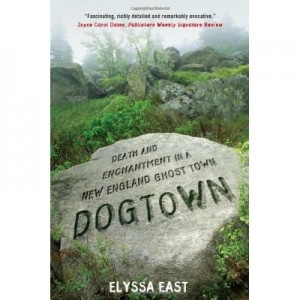
While scrolling through the newspaper accounts, I began to wonder if this brutal act of violence had altered Dogtown’s character, or if bad seeds had sprouted there all along. Was there something truly different and dark about Dogtown? Why had the land been abandoned in the first place? Did some places have a propensity for tragedy in the way that others brew their own dust storms? Did the murder account for why the place always seemed empty?
Dense and painstakingly researched, Dogtown provides fascinating details about a little-known place on Cape Ann, specifically in working-class Gloucester. Author Elyssa East masterfully weaves together: her personal journey to discover Dogtown; a horrific 1984 murder which transformed the community and still haunts residents; artist Marsden Hartley’s connection to Dogtown; and the strange history of the place. It’s a fascinating work of narrative non-fiction.
Steele: You said it took 10 years to write Dogtown. How did you start working on it?
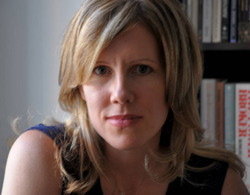
author Elyssa East
East: It was 10 years. At first I just thought I was going to write a magazine article on the painter Marsden Hartley and his feelings for this place. For Dogtown. I got back rejection letters that for five minutes maybe a month or so later make you feel hopeful. And then you feel ridiculous for feeling hopeful. It was originally how Marsden Hartley felt transformed by this landscape. Then the more I started looking into the story of Dogtown, I realized there was a more complex story to be told. I was in graduate school and one of my professors suggested that I start to research it more. One thing led to another.
Steele: I had never heard of Marsden Hartley until I read Dogtown. What attracted you to him and to his paintings?
East: One of the things I really like about Hartley is his story. Critics consider him to be one of the greatest early American modernists. Some think he’s even better than [Georgia] O’Keefe and even Edward Hopper. I feel it would be more accurate to say he’s on a level with Hopper. There’s a real intensity to his paintings and I think he painted from a really lonely place inside. His work is very honest and emotionally raw in that respect.
One of the things that really enamored me to him was that he was born in Lewiston, Maine which is a very rustic old town and his mother died when he was eight. He was abandoned by his family and by his father. He worked in a mill and then later went on to become a great artist. I just love that he’s someone who had a very working class origin and overcame a lot in life. There’s also the story that he was a gay man and being a gay man in the early 20th century adds another layer of struggle as part of his biography. He was always searching for a place that he could consider his home. That was something I really identified with in his story and in his work.
Steele: How do you see all that in his work?
East: I made a copy of one of his paintings. That’s how I discovered him, from a painting class assignment. There’s something about the way he works the paint and uses his brush. His strokes are very agitated. The way that he layers the paint, he was really working that paint and he wasn’t coming from a calm place. He was very anxious. He used a pencil or charcoal ground into the paper. What I like about his Dogtown paintings is that they are not necessarily great paintings but show him struggling and taking a creative risk. That was something I admired and respected about him. He switched styles a lot. The fact that he was willing to take all these risks I think shows a lot of courage on his part.
A lot of his later paintings [of the Maine coastline] are really powerful and explode with energy. It’s really hard to make landscape in photography or painting as dynamic as it is when you are actually standing there. He really succeeded at that.
Steele: You were getting your MFA in creative writing when you started writing Dogtown. Having a creative background, was it hard to write it? What were the challenges of non-fiction?
East: I’ve never been that creative. I didn’t really have an identity. I also produced theater and was the analytical or practical person on the scene. Especially in those fields, there’s a real division in who’s considered creative and who’s considered administrative. I was always interested in the creative capability that these landscapes represented but within the confines of reality. I do have a very strong practical streak.
[In writing Dogtown], I was very attached to the facts and the story. There was something about being restricted by all these facts that made it easier to be more creative. The story was already there, it was just a matter of finding its structure. The challenge was finding the facts and figuring out how to maintain their intrigue and still tell the story without just handing down a bunch of trivia. Finding a balance between the story and the subject. There’s always the subject which in this case was Dogtown and then there’s the story. In this case there were several stories: my quest to find the Hartley paintings; the murder; and the place’s history itself.
Steele: I like the intertwining stories. How did you decide to focus on those particular aspects?
East: A bowl of candy. I work at a writer center in New York. The candy bowl was full of these Starburst-like candies. I was trying to figure out how to make this book from all this information and all these storylines. Purple was the color I chose for Marsden Hartley. Red was for the murder. Green I chose for the landscape and the history. Yellow was the color for me. I kept arranging this candy, finding to find a pattern until I came up with an outline for the book. It helped me, being a visually minded person, to have something tactile to work. I color-coded the research to what type of chapter I thought it belonged. I tried to write each chapter with its own arc. But really it was because of this candy bowl that it all came together. Having five colors of candy really helped.
Steele: When do you know that you’ve done enough research?
East: You know Amy, I really could have gone on and on. I really just wanted to know what the material was. In many instances I had fewer questions. I knew that based on what I would find, that would dictate my story. When researching I was looking for specific things. I kept coming across a story of alleged witches in Dogtown. I researched individual women through vital records and property records. I couldn’t find enough information to validate the allegations. It led me to research women’s history and I found things that didn’t belong in the book but I wanted to keep investigating because it was so interesting to me. I had to just cut myself off at a point and just get to writing.
Steele: In the book you said: “Dogtown had changed Marsden Hartley and his paintings changed me.”
East: Hartley’s paintings changed me in that when I made that copy of his painting, I really didn’t think I could paint. I had to take a painting class in order to graduate with a degree in Art History from my school. I felt I was flunking all my painting class assignments until it came to this Hartley painting. I actually made a painting that looked like something and for me that was a big epiphany. I secretly wanted to be an artist when I was younger.
So that did change me and I felt close to Hartley because copying someone’s painting can be very intimate because you learn how they move the paint on the canvas. I liked that he painted these un-picturesque places and found something beautiful in them. I found that really moving and really compelling. Some of the places that he painted in Dogtown aren’t traditionally beautiful and I liked that.
Steele: One thing you focus on in Dogtown is place and a connection to a place. Can you explain this?
East: The relationship with have with place is something that I think is really under examined. It’s something fascinating and real. It’s hard to grasp. It’s not as easy to delineate in a narrative as say, your relationship with another person. That was really inspired by Hartley and his story. I’m from the South and everywhere I go people assume things about me because of where I’m from. That notion of place and identity is something that I’ve been aware of for a long time and interested in. It wasn’t until I started going to Dogtown and discovering that it has its own vibes that I decided that it was what I wanted this book to be about.
Steele: Why was the murder [in Dogtown in 1984] integral to the book?
East: The thing about the murder is that it really became a turning point within the community. There was this crisis which was the murder and in the aftermath, some people really did want to bulldoze that place, tear it down and put up condos. The majority of the people wanted to maintain Dogtown. That was a critical turning point because it gave people an opportunity to re-examine their connection to this landscape. I keep hearing this story over and over and it happened nearly 25 years before I visited Dogtown. For many people it had changed Dogtown.
purchase at Amazon: Dogtown: Death and Enchantment in a New England Ghost Town

Share this:

STEELE INTERVIEWS: author Melissa Senate
Posted by Amy Steele in Books, Interview on October 26, 2010
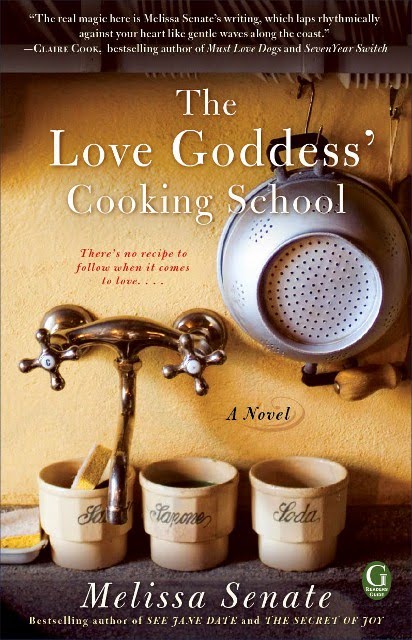
Title: The Love Goddess’ Cooking School
Author: Melissa Senate
ISBN: 978-1439107232
Paperback: 352 pages
Publisher: Gallery; Original edition (October 26, 2010)
Category: contemporary fiction
Rating: B+
This was what Holly did like about cooking. The do-over aspect. There were no do-overs in love, in relationships, unless the It’s Not You, It’s Me was willing. But risotto, overcooking pasta, underseasoned sauce– there were not only second chances but hundreds.
The Love Goddess’ Cooking School details what happens when a few people introduce a melange of dissatisfaction, fear, sadness, despair, wants, dreams and varied experiences in hopes of changing their life course through the art of cooking Italian food. Gifted author Melissa Senate utilizes her deft ability to create both likable and unlikable characters who mix and mingle throughout the novel. The main character, Holly Maguire, has left behind a love in San Francisco and decides to try her hand at taking over her recently deceased grandmother’s homemade pasta and sauces boutique as well as cooking class. While learning how to cook and teach, Holly in turn discovers much about her own strengths and needs. She also watches and guides other members of her class toward new paths which will make them more content. The Love Goddess’ Cooking School takes the reader on a charming, abundant journey.
Here’s my recent interview with Melissa:
Aimee Steele [AS]: I interviewed you almost exactly a year ago for The Secret of Joy. Pretty Cool.
Melissa Senate [MS]: And I appreciate your interest in my work!
AS: How did you come up with the idea for The Love Goddess’ Cooking School?

MS: A combination of my thinking about my late grandmother, who would only talk about her interesting life (Orthodox Jewish upbringing on Manhattan’s Lower East Side, her three siblings who never married, her two husbands . . . ) in the kitchen. While cooking beside her, scrubbing potatoes or forming meatballs, I got quite the earful. Also, my young son loves to cook with me, and on his sixth birthday, he made a wish: “Please let mommy say yes to getting me a mouse, rat or hamster for my birthday. Please, please, please with extra please on top” into the eggs he was stirring. The combination of food and cooking bringing people together, of wishing and asking and remembering while cooking, melded together to inspire the book.
AS: A lot of people romanticize Italy and Italian food. What do you think the attraction is and why did you decide to have it be the focus for The Love Goddess’ Cooking School?
MS: I went to Italy on my honeymoon and it’s everything it’s romanticized to be (even though I’m now divorced!). The food is everything from comforting to decadent, from solid to romantic, from plain to magical. Italy is so rich with history and beauty and architecture and religion and wine and, yes, the amazing food.
AS: In general food and romance go together so often. Do you have any theory on that?
MS: I think it has something to do with the age-old dinner date or sweet picnic or mom or grandma (if they’re the sweet kind) making your favorite meal and baking you cookies. Food means comfort and satisfaction.
AS: You told me recently (via twitter) that you like “to examine the perception of feeling alone especially when cut off from family.” Why?
MS: I like to explore some real stuff from my own life, family estrangements, oddities, the usual family dysfunction in my fiction. It’s interesting to me to watch how a character seeks connection, love, family, friendship from others, whether new friends or lovers, when she feels adrift or alone or cut off from her own family. There’s a longing there I love to explore in my work.
AS: What is the importance of including the Grandmother’s diary entries in the book and for Holly?
MS: Originally I gave Holly’s grandmother her own point of view, but her voice seemed too dominant and her story too big, so I decided to encapsulate her world in the diary entries. I wanted to parallel what Holly was doing with what her grandmother was doing—teaching the cooking class for the first time. I loved researching the early 60s culture for Camilla Constantina’s diary.
AS: In The Secret of Joy there was a box of unsent letters and now you have a diary that’s left to be read. What is your fascination with letters, diaries, writing longhand about thoughts etc.?
MS: I do love the discovery of letters, written in longhand with the writer’s imprint and its effect on the finder. A treasure trove of history, explanation—yet that’s all: you can’t ask questions of the writer. You can only interpret. And that interpretation can often lead to discoveries about yourself.
AS: Fortunes play in here but how much do you think is just being lucky and how much is destiny and how much is willing one’s life to go a certain way? [I wish I could do that.]
MS: I’m slightly superstitious and I do love to believe in all that. A $5.00 palm reader on a New Orleans street corner told me 15 years ago that whatever I was doing, I was on the wrong side, ie if I were an actress, I should be a director. If I were a teacher, I should be a student. I said: “I’m a book editor, but I can’t be a writer, so forget that.” A few years later, I wrote my first novel. I think it’s luck, being in the right place at the right time, both literally and figuratively, and trying. Trying is everything.
AS: What do you appreciate most about Maine and what do you want people to take away about the state from this novel?
MS: I moved here six years ago from a city of 8 million to a town of 8,000. I appreciate the quiet more than anything. It’s SO quiet. There are trees and water everywhere you look. I like to set books here now because Maine is such a comfort in itself; there’s no pressure here. Seriously you’ll never even hear a car horn honk. It’s everything it’s said to be. I also like the rugged beauty of Maine; there are some tourist spots and fancy hubs, but for the most part, Maine is all rugged coastline and moose and fleece and land.
AS: Often grandchildren never get to really know their grandparents that intimately. You really created a lovely relationship between Holly and Camilla. What drew you to focus on that relationship?
MS: I wanted to pay homage to my late grandmother, who I mentioned above. There’s so much to learn from your grandmother—about the history of family, the stretch of generations, the way the past affects the present. Plus, my grandmother made me feel very special at a time when I was very confused as a kid over family angst. I wanted to give Holly a special grandmother, especially because Holly couldn’t connect with her mother while growing up and as an adult.
AS: Why did Holly’s mother steer clear of Maine and her mother’s cooking ventures?
MS: Holly’s mother had been there, beside Camilla Constantina, the first time Camilla had been branded a “witch” and thrown out of the snooty, influential islander’s house. Holly’s mother grew up hating Camilla’s fortune telling, her exotic looks, her “magical” cooking. And so she moved away the moment she could, settled with a conventional man, and never could connect with Holly, who loved the lore surrounding her grandmother, loved the island and loved cooking beside her grandmother.
AS: I did like that Luciana told Holly that she believed that no one should be talked into a life. Can you explain that concept a bit more?
MS: I think people get talked into a life all the time, whether by someone else or themselves. It’s so easy to be steamrolled by someone else, be pulled by someone’s else’s vision, and it’s easy to rationalize. At some point, you know when you’ve made a wrong move or when something doesn’t feel right simply because it doesn’t. You can honor that or try to fix it and make it right. I’ve done both. Sometimes, though, where you’re kicking and screaming is where you need to be, and the problem is inside you, not where you are.
AS: Tamara is the single woman who wants the successful career and love as many women do but doesn’t have much luck with advancing past a few dates with guys. You really got so many things right with her. I liked some of the phrases you used. [If only I could get a list of clients as long as ex-boyfriends and third-date guys who blew me off. I’m beginning to think I shouldn’t even expect a guy to fall in love with me and that I should just settle for Mr. Okay.]
MS: She was in a tough spot with her overbearing mother and moving-on sisters and feeling like she had to do, do, do just to find what anyone wants: partnership, love, connection, your person.
AS: Tamara, Juliet, Simon and Mia all join the cooking class for different yet similar reasons. What made you put this group together? How did you create these characters?
MS: Mia came full blown into my mind, just one of those wonderful, magical writer moments. When I imagined a group of five standing around a kitchen island, making pasta, I only knew they were all seeking. And the group came to me one by one with their backstories, asking for help. As I thought them up, their stories filled themselves in.
AS: What was the most challenging part of writing The Love Goddess’ Cooking School?
MS: The cooking. I spent months in the kitchen researching the recipes I wanted to use, making dishes over and over until I got them right and changed this and that enough to make them mine—Camilla Constantina’s. I started out a terrible cook and ended up pretty good at classic Italian cooking.
AS: What do you like best about your character Holly?
MS: Her seeking soul, I think. She tries hard. And she’s kind. I like kind.
AS: Read your dream cast for movie version and so agree w/ Kate Winslet, Robert Downey Jr., Ryan Gosling and Vera Farmiga. Adore them all.
MS: I had luck once with a TV movie deal and so the possibility always seems very real now for the small or big screen, even though my chances of it happening again are a zillion to one. You never know is a good motto, though.
Thanks for these great questions. So appreciate the careful read and thoughtful questions!
buy at Amazon: The Love Goddess’ Cooking School

Share this:

STEELE INTERVIEWS: author Darin Strauss
Posted by Amy Steele in Books, Interview on October 18, 2010
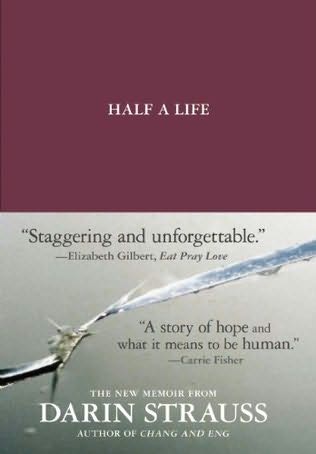
Darin Strauss [Chang and Eng, More Than It Hurts You] wrote Half A Life about a tragic car accident that occurred when he was 18 years old. A sophomore swerved out in front of his car on her bike. She died. it was not Strauss’s fault. For many years Strauss repressed it and avoided any thoughts or conversations about it. In Half A Life, Strauss examines his feelings related to the girl who died as well as the accident and its aftermath. Strauss writes honestly, exquisitely and provides a thorough examination of this profoundly personal experience. Half A Life is a provocative, intense read.
I interviewed Darin for More Than It Hurts You and I contacted him when I heard he had this memoir out. He’s a talented, erudite writer and a genuinely kind guy. I’ll interview him anytime.
Darin: You said you were writing a memoir?
Amy: I Have ideas but I’m afraid to actually start anything.
Darin: Well, the first draft was pretty bad. The hardest part is getting it on the page. There were a lot of things that were terrible that I cut out.
Amy: After writing several novels, what were the challenges in writing a memoir?

Darin: Every bit of training I’d had was how to make stories more interesting so I kept reminding myself, ‘you have to stay true to the facts and you have to let the story play out the way it played out in real life.’ If this had been a novel, the trial would have been more dramatic. I’m not really a journalist so I was just trying to remember what had happened and be respectful of what happened and not stray from the facts at all.
Amy: Did you go back to do any research for it?
Darin: Yeah. I looked and found that article that was written about me to get the exact quote where the police officer said I wasn’t to blame. that was actually a nice surprise because I didn’t remember him saying it in such a clear cut way that I was not at fault. It was like he was sending a message to my future self. And I went back with my family to see what the street looked like. I talked to my friends to see what they would remember but it was sort of what I remembered and how it affected me.
Amy: Why did you feel the need to finally write about the accident you had at 18?
Darin: I thought it was going to be a secret. I thought I’d never tell anybody and most of my friends do now need to know about it. I think it was the fact that my kids were born and I started to think of how hard it would be to have lost a child. I had a new understanding. My wife got pregnant and I was 36 and the accident happened 18 years before.
Amy: The perfect title. Half A Life.
Darin: Thanks. It happened naturally. I thought, ‘I’m never going to write about it’ and turned 36 and found myself doing it.
Amy: How did you think that writing would affect your thoughts about that day and its aftermath?
Darin: I think I just wanted to see how I thought about it because I had put it out of my mind and I had forgotten a lot of it. I think the fact that I had the thought that she wasn’t committing suicide at all was an idea I had when I started writing it. I had pretty much convinced myself that she was definitely committing suicide. And then that a girl would write in her journal at 16, “Today I’m going to die,” doesn’t necessarily mean she had planned to commit suicide. Although I did just hear this week from a friend of hers, who I had never known but had read the book, and she told me that the girl on the bike had started talking about death a lot. The realization was whether she did or didn’t did not affect my story. She did what she did and I did what I did to avoid her and that’s really I could control.
Amy: You said if you had never had this accident that killed Celine, you would have never have become a writer. Why?
Darin: That’s probably true. I thought I’d go to law school but after the accident I became more introspective and the lawyer thing stopped because their lawyer in the lawsuit was such a scumbag.
Amy: How scary is that? You’re going off to college up to Tufts and you get this summons?
Darin: The last I heard when I went to school was that her parents would always support me. It was a terrible shock. It was scary emotionally. It was a total drag. I thought these people were supporting me and then found out they were suing me for millions of dollars. That’s pretty scary.
Amy: During the funeral, you made a point of writing that when people remember lives or want to remember lives, they want the person to be extraordinary even if that person wasn’t so.
Darin: The local newspaper seemed to think it would only be a worthwhile story if the person who died was somehow the most popular person in school or the prettiest girl in the class which was really weird. It seemed like they had to make it sadder for the general reader.
I just wanted to be honest about everything. The book had to be more nuanced than that article I wanted to preserve her memory from that stupid notion that you had to be Prom Queen for it to be said. I wanted to be honest about the way that she was. Misrepresenting her was not the way I wanted to write the book.
Amy: In writing this memoir, what have you learned about yourself and your relationship to Celine and the accident?
Darin: It’s difficult to deny that things don’t change you and it’s very unhealthy not to realize that you’ve changed. Acknowledging that this had happened to me was important but I wouldn’t let it dictate the rest of my life.
Amy: Although you moved past high school and your hometown, you say that Celine was always with you. Her mother even told you that you know had to live for two people.
Darin: I have twins now. My first novel Chang and Eng was about conjoined twins. So it was really embedded in my brain.
Amy: It’s always been with you so how did you cope with it?
Darin: I don’t like the word closure. It’s silly. You never close the book on anything or every fully get over it. You have to learn to live with it. You realize that these things can happen to you and not let it ruin you. It hurts. Most people who’ve email me have been glad to read this because I don’t think there’s that much out there in terms of books about someone facing something. I don’t think we ever get closure so it’s more realistic to see what you did in the certain moment that it was the best you could do, and try to live with it.
Amy: Isn’t the power of the mind over the body amazing when you repress things and don’t realize the extent to which you are until your body just revolts?
Darin: At 28 I had stomach surgery and started to get gray hair and all these things that don’t usually happen to 27-year-olds so I think it was my body telling my mind ‘you can’t pretend this isn’t happening and avoid any consequence.’ I didn’t put it together with the accident until later. Medication and surgery and I didn’t think of the psychological aspect of it.
Amy: You said: “My accident was the deepest part of my life, and the second-deepest was hiding it.”
Darin: I just didn’t tell people. I have a lot of friends who just found out about it with the book or with the excerpt of the book that aired on NPR on “This American Life.” So it was strange for my close friends. I just really wasn’t ready to talk about it to people. I did keep my friends separate (new friends from his Long Island friends).
Amy: Now that Half A Life is out there, how do you feel?
Darin: I feel that I’m in a much better place than ever about it now that I’ve written the book. It never goes away. It’s been 20 years now and I thought as I wrote the book I was pretty healthy about all this stuff. But when the book was about to come out I thought I should write the parents a letter to let them know. I wanted to warn them that it was coming out. Just the act of googling them and writing the letter was harder than writing the book.
Darin Strauss reads from Half A Life at Brookline Booksmith Monday, October 18 at 7pm
buy at Amazon: Half a Life


Share this:

STEELE INTERVIEWS: author Koren Zailckas [FURY]
Posted by Amy Steele in Books, Interview on September 28, 2010
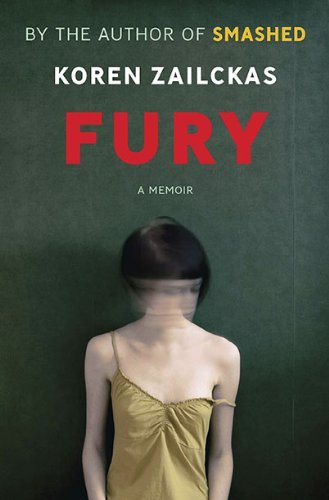
Koren Zailckas follows up her best-selling memoir Smashed, which focused on her drunken years in high school and college, with FURY. This time Koren discovers that for many years she’s been avoiding her own anger by letting it just fester instead of releasing it. FURY takes the reader through Koren’s therapy, experimentation with homeopathic remedies and dealing with several major personal crises as well as her problematic relationships with her mother and sister. FURY is fastidiously researched and a compelling read about an emotion few people, even fewer women care to acknowledge or discuss.
Amy Steele: Why did you decide to focus your memoir on anger?
Koren Zailckas: In the beginning I had no intention of writing another memoir. Someone suggested that I write about my female friends. My female relationships have always been intense. It occurred to me that I was more interested in writing about female anger. I wanted to write an objective, journalistic book about American attitudes about anger, about remedies for rage. A few years into the project it became clear to me that I was uncomfortable with the topic. I didn’t know how to express anger and since I’d quit drinking I couldn’t use alcohol as an escape from these emotions. I had this horrible break-up and went home to stay with my parents which was the worst place to be as angry and emotional as I was.
AS: When I picked it up, I expected there to be more of a personal connection. Which there ended up being . . .
KZ: It began with a whole lot of research.
AS: Why do you think anger is okay for men or more acceptable for men than for women?
KZ: Men have their own hang-ups. Men fear being the bully. I do think that anger is a particular challenge for women. A study came out a few months ago from the University of Quebec that women who express anger in the workplace are considered professionally unstable.
AS: I’ve been fired or left jobs for walking away from a situation that made me angry.
KZ: Men who get pissed off in the workplace are seen as more powerful and more commanding. It increases their status at work.
AS: Did you have a specific goal in mind that you hoped to accomplish?
KZ: I wanted to retain my sanity because sometimes it just seemed like my world was falling apart. Eventually after this breakup I began to see that anger was really my issue. I was writing this book more or less in real time. I knew that I needed to learn how to express my feelings towards people. In my family you’d just go away, go off on your own and deal with your emotions by yourself and come back and pretend that nothing happened. I learned I had to embrace my anger sometimes. I didn’t want to use a partner to get rid of all my childhood feelings: to say to him what I wanted to say to my parents.
AS: How did you approach the project?
KZ: I wanted to see what psychologists, theologists and sociologists thought about anger. I wanted to get every perspective I possibly could on anger. It turned out that was a defense mechanism—putting on this scholarly/ academic hat prevents you from getting too close, too emotional. At a certain part in the book, I decided to tell the story of my past and my relationship with my mom.
AS: There are a couple quotes I like. One is: “women’s tears are just as often an assertion of anger.”
KZ: Women are more inclined to cry out when they are angry than men are. That was something I did for a long time. I would cry when I got pissed off and just say, “I’m just upset.” I had some depressive bouts in my life that were just anger.
AS: What did you find most useful in dealing with your anger [of course besides writing about it]?
KZ: [The homeopathic remedies] were very interesting. My good friend is into homeopathy and so she sent me all these remedies. I think that since I had to take the remedy for whatever it was I was feeling that day, I had to wake up and be really in tune to my moods and identify what I was feeling. That was helpful.
AS: How did your feelings about anger change in writing FURY?
KZ: I’m a lot more trustful than before. I always thought that anger and love weren’t compatible and you couldn’t really fight with anyone in your life without them leaving. In my family you’d get iced out and get the silent treatment from people you had arguments with. I learned it’s essential to get angry and anger is a natural, normal human emotion. Sometimes anger can be a positive force for change.
Buy at Amazon:
Fury: A Memoir

Share this:

STEELE INTERVIEWS: author Zoe Ferraris
Posted by Amy Steele in Books, Interview on August 20, 2010

Zoe Ferraris earned her MFA in Fiction from Columbia University in 2006. After the first Gulf War, Ferraris lived in Jeddah, Saudi Arabia with her then-husband and his family, a group a Saudi-Palestinians. She has a daughter and lives in San Francisco. In her second novel, City of Veils, she deftly weaves together an intricate tale of individual struggles with antiquated customs. Ferraris illuminates the varying levels of religious devotion and the status of women in Saudi Arabia from several viewpoints.
Amy Steele [AS]: Where did the idea for this story come from?

Zoe Ferraris [ZF]: City of Veils is a follow-up to my first novel, Finding Nouf. I wrote Veils because I really felt that there was more to say about Saudi Arabia and that my characters have further to go. In particular, I wanted to give a wider perspective of Jeddah. It’s a fantastically diverse and complex place. Two books won’t do it justice.
AS: What kind of research did you do about women’s rights and the treatment of women in Saudi Arabia?
ZF: A lot of it came from first-hand experience, but obviously I haven’t lived through everything, so I did a lot of reading. These days my primary interest is in talking to people who live there and hearing what things are really like on the ground. No matter what the media says, no matter what the “official” law is, when somebody lives through something, it’s always going to be more real.
AS: How did living in Saudi Arabia influence your writing about the culture?
ZF: I went there with the notion that women were catastrophically oppressed by evil male tyrants, but living there I realized that men suffer from gender segregation, too. In some ways I felt more sorry for them. My ex-husband spent a very long day at work and would come home to me and his sisters, who’d beg him to take us out, take us ANYWHERE, we’ve been stuck HOME all day. No, we haven’t cooked dinner. YOU have to take us to the grocery store. And the drug store. And so-and-so has to go to the doctor…. I started feeling sorry for the evil male tyrant.
AS: What do you think that the people of Saudi Arabia think of Americans? The Saudi Arabian government is such an ally and yet we look away from the mistreatment of women.
ZF: It’s tricky to generalize what a whole nation thinks, but I’ll say this: I usually come away from the Middle East thinking that people seem to love and hate America in equal measure. On one hand, it’s the Big Bad Evil Empire that goes to war for oil and sides with Israel against the poor Palestinians. Mostly, we’re convenient targets for rage — most of it misplaced, in my opinion. On the other hand, who can resist a country that invented the internet, cell phones, and Pamela Anderson?
One of things that comes out in City of Veils is just how integral the behavior of women is to national, religious and political identity. And that’s not really something we should be interfering with. I hope we stay hands-off with the Saudi government because we know it’s not our job to “fix” the way they think. It’s our job to recognize that we don’t agree (perhaps) with their policies, but until a bunch of Saudi women come asking us for help, we leave it alone. I say good call, American government. Let the Saudis fix the Saudis.
AS: What do you like best and least about Saudi Arabia?
ZF:
Best: the hospitality. People are so generous with their time and energy.
Worst: realizing that it’s so frickin hot that I wouldn’t leave the house even if I could.
AS: Who is your favorite character in City of Veils and why?
ZF: Nayir is still the best. It’s like he’s my favorite son and I’m trying to hide it from the others but they all know anyway and figure he deserves it because he’s had such hard luck.
AS: Why did you involve Westerners, Eric, Miriam and Mabus in City of Veils and why do you think some Westerners are attracted to the Mid East culture and Islam?
ZF: I really wanted to include an outsider’s perspective because there are so many non-Saudis living in Saudi Arabia. I’ve also known a lot of Americans who’ve lived in Jeddah.
Who knows why anyone gets interested in something? I was drawn to Saudi Arabia when I met my ex-husband. There could be a hundred personal reasons I found the place so enigmatic and confusing and wonderful, but essentially, love drew me in.
AS: Do you think that what Middle Easterners believe about Americans is what they have culled from television and film?
ZF: This is such a scary thought. I mean, shut your eyes and let a random episode of Temptation Island pop into your head. And try not to imagine a bunch of Muslim teenagers sitting around their illegal satellite TV in Jeddah thinking that all Americans run around in bikinis having sex with their neighbors. Or that we’re all super rich vapid housewives. Or heck, that we can all dance and sing. Our national storytelling lurches so happily into the freak-show factor, I kind of want to say that we deserve what we get.
AS: Did you base Katya on any women you met in Saudi Arabia?
ZF: In a way, she was inspired by a few women I met there who were highly educated and who were working outside the home as well as raising families. I was really interested in these women except that the ones I seemed to meet were often extremely devout. I started getting the idea that maybe they cloaked themselves in devoutness to protect themselves from criticism. So a woman works outside the home, and has a successful career, but no one is going to say she’s a bad Muslim, because every time you talk to her, she’s so intense that you get scared for your mortal soul. I really wanted Katya to be more moderate. I eventually started meeting more moderate-thinking women, and I’d say they’re the majority.
AS: The prostitution and taking of “summer wives/ temporary wives” in Saudi Arabia is so strange and layered. How did you find out about it?
ZF: I see this as a close relative of the “misyar” marriage, which is essentially a marriage where the man has no financial responsibility to his wife. Both parties sign a fake marriage document, in case the religious police stop them in public. In other words, quick and easy. Or as an Arab friend of mine jokes: “Muslim dating.” There’s no real commitment in either “summer weddings” or “misyar” marriages. But because society is so strict about couples being married, then the couple has to come up with a fake or temporary marriage license.
A good friend of mine in Saudi first told me about these kinds of situations back in the early 90s. He used to buy his marriage licenses with a row of condoms stapled to the top. As I started researching “summer weddings” for City of Veils, I realized there’s a whole niche industry going on, what essentially amounts to legal prostitution.
AS: UAE is going to crack down on Bluetooth/ smart phone usage. How will this affect those in Saudi Arabia?
ZF: Jeez, if an open place like the UAE is cracking down, I can’t imagine the Saudis will be far behind. Bluetooth is really challenging in a country where women are supposed to stay hidden or modestly covered. It’s kind of the new revolution in flirting. And dating. And generally communicating with the opposite sex. A crack-down would be depressing news.
AS: Why did you want to write a thriller?
ZF: In Finding Nouf, the mystery aspect grew out of a need: I wanted Nayir, a devout Muslim and generally earnest guy, to be put into a situation where he would have to cross the gender segregation lines. The situation would have to be important enough to make him do it, and I figured murder was one of the only things that fit the bill for him. A woman dies and nobody seems to think it’s odd. But he does, so he has a higher moral cause to go prying into a woman’s life.
This subject still interests me in City of Veils. A woman dies, and it’s difficult and tricky to find out how she lived her life. Even as a legitimate police investigator, you still have to cross segregation lines, you still have to break down barriers of courtesy and privacy that seem a lot higher in Saudi than they are in other places.
AS: How does your novel compare to your own experience living in Saudi Arabia?
ZF: When I lived in Saudi, I felt like every time I turned around, something humorous or goofy was happening. We’d go have a picnic at a disused runway at the airport (it offered privacy and trees) but the guards would catch us. They would wait until we were settled before turning on the sprinklers to chase us all out. Or during a wedding one day, the doorbell rang and we opened it to find my four-year-old niece, who had run away and managed to make it halfway across town before some old baker noticed her and brought her into his store. She wouldn’t tell him where she lived, so he had to ply her with cookies. The baker was standing at our door, looking completely frazzled. Her stubbornness had worn him out.
I’d love to convey some of that lightness in my writing. It pops up now and then, but as an overall theme it doesn’t seem right in the context of murder.
Buy at Amazon:
City of Veils: A Novel


Share this:

STEELE INTERVIEWS: designer Santino Rice of On the Road with Austin and Santino
Posted by Amy Steele in Interview, TV on August 9, 2010
Amy Steele: How has your career changed since being on Project Runway?
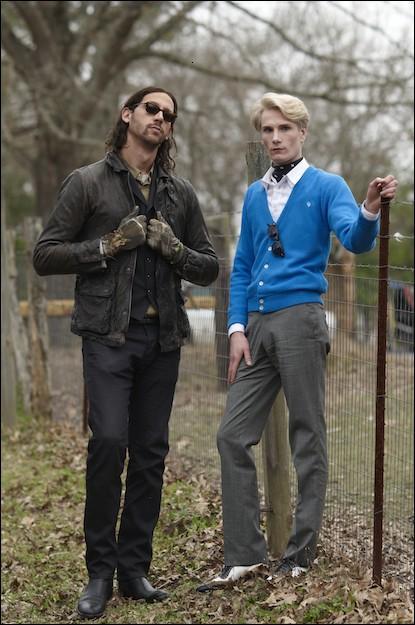
Santino Rice: Much has changed; it’s been over 5 years since I competed on Season 2 of Project Runway. I’m internationally known and I have a healthy business creating one-of-a-kind pieces for clients. I’m able to pick and choose what I want to work on and who I want to work with. I’m able to pursue many more projects outside of the fashion industry and I’m staring in 2 hit TV shows– RuPaul’s Drag Race and On The Road With Austin & Santino— each is inspiring and focuses on the human spirit and creativity.
Amy Steele: What appeals to you about this show?
Santino Rice: Austin and I, along with producer and friend, Rich Bye of Goodbye Pictures developed On The Road and this has been years in the making. Everything about this show is appealing and inspiring to me. Hopefully our exchanges with our clients will inspire everyone who tunes in. Austin and I are both from small towns and we enjoy revisiting these towns that really remind us of where we came from. Although finding fabrics in these towns is difficult, it is possible to create something if you put your mind to it.
Amy Steele: Why did you want to do On the Road?
Santino Rice: Why not? God-willing we will take it Around The World! I love the idea of creating a special moment for a special woman. Most women never have the opportunity to have a made-to-measure garment created for them and this show documents what goes into the process of making a look from scratch. We are still going through a very precarious time in America, and it’s encouraging to travel into these towns and find our materials locally and make everything from scratch. Sure, we’re entertaining but we are creating a type of show that has never been done before. This isn’t a make-over show, it’s much more than that.

Santino Rice
Amy Steele: What has been the greatest challenge so far?
Santino Rice: Ugh, driving long distances, jumping in and out of planes, living out of suitcases. We’re often sleep deprived. It’s specific enough to have to hurdle all of the obstacles in our way in each town but we understand that we are creating entertainment as well. Austin and I are both curious about the towns we go to and the people we meet. It’s challenging to be documented while you are trying to create something in a limited time frame with a limited budget. Anything that others might find difficult, I see as a nice change and that adversity will help inspire us to create something even more personal and beautiful, even if getting there is a little painful.
Amy Steele: How do you and Austin complement each other when designing and what do you disagree about most often?
Santino Rice: I think that we both have very strong points-of-view and we respect each other. Beyond that I can never tell what we might disagree on as we work through our process, but you can be certain that we will each voice our opinions about something we don’t like. It’s great to collaborate with another designer who has such a depth of knowledge and references. Nothing about our collaborations is formulaic, it’s always different, it’s always changing, and in turn it’s always exciting.
Amy Steele: What is different about your approach to design than Austin’s?
Santino Rice: We are completely unique individuals. Much of what we do and how we approach the construction of a design is different. I believe that approaching an idea from multiple perspectives adds to a design. I love illustrating my ideas and I love to render a mock-up or prototype to the point where I can easily explain my concept to our client.
It’s amusing to me that everyone wants to compare our differences from our similarities. I suppose it’s because we visually look different that makes people want to dwell on that. Austin and I are friends and we laugh a lot when we are together. We might butt heads sometimes but it’s only because we both want to be proud of what we are creating. We are a team and we have very little time to accomplish something amazing so we are listening to our clients and to each other.
Amy Steele: How do you and Austin work together from planning the design to its execution?
Santino Rice: As you can see in On The Road, we talk to our client for a few hours and find out who they are and what they like and dislike. We immediately have ideas that pop into our heads and we start discussing them. Ultimately, the fabrics and findings that we dig up in town will heavily influence our design. I might go to the fabric store while Austin heads to an unconventional shop to pick up some odds and ends. We reconvene back at the workspace and we start sketching and being inspired by all of these materials we have in front of us. We comment and are inspired by what each other is creating and we start to come to some conclusions on what would be best for our client and what will be most appropriate for the event. After we pitch our ideas to the client and we have a good idea of what we are going to create, we still are collaborating on everything from the construction to the finishing details. Austin and I have a constant dialog throughout and we are both very much invested in creating something that our client will love.
Amy Steele: Why is it so challenging for you to work together as a team?
Santino Rice: It’s not challenging at all for me to work in a team. You’re referring to the 2nd episode where I start to want to pursue other creative options for our client Rosaline. You might see it as something else but I felt the need to explore other ideas on my own and then discuss them with Austin. The more sketches and mock-ups that we can create before our client meeting, the better! I don’t think that sitting behind Austin, twiddling my thumbs and being a backseat driver to what he was draping, constitutes a team. I’ve never gotten upset about Austin exploring his creative ideas separately, why should I be limited to watching him just because he grabbed the violet satin first?
Amy Steele: What inspires you to design for all these different women?
Santino Rice: I come to town without any preconceived ideas. I know very little about who we are meeting. Our clients lives, personalities, and accomplishments are what first inspires my mind and peaks my interests. Thankfully, I have been genuinely inspired to go above and beyond the call of a fashion designer because I love these women. It’s important for me to find out as much as I can about our clients because I need to truly understand them and their needs.
Amy Steele: What have you learned doing this show?
Santino Rice: I learn something new everyday, whether I’m doing a show or not. I’m open to receiving knowledge and new ideas. On The Road With Austin and Santino has really just reconfirmed a lot of things that I already knew. You can find big people in very small towns and once you get to know them and take a walk in their shoes, you understand why they’ve cultivated the life that they have for themselves. It’s fascinating and it’s rewarding for us to contribute to a memorable moment in someone’s life in the way that we do.
Amy Steele: You have a great, infectious laugh and such a laid back demeanor. What do you worry about? How do you maintain such an optimistic outlook?
Santino Rice: Thanks! Rather than worry, I make lists and check off all the things I need to do. I suppose that I laugh to keep from crying. I’m happiest when I’m creating, so I stay busy and I focus on the details of life and laugh away all of the things that are ugly and mediocre. I love myself and I believe in myself, if I could instill some part of my outlook on life into others, I’d say you should love more and laugh more and steadily accomplish your biggest dreams. Oh and remember to sing in the shower and dance your ass off!
Amy Steele: What can audiences expect from both of you in future episodes?
Santino Rice: Expect more hilarity and more beautiful fashions. We’ve got some clients and events coming up that nearly kill us. It’s always an adventure and towns and clients are always changing. Things never get old for us because we are always experiencing something completely different. Thank you for watching and I hope you enjoy it as much as Austin and I enjoyed making it!
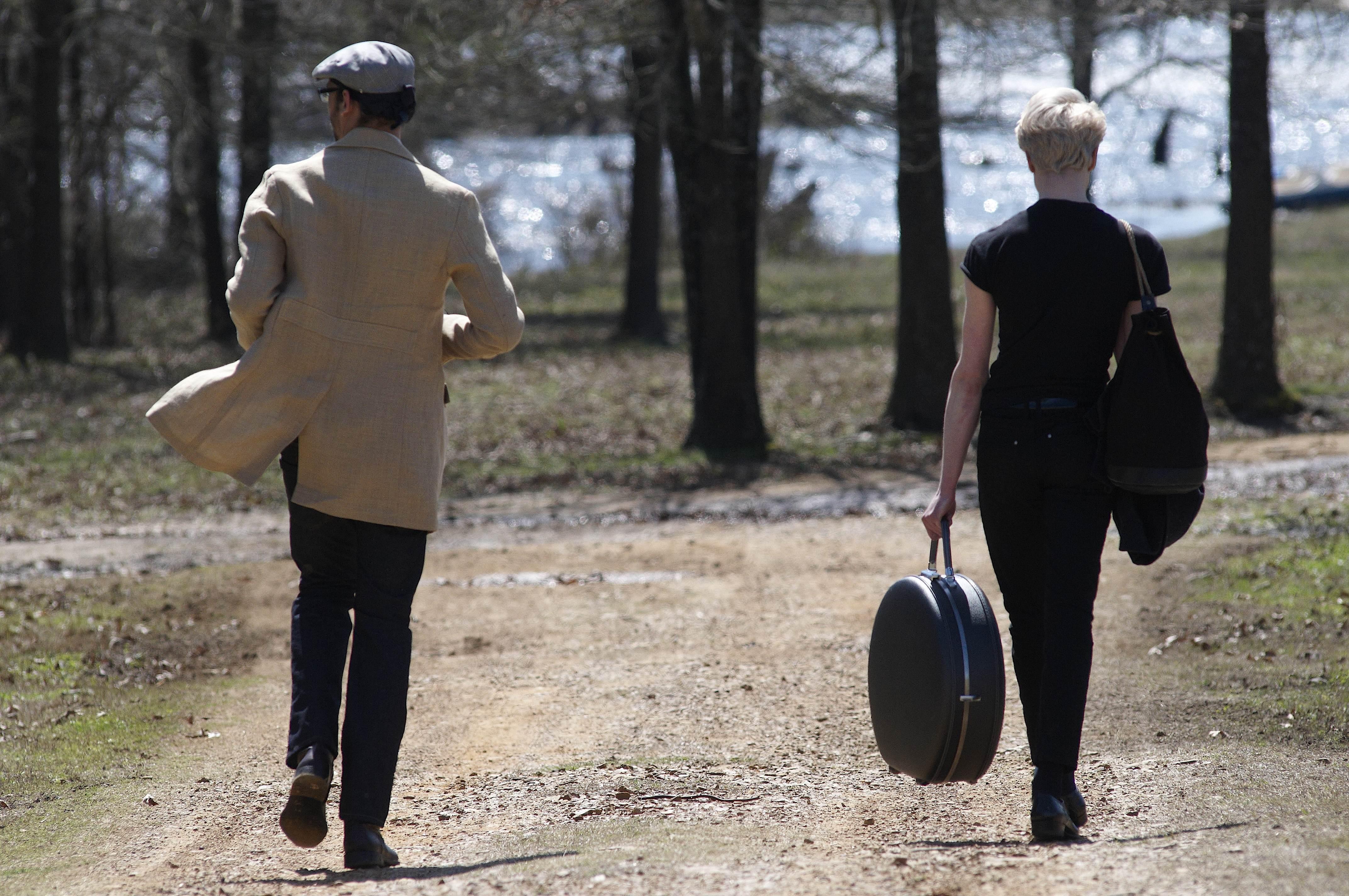
On the Road with Austin and Santino airs Thursdays at 10:30p EST on Lifetime.
Share this:

STEELE INTERVIEWS: author Jonathan Tropper
Posted by Amy Steele in Books, Interview on July 24, 2010

That’s love in real life: messy and corrupt and completely unreliable. I like Penny, and I still love Jen, and I hate Jen and I couldn’t leave Penny’s sad little apartment fast enough. I want someone who will love me and touch me and understand me and let me take care of them, but beyond that, I don’t know.
The combination of honesty, darkness, and vitriol in THIS IS WHERE I LEAVE YOU by Jonathan Tropper is fantastic!
Amy Steele [AS]: I was talking with some people on Twitter about the concept of chick lit/ women’s fiction. There’s no men’s fiction category but there’s women’s fiction, yet mostly women read fiction. What are your thoughts on this?
Jonathan Tropper [JT]: I try not to think about it. I was really disappointed when I made it as a novelist and the publishers basically told me that men buy non-fiction and women buy fiction. I was a reader and I only read novels and I supposed many men do. Proportionally they sell more books to women than men. Novels. Men seem to buy biographies and books on war and other non-fiction. At least that’s the sense of things in the publishing industry. I certainly hear from many men who read my books. Even if women are buying the majority of novels it doesn’t mean that women want to only read books by women and about women.
AS: You focus a lot on relationships and even if they are about guys I can totally relate. They are really insightful and funny and yet you have the darker side to them. How did you develop your style?
JT: I didn’t really think about it. I was partly inspired by the books I read. I wanted to tell stories about how contemporary men deal with the issues we all deal with in an honest and unflinching way. I try to write from a male perspective and present a fully realized portrait of how today’s suburban men think. What their values are. What there challenges are. I didn’t think of the style. I write the way I write.
AS: Did you make a conscience effort to become a writer?
JT: I really wasn’t good at anything else. I really thought I wanted to be a writer. I went to grad school for writing [masters in creative writing from NYU]. I was always writing. I wanted to write novels. I tried one or two that didn’t work. I picked it up again and I wrote one that I managed to sell. I never believed I could actually do it successfully.
AS: What do you learn in a creative writing program?
JT: You can’t learn to write certainly. It’s very motivating for a writer to be surrounded by other people who are trying to do what you’re trying to do. Pretty much no one in my life was attempting to be a writer and it feels almost validating to just sit in a room full of people who are willing to talk about character and plot. It legitimizes it as a real pursuit for you. Through that process of work-shopping stories, I think you develop your own ability to critique your work a little better than if you just wrote in a vacuum.
AS: How do you separate yourself enough so that you’re writing for yourself but also writing to attract a readership?
JT: I have to know enough if I’m spending the next year of my life working on this story. I’m an avid reader and I know what speaks to me and I know what would appeal to me. I try to write the type of characters that I’d be interested in reading about.
AS: Are you as observant in reality as you are in your writing?
JT: Writers in general, by their very nature, tend to be more observers than participants. I pay attention to people: the way they talk, the way they move, the way you can see their motives. I’ve always been focused on watching people and their behavior.
AS: You’re central characters are mostly GenXers like you and me. I know that most authors draw on their own experiences. How much of your own experiences go into your writing?
JT: Not factual or autobiographical experiences. There are things I write about that intrigue me. None of the things that have happened to the characters have ever happened to me but it’s all fueled by what’s around me– by all my observations, feelings. No one that I write about would be out of place living in my neighborhood.
AS: Why did you choose to write about sitting Shiva?
JT: I was writing a book about this man who lost all the things that made him a man. He lost he wife, he lost his job. I wrote all these pages and he wasn’t that interesting to me. I wrote a chapter where he goes home to his parent’s house and I introduced all his siblings and his mother. And that was the only time that I felt the book was becoming alive to me. So I decided I wanted to make the book about the Foxman family and I just had to come up with an excuse to keep them together for more than a few hours. That’s when I came up with the idea of a Shiva.
AS: What appeals to you about that setting in drawing out character stories?
JT: It was about trapping all these adult children who have all these issues with each other and they’re spending time in the same house and in their childhood house. They regress back to their childhood issues.
AS: How do you write: characters first or plot/ story first?
JT: It’s always the character first and then the journey I want the character to take. Then I sort of build the plot around it. It has to be something larger than a premise you’re writing about. This is Where I Leave You is not a book about Shiva. It’s a book about family. It’s a book about marriage. If it is a big idea, it’s just a cool idea and you’re going to run out of steam. I know I need to be grounded to the character, at least, before I get to the plot and the premise.
AS: How do you balance humor and pathos?
JT: I get asked that a lot. I don’t really think about it. The question actually surprises me because it’s not a conscious act. I’m just writing the way I write. If I’m writing a dramatic moment chances are the humor’s not going to pop up at that moment. I write books that are honest in their focus.
AS: Why did you want to write about a shock jock and the radio setting?
JT: It wasn’t just that he lost his life but that he lost his life in such a public setting.
AS: Who are some of the authors who have influenced you?
JT: I love Richard Russo. I came up reading Jay McInerney and Bret Easton Ellis. Before that I read Stephen King and Kurt Vonnegut. I’m kind of all over the place.
AS: What inspires you to write?
JT: The rock star thing didn’t work out.
###
Title: This Is Where I Leave You
Author: Jonathan Tropper
ISBN: 978-0452296367
Paperback: 352 pages
Publisher: Plume; Reprint edition (July 6, 2010)
Category: contemporary fiction
Review source: publisher
Rating: 5/5
Jonathan Tropper is currently on tour in support of the paperback release of This Is Where I Leave You.
Tuesday, July 27, 2010, 7:00 pm
Huntington Book Revue
313 New York Avenue
HUNTINGTON, NY
Wednesday, July 28, 2010, 8:00 pm
Elliot Bay Books
1521 Tenth Avenue
SEATTLE, WA
Thursday, July 29, 2010, 7:00 pm
Book Soup
8818 West Sunset Blvd
LOS ANGELES, CA
Tuesday, August 3, 2010, 7:00 pm
Newtonville Books
296 Walnut Street
NEWTONVILLE, MA
Wednesday, August 4, 2010, 7:00 pm
92Y Tribeca
(panel with Peter Hedges)
200 Hudson Street
NEW YORK, NY
This Is Where I Leave You: A Novel

Share this:

STEELE INTERVIEWS: The Organ Beats
Posted by Amy Steele in Interview, Music on July 18, 2010

The Organ Beats formed in 2008. Siblings Danny [drums] and Noelle [vocals/ bass] are siblings recruited their friend Mikey [guitar] to round out the band.
Steele: What have been your greatest challenges as a band?
The Organ Beats: money
Steele: How is it to write music and tour as siblings?
The Organ Beats: It’s great, we argue all the time.
Steele: What has Noelle’s experience in Damone brought to the band?
The Organ Beats: Bitterness
Steele: What makes The Organ Beats work well together?
The Organ Beats: We’re all nerds who love nothing more than playing music.
Steele: Why did you go to the Houston, Texas area to record Sleep When We are Dead?
The Organ Beats: To get away from the city and record for cheap.
Steele: What does a live gig bring to your music?
The Organ Beats: energy
Steele: How do you write your songs?
The Organ Beats: it usually starts with a verse then a chorus, pop a bridge in there next to a solo. haha, just kidding. For me I just write a poem and a riff and piece it together into a standard formula. The magic is in the recording, where you can layer on the spice and really be creative.
Steele: Where do you get the lyric ideas for what I interpret as melancholy love
songs?
The Organ Beats: Boys have definitely been a muse. I have a great appreciation for nature. But also persevering through tough times has been a topic on numerous occasions.
My favorite song right now is Sleep When We Are Dead by The Organ Beats:
Share this:

-
You are currently browsing the archives for the Interview category.
About Me

covering mostly music and books. focus on alternative/indie and women in music, literature and the arts. feminist. vegan. mostly alternative, a bit bohemian. Masters in journalism from Boston University. BA from Simmons College.



Entertainment Realm by Amy Steele is licensed under a Creative Commons Attribution-Noncommercial-No Derivative Works 3.0 United States License.
Based on a work at entertainmentrealm.comCopyright © 2009. All writing, unless otherwise noted, by Amy Steele.
 ENTERTAINMENT REALM
You must be logged in to post a comment.