Archive for category Interview
STEELE INTERVIEWS: Skyline Pigeons
Posted by Amy Steele in Interview, Music on June 30, 2012

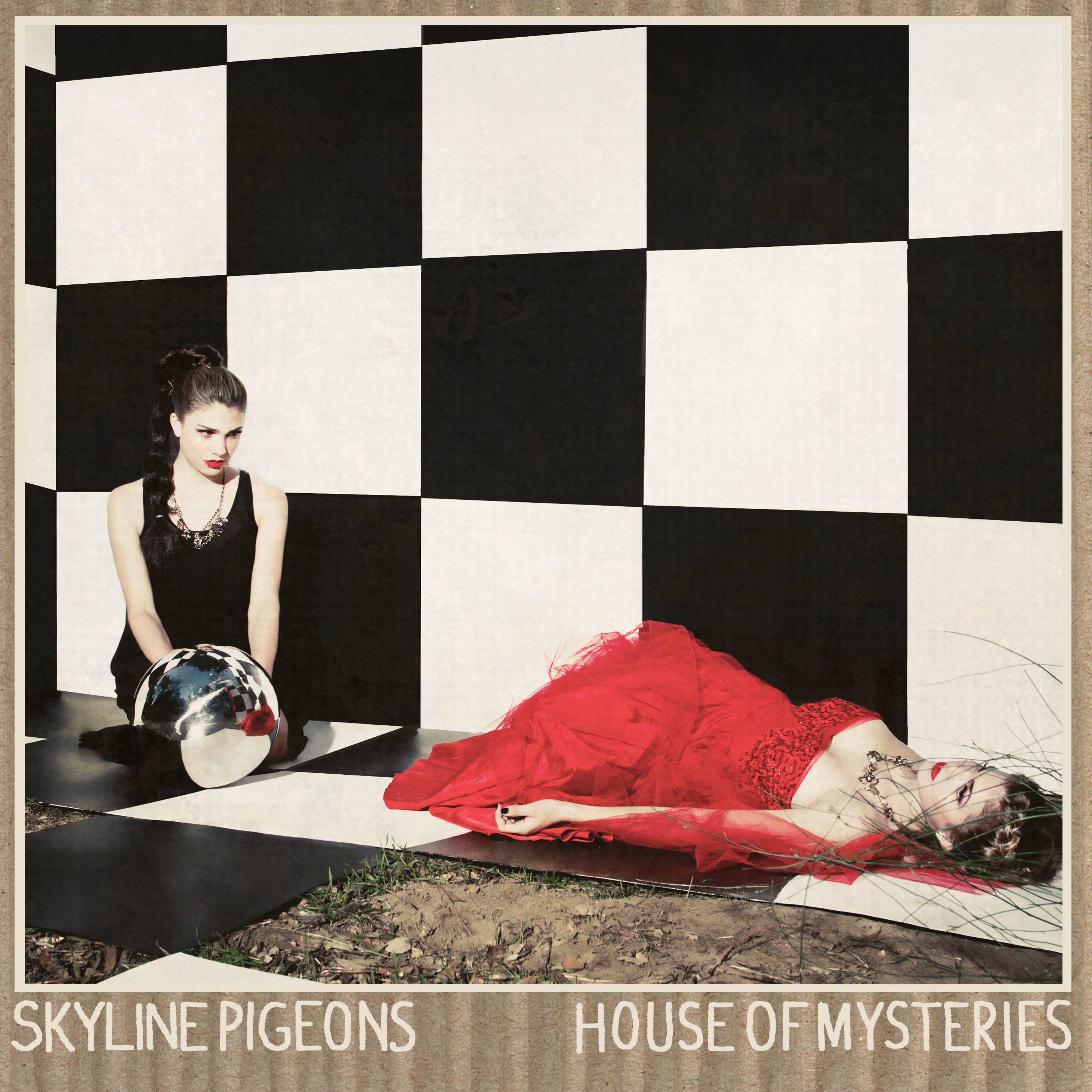
Skyline Pigeons is one of my favorite new bands. Centered on intelligent, strong and talented sisters Roxanne and Caroline Teti, Skyline Pigeons erupts with an edgy emotionalism and rich tapestry of melodies and instrumentation. The band’s debut album House of Mysteries came out earlier this month. I recently interviewed Roxanne via email.
Amy Steele: Thank you for taking the time to answer some questions. I love Skyline Pigeons. The breathy, sultry vocals mixed and darker melodies on some songs and then more emotional, harder vocalizations with churning, stronger chords on others is fantastic. It’s layered, intense and wonderful.
Roxanne Teti: Thanks for your kind words and interest. It means a lot to us.
Amy Steele: When did you first become interested in music and when did you decide to form a band and really pursue writing and recording music?
Roxanne Teti: We are classically trained musicians and so we’ve been playing music since we were five years old. As we approached teenage adolescence we started writing songs together and really exploring original creativity. I think it happened about four years ago, while I (Roxanne) was a freshman in college and Caroline was a freshman in high school when we really started to take our musical and lyrical collaboration seriously. I think the desire for this was feeling the need to want to communicate our personal emotions and concerns about society through song and then finally gathering the courage to do it.
Amy Steele: How long have you been in music? Did you study music or learn on your own?
Roxanne Teti: Caroline has played piano since she was five years old and continues to teach herself new additions to the instrument by learning organ, analog synthesizers, and different electronic keyboards. She also is teaching herself how to play guitar now and is really into slide guitar and alternate tunings. Growing up I began with piano but then switched to flute. I played flute for about 13 years. About five years ago I picked up the guitar and the harmonica, and taught myself how to play. My main inspirations to learn guitar were Bob Dylan, Leonard Cohen, Ani Difranco, PJ Harvey, and Johnny Cash.
Amy Steele: So sorry to hear about the fire and destruction of your house. Had you already started writing songs or was that even an impetus to writing these songs?
Roxanne Teti: We were always writing songs before the fire and so the fire acted as sort of catalyst in really forcing us to sit down and record a full record. Yes, many of these songs are directly inspired by the traumatic experience, but songwriting was our rock before and especially during the fire. It became the one thing in our lives (at that moment) that didn’t “change.” In effect, it became a part of our lives we place more value on.
Amy Steele: What is your writing process?
Roxanne Teti: Caroline and I write songs together as a collaborative unit. We usually guide each other in nailing a melody or following a song’s arrangement to finish. We usually write together or sometimes work on songs individually and then show them to each other and then continue writing more. Most of the time we are pretty open to each other’s ideas but when things are super personal, it’s kind of like okay, we won’t touch it.
Amy Steele: Where do song ideas come from?
Roxanne Teti: We draw from personal inspiration in our romantic lives as well as social issues that involve realities around us. I studied sociology and so I’m also thinking about other people’s realities as well as my own and often look for inspiration in dire places like the news or just by looking out my window. Most of the time, ideas take flight from a current emotion or following a moment to where it satisfies. Honesty is also a big part of inspiration—as recognizing truth and communicating that truth is difficult to do but incredibly gratifying to sing about if done appropriately and without regret.
Amy Steele: As sisters what are the challenges of working together?
Roxanne Teti: We are siblings and so we definitely know how to push each other’s buttons if we want to. But importantly we want to write good music together and have fun doing it and so confrontation like that rarely comes up. I think some of the challenges can come up in debating over a song and its stylistic direction but what is so great about being sisters is we usually have similar taste on issues but when differences of opinion do come up the differences add more dimension and complexity to the tune.
Amy Steele: How do you support one another?
Roxanne Teti: We always have each other’s back and always put our relationship in front of the music. In that sense we keep each other calm, focused, and happy. We try to provide a calm setting emotionally for whenever life gets stressful. Caroline and I are both finishing up college right now. Caroline is an undergraduate majoring in classics at UCLA and I’m a graduate student in film school at USC and so we try to accommodate each other’s schedules and create less stress for when we have to tour or record a song.
Amy Steele: Why do you think there still are not that many female-fronted bands or all-female bands?
Roxanne Teti: I think more women at a younger age need to be encouraged to follow their musical ambitions and have the confidence to be proud of their abilities. I think insecurities for female musicians are often formed in adolescence. Like the old – “girls can’t play guitar” or “it’s just a girl band.” Many women are intimidated and unfortunately end up quitting. I think the distinction between genre and gender gets in the way of women just being musicians instead of female vocalists or girls who are in a ‘chick band.’
Amy Steele: One hears many eclectic sounds and emotional range in your beautiful music. What influences you?
Roxanne Teti: We are very much influenced by memories and the recognition of capturing a moment through song. We tend to write most freely when we let the creative juices flow like a stream of consciousness without placing any boundaries on the song’s structure or lyrical content. We like recording these processes and labeling them with dates and times just as one would do with items of nostalgia. This also helps us try and remember what we’ve written while in a transcendental mindset that lacks hesitation and promotes a “sonic libido” or a notion that feels gratifying to the senses. In terms of style and vibe I feel like we are mostly influenced by the harmonies and melodies of the late 50’s and early 60’s and psychedelic rock and folk music.
We’re inspired by the cultural consciousness and atmospheric projections of Bob Dylan, The Doors, The Velvet Underground, Elton John, and Leonard Cohen. The way Leonard Cohen grasps and chills an audience with such undying resolution and delivery is so consuming and inspiring. Mazzy Star, PJ Harvey, and Cat Power are more contemporary groups/songwriters we have grown up listening to as budding songwriters and have been influenced by their husky reverb meshed voices, instrumental choices, and simplistic and atmospheric musical arrangements.
Amy Steele: This is hard to do via email but can you tell me how you came up with a few of these songs:
“The Cycle”
“ The continuous rekindling of a fun but dying past relationship and a standard chord progression in the key of A. We just kept playing around with a sound that felt sexy but also a little edgy.”
“Get Up”
“This is our “feel good” anthem. Caroline came up with the verse melody while studying for a geology test. Then she was like “look how fun this is Rox”, I said, “great lets finish the rest of the song, I’ve got these lyrics about embracing one’s identity”. We put two and two together and so came “Get Up”.”
“Lucid”
“Lucid was a song Caroline wrote six years ago. When we decided to make the record, we revisited this old gem and really flushed out the arrangement and the lyrics.”
“Take Me Back”
“ We wrote the lyrics to “Take Me Back” within days after our house burned down. Everyone was angry, upset, and not rational. We were sick of the fighting and the mixture of emotions. Then we wrote the music to this song about two years after the fire. We were practicing in a rental home’s pool house and it sort of came out around 3 am.”
Amy Steele: What do you like best about this album?
Roxanne Teti: We like how everyone song is different but is still somehow unified by our sound.
Amy Steele: Why did you name the band Skyline Pigeons?
Roxanne Teti: We are huge Elton John fans and the band name came to us while listening to Elton John’s first record Empty Sky (1969). There was a harpsichord version of the song on the record called Skyline Pigeon. The song is one of Elton and Bernie Taupin’s first really beautiful lyrical and musical collaborations. This collaboration reminded us of the way Caroline and I work together as songwriters and so came the band name—The Skyline Pigeons.
Amy Steele: Thanks! Hope to see you in Boston soon.
purchase at Amazon: House of Mysteries

Share this:

STEELE INTERVIEWS: Carrousel
Posted by Amy Steele in Interview, Music on May 28, 2012

One of my favorite bands of this year, Carrousel, plays melodic, dreamy and dark music. Inspired by the imagery, sounds and ex-pats of Paris, it’s wonderful. The music will grab you immediately. I spoke with singer/songwriter Joel Piedt from his home in Tallahassee.
There’s something beautiful about honesty.
–Joel Piedt
Amy Steele: I really really like the album. It’s great. I’ve been listening to it for a while. It’s the kind of music I like—melodic and dark.
Joel Piedt: Thank you I appreciate you saying that.
Amy Steele: So how did the band get together?
Joel Piedt: We started accidentally. My friend Brad and I had worked on an album back in the summer of 2007 and it became a solo project. Brad was the engineer. We became really good friends because of that. We always joked how fun it would be if we were in the same city that we start a band one day. I was finishing college at Chattanooga and Brad was transferring to college at FSU [Florida State University]. On a whim I decided to move to Tallahassee. So we spent night and day making a record in the summer of 2009. It was supposed to be a two or three month project but somewhere along the way we got this vision for this album that you now hear. We holed ourselves up in this house for a year and worked really hard on it. It ended up being a two-and-a-half year process.
Amy Steele: Why do you think it was such a slow process?
Joel Piedt: We stumbled onto the sound. We thought we were on to something and that’s how it all went down. Brad actually left the project and I recruited five friends in Tallahassee to play live. So that’s how it’s shaped up to be.
Amy Steele: why did it take two years to put together the songs on the album?
Joel Piedt: I think why it took so long was that around that time as well my standards were really changing. Before I was okay with the idea of just popping something out. Both Brad and I became very professionalistic – we were our own worst critics. I would do a vocal take or whatever it was and Brad would want me to do it again. So it became this challenge with these really high standards. We approached every song under a magnifying glass. We knew we had an idea and we wanted to see it through the very best we could. Some of the songs had aged. Some parts we had to re-do.
Amy Steele: What’s the music scene like in Florida?
Joel Piedt: There’s a very interesting culture in Tallahassee. There’s an interesting arts scene but it’s not as strong as it could be. We have access to FSU which is great. There’s not a huge local band music scene. That discouraged me for a bit but in the end I realize it’s a really great city to do what I do because If I lived in New York on L.A. I’d feel this constant pressure to go out and compete in the music scene and climb up the ladder. I’ve been allowed to relax a little in Tallahassee.
Amy Steele: How do you get the attention that you need? How do you develop a fan base? What have been the challenges?
Joel Piedt: We’ve done everything backwards. We found our sound in the studio and now we’re playing live. We’re facing those challenges now. We’re building our following with online content. We’re just trying to accrue as much ammunition as possible. I don’t want to put anything out unless I’m 100% confident in it.
Amy Steele: With you pulling a James Mercer [The Shins] by recording the album and then bringing musicians in, what’s it like with new people coming in?
Joel Piedt: I like the idea of being a James Mercer and The Shins. There’s a collaborative feel as well for the live setting. I love the idea of the name Carrousel because people are getting on and off. It changes up for different projects. There are different sounds and different interpretations.
Amy Steele: Are you more interested in doing concept albums?
Joel Piedt: Concept albums got kinda worn out in the 70s but I think there’s room for a new kind of concept album. I felt that this album was a short-story or mini-novel. It might not tell a story lyrically, but it does so sonically.
Amy Steele: You have several inspirations for this album—one was a break-up. Do you think there’s a novel way to approach that?
Joel Piedt: The break-up record has become cliché but I did want to approach it the way that I did. It wasn’t contrived. Those were things I truly did feel and the girl it was about Michelle was staying in France for a while so the whole vibe of the album changed. I was listening to French music and French composers. It felt good for me to describe it from that perspective. I feel good about where it landed. It’s true and artistic and the greatest thing artists can do is tell the truth. There’s something beautiful about honesty.
Amy Steele: What inspired you by Ernest Hemingway’s book A Moveable Feast? I love that book.
Joel Piedt: Just the vision of Paris in the 20s. It just did something to my imagination. I pictured myself there. I also started going to the symphony at FSU. It all affected me at a deep level.
purchase at Amazon: 27 rue de mi’chelle

Share this:

TV review: The Conversation with Amanda de Cadenet
Posted by Amy Steele in Interview, TV on April 24, 2012

Created by Amanda de Cadenet and executive-produced by Demi Moore, The Conversation with Amanda de Cadenet utilizes a casual format which evokes a girlfriends chit-chatting setting. In the first episode, de Cadenet speaks with Jane Fonda, Gwyneth Paltrow, Sarah Silverman and Zoe Saldana. Fonda talks about marriage and intimacy issues. Paltrow discusses how the death of her father, Bruce Paltrow, profoundly affected her. Both Paltrow and de Cadenet open up about post-partum depression. Silverman addresses boundaries and being a strong woman in a male-dominated industry. Saldana focuses on body image.

Amanda de Cadenet showcases her natural skill as an interviewer. She’s adept at eliciting truthfulness and emotions from others. She’s not just a model/ photographer/ pretty face who can read lines off a teleprompter. She’s the real deal. Amanda de Cadenet has smarts and life experience to share with other women. She’s self-effacing—rather cutely obsessed with her post-pregnancy lopsided breasts—and charming. Amanda de Cadenet is a true delight that soaks in the spotlight without overshadowing anyone else.
In future episodes de Cadenet will interview more famous and influential women, including: Lady Gaga; Miley Cyrus; Eva Longoria; Kelly Preston; Alicia Keys; Senator Kristen Gillibrand [D, NY]; Ivanka Trump; Donna Karan; Gabby Sidibe. The show also features “Women on the Street” segments where de Cadenet asks a variety of women questions about body image, relationships and other women’s issues and concerns. The Conversation with Amanda de Cadenet is an engaging and illuminating show with some of our favorite entertainers.
The Conversation with Amanda de Cadenet premieres Thursday, April 26 at 11pm ET/PT on Lifetime
Share this:

STEELE INTERVIEWS: Winterpills
Posted by Amy Steele in Interview, Music on March 8, 2012
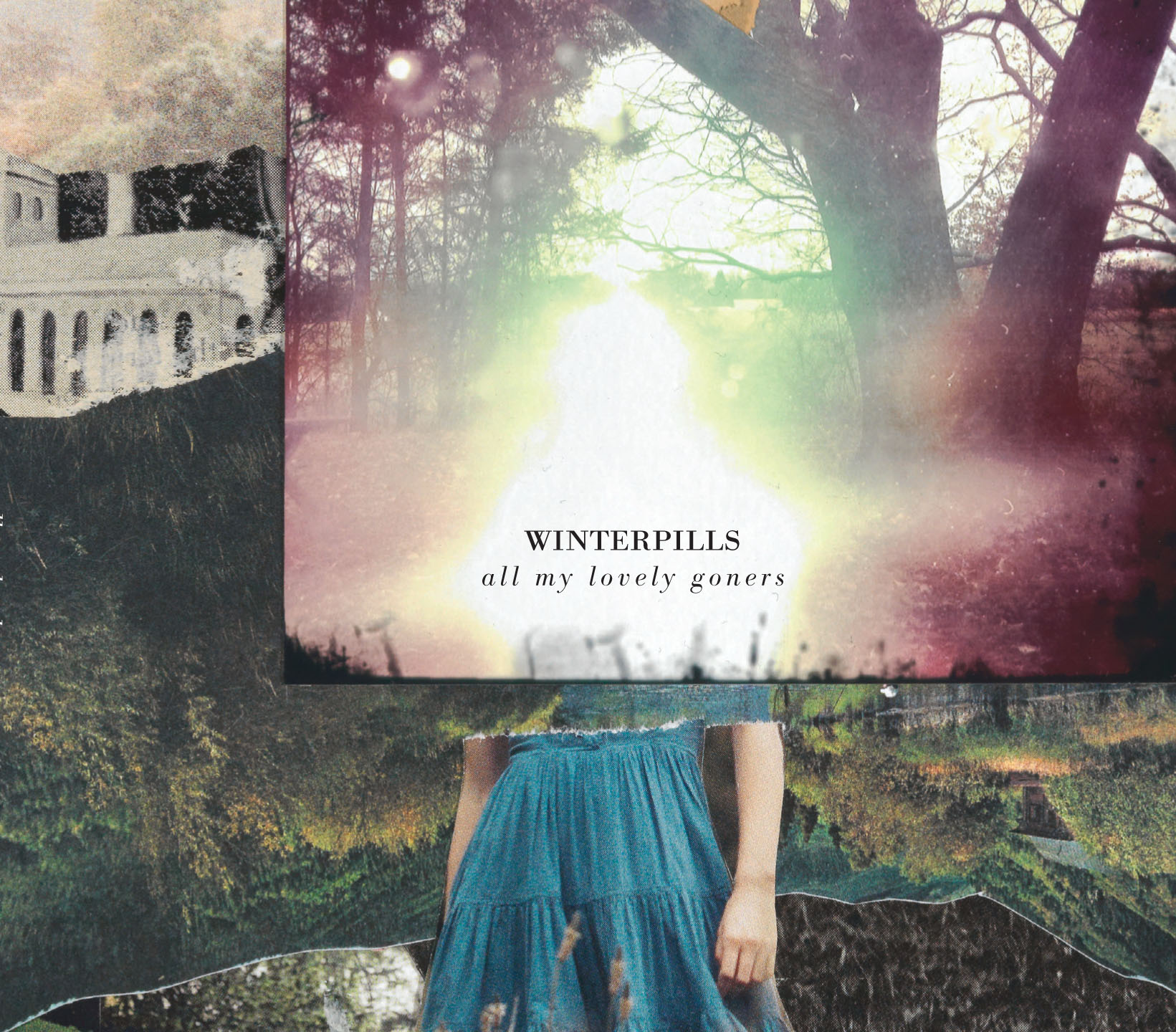
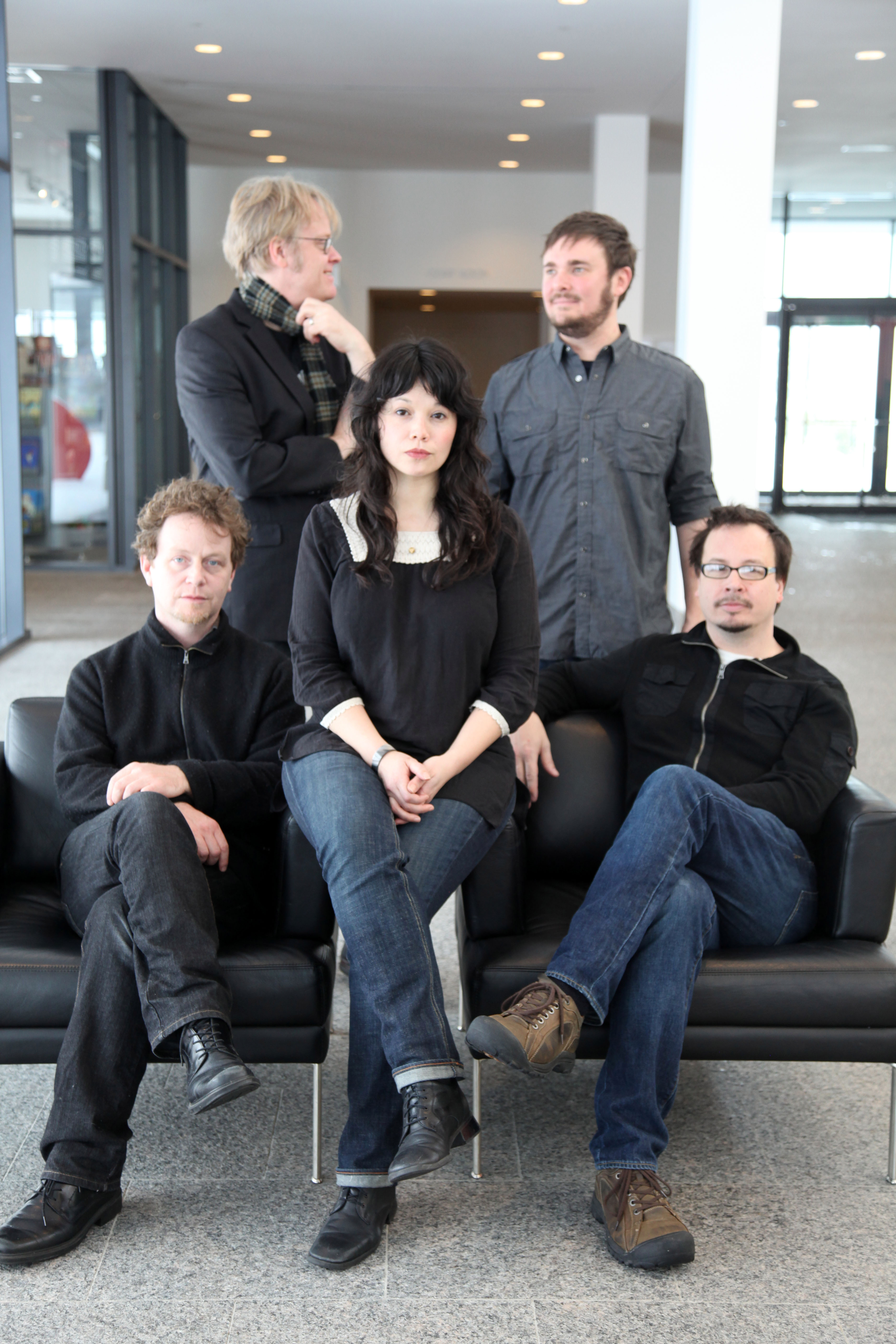
Winterpills is a wonderful chamber-pop band from Northampton, Mass. The songs are swirling and melodic. All My Lovely Goners is the band’s fourth full-length release. I recently spoke with singer/songwriter/ guitarist Philip Price.
Amy Steele: You spent two years recording and producing this album in your own studio. Why did it take that long?
Philip Price: We weren’t recording the whole time. We started recording August 2 of last year but it took a long time for the whole thing to come together. It was a very slow gestating project which for me is a better experience. We were just figuring out our pace and a couple of the other ones [albums] we had to push to get them done in the studio. I wish the songs were better put together. I feel like we got it this time.
A year after our last release there was a brief period where the band wasn’t sure what it was going to do. We weren’t going to break up but our energies were going in other directions for a while. I thought it would end up being a solo record. I did pretty elaborate recordings/ demos of the songs. When it was all done, I thought it was another Winterpills album. If I did a solo project I would want it to be a departure, something different.
Amy Steele: When you play a live show, what can someone expect?
Philip Price: it depends on the room. We just play the songs. We sound like the record pretty much. We are touring as a duo a lot these days. Flora [Reed—vocals, keyboards] and I go out. That’s going to sound a lot more stripped down. We’re going to SXSW this year with our guitar player. We did a whole tour last year as a duo and we were pretty happy with how it ended up going.
Amy Steele: You’ve been together as a band for eight years. What makes you work well together?
Philip Price: We came together in 2004. We knew each other and started playing music together in non-ambitious ways. Everyone was doing other things or had other projects. We started playing out mostly regionally before we decided if we were going to record or not.
Amy Steele: When I think of the area you’re in I think of all the colleges around there. Did you all grow up out there [near Northampton/ South Hadley] or go to college out there?
Philip Price: Dennis [Crommett- guitar] went to school out here. I didn’t. I migrated here in the 90s from Vermont. Flora’s family is from here but she didn’t grow up here. We were all well beyond college when we first started playing together. I had a band for nine years before this one called the Maggies. A power pop band along the lines of the Posies or the Lemonheads. I came out of that band in 2002, toured as a solo artist and got very frustrated and lonely. Dennis, Brian [Akey—bassist] and Dave [Hower—drummer] have a band. A much harder rock band. Flora has a solo record. Just a few weeks ago, Dennis, Brian and Dave were Frank Black’s backing band for a show.
Amy Steele: How has the band changed over the years?
Philip Price: We can be a big lush rock band and we can also scale it down really well. Quiet. It’s been a natural progression. We had to be a rock band in addition to being ethereal.
Amy Steele: What makes you work well together?
Philip Price: We’re all friends. We’ve stayed friends. We don’t fight.
Amy Steele: Winterpills has been labeled chamber pop—I’d not heard that before.
Philip Price: I don’t know who coined it but it kinda fits. It’s a rock band but it’s also listening music. You might sit down and listen to it. It’s apropos of a certain type of rock song that might be more arranged and more formal. It’s interesting not to have to say that you’re an indie rock band or an indie folk band, both of which could apply, but I’d rather not use that terminology if possible.
Amy Steele: I’ve just recently heard of you and I feel awful about that.
Philip Price: You’re right there along with most people.
Amy Steele: I really like you guys. I really like this band. How have I not heard of you?
Philip Price: Well it’s a strange time in the music business. I think for a while people didn’t quite know what to do with us. I think every artist would say they’ve had experiences in the industry that have been disheartening. I feel like we’re a very slow-growing fruit tree or something like that. Unlike a lot of rock careers we’re more like a small publishing house.
Amy Steele: What is your songwriting process?
Philip Price: I’m lazy. I’ll wake up with a song in my head or a melody will come to me and then I’ll whip out my recorder and get it down. Eventually I’ll collect a bunch of those. I end up writing an album’s worth of songs per year. It tends to be melody first and then lyrics after. And then the meaning after that, whatever the song means.
Amy Steele: What do you think makes a good song?
Philip Price: It’s gotta have a great hook lyrically and melodically and they have to make each other happen.
purchase new album: All My Lovely Goners

Share this:

STEELE INTERVIEWS: author Dan Chaon
Posted by Amy Steele in Books, Interview on February 7, 2012
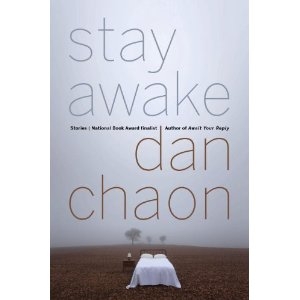
The stories in Stay Awake are riveting, twisted, macabre, complex and darkly humorous. Previous works by Cleveland-based author Dan Chaon include the novels You Remind Me of Me and Await Your Reply. He teaches writing at Oberlin.
Amy Steele: You started out writing short stories and have also written two novels.
Dan Chaon: It’s what you start out with in college. I was even writing stories when I was a kid. I was reading Ray Bradbury and Shirley Jackson and those old anthologies/ thrillers that were supposed to be edited by Alfred Hitchcock. Stories to Read with the Lights On and things like that.
Amy Steele: What appeals to you about writing short stories?
Dan Chaon: I’m someone who has a lot of ideas. A lot of the ideas aren’t particularly novel-like or something I want to spend an entire 200 or 300 pages exploring. The story gives you this opportunity to play around with a particular idea and get in and get out and I like that.
Amy Steele: What are the challenges in writing a short story?
Dan Chaon: There’s the challenge in compressing some information and figuring out what belongs in the story and what doesn’t . The other issue is how to get a resonance and make a reader care about a character and make them feel something about the character’s state by the end of the story.

author Dan Chaon
Amy Steele: What are the elements of a good short story?
Dan Chaon: I don’t know if you can describe it exactly. I think stories vary so widely. There are great short stories that have a traditional three-act structure and there are great short stores that are just monologues and there are great short stories that are mostly concerned with language. The fact that the form is so flexible is one of the things that makes it so wonderful.
The only thing you can say about what makes a short story great is that it gives you that friction at the end where the hairs on the back of your neck stand up.
Amy Steele: What is the market like for short story vs. novel?
Dan Chaon: What market are we talking about? The market for individual short stories?
Amy Steele: Everyone thinks they can and will write a novel but then some will write a short story.
Dan Chaon: I don’t think there’s the market for short stories that there was during the golden age of magazines. When you had The New Yorker and The Atlantic and The Saturday Evening Post. That’s pretty much gone. There’s still a huge number of small literary magazines. There’s a lot of interesting stuff that’s going on online. Publishers are resistant to short story collections a little bit because they don’t sell as well.
But they still continue to publish quite a few of them so I don’t think it’s impossible. If you’re betting the odds, you’re probably better off writing a novel first. There’s always that story of someone who publishes a short story collection right out of grad school and then works 15 years writing a novel that ends up being a big flop.
Amy Steele: What attracts you to writing about the darker side of people?
Dan Chaon: I’ve always been attracted to the morbid and the scary and to mystery. I’ve been a lover of ghost stories for a long time. I think one of the things this collection reflects is trauma and how people deal with loss. So I think those two things are complementary. Ghosts and horror stories and trauma and loss.
Something bad has been looking for him for a long time, he thinks, and now, at last, it is growing near.
–“The Bees”
Amy Steele: How did you come up with the idea for “The Bees”—kind of a paranormal, creepy story?
Dan Chaon: It started about a child with night terrors. And I was thinking a lot about how people change over time or don’t change. I just had this idea about a dead-beat Dad returning after a long time lapsed and having been a changed person. And how and whether that would be forgivable. I’d heard an anecdote about this from a friend. The long absent parent and whether they could be forgiven was on my mind and that’s where the story began to emerge from. I had been asked to write a story for an issue of McSweeney’s that had a supernatural element to it. It all came together in a way that I thought was pleasing.
Amy Steele: Why did you want to write a story—”Stay Awake”—about a baby with craniopagus parasiticus? What kind of research did you do?
Dan Chaon: I think the core of the story was seeing something on a talk show. I want to say it was Oprah but I don’t remember for sure. Some parents who had a child with this condition. Then I found myself googling some info about that really strange condition and becoming really fascinated by it.
Amy Steele: Do you write story ideas down all the time?
Dan Chaon: Yeah. And I do read a lot of the weirder news stories. The stuff at the bottom of the page that’s more pulpy. I find I get a lot of inspiration out of that.
Amy Steele: “Thinking of You in Your Time of Sorrow”—about teenagers whose baby dies shortly after birth—and “Take This, Brother, May It Serve You Well” deal with topics most people want to avoid and with truly unlikable people. What do you enjoy about those stories?
Dan Chaon: In terms of unlikable people, I find them more interesting in some ways. I like people who have the capacity to misbehave and do wrong things because that seems to have more dramatic potential for me. As a reader and as a writer. It’s one of the places that I’m interested in looking at. People who have done something that they regret in one way or another. At least that guy in that one story had a lot of things to regret and that made him a lot of fun to write about. Also he was pretty funny in a lot of ways because he was so angry and jerk-ish.
There is a stage you reach, Deagle thinks, a time somewhere in early middle age, when your past ceases to be about yourself. Your connection to your former life is like a dream or delirium, and that person you were once is merely a fond acquaintance, or a beloved character from a storybook. This is how memory becomes nostalgia.
–”Take This, Brother, May It Serve You Well”
Amy Steele: How do you decide whether to tell a story in first-person or third-person?
Dan Chaon: A lot of times it just seems to emerge from the situation. With that voice, that was the driving force behind the story in some ways. That kind of constantly riffing, smart-alec-y voice. I didn’t even know where it was going at first. It was just riffing on all these observations.
It was probably one of those dutiful married person fucks that happened right before they went to sleep or right after they woke in the morning . . .
–“Long Delayed, Always Expected”
Amy Steele: How does writing influence your teaching at Oberlin and how does teaching influence your writing?
Dan Chaon: You get to spend time with people who are interested in the same subjects as you are—exploring language and the process of creating stories. In some ways you’re dealing with the same problems whether you’ve written five books or whether you’re just starting out. What kinds of language are evocative and what kinds aren’t. How do you create a feasible character. All that continues to be a challenge. To be able to talk about it with my students helps me as a writer. I think being a teacher helps me to think about these issues in dynamic ways.
Amy Steele: How does living in Cleveland/ the Midwest affect your writing? Have you always lived in the Midwest?
Dan Chaon: Yes, I’ve always lived in the Midwest. I grew up in Nebraska then I moved to Chicago for college. I went to grad school at Syracuse. So that was my one foray outside the Midwest although Syracuse still feels pretty isolated. Now I’m back in Cleveland. I guess there’s a particular feel of the landscapes in the Midwest that have a particular power that I’m drawn to.
Amy Steele: What about people supposedly being so polite and nice in the Midwest?
Dan Chaon: One of the reasons I may be interested in people’s secrets and the unexplored aspects of people’s identities is that I’ve grown up among that politeness. You don’t really say what you think a lot of the time.
purchase at Amazon: Stay Awake: Stories

for more info: Dan Chaon website
Dan will appear at Brookline Booksmith on Wednesday, February 8.
Share this:

STEELE INTERVIEWS: Stephie Coplan of Stephie Coplan and The Pedestrians
Posted by Amy Steele in Interview, Music on January 23, 2012

Who:
Stephie Coplan (vocals/piano)
John F. Herbert (bass)
Shane Considine (drums)
From: NYC
Discography:

Debut EP out now
Sound: piano rock trio
Plucky, creative, dark yet upbeat
Voice reminds me a lot of Suzanne Vega
I interviewed Stephie recently.
Amy Steele (AS): You started playing classical piano at a young age. What did you like about it?
Stephie Coplan (SC): I did! I started playing when I was 8. I really loved playing Brahms, Ravel and Rachmaninoff – – to this day, they are my favorite composers. All three are incredible at expression emotion and telling a story without using lyrics. Chopin has a gorgeous piece called the Raindrop Prelude that mimics the sound of rain falling on a window pane as a constant backdrop throughout the piece – playing that piece as a little girl was the first time I ever thought about using music (as opposed to lyrics) as a way to tell stories. Rachmaninoff in particular tends to write very thunderous, emotional, brooding pieces. If anyone reading this has been to one of our live shows, they know how much I love banging on the keys, especially in the lower register. Rachmaninoff gave me a chance to do that at a very young age and I have him to thank for my 10-note hand span (although I have very large hands to begin with, like that girl from the “Seinfeld” episode with the “man hands”…what can I say, I’m blessed.)
AS: How did you transition from classical music to pop/rock?
SC: Broadway and show tunes were sort of the bridge. My mom was a theater major in college and when I started playing piano, I usually split my time practicing classical pieces that my teacher gave me with Broadway show tunes that my mom slipped on the piano stand (whoops…how did those get there?) I only listened to pop music from the 40s and 50s (the Rat Pack, Peggy Lee, Doris Day, etc.) until I was about 11 so I have an encyclopedic knowledge of music from that era. I discovered FM radio in fifth grade, which is when I heard my first Top 40 song (I think it was “Foolish Games” by Jewel) and three years later, started writing my own pop songs. I heard The Beatles for the first time when I was 14. Weird, right? It’s like I’m Amish or something.
AS: At Tufts what did you study?
SC: Philosophy. I only took two music classes, Contemporary Concert Music (John Cage, Steve Reich, Philip Glass, etc) and Psychology of Music. I played piano in the pit orchestra for a lot of our musicals, though.
AS: How did you develop a following in Boston?
SC: I hung out at a lot of local music venues like TOAD, the Lizard Lounge and the Burren and became part of a very large group of songwriters. The music scene in Cambridge/Somerville is very supportive of newcomers – it’s a unique group of people and I miss them a lot now that I live in Hoboken.
AS: How did the group get together?
SC: Craigslist. The casual encounters section. No, just kidding. It was Craigslist, though. Craigslist is very hit-or-miss but the three of us ended up becoming best friends. I don’t think any of us remember that we actually met on the Internet – it feels like we met in a much more organic way because we get along so well and love playing together. They are the two best musicians in New York City and I can’t wait until we’re touring full-time so I can be around them all the time. (Famous last words…?)
AS: What is your songwriting process like?
SC: It’s different every time, but usually I noodle around on the piano until I find a few chords that I like. I try to write the hook first, and build the rest of the song around that. Sometimes I’ll invent a character in my head and write about that person, or I’ll look up people on Facebook who make me feel very strong emotions (like my ex or my best friend or whatever) and stare at their picture until lyrics come out. I guess everyone is going to unfriend me now.
AS: What inspires you to write songs?
SC: I really like wordplay. It’s so much fun. I’m most excited to write songs when I can make clever rhymes – I wrote a pretty shitty song once called “Is Anyone on the Internet Tonight?” about online dating. It was a terrible song but I rhymed “breakfast” with “Netflix” and “vegetarian” with “aquarium” and gave my reflection a high-five in the mirror because I was so proud of myself.
AS: Let’s talk about a few of the songs.
What’s the story behind “Take Me Back to the Suburbs?”
SC: I moved from Boston to Hoboken to work at a non-profit deep in the heart of Newark. About two weeks in to the new job, I was walking to the bus after work and a police officer stopped me and interrogated me on the street. I thought he was kidding at first, but it quickly became apparent that he thought I was a drug kingpin. Go ahead, laugh. I am a little oblivious when I walk around sometimes, and apparently I had walked right by a drug deal – definitely a “wrong place wrong time” scenario. He thought I was involved and searched my bag and ran a background check on me while I stood on the sidewalk crying hysterically in pink sunglasses and a corduroy jumper. I finally convinced him that I was not a drug lord – just a nerdy white girl from the suburbs. I asked him for a ride to the train station since he made me miss my bus, but he told me that I’d have to ride in his car with the drug dealers so I walked instead. When I got home, I wrote that song.
AS: “JERK” is a great single. Bold and provocative. How did you write this one?
SC: Thanks! It’s a true story – I was seeing a really hot guy who played a lot of mind games with me. He told me that he cared about me, but wouldn’t take me on a single date. He wouldn’t even buy me a cup of coffee. He just invited me to his fancy apartment to watch TV and hook up. It’s a story that’s all too common, unfortunately. I stayed in that “relationship” (if you can even call it that) for way too long but at least I learned an important lesson about dignity and self-respect. “JERK!” was originally a slow, bluesy striptease-y type song but ended up turning into a hate sex anthem when we went to the studio to record it.
AS: What influenced “Make You Mine?”
SC: Oh boy. That’s the most personal song on the EP, by far. It’s about a guy I was in love with for a very long time, someone I truly thought I was going to spend the rest of my life with. I found out that he cheated on me with two different people – he even flew 3000 miles to cheat on me with a girl in Portland, Oregon once (hence the Portland reference in the second verse). We broke up for about a year and saw other people while I sorted out my feelings. I wrote “Make You Mine” when I decided to take him back – it’s a song about finding the strength and resilience to forgive someone who has cheated on you and let them back into your heart. Predictably, he cheated on me again with someone else right after I took him back, so we broke up again. I haven’t talked to him in over a year, and don’t plan to ever again. Every time I play that song live, I am reminded that you can’t make someone love you, no matter how hard you try.
AS: What has happened since the video for Jerk went viral and caught the attention of many critics?
SC: “Viral” is a relative term! I guess it went viral on some level – I know a ton of people posted it and re-posted it on Facebook, Tumblr, Twitter, etc. We’ve been making a lot of new fans, which has been great. I love connecting with people from all over the country on Facebook. I love hearing that they can relate to the song. It makes me feel like I’ve done my job as a songwriter. The popularity of the video has caught the attention of a few internet and college stations around the country, which has been really exciting and surreal.
AS: Tell me what happened with Paul Driscoll and WFNX.
SC: The night we posted the video, a fan saw it on Facebook, tracked me down, and suggested that I send it to Paul at FNX. He said that Paul had a reputation for getting behind new music and that based on his taste, he would probably really like “JERK!” I sent Paul a message and told him that we had just put up a new single that a lot of people seemed to like, and that it would be awesome if he listened to it. I didn’t expect to hear back because getting radio play is typically much more complicated than just sending your song to a station. I was shocked when he wrote back in 15 minutes and said that he had listened to it three times in a row and wanted an MP3 immediately. I screamed like a wild animal, called Shane (since he is from Boston too and loves FNX as much as I do) and spazzed out like a pro.
AS: How are things different live than what people hear recorded?
SC: It’s not very different! We play more solos live, but other than that, I think we sound pretty close to the recordings. There was very little “studio magic” used on us – we just did a bunch of takes until we got everything right.
AS: What do you think makes a good song?
SC: GREAT question. I could talk about this for days. I think a good song makes you think, or makes you feel. I am personally always a fan of songs that tell very vivid stories or breathe life into characters – that’s why I’m such a huge fan of Fountains of Wayne, who are experts at that. If I can’t tell what a song is about, I get bored. I know some songwriters like to leave their songs open to interpretation but…I don’t know, I sort of think that’s bullshit. For me personally, anyway. I think if it’s not clear what you’re trying to say, then you haven’t said it very well. The songs that hit me the hardest are the ones that can get me to relate to them in very specific and meaningful ways – Taylor Swift, Amber Rubarth, and Alanis Morissette are particularly excellent songwriters in that regard, I think.
AS: What are the biggest challenges for musicians today?
SC: THERE ARE SO MANY. Where to begin? I think the biggest one is making a living. With the advent of digital piracy, CD sales are no longer a viable means of collecting income – CDs have really become more like a business card than anything else. It’s an honor every time someone buys one of our albums because I know it’s not just a five-dollar purchase – it’s a statement. They’re saying that they believe in us, and it means the world to me every time someone gives us their hard-earned money for something that they could just stream online for free. On the other hand, while the Internet has destroyed the music business in a lot of ways, it has also made it possible for artists like us to make hundreds of new fans and effortlessly keep in touch with them. Before e-mail lists, musicians had to send out postcards to their fans every time they had a gig coming up. The bigger their fan base got, the more expensive their postage became. At least we don’t have to worry about that anymore.
AS: As a woman do you run into unique challenges?
Actually, being a woman has given me a large advantage, I think. Alternative radio is heavily male-dominated so being a woman is an automatic easy way to stand out. That being said, I think because I’m a woman playing music in a historically male genre, people expect me to have a feminist “girl power” agenda, but I don’t. I’m not Alanis or Fiona or Tori. I’m not bruised or battered and I don’t really have anything to prove. I’m just honest, and I hope that people can, for the most part, separate my sexuality from my music when they listen to it.
AS: Your debut EP comes out soon and you’re going on tour. What goals do you have now?
SC: Yes, we’ll be hitting Hoboken on January 26, DC on February 4, and releasing our EP in Boston on February 18. Our goals for 2012 are to hopefully hear “JERK!” on more stations and be touring full-time by the end of the year. Wish us luck…
Share this:

STEELE INTERVIEWS: Buffalo Tom
Posted by Amy Steele in Interview, Music on November 19, 2011
Buffalo Tom celebrates its 25th anniversary with three shows at Brighton Music Hall on November 25, 26 and 27. Shows are pretty much sold-out. I think I got shut out.
Buffalo Tom is Bill Janovitz [guitar], Chris Colbourn [bass] and Tom Maginnis [drums].
Coincidentally, Buffalo Tom was my first band interview in 1993 when I was in graduate school at the University of Maryland. Can’t believe so much time has gone by.
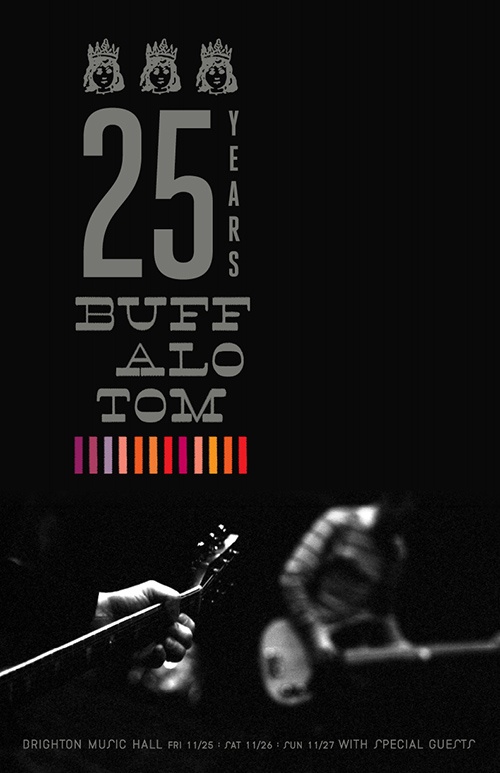
Bill Janovitz kindly took some time to answer some questions.
Amy Steele: How do you feel about Buffalo Tom hitting the 25 year mark?
Bill Janovitz: Old. But accomplished. Nostalgic. Wistful. Weary. Teary. Beery.
Amy Steele:Who helped Buffalo Tom the most?
Bill Janovitz: I assume you mean helped along in our career. I would have to say Tom Johnston, our manager all along.

Amy Steele: What has enabled you to stay together for so long?
Bill Janovitz: I think we are all different types of personalities in many respects. But we are common in some very deep ways, one of which is loyalty — not just to each other, but to others in our lives. We are all part of a big group of friends who date back at least 28 years, some even further back to childhood. But loyalty alone would not be enough to keep an artistic and creative endeavor together all these years. Each of us has broad musical taste, much of which overlaps. And we have more or less shared the same vision for the band. But we also took almost seven years off from writing and recording with each other, only regrouping for isolated shows or short tours. That was time we worked on our side projects, such as our families.
Amy Steele: How has the band changed through the years?
Bill Janovitz: We have not changed in some very fundamental ways. As with individuals, I would estimate personalities are 90% formed by the time people are adolescent. Using that as an analogy, after the first two records (birth), we hit our adolescence on our middle records, and refined and moved laterally on subsequent recordings. We kept getting better as a live act, though. I see clips from the 1990s and clips from last year and think we are at least as good live as we were then, but I think we might be better musically. Maybe not.
Amy Steele: When did you think you had really made it?
Bill Janovitz: Not sure what “made it” means to you. But there were little goal posts all along: getting our first headlining gig; hearing ourselves on the radio; touring Europe and playing big halls; being able to quit my day job; playing at Reading twice; getting enough money to buy a house; jamming with Mick Jones… These were all dreams come true. It was more of a struggle when we leveled off and started a descent around 1998. Everything had felt like momentum forward or upward until that time. Then it all started to turn.
Amy Steele: When did you know that it wasn’t going to be your full-time thing?
Bill Janovitz: Around the same time as above. When we realized we could still make a decent living at it only if we stayed on the road. None of us wanted to do that after 10 years of it. We had kids that we wanted to see.
Amy Steele: The 90s was really a great time for Boston bands to break out to the national level. What was it like
being part of that era?
Bill Janovitz: It was really the late ’80s-very early ’90s where it felt like a Boston thing. When Nirvana broke through in 1992, though, it really felt more like an international alt rock thing, with all kinds of great bands being considered mainstream. That had been the first time since the 1970s that I felt like I had a good chance to put on the radio and hear a song I loved. It was so nice making friends with other musicians from around the country and world — Bettie Serveert in Holland; Pavement; Belly; Teenage Fanclub from Scotland; our Beggars Banquet label in London; Died Pretty, You Am I, and Smudge in Australia; The Verlaines in New Zealand; Superchunk; Dinosaur Jr.; and so on. I truly think it was a great time for music. All of those records still are a pleasure to listen to.
Amy Steele: Many bands and artists left Boston for New York or Los Angeles, did you ever consider that?
Bill Janovitz: Until we formed Buffalo Tom in 1986, I had always assumed I would end up in New York, as that’s where I grew up (Long Island) and had some old friends. I still love the city. But things with Buffalo Tom started happening and I love Boston as well. We all thought it made the most sense, since we had sort of established ourselves as we were graduating. Now, I can hardly see myself anywhere else. I feel very grateful that we were in one of the right places at the right times for what we were doing. My friends in NY had a very hard time getting going. It had been easier in that city in the early 1980s, but by the middle of the decade, it was an expensive place to live and try to be a band, with surprisingly few venues for a city that large relative to Boston. I always thought LA was unfairly slagged. We were there for a couple of months during the making of Big Red Letter Day and I really enjoyed it. I feel like I could still be making a living doing music if I were there, scoring, soundtracks, etc. Not sure if that would be better, though. Seems like the grass is greener. I hear almost nothing but nostalgia from most people who have left Boston to live there.
Amy Steele: What are your top three tour highlights?
Bill Janovitz: Off the top of my head: the aforementioned backstage jam with Mick Jones on an otherwise miserable tour where Big Audio Dynamite and we were opening for some lamestream band. Getting invited to stay at Peter Buck’s house in Athens on one of our first tours and hanging out playing records with him until the wee small hours. Going to Australia for the first time (fill in the blank: Italy; Japan; Reading Festival; Cactus Festival in Brugge – magical)…
Amy Steele: What’s the best part about being in Buffalo Tom?
Bill Janovitz: The musical chemistry and having an outlet and a platform for our music/musings.
Amy Steele: What should fans expect at the anniversary shows?
Bill Janovitz: Old numbers; guests; animal acts; jugglers; danceathons.

Let Me Come Over
Share this:

STEELE INTERVIEWS: author Caroline Preston
Posted by Amy Steele in Books, Interview on November 13, 2011
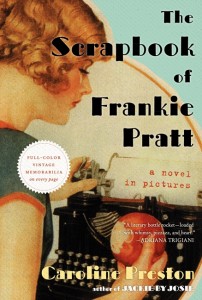
Amy Steele: Why did you want to write a story in the scrapbook format?
Caroline Preston: I like to say the idea of making a scrapbook novel was 40 years in the making. As a little girl, I used to pour over my grandmother’s flapper scrapbook filled with dance cards, letters from old boyfriends, ocean liner tickets, and even long curls snipped when she got her hair bobbed.
My first three novels were what I guess you’d call “conventional” format—i.e. just words. My third novel Gatsby’s Girl was inspired by the meticulous scrapbook F. Scott Fitzgerald kept about his first love, Ginevra King—her first note to him, her handkerchief, and a newspaper clipping about her marriage to another man. Later he would turn the story of his unrequited crush into The Great Gatsby.
When I was casting around for the idea for my fourth novel, I wanted to create something that was as visual and powerful as a scrapbook. And then I had a crazy idea—why not make a novel that WAS a scrapbook. Not a digital scrapbook, but a real one made of real stuff that I cut up with scissors and pasted together with glue.
Amy Steele: What came first—the story or the memorabilia?
Caroline Preston: I started with my character, Frankie Pratt, and the outlines of her story, which was set in the 1920’s. I imagined an 18-year-old girl who wanted to become a writer and her journey which would take her to Vassar, Greenwich Village, and Paris.
Then I hunted down and bought all the things that a girl like Frankie would glue in her scrapbook—postcards, movie tickets, Vassar report cards, menus, sheet music, fashion spreads, popular magazines, a New York subway map, a Paris guidebook, and of course love letters. In all, I collected over 600 pieces of vintage 1920’s ephemera.
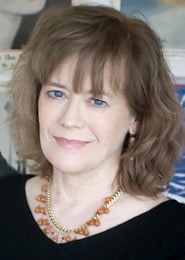
author Caroline Preston
Amy Steele: How did the memorabilia dictate the story?
Caroline Preston: Frankie’s story changed and evolved as I found surprising things—for example an original book cover for The Sun Also Rises. The book caused a huge fuss in Paris when it came out in 1926 because everyone recognized the characters, and she would be right there to bear witness.
Amy Steele: Why did you choose to set Frankie’s story in the 1920s?
Caroline Preston: Like a lot of people, I have a romantic obsession with the 1920’s when very aspect of life (especially for women) was turned upside down and reinvented. Women cut off their hair and hemlines, got the vote, went to work, and felt freed from Victorian behavior codes. Writing Frankie Pratt was a chance for me to indulge in some lovely time travel.
Amy Steele: How would you describe Frankie Pratt? What do you like best about her?
Caroline Preston: When the book opens in 1920, Frankie is an 18-year-old girl living in a remote New Hampshire village. She has ambitions for herself—she wants to go to college and become a writer—and is able to overcome financial hardships to get herself to Vassar. After college, she heads off to Greenwich Village and Paris on her own to follow her dreams. I love her contradictions—gutsy, wildly romantic (which results in a few bad choices), unwilling to take no for an answer, but also a sensible and principled Yankee girl at heart.
Amy Steele: Where did you get a lot of the things featured in the scrapbook?
Caroline Preston: I had a surprising number of 1920’s items in my own collection of vintage paper. I stopped at every roadside antique store and junk shop I passed—from Mississippi, Virginia, New York and Illinois. (My favorite store is Whiting’s Old Paper in Mechanicsville, Va.) And also over 300 items from eBay—so many that my mailman complained.
Amy Steele: What did you like about working as an archivist?
Caroline Preston: As an archivist, I sifted through trunks and boxes of old family papers. It reminded me of hunting through the attic of the house I grew up in.
Amy Steele: How did you transition to writing?
Caroline Preston: I didn’t start writing until I was 40 and had had my third child. I’d worked as an archivist for 15 years, and wanted to turn some of those fabulous stories I’d unearthed into fiction. My husband, the writer Chris Tilghman, encouraged me to give it a try. A year later, I finished my first novel, Jackie by Josie.
Share this:

STEELE INTERVIEWS: WHEAT [I kinda adore this band]
Posted by Amy Steele in Interview, Music on October 22, 2011

Amy Steele: Thank you for taking the time to answer a few questions.
Brendan Harney: You’re totally welcome. Our pleasure for sure. Nothing like the opportunity to talk ’bout what we love.
Amy Steele: The two of you, Brendan and Scott, have been together as Wheat for 15 years. How did Wheat start?
Brendan Harney: We started off as art school pals – “hangin’ out” in the parking lot of the art building. We always enjoyed each other’s aesthetic choices and such, and looked for ways to collaborate. And, then eventually we decided that we could kinda pull a lot of things together by making music and art under one umbrella sorta thing. No goals – no business plan – just whatever felt right.
Scott Levesque: yeah I had actually never witnessed Bren play a drum, but trusted that he’d be great. We had a lot of the same things in common we loved in music, visual art and artists, some books, etc.
Amy Steele: What kind of music training do you both have?
Scott Levesque: Actually I have anti-training… I seriously have a mental block when it comes to facts and figures; A’s and D’s. …it’s really funny. I just really enjoy the creative process being pure and natural. I just listen up super-ultra-mega close is all. And feel junk so I go with it…
Brendan Harney: Basically none. Really, not much at all. I took drum lessons off a guy for ’bout a year, but that was way way way before I ever started playing with Scott. In fact I had put the drums down for many years while working’ on visual art stuff. My best music training is listening and playing – listening and playing.
Amy Steele: What has changed since the band’s inception?
Brendan Harney: Well a few dudes have come and gone over the years for sure – most notably our original bass player (Kenny Madaras), and our long time guitar player and [honorary] kid brother (Ricky Brennan). And, the roles we play in the band continue to evolve sorta like a strange mismanaged garden. you know – it obviously got a bit more “professional” as the years went by – but, we also always throw some wrench in the works there as well – just to keep things fresh. Also – our aesthetic continues to mutate into something of its own. Who knows where it will go next!
Scott Levesque: I don’t always see change since I’m so close, but we always refer to a focusing, flex and wobble, sort of thing… we tighten up, lax out on the other end. Still the same guys at the core, but we get restless and crave change within the wheat framework [which comes so naturally]
Amy Steele: How do you manage longevity in such a rapidly changing music industry?
Brendan Harney: We just have always put the making of music right at the forefront (sometimes at the cost of a good career move and such like that). And, we’ve always kinda had change happen to us all along the way which keeps us working and guessing and reaching for something. God knows what – but reaching for something. I think something as close to real communication as we can get. It’s elusive, but we always try and share something legitimate – not bullshit – but, you know…… maybe spiritual on the love level or something.
Scott Levesque: You know the simple doing of it makes it so. “The horns don’t move until it walks,” that’s Captain Beefheart btw… it’s funny: if you write new songs, you have new songs. No great mystery. We exist because we say we do.
Amy Steele: What makes you work well together?
Scott Levesque: mutual respect for the other ones choices and artistic decisions. Plus I’m amazed at how Bren has always listened to most everything I’ve given him… and then made it better [or worse] in some way, shape or form.
Brendan Harney: I guess we have a lot more in common, taste wise, than not. We have complementary strengths as well. And now, we have Luke Hebert in the band; who plays all kinda instruments and is such a great dude to hang out with, that it keeps it all like a little bedroom beer party or something akin to that. Hanging out – sharing – working on getting it right.
Amy Steele: What has been or is your greatest challenge?
Brendan Harney: good question. Probably keeping our weirdness in check. It wouldn’t be hard for us at all to just make music that is kinda out there and only for us I think. So, the challenge is to remember to shape the music in a way that doesn’t feel too tangential or difficult. We get bored super easy – so, we gotta put songs down before we reinvent the wheel every half hour or so!
Scott Levesque: then also the opposite way… keeping the m.o.r./ pop-ness in check. Relaxing the ultra-pop arrangement side of us… like the tightrope walking thing. I love both sides equally! Black Dice to Kelly Clarkson… it’s all good at certain times. Great music is great music!
Amy Steele: What’s the best aspect of making music?
Brendan Harney: just that – making music. Taking a song from a simple idea, and/or chord progression, and then get to the point where it is fully realized. That’s a ton of fun. Staying quiet – being still – find out where that song wants to go, ’cause it’s got its own life, but we gotta channel that shit. So, you know – get a little smoke in our eyes – get quiet, and see if we can’t carve that song out proper.
Scott Levesque: yeah the “un-carved block” aspect of music discovery… but also just the demands and rigors of being a song writer. Never being bored, or complacent. Always workin’ out a verse, letting your life imitate art imitate life. Having a “higher purpose” or responsibility to the culture… whether success or not, having a “radiohead” that hopefully never switches off.
Amy Steele: Do you have a favorite album, a favorite song and if so, why?
Brendan Harney: I think my personal favorite Wheat album is, Everyday I Said a Prayer for Kathy and Made a One Square Inch. It has a tremendous spirit to it. When I listen I can feel the room we did it in. I can feel the emotion. I can feel the spirit. It’s a challenging record for sure, but it’s real art. Great concept – great songs – great and crazy execution.
Scott Levesque: yeah lots of improvisation on that [Kathy] record… though I’d say the newer songs are faves of mine… I love the new chapter, the m.o. re-invention and the current challenges of the day, time and place.
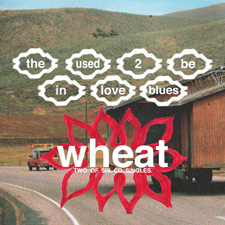
Amy Steele: You’ve released some new singles on your website. What’s the plan behind that?
Brendan Harney: Well, we’re working on our 6th full length (Can’t Stop the Addiction), and we just didn’t wanna have this huge gap between the last record and the next in terms of output. So, we figured this would be a cool project to do. Three double a-side singles that have a similar look and feel. Similar spirit hopefully. It’s always good to just finish songs, and not have a bunch of stuff in the “to do” box. This gets us in the zone, and makes us finish things up and get those kids out the door! Once those songs have gotten their legs, and can stand up on their own, it’s – “you go now and have a great life – don’t get yourself into any trouble now!”
Amy Steele: When do you expect to have a complete album finished? Do you record yourself or work with someone?
Brendan Harney: probably next fall or something. Never quite sure ’cause the process becomes its own beast. We might need to visit another planet or something before we get our heads on straight to fight the good fight. We do a bunch of work ourselves, and we also have been working with Citizen Kane as well.
Scott Levesque: we have always done both [ways of recording] we like the “one takes” and unique sounds that come from necessity and haste to remember but also like the wrench and sometimes “Band-Aid” other folks can throw into the mix, so BOTH, always!
More info at Wheat website
Share this:

STEELE INTERVIEWS: author Tom Perrotta
Posted by Amy Steele in Books, Interview on September 3, 2011

Tom Perrotta’s latest book examines the aftermath of a Rapture-like event for a small suburban town. I interviewed him for
The L Magazine.
Share this:

-
You are currently browsing the archives for the Interview category.
About Me

covering mostly music and books. focus on alternative/indie and women in music, literature and the arts. feminist. vegan. mostly alternative, a bit bohemian. Masters in journalism from Boston University. BA from Simmons College.



Entertainment Realm by Amy Steele is licensed under a Creative Commons Attribution-Noncommercial-No Derivative Works 3.0 United States License.
Based on a work at entertainmentrealm.comCopyright © 2009. All writing, unless otherwise noted, by Amy Steele.
 ENTERTAINMENT REALM
You must be logged in to post a comment.