Archive for category Interview
STEELE INTERVIEWS: author Nathalia Holt [CURED]
Posted by Amy Steele in Books, Interview on April 5, 2014

Growing up in Manhattan, Nathalia Holt interned at a hospital in Hell’s Kitchen as a teenager in the 90s. It had a really large AIDs ward. “As a teenager it really touched me, it stayed with me.” She almost always knew she wanted to be a scientist and ended up majoring in molecular biology in college and then earning her PhD. She completed her dissertation on HIV gene therapy. Holt is an award-winning research scientist specializing in HIV biology. She trained at the Ragon Institute of Massachusetts General Hospital, MIT and Harvard University, the University of Southern California and Tulane University. CURED is about the Berlin patients, two patients diagnosed with HIV who became cured through two vastly different treatment plans.
Amy Steele: Why did you want to write this book?
Nathalia Holt: I was really struck by how few people had heard of the Berlin patients. It’s such a big story for HIV researchers and those living with HIV. It’s a great. I really wanted to bring this story about somehow. It’s a story you’d not expect.
Amy Steele: Can you explain the Berlin patient?
Nathalia Holt: There are two Berlin patients. One of them [known by the identity Christian Hahn] received this really aggressive therapy from a family doctor in Berlin. And he got cleared of the virus and his case has inspired a lot of cases of eradication of the virus using early aggressive therapies. The second Berlin patient who is Timothy Ray Brown had cancer and HIV. He was given a stem cell transplant from a person who is naturally resistant to HIV. There’s this small group of people who are naturally able to control their HIV because they have a gene mutation that locks HIV out of their cells. So once he got this stem cell transplant it cleared HIV out of his body. He’s inspired many clinical trials, most prominently, gene therapy trials that have a lot of promise right now.

Nathalia Holt (photo by Steph Stevens)
Amy Steele: How are the Berlin cases important to and the importance to HIV research?
Nathalia Holt: These cases have changed how HIV cases are funded. Cases are directly cited. Last December $100 million grant by Obama for HIV research [ HIV Cure initiative in honor of the 25th World Aids Day launched by Obama administration]. These cases have changed the culture of talking about HIV research and have opened up the funding and way to collect data. Funding agencies that never would have funded before now cite these cases. They’ve changed the culture. They’ve ended up influencing some really big cases. In Timothy’s case, there’s gene therapy in recreating mutations in people’s own cells which may really work. And now we have these pediatric cases. Treat HIV early and aggressively and clear the virus early of these kids. It’s a matter of getting the testing and formulations and bringing it to a bigger scale.
Amy Steele: You’ve said that the medical community and researchers don’t like to talk about a cure. You talked about the difference between a functional and a sterilizing cure and yet you titled your book CURED. Why?
Nathalia Holt: Previously you didn’t want to talk about a cure. It had a terrible reputation. It’s completely changed now. I was at a big HIV meeting last week and there was a Cure symposium. It’s really such an incredible turnaround. When I think about five years ago at the same meeting and what it’s like today, it could not be more different. People are very comfortable using this cure word when talking about HIV. And I feel very comfortable talking about these patients being cured.
Amy Steele: What makes a retrovirus?
Nathalia Holt: It’s made of RNA. How they’re really sneaky is that they can integrate into our own DNA. They package their own genetic material and hide it in our genetic material. They basically turn our cells against us and make a virus that way. It’s why it’s so difficult to treat [HIV]. It is able to hide so well in the body.
Amy Steele: You said that the gut not the blood contains “vast majority of the body’s immune system, more than 70 percent of all T cells reside there not in our blood.” How is this important?
Nathalia Holt: For so many years people were focused on the blood because it’s so much easier to sample the blood and filter the blood. Yet this is the tissue where you have all these cells that HIV loves that are all packed together. And you also have these long-lived cells in the gut for HIV to hide. So it’s important to remember these anatomical sites that you wouldn’t consider otherwise.
Amy Steele: How is gene therapy more effective than other types of therapy? Can you explain the importance of the CCR5 gene?
Nathalia Holt: You can draw blood from a person with HIV and then you can isolate out the cells and make cuts in the CCR5 gene, the same gene that people who have this mutation this gives them a natural resistance (to HIV). And because they have this mutation in this gene, HIV can’t enter their cells. So after you modify their cells you’re able to put them back into the same patients and they hone to the body, to the bone marrow and become part of this next generation of cells that are resistant to HIV. And more than that they have a selective advantage.
Amy Steele: You did a great job describing the personal lives of the Berlin patients are. Sounds like Timothy’s doing a lot of speaking engagements.
Nathalia Holt: He’s doing much better. He has a new living situation and a new boyfriend. He’s so much better and so much happier.
Amy Steele: He had so many other things going on besides HIV.
Nathalia Holt: He had three rounds of chemo. He had kidney failure. It’s just the toll of having multiple brain biopsies, a stem cell transplant. I think anyone would be knocked down for a while. It’s good that he’s coming back now and feeling better.
Amy Steele: Both Christian Hahn and Timothy Brown still consider themselves to be HIV positive although essentially cured of it.
Nathalia Holt: I really thought this was an interesting thing. Somehow having the virus has this identity of its own.
Amy Steele: One thing I took away from the few semesters of nursing school and becoming a medical assistant is that every medication has side effects and no medication is 100% effective. It’s intriguing in any study how individual it becomes.
Nathalia Holt: These physicians tailored therapy just for them and not for anyone else. It was made very thoughtfully by their physicians. And it says so much for primary care.

purchase at Amazon: Cured: How the Berlin Patients Defeated HIV and Forever Changed Medical Science

Share this:

STEELE INTERVIEWS: Charlie Hilton of BLOUSE
Posted by Amy Steele in Interview, Music, Women/ feminism on March 14, 2014

photo by Tonje Thilesen
Portland band BLOUSE composes exquisitely dark, swirling Goth-pop writhing with existential themes. Magnetic. Moody. Brimming with haunting vocals and dreamy, moody compositions. After putting some initial recordings on Bandcamp and garnering the attention from a popular music blog, BLOUSE received offers from several record labels and signed a deal with Captured Tracks. The band’s currently on tour with Dum Dum Girls. I spoke with singer/songwriter Charlie Hilton via phone from the tour bus.
Amy Steele: You have a really beautiful voice. How did you realize you could sing or what got you into singing?
Charlie Hilton: My dad is a musician. My entire family is musical. My parents bought me the White Album when I was 12. That was my first CD. Then my dad bought me a guitar. I tried to learn every Beatles song. I tried to sing. I didn’t take any professional instruction until I started this band a few years ago. We were playing a lot of shows and I wanted to have a gentle voice and protect it.
Amy Steele: I imagine there’s a lot of strain especially if you’re touring.
Charlie Hilton: (My vocal coach) tells you to sing 70%. You always want to feel like going all-out every night. I don’t know if I do 70%. I try.
Amy Steele: What do you like about being a singer?
Charlie Hilton: I’m a pretty shy person. I feel I can be pretty awkward in conversations when I’m talking to people I don’t know. I feel like writing music and songs are the most effective way to communicate. And it’s not a conversation but it feels like a wonderful exchange. It’s very real and I can finally say exactly what I want to say. When I was younger I used to like to be the girl in the room with the guitar singing people to sleep.
Amy Steele: How did the band get together?
Charlie Hilton: I met Patrick [Adams—bass/drums] first at Portland State. We went to school together. I was studying for a graphic design degree. We started playing music together. Jake [multi-instrumentalist/ producer Jacob Portrait] is Patrick’s best friend. We started doing some demo’s together and decided to be a band.
Amy Steele: How does the songwriting work?
Charlie Hilton: I write all the lyrics and depending on the song, I’ll just write a song very basic– just the melody and lyrics. I’ll never do any production on my own. Then together we’ll figure out the sound. Sometimes we’ve just jammed together and I’ll write on top of that. It just depends on the song.
Amy Steele: What inspires you? What I get from the songs is a little moody, a bit darker, I love that though. That’s most of the music I listen to. Where do you get ideas from?
Charlie Hilton: I turn to dramatic and darker themes when I’m writing a song. It’s a nice opportunity to communicate something potentially profound in a delicate way. I think about mortality a lot and the meaning of life. Time and the nature of existence are fascinating to me. When you think about those things you can’t help but get a little dark. I always think about those grandiose things.
Amy Steele: What challenges do you feel you have as a woman in the music business?
Charlie Hilton: One challenge that usually comes up is that I’m dressing for a show and people think I should dress sexy. They say “show your skin.” I don’t think that’s something I need to do. Is that going to help me out? I usually just wear what I want to wear. It’s confusing. I always want to wear the least sexy thing. I want that not to be part of my thing.
Amy Steele: What’s someone going to get seeing BLOUSE live versus listening to the album?
Charlie Hilton: We play pretty loud. I hope it feels there’s more energy. We add little flourishes to some of the songs. Our set up is simple. The songs feel more powerful live.
purchase at Amazon: Imperium

MARCH/APRIL TOUR with DUM DUM GIRLS
03/15 – Houston, TX – Central Quad @ Rice University
03/16 – Dallas, TX – Spillover Festival
03/18 – Nashville, TN – Exit/In
03/19 – Birmingham, AL – Bottletree
03/20 – Atlanta, GA – The Earl
03/21 – Raleigh, NC – Kings
03/22 – Washington, DC – Black Cat
03/23 – Philadelphia, PA – Johnny Brenda’s
03/25 – New York, NY – Bowery Ballroom
03/26 – Brooklyn, NY – Music Hall of Williamsburg
03/27 – Boston, MA – Brighton Music Hall
03/28 – Montreal, QUE – Il Motore
03/29 – Toronto, ONT – Lee’s Place
03/30 – Ferndale, MI – Loving Touch
03/31 – Chicago, IL – Empty bottle
04/01 – Minneapolis, MN – Triple Rock
04/04 – Vancouver, BC – Biltmore
04/05 – Seattle, WA – Neumos
04/06 – Portland, OR – Doug Fir
04/08 – San Fransisco, CA – Independent
04/09 – San Jose, CA – The Blank Club
Share this:

STEELE INTERVIEWS: author JILL EDMONDSON
Posted by Amy Steele in Books, Interview on November 25, 2013

This time around, PI Sasha Jackson is investigating the murder of a porn star…
The drug addicted girl was a worthless nobody, so the cops aren’t putting much effort into finding out who killed her. Sasha takes on the case, and learns that the dirty picture business is way dirtier than it seems. She discovers surprising motives and even more surprising secrets, and just when she thinks she’s solved the case, another dead body turns up.
Meanwhile, Sasha’s private life is a shambles. Her brother is pissing her off, Sasha’s love-life is on the rocks, and her BFF has her nose out of joint over Sasha’s latest revelations. And then there’s the driving instructor, the locksmith and the glazier. Let’s just say it’s a good thing that Sasha has a credit card.
Why can’t everyone just chill out long enough for Sasha to get in a good jam session, or have a good night’s sleep?
Oh, for crying out loud, pass the Scotch…
Amy Steele: Jill, it’s been two years since the last Sasha Jackson mystery and since I interviewed you. What have you been up to in Toronto?
Jill Edmondson: Two years! Where did the time go? Let’s see, well, I ignored writing for a while and just did other things. I moved homes (what a pain), I traveled a bit (Italy, Peru, Bahamas, etc….), I got a dog, and then another dog (smartest thing I’ve ever done!), and I took my time writing Frisky Business. The three previous books came out in rapid succession; there was no need to rush with the next one. There were a few stretches of three or four or five months at a time when I didn’t look at Frisky Business at all.
Amy Steele: In Frisky Business you’re tackling the Canadian adult film industry. Why did you decide to focus on that?
Jill Edmondson: The book was totally inspired by chapter two of Empire of Illusion by Chris Hedges. Hedges is one of my favourite writers, and Empire of Illusion is one of the most thought-provoking books I’ve read in a long time.
Amy Steele: What were the hardest aspects to write?
Jill Edmondson: For me, the hard part always seems to have less to do with subject matter, than with plot and clues and playing fair with the reader. Like, I could know that it’s Colonel Mustard in the Library with the Rope, but how in the name of Pete do I pen that without making it super-obvious, super early on in the book? Yikes, it’s hard to pepper in just enough clues, and to keep them just subtle enough.
Amy Steele: How did you research this novel?
Jill Edmondson: Mainly by reading the Hedges book, but anytime I noticed a newspaper or magazine article on the topic (or a related topic), I filed it away. Also, a wee bit of it was leftover from when I wrote a paper on Human Rights and the Sex Trade when I was doing my MA. The paper wasn’t on quite the same topic, but there was some overlap.
Amy Steele: What attracts Sasha to the sex cases as her brother pointed out? She’s almost an SVU PI.
Jill Edmondson: I’m not sure… I’m intrigued by themes of marginalization and I don’t like assumptions. In Frisky Business (and Dead Light District) the victims were victims even before the murder. People scoff at certain types of (or classes of) people and that makes me angry. Human beings deserve dignity. Who knows what circumstances led to a person (or character) being in such and such a place? Yet, because of their “lot in life” some people are easily dismissed. That’s bullshit. There but for the grace of Gawd…
Amy Steele: Sasha is my favorite feminist PI. Probably because she’s outspoken and she’s an advocate for women and women’s issues by taking the cases that she does. Though she never uses the word feminist. [She needs to be in a scene with a “This is What a Feminist Looks Like” t-shirt or better yet a “I Stood with Wendy” shirt.] Was this your plan all along or has this just developed from the first book?
Jill Edmondson: I think it just is. Or she just is. Sasha sees something wrong and wants to right it. She appreciates freedom, autonomy, and fairness. Those things, or actually a lack of them, are common in the sex trade, and have been a part of women’s issues in general. Sasha’s values are very much my own.

Amy Steele: How do you think Sasha’s developing as a character? Do you have any particular goals set for her? How do you plan out character development?
Jill Edmondson: Goals? Yes and no. I had certain goals back in book one that I have since shelved or changed, but of course there are other things I have held on to. There has to be a logical progression, whether that means love life, or professional life, or what have you. For instance, in Blood and Groom (book #1) she was pretty broke, so it wouldn’t have made sense for her to be thinking about buying a house in Dead Light District (book #2).
One aspect of character development that I will have to start to address is her mother. I’ve pointedly not said much about mom so far, other than mom took off when Sasha was a toddler. But there is a bit of an abandonment issue that Sasha has kept buried, and at some point her natural PI instincts and curiosity will take over. I figure this will happen by book six or seven.
Amy Steele: Sasha balks when her boyfriend of only a few months wants her to move in. Why do you think Sasha doesn’t want to commit to any guy as a partner or live-in situation but yet she always seems to have a boyfriend?
Jill Edmondson: Sasha has a joie de vivre, and part of that includes romantic interest(s), but she won’t be able to commit until she is truly satisfied with other aspects of her life.
Ah, if only she could throw Mick, Derek and Houghton in a blender…
Each guy fills a need (music, friendship, stimulating conversation, etc.) but none of them hits the mark on all three things. Also, she’s known Houghton since high school, Mick from her early twenties band days, and Derek has been a professional acquaintance for a couple years. The three guys she has been involved with were all friends before they were ever romantic interests, and they remain friends. In a way maybe these guys are part of her extended family? Her “inner circle” is pretty tight, with close, cherished, long-standing relationships all around. Even her two BFFs, Jessica and Lindsey, have been around since they were in training bras.
Amy Steele: Sasha’s quite independent yet lives with her father and brother. She never explains that to the guys she dates. And no one ever asks. She thought about moving out this time around but it seemed she’s pretty comfortable still. How does she manage feeling independent even while living with her father?
Jill Edmondson: Before I began writing the first book, I had read a few articles and had seen a few news pieces about the growing trend of adult children returning home – much to the chagrin of their (wannabe empty-nest) parents. So, writing her home life as such seemed like a realistic thing to do.
I guess the dynamic of comfort and independence partly rests on the fact that there’s just one parent around instead of two. As well, her dad goes away a fair bit on his gambling trips. And Shane is hardly ever home because of the restaurant. So, there is a home life and bonds with family but they’re not in each other faces all the time.
There one more subtle point to her home life, I think, and that is that Sasha is confident enough and secure enough to know she’s a big girl. She’s not clinging to the apron strings because she has to or needs to. If a guy ever called her on her living situation, Sasha’s response would be: “Yeah, and? What’s your point?”
Also: Toronto is a bloody expensive city to live in!
Amy Steele: We’ve talked about your fondness for traveling, particularly to South and Central America. What are the top three places you want to visit?
Jill Edmondson: Just three?!?! So hard to choose… I am dying to visit Italy again. I spent a month there (~two years ago) and loved every minute of it, especially Sicily. There’s so much more to see!
I need to travel around South America. All of it! I’m happy to go any place where I can practice Spanish. I very stupidly DIDN’T zip over to Lake Titicaca while I was in Peru. Must rectify that…
And Scandinavia has long been on my wish-list… Expensive though. Note to self: Buy lottery tickets.
Amy Steele: You’re already at work on the fifth Sasha book. What can you tell me about it?
Jill Edmondson: You know, this is a funny accident, but it seems that the Sasha books alternate between “light” and “heavy” themes or tones (wedding, prostitution, fetish, adult films). As it happens, Odd Lang Syne will be a “light” book. It’s about Gina Gervais, a former teen idol. Gina is at the peak of her comeback, and she’s back on the top of the charts. Everything should be golden, but it’s not. She’s going through a nasty divorce, she’s got a stalker, and, oh shit, someone’s just released a sex tape of her. If that’s not bad enough, her estranged husband is murdered, and guess who’s the number one suspect?
Jill Edmondson is the author of the Sasha Jackson Mysteries. Frisky Business is the latest novel featuring PI Sasha Jackson. Purchase it at Amazon: Frisky Business (A Sasha Jackson Mystery)

For more info on Jill:
Follow her on Twitter
Share this:

STEELE INTERVIEWS: ELIZABETH COHEN [author, The Hypothetical Girl]
Posted by Amy Steele in Books, Interview on November 23, 2013
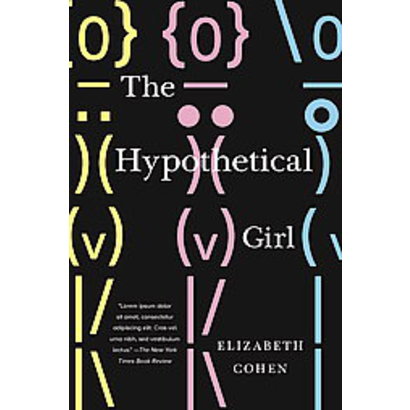
In this astute story collection, Elizabeth Cohen writes about dating in the digital age. Navigating various dating sites, creating a real or fabricated profile, various internet flirtations, anticipating actual meetings. In the opening story “Animal Dancing,” Cohen writes: “I am a giver. I am fun. I am interesting and I have spectacular eyes. Someone will find me. Someone will love me.” Would you take a chance on a potential long-distance relationship as described in “People Who Live Far, Far Away”: “A cool Icelandic dude who likes nature and animals might be the ticket, she thought, coming across Miko’s profiles on Matchhearts.com. He would be exotic enough to impress her friends, who, after college, had all so promptly given birth.” Should you take a chance? Should you dive in and risk exposing yourself online? In “Love, Really” Cohen writes: “When he kisses you and you kiss him back it is like you are home. Home being the man himself. This is ridiculous, you think, as you hardly know this man. But there it is: home.”
Elizabeth Cohen is an assistant professor of English at Plattsburgh State University. Her articles, stories and poetry have appeared in Newsweek, New York Times Magazine, Salon, Tablet and the Yale Review. Her memoir, The Family on Beartown Road (Random House, 2003), was a New York Times Notable Book.
Amy Steele: How long did it take you to write this collection of stories?
Elizabeth Cohen: In all about three years. I started them while living in Connecticut and finished up in my current home in upstate New York. They followed the trajectory of my own thoughts about trying and then, later, actually trying online dating.
Amy Steele: What attracted you to writing about online dating/ dating in the digital age?
Elizabeth Cohen: The realization that love and courtship, millennia old, have actually changed, due to technology and an interest in how that might be. Is love forever different now? I watched a friend meet three men in succession online (this is a smart and reasonable fifty year old woman) and then believe each time she was in love, the third time actually initiating what looks to be a lifelong relationship! These were all people she never met. That is just not how love has worked before. This idea of the mediation of emotion, the technology-enhanced ways of finding and courting and growing into the idea of love– it is all new. And that fascinated me. Plus, it is often just so funny.
Amy Steele: How did you gather information to work from? Personal experience? Research?
Elizabeth Cohen: Articles I read, stories I have heard, people I canvassed for information, things I have experienced and things I just dreamed up. Pure wild imagination let loose in this realm.

Amy Steele: What do you like about writing stories?
Elizabeth Cohen: The fact that you, the author, can create a world. You can make it any way you want. You make the rules, you create the scenery. You pick the soundtrack. There is no right or wrong way to do it, aside from using basic grammar and solid writing constructs. You can create characters who do things you would never do or have opportunities you would never have. It is a way to live outside your own life.
Amy Steele: You wrote a memoir. How does writing fiction compare to writing a memoir and was it a huge leap to start writing fiction after writing a memoir?
Elizabeth Cohen: In a memoir you are married to truth. You can choose what pieces or slices of truth you want to tell, how you want to shape truth or organize it but there is always that truth requirement that underlies and in fact directs all you write. In fiction, you have no such requirements. What a relief! You can do whatever you want. And it becomes a question of the skill and artistry in which you have done it, in the end. Nobody will call you out for lying. Because you are supposed to lie – fiction is all about lying. As Albert Camus said, “fiction is the lie that tells the truth.” It is about creating really interesting, involved and imagined alternate realities. Memoir, in the other hand, is about finding beautiful and unique ways to tell a story while being faithful to life, and accuracy. Says Stephanie Klein, author of Straight Up and Dirty: A Memoir: “Tell the truth, or someone will tell it for you.”
Amy Steele: In “The Opposite of Love” you write: “Rita had always thought happiness was overrated anyway, the emotion for the masses. Something advertised daily on national television.” This is fantastic. She tries to keep her cancer a secret, even from her mother, for the longest time. And when it does come out she handles it in a truly sardonic manner. How did you come up with Rita and this story?
Elizabeth Cohen: She just popped into my head. I have no explanation for it. After they read that story, people are constantly asking me if I have breast cancer. No, I do not. And I hope I never do. I was just interested in exploring the idea of irony and this character appeared with a strategy for doing it.
Amy Steele: Allison has a sponge-filing system and develops one for her love strategy in “Boat Man.” Why do you think this didn’t work for her?
Elizabeth Cohen: Because love is more complicated than sponges. Further, people on the internet are not who you think they are; they have dimensionality and features. On the internet they are merely ideas of people, they are hypothetical. You cannot make a surefire strategy out of something that may not exist. That would be like trying to catch mist, put it in a bottle.
Amy Steele: “Life Underground” speaks to potential and societal expectations. How did you come up with this story?
Elizabeth Cohen: That story, unlike most of the others here, is actually rooted in some things that actually happened. It is, in the end, about sibling rivalry, about fear of failure and settling. These are topics I am obsessed with, the way fear and competition can just shut us down.
Plus, I love caves. I just do. I think I might have been a spelunker in a past life.
Share this:

STEELE INTERVIEWS: KRISTIN HERSH
Posted by Amy Steele in Interview, Music on November 12, 2013

So many amazing things about Throwing Muses. The band formed in 1983 in Newport, RI, became trailblazers in the 90s indie rock scene and were the first American band signed to British label 4AD. Purgatory/ Paradise is the band’s first release in 10 years.
Throwing Muses has maintained its distinctive edgy sound. Churning, muddled guitar with alternating loud and soft melodies complements singer/songwriter/guitarist Kristin Hersh’s throaty vocals. “That’s no way to bring a body down” Hersh laments on the dark, hypnotic “opiates” as the melody vacillates dark to light, dark to light. So effective. So fitting. Sometimes psychedelic rhythms–“morning birds 1” races, rages and burns, other times more melodic – opening track “smoky hands” sounds nearly acoustic, subdued and honey voiced– but always intense. “terra nova” slows down with dramatic flair, a complicated orchestration. Beautifully provocative. Worth the decade wait.
Although we’ve yet to meet in real life, I consider Kristin a friend. One day she and her astute son Bo will show me around NOLA. A few days ago she answered questions about Throwing Muses and the new album.
Amy Steele: You’ve said that being near water is very important to you. What is your connection to water? How does it affect you?
Kristin Hersh: Water is the only thing I can bury myself in, and shake off chemicals that aren’t serving my psychology or my songs. The ocean will brutalize you, soothe you, etc., teach you a goddamn lesson, in other words 😉
Just looking at it reduces you to your own speck-ness. Such a relief to be a speck…
Amy Steele: You wrote a memoir [RAT GIRL] about your mental illness. What is a good day for you and what is a bad day? How does being bipolar influence your writing and music?
Kristin Hersh: I found out this year in treatment for PTSD that I’m not actually bipolar, but dissociative. I had a hidden personality that wrote all my music and kept trauma from interfering with my life. I have no memory of having written any of my songs, and no memory of performing them, either, because that glassy-eyed stage presence I was known for was a part of me I knew nothing about.
It kept me from bad days, though I struggled with the effects of poison emotions and memories. I had a hangover for most of my adult life. You can’t escape trauma, as it turns out; all you can do is try to hide it.
Amy Steele: Can you believe that you’ve been in a band for 30 years? Who is Throwing Muses in 2013 vs. when the band formed in 1983? How has the band evolved?
Kristin Hersh: Throwing Muses is home to me, always has been. Just as comforting and exciting as “home” which is an intense peace, if that makes any sense. I adore my band-mates. Every minute in the studio and even on the freakin’ tour bus with them has been an honor. They’re funny, kind and their standards are beyond high; plus, they work harder than anyone I’ve ever known.
We’ve lived road-dirty, hungry, sleep-deprived, homesick, hungover and broke for years and I’ve never seen their attention waver. Obsession is a beautiful thing when music is the object of one’s affections.
Amy Steele: I recently compiled a list of what I deem essential female-fronted alternative rock bands of the 90s. Of course Throwing Muses make that list. It’s still so hard to be a women in the music business. Do you feel particular pressures as a women in the music biz and what’s different today than when you started out? What have you learned along the way?
Kristin Hersh: I’ve never considered myself a woman in the music business, because where music is concerned, I feel genderless. I certainly wouldn’t want to define my demographic as white females just because that’s what *I* am; that would make me a lousy songwriter.
I really can’t imagine *anyone* seeing me that way, as I’ve never portrayed myself as anything but the *person* behind a sound.
Amy Steele: Kristin, you have 30 songs on Purgatory/ Paradise! Are you constantly scribbling down song ideas and writing songs or do you put aside time to write songs?
Kristin Hersh: I have no memory of writing songs other than an industrial noise I hear at 4 a.m. when a song is coming. After that, all I ever know is that another song *is*.
We had 10 years between the Muses’ last release (other than an anthology) and Purgatory/Paradise, so I had about 75 songs I knew to be Throwing Muses songs. I knew this because they were written on either my Strat or my Telecaster. 50FootWave songs are written on my SG’s or my Les Paul and solo songs are written on my Collings. I only recorded 50 of those 75, then we edited the record down to the 32 that served this piece the way sentences serve a paragraph.
Amy Steele: What are some things that make you truly happy?
Kristin Hersh: My sons are bewitching angels and not because I know how to make bewitching angels. I just lucked out. The problem with loving children, however, is the terror that comes with the caregiver role. Their pain is something I can’t bear and something they can’t avoid. That delicate balance of love and terror is in my relationship to the songs as well, and as close as I get to truly happy.
Thank you for doing this, Amy. I hope you get truly happy soon.
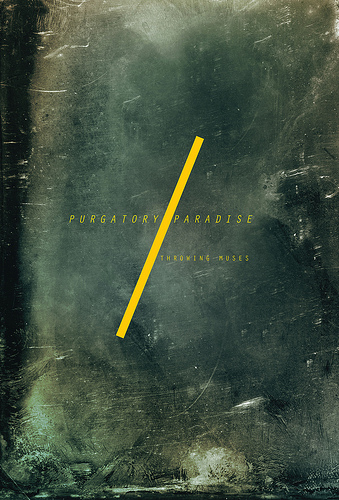
Purgatory/ Paradise is the band’s first release in a decade. It’s available via traditional digital services directly from the Throwing Muses website, and will be released as an art book with CD insert on December 3 by Harper Collins’ It Books imprint in the US. The Purgatory/Paradise book, designed by drummer Dave Narcizo, features lyrics, photographs and writing by singer/guitarist Kristin Hersh. There’s downloadable content featuring commentary, instrumentals, and the album plus art in multiple digital formats.
if you enjoy my interviews, please consider making a contribution so I can keep going. Every dollar appreciated. Make a Donation button at right side of website.
This is my favorite song on Purgatory/Paradise:
Share this:

STEELE INTERVIEWS: Lucy Wainwright Roche
Posted by Amy Steele in Interview, Music on November 10, 2013
When you think family business you might think law firm or automobile sales. Maybe a large restaurant or hotel chain. For Lucy Wainwright Roche, the family business means touring via vans and buses. It means that her mother and father [Loudon Wainwright III and Suzzy Roche of The Roches] and sister and brother [Rufus Wainwright and Martha Wainwright] are also singers and performers. Lucy bucked the expected and decided to get her masters degree and taught for a few years. Alas music called her back into the fold.
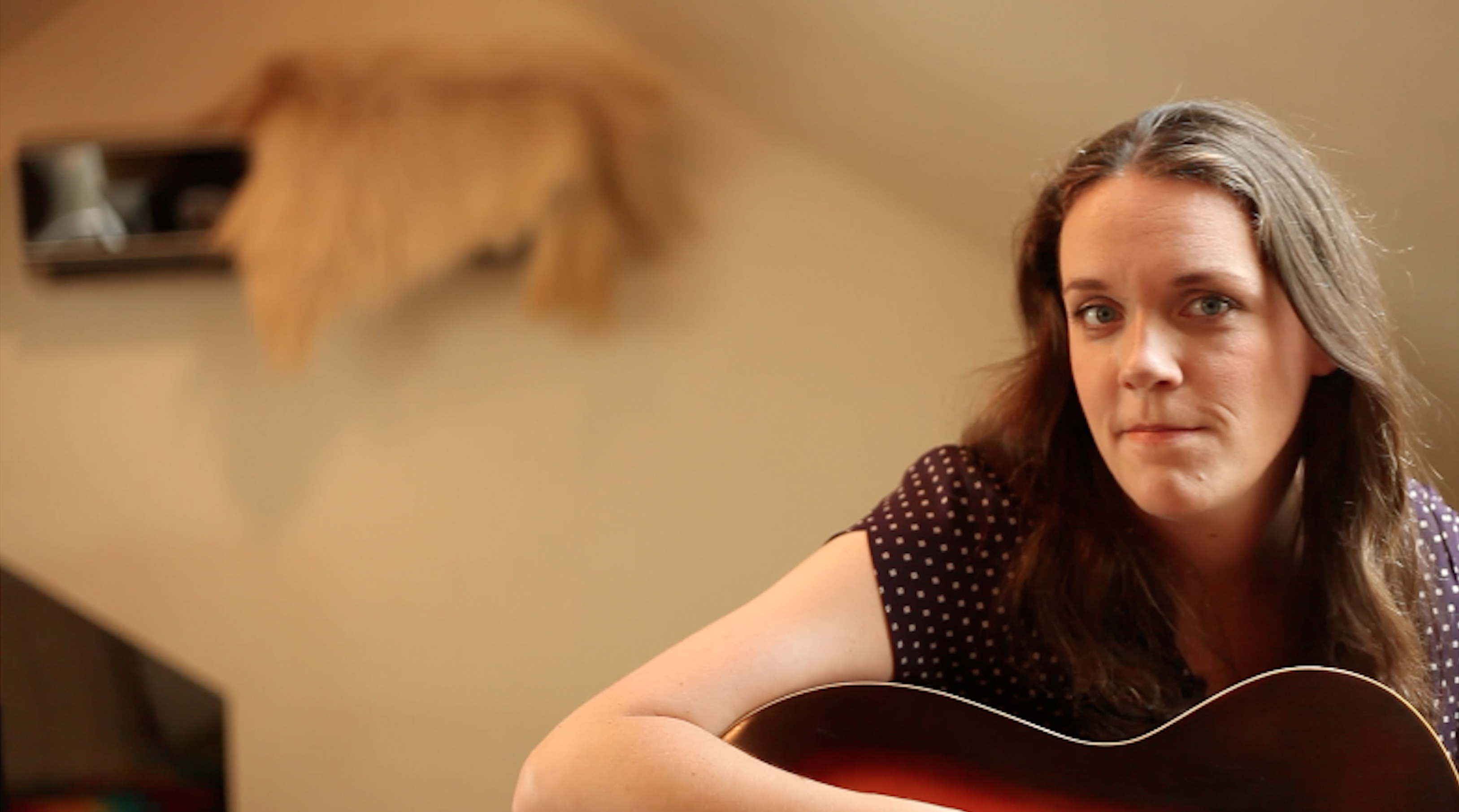
There’s A Last Time For Everything, her sophomore album, showcases gorgeous, lush vocals with ambitious arrangements. Lucy’s songs feel simultaneously expansive and comforting. Dreamy. She’s currently on tour and plays Club Passim in Cambridge, Mass on Sunday, November 17.
Amy Steele: What’s it like being part of such a musical family? What are the advantages and disadvantages?
Lucy Wainwright Roche: Well, I’ve never known anything besides being in a musical family and so it seems pretty normal to me. In terms of disadvantages, sometimes it’s overwhelming to be in a family business – it’s hard not to see yourself and to judge yourself in the context of the family.
Amy Steele: Yet you went to grad school and became a teacher for a while. What made you do that and then leave teaching for a music career?
Lucy Wainwright Roche: When I was a child and a younger adult, I really didn’t see myself going into music. I’d always been interested in teaching and working with children. I went to grad school for education and taught elementary school for a few years, which I loved. I ended up missing music, though, and so then I succumbed to the family business after-all!
Amy Steele: Why did you record this album in Nashville?
Lucy Wainwright Roche: I recorded this album with my friend Jordan Brooke Hamlin who lives in Nashville. She had been encouraging me to come down there to visit and to work on a few songs together. Eventually I bought a ticket down there and we worked in her basement for about 8 days straight and got the bulk of the album done. It was great to work in Nashville. My other recordings were all made close to home and it was fun to be in a new spot.
Amy Steele: What inspires you to write music?
Lucy Wainwright Roche: Oh, you know… the usual things… like heartbreak and misery. But also, I really find myself writing a lot about place and travel which I suppose has to do with the fact that I’m often away on tour and going from place to place.
Amy Steele: Can you tell me about these songs – either how you came up with the lyrics or melody or the recording process?
“Seek and Hide”
Lucy Wainwright Roche: This song is one that grew and changed the most from the demo to the recording. I love how it turned out and was thrilled to have Colin Meloy sing on it. He did a really great job.
“Last Time”
Lucy Wainwright Roche: “Last Time” was the only song I had written for this album before the summer I recorded. I’d written this song earlier in the year and so it was kind of a touchstone to anchor the rest of the writing. All the other songs were written in the weeks just leading up to recording.
“Take What You’re Given”
Lucy Wainwright Roche: This was the last song written for the album. I was flying home to NYC on the last day in Nashville and my flight was delayed. I had wanted to write a song that was kind of meditative and circular in it’s form and I had some subject matter in mind. I walked around and around a parking lot writing the lyrics and then we quickly recorded the guitar and vocal part right before running to the airport!

Share this:

STEELE INTERVIEWS: ANDRE DUBUS III
Posted by Amy Steele in Books, Interview on October 23, 2013
Dirty Love— a collection of novellas– focuses on what draws people toward one another and what pulls people apart in the name of love. What happens when fear, ego, power, desire and raw feelings influence our decisions? Beautifully written, evocative, emotionally wrought with layered characters and impossible situations. Love isn’t always what one expects it to be. Love can be emotional or physical. Love can be a bit of both. The writing never hides anything but peels away ugliness like a sunburn sloughs away one’s skin. There’s a wonderful sense of place and setting. Dark, gritty hideouts described with intricate detail. These characters and stories remains with you after the last page.
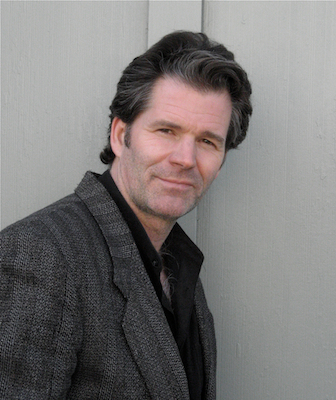
I recently spoke with Andre Dubus III by phone during a stop on his current book tour.
Amy Steele: Garden of Last Days is one of my favorite 9/11 novels, one of the best novels I’ve read. I loved it so much. And it’s being adapted into a film?
Andre Dubus III: Well James Franco pulled out of directing it but it’s still optioned by Gerard Butler’s production company. I think it’s still going to get made. I really appreciate you saying that because I don’t think enough people talk about it and I think it’s a better novel than anything I’ve ever written.
Amy Steele: Did you do a lot of research for (the novel)?
Andre Dubus III: Oh yeah I did a ton of research for it. I actually had to start writing just to read. I read the Koran twice. I read about the history of Saudi Arabia and Islam. I think some people see those three numbers 9/ 11 and they walk away. That might be changing now. People are more willing to step into an artistic exploration of that subject. All you can do is let it go.
Amy Steele: How did you come up with the latest idea for Dirty Love?
Andre Dubus III: The honest answer is I’m not sure. There’s a difference between making something up and imagining it. “The Bartender” and “Marla” came from longer stories that didn’t work. I realized they came from the same town. I realized I was writing deeply from an emotional center. I see a lot of marriages crash and burn around me and my wife. I’ve always been curious about how hard it is to love well and be loved.
Amy Steele: I saw comments on Goodreads that people think Dirty Love is depressing and some people consider the characters unlikeable. I’ve discussed reading and writing unlikeable characters in a writing group. How do you feel about writing unlikeable characters?
Andre Dubus III: I’m so glad you asked. Are we writing fucking sitcoms here? I’ll refute the whole notion of antagonist and protagonist. There’s not good guy and bad guy. To me they’re not cartoons. I rarely give a thought that characters have to be likeable. What am I here to fucking amuse you? I think the writer’s job is to paint the gray because no life is clearly defined. We are all living this dance and it is clearly fraught with making choices. Lots of my choices are bad and that’s normal. None of us are attractive at all times. What is attractive to me is authenticity. You know what a turn on is? Truth. You know what a turn off is? Perfume and smiling through fear.
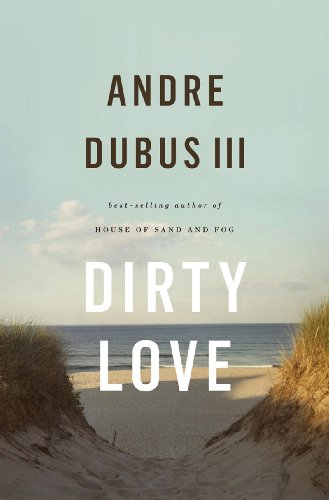
Amy Steele: I like this quote from “Listen Carefully As Our Options Have Changed:” “Other women, women like Anna Harrison, seemed to smile on reflex, as if this were something they were taught to do as young girls—be nice, be pretty, nice is pretty—and so you never knew if a woman was genuinely please with something you’d said or done, or not. But Laura only smiled when she felt like it, her eyes turning down at the corners, so it was gift to them all when she did, a gift to Frank Harrison Jr. too, who must have charmed her into doing that at the gym, the place he drove his Audi coupe to every Monday, Wednesday and Friday . . .”
Andre Dubus III: I hope there’s not harsh judgment from me in that passage. I have empathy for mainly women who are taught to do that especially in the South.
Amy Steele: How does writing affect your teaching and teaching affect your writing?
Andre Dubus III: I really like teaching at UMass Lowell because they are the type of kids I grew up with in Merrimack Valley. I really speak their language and I’m moved by the experience. I know I learn a lot from the students in my class and I’m not just saying that to sound like some generous teacher. Teaching well draws from the same well that writing draws from: the reserves of compassion and ability to listen and concentrate on another. So I have to have fine line between teaching and writing. I try not to ever think of career. I just try to go to the dream world every day.
Amy Steele: Back to Dirty Love again, one part up at Hampton Beach you got that so well. I can talk this way because I’m the snob. Hampton Beach is kinda scummy.
Andre Dubus III: Hampton compared to Salisbury is Paris to Detroit.
Amy Steele: There was a moment where she said that she felt he thought he was too good for her.
Andre Dubus III: He admits to himself that maybe his wife drifted away from him for some decent reasons.
Amy Steele: I can’t stand the term slut-shaming. [we discuss it a bit]
Andre Dubus III: It’s offensive. Your larger point is language is important and word choice is important. You can talk about promiscuity without saying slut.
Amy Steele: What do you think are the qualities of good writing?
Andre Dubus III: I can isolate what I find to be negative qualities. I’m not a fan of a lot of post-modern work that I think is self-indulgent, wordy and showing the vocabulary of the writer and the hip world-weariness of the writer. That kinda work leaves me cold. As a reader– generosity of the writer, humility where it’s about the subject and where it’s character-driven in a service of what’s trying to be captured. I read poetry every day. I love the boiled down essence of poetry. I look for poetry in prose. In a way that evocative.
Amy Steele: What do you like best about writing?
Andre Dubus III: I like trying to be other people. I really do. Eudora Welty has a lovely preface to her collected stories. She says the creative that she holds most high is trying to enter into another human being. People fascinate the hell out of me. I never get tired of watching people, listening to people. The best part is not getting up in front of people but meeting people. I like trying to find the right word that captures the thing I’m trying to describe. It’s very pleasurable when you feel like you’ve done it and very frustrating when you feel like you haven’t. It inspires you to work harder and that’s why I do it five or six days a week.
Andre Dubus III will be reading from Dirty Love at Harvard Book Store on Friday, October 25 at 6 pm. He’ll be at Concord Bookshop on November 17 at 3pm.

Share this:

STEELE INTERVIEWS: singer/songerwriter Tony White [Grace & Tony]
Posted by Amy Steele in Interview, Music on October 9, 2013
Punk rocker Tony White saw Grace Schultz– a bluegrass musician and gospel singer– performing and became smitten. Sometime later he asked her to jam with him. They hit it off and decided to meld their styles into something unique and fabulous which they’ve termed “punkgrass.” The now-married Tennessee duo writes gothic tales with an edgy, dramatic flair. Their debut album November [Rock Ridge Music] will be released on November 12.
I recently interviewed Tony White.
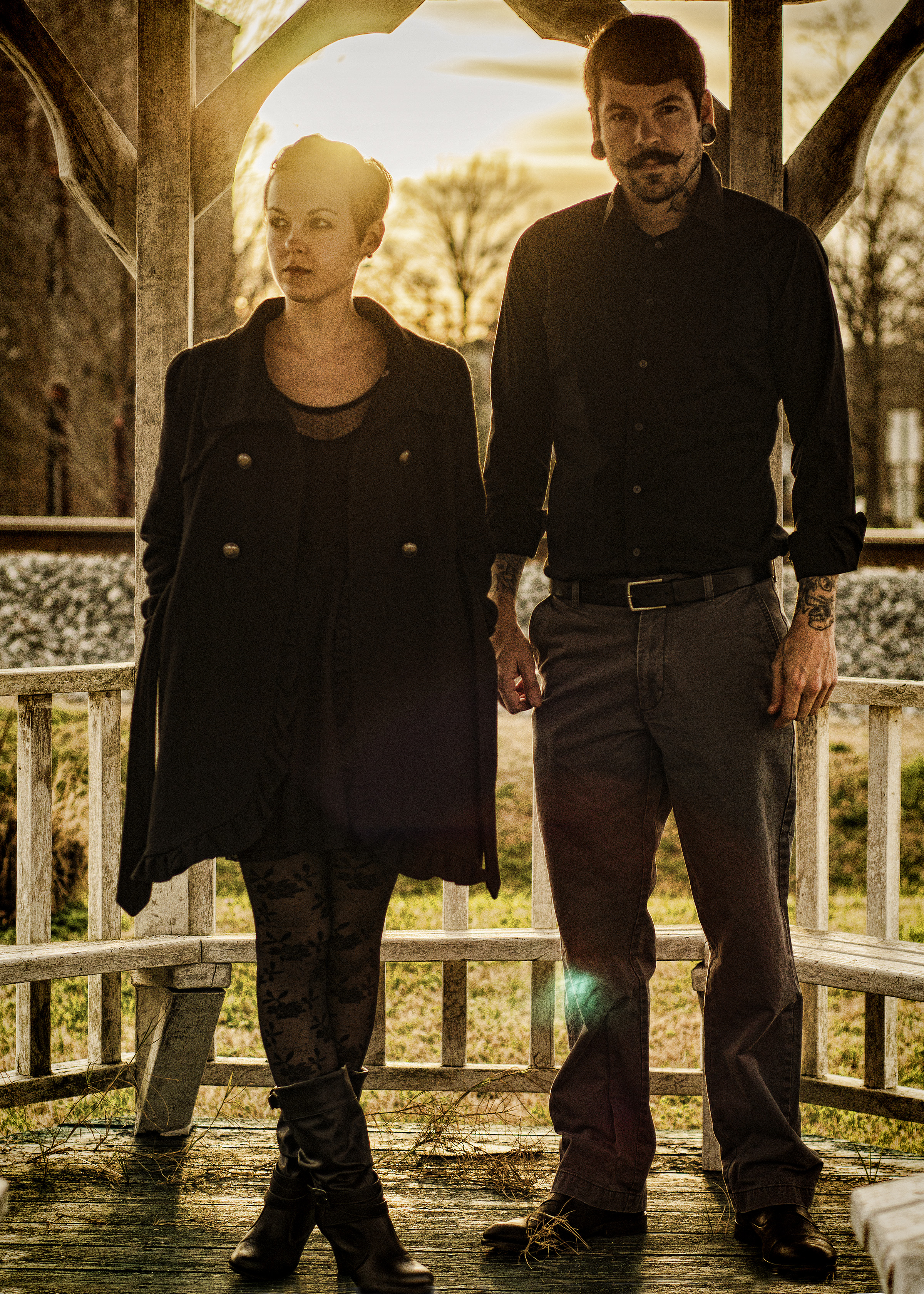
photo credit: Wes Carter
Amy Steele: When did you each start playing music and singing?
Tony White: I started playing guitar when I was 15 or so. Was handed off a few chords from my brother and just took it from there. Have always loved to entertain. Grace has been a natural performer her whole life. She has stories of drowning out the entire church with her voice when she was a little girl. She plays many instruments, but I think when her Paw Paw Shultz taught her the guitar, her desire to perform really began. He would be so proud…
Amy Steele: What drew you to music?
Tony White: I’ve always been moved by music. For as long as I can remember my life has been set to the musical soundtrack in my head. Grace uses music as a therapeutic way to cope with a lot of things in her life. Stress, studying, etc…
Amy Steele: Where and how did you meet?
Tony White: We had mutual friends through the years, but didn’t actually meet until I invited her for a jam. I had a bunch of leftover punk rock tunes from a band I was coming out of, and had seen (stalked) on the internet that she played banjo and mandolin. Our music and love has grown together.
Amy Steele: How does being a couple influence your music?
Tony White: I think raising kids, paying bills, and the everyday struggles of being married help form a strong bond as a duo. Though we fight like cats and dogs while we write, we try to remember to keep those disagreements out of our marriage. We are definitely starting to find our groove as a songwriting team, and have a great start on the next album already.
Amy Steele: You’re now playing what you’ve dubbed punkgrass. Very unique folk/ Americana with gothic undertones. What is your songwriting process like?
Tony White: We don’t have a certain formula. Sometimes in starts with a melody, sometimes it starts with a riff, you just never know. But I (Tony) tend to be more of a melody guy, and Grace is the more natural lyricist of the two.
Amy Steele: Where do your song ideas come from?
Tony White: We draw our ideas from everything we see around us. A certain mood, an event in our life, even books and movies. We try to avoid anything typical.
Amy Steele: When you recorded this album you worked with a full band. How do you usually write music/ perform and how was that different?
Tony White: With the direction of Lloyd Aur Norman (Producer) and Stephen Jones (Engineer) of Villain Place in Nashville, we decided the best way to present this group of songs on the album was to bring in players. Without the luxury of the live connection we make with the audience, we didn’t want to lose any energy. Had a great time playing with other musicians and would be surprised if we didn’t do it again on the next one. But live, it’s Grace and I against the world.
Amy Steele: How has your music changed in the last few years that you’ve been playing together?
Tony White: Whereas the first batch of songs were mostly pre-written punk rock tunes, the November album was written with a certain style set in place. We wanted to create something we would listen to ourselves, something different.
Amy Steele: In what ways do you use social media to interact with fans?
Tony White: Social media has been huge for us, because it’s a free way to make connections with your audience. We regularly do Q&A’s with our fans, as well as contest giveaways. We have made ourselves available and always respond to any email or question we may receive.
Amy Steele: What can someone expect from a Grace & Tony show?
Tony White: You can expect a stripped-down version of these songs that were written for two people, just the way they are supposed to sound. We love to make a genuine connection with our audience, before and after the show.
Amy Steele: What makes a good song?
Tony White: For us it’s all about something unique. All of our songs are written in simple punk rock style formats, with hooks and harmonies. But it’s being unique that we strive for. We want you to leave the show feeling as if you just saw something new, and we want that same reaction after you hear a G&T song.
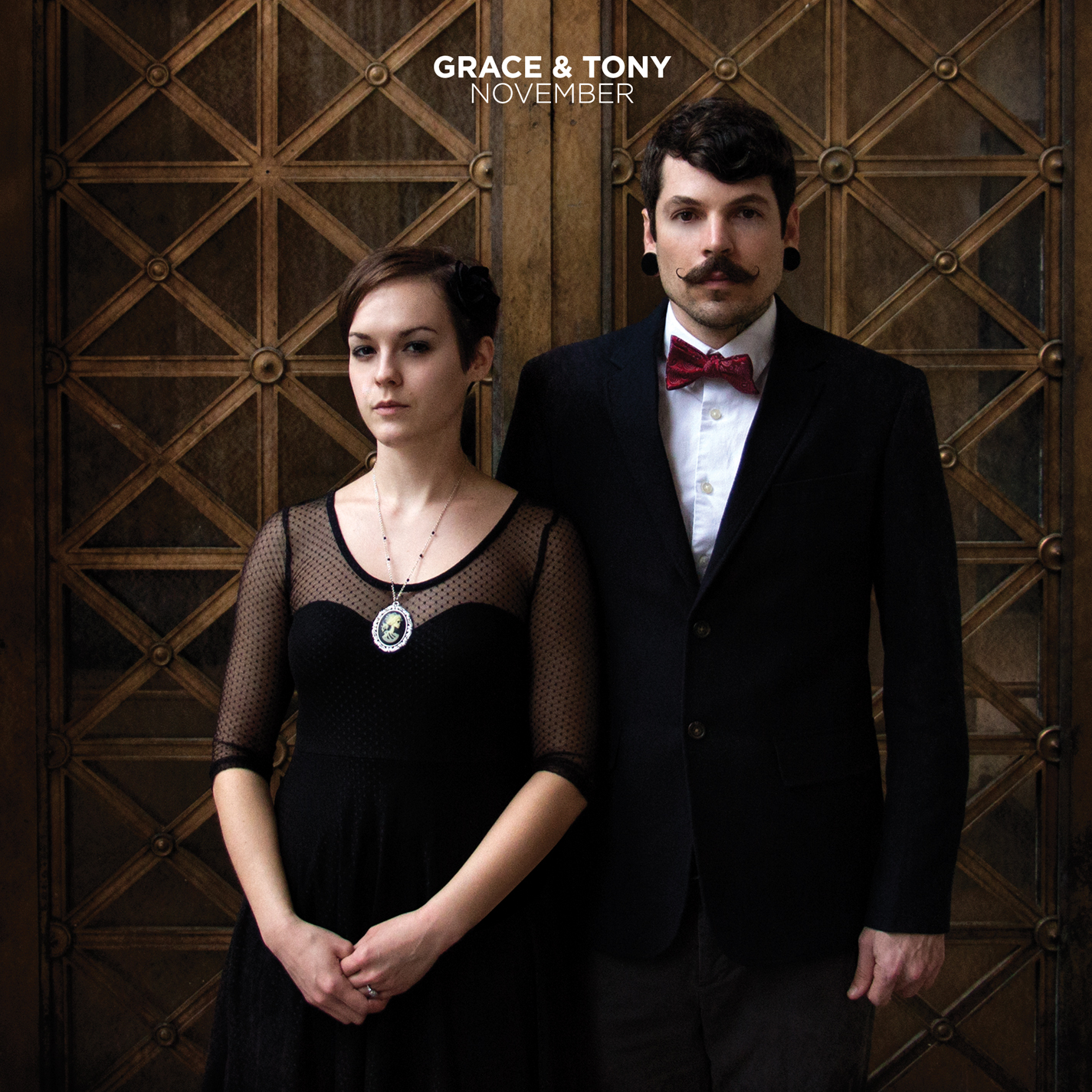
Amy Steele: Why did you name the album November?
Tony White: The album is named November because we met on November 21, 2010. And the rest is history. 🙂
Grace & Tony will playing The Paradise Rock Club with Kingsley Flood on Saturday, October 14, 2013.
Share this:

STEELE INTERVIEWS: author David Vann
Posted by Amy Steele in Books, Interview on August 30, 2013
“What I can remember is what I understood. I know my own grandfather said I should be killed and burned, but I can’t remember what I felt when he said that, I think I felt nothing, because I remember nothing. Anger might have been possible But I could not have felt any recognition, and for some reason I don’t understand now, I felt no fear.”

David Vann writes dark, introspective, mesmerizing novels. In his latest novel Goat Mountain the unimaginable happens for an 11-year-old boy on his first hunting expedition with his father and grandfather. The three generations must examine themselves and their relationships with each other as well as the consequences of their actions. It’s riveting, disturbing, violent and haunting. Vann is the winner of fourteen prizes, including France’s Prix Medici etranger, the Grace Paley Prize, the AWP Nonfiction Prize and France’s L’Express readers’ prize. He’s a professor at the University of Warwick in England.
I recently interviewed David via email.
Amy Steele: Hi David. It’s an honor to interview you. I admire your writing. There’s such emotional intensity and darkness in it. I don’t tend to be gushy with my interview subjects but when I’ve read almost everything someone’s written [haven’t read A Mile Down], I just have to admit it. Dirt is my favorite.
David Vann: Thank you, Amy! Very generous of you. And I appreciate your reviews and inclusion on your best books lists.
Amy Steele: How did you end up teaching in England and living in Turkey as well as New Zealand?
David Vann: My wife Nancy and I became residents of New Zealand ten years ago, in 2003, and we love it more each year. We’ve finally built a house and live there Dec-May, overlooking a beach and headlands and ocean and islands. We do a lot of watersports and also hike and mountain-bike right from the house into the mountains behind. It’s a very peaceful and easy place where I can relax and focus on my writing. We sail for a couple months each summer in Turkey, where we used to run charters (I was a captain on boats for about 8 years because I couldn’t get Legend of a Suicide published). We like the culture there, and the beautiful coves and bays and ancient ruins. And I love my teaching job in England at the University of Warwick. It’s just 10 weeks each autumn, teaching two grad workshops of 12 students each, fiction and nonfiction. Talented students, great faculty, and my wife and I love London and touring around England. It’s also nice to be closer to various European book launches and festivals. I used to teach in San Francisco, and it was a bummer to do three roundtrips to Europe during a semester.
Amy Steele: Alaska is in your first two novels (California in the next two). Do you get back there often? How long did you live there? What was it like growing up there?

photo by Mathieu Bourgois
David Vann: I was born on Adak Island in Alaska and spent my early childhood in Ketchikan, Alaska, until I was five or six. After that, my parents divorced and I lived in Alaska just one-third of each year, two-thirds in California, until my father died when I was thirteen. The rainforest in southeast Alaska is still vivid in my memories and mythic in my imagination. In all of my fiction, I write from landscape. You can think of it as a Rorschach test, a kind of blank page for the unconscious to fill with shape and pattern and meaning. My grandfather caught a 250-pound halibut once, and I always think of it as a metaphor for how writing works, looking over the side of the boat into the water and seeing something small grow and change shape and become impossible and enormous by the time it reached the surface. I was going back to Alaska every year, most recently on a book tour with the library system there, but I’ve missed a year or two now.
Amy Steele: How did your Native American background affect your upbringing and cultural identity?
David Vann: I didn’t know I was part Cherokee until after 2005, when my sailing memoir A Mile Down was published. I was contacted by the Cherokee nation because I was burying Chief David Vann in Google searches. It turns out he’s a great uncle several generations farther back. There was also a related chief with my father’s name, Jim Vann. My grandfather didn’t tell anyone about being one-fourth or one-eighth Cherokee, but looking back now, the men in my family and my new novel Goat Mountain only make sense to me in the context of that heritage. I think it’s very strange one can be so affected by heritage without even knowing about it. I’ve written an essay about this, which hopefully will appear soon, so I should perhaps stop here for now.
Amy Steele: What made you decide to study writing in college and grad school?
David Vann: I always wrote, even when I was a kid, telling our hunting and fishing stories then and giving them to my family as Christmas presents each year. So I never wondered what I wanted to study or do. I just never could get published or make any money through writing, so I had to do other jobs for a long time.
Amy Steele: What do you like about writing?
David Vann: I like the transformations by the unconscious that happen on the page, through landscapes changing shape and characters colliding. I’m watching more than writing, and the experience is the closest I have to religion, something that transforms the world and makes it meaningful and offers me a place.
Amy Steele: When you write do you tend to work from an outline or allow your characters or the plot to lead you?
David Vann: I never have any outline or plan or even any idea what the book will be about. This is exciting to me. Goat Mountain was the strangest and best, and I began to understand it only in the final fifty pages. It was a thrill ride. And it’s never plot that leads, but only character and landscape. What shocks me is how much pattern there is to the unconscious. In Caribou Island, for instance, there are four couples all reflecting on love and marriage, but that wasn’t a plan, and I thought I’d be writing in only one point of view but ended up writing in seven. The other thing that excites me is that the books are published almost the same as the first draft. No scene has been added, cut, or moved. I work very hard on line edits for months, polishing sentences, but even that doesn’t lead to much change. So readers experience basically the same thing that I did in first writing.
Amy Steele: Your first book, Legend of a Suicide, was about a son dealing with his father’s suicide which is something you experienced. Your other novels are also fairly autobiographical. In the prologue to Goat Mountain you write: “This is the novel that burns away the last of what first made me write, the stories of my violent family.” Are you no longer going to write novels about your family or that are violent?
David Vann: Goat Mountain is the end of my books that have family stories in the background. They’ve all been fiction, with all that happens made up (with the exception of the first three stories in Legend of a Suicide, which do contain many autobiographical facts and events), but they’ve been powered emotionally and psychologically by the disturbing stories of my family’s history. Once I finished Goat Mountain, I was afraid I might never write again, or never find any weight to my next characters, but then I wrote the next novel, about Medea, titled Bright Air Black, and she has as much weight as anyone else. That book is tragedy also, of course. But I’m working on a novel now, Aquarium, which is actually a comedy, not as in ha ha but as in nobody dies in the end. I should mention, by the way, that my novels actually are not violent compared to most other books and movies and TV series.
Amy Steele: Why did you want to tell the story in Goat Mountain?
David Vann: I didn’t. I was starting a novel set in the Australian outback and then just started writing Goat Mountain and had no idea what I was doing. But it is the material of the first short story I ever wrote, more than 25 years ago, so it was a novel waiting to happen, a landscape I couldn’t avoid writing about, the northern Californian ranch where we hunted deer each fall.
Amy Steele: What was the purpose of the bible stories?
David Vann: I didn’t know as I was writing, and I was surprised to see the holy trinity show up in my novel, since I’m an atheist. The poacher the boy shoots in the first chapter becomes a kind of Jesus figure, the buck he shoots becomes a kind of holy ghost, and his grandfather becomes a terrible god. The book is about the legacy of Cain, our desire to kill, and what rules hold us together and what happens when those rules are broken.
Amy Steele: Do you see Goat Mountain as a tale of morality or a coming of age story?
David Vann: I would never write a tale intending a moral, and there’s no moral in Goat Mountain. There’s only a battle. And it’s not a coming of age story really, either. It’s a Greek tragedy, 4 characters on a mountainside for two and a half days, told in real time. The boy is affected and does change and does become a man and more terrifyingly human.
Amy Steele: When you’re writing about killing a man or someone committing suicide what kind of inner dialogue goes on for how far to go in describing that situation to make it compelling and realistic without it being too gory to turn-off readers?
David Vann: I never think of readers. I follow what happens in the writing, transformations on the page, and question only whether I believe each sentence. I had a class with Grace Paley, and she said every sentence in fiction has to be true. I agree with that. And American readers generally have forgotten the last 2,500 years of literature anyway. We should never ask whether characters are likeable, for instance. That’s a new question. It’s been irrelevant for 2,500 years and is still irrelevant. But I should also address this question of gore. I don’t like or write horror or gore. I write tragedy, in which any violence is connected emotionally and psychologically, and there’s actually very little violence in my books comparatively. Horror is without this connection, just watching limbs sawn off in deadened entertainment, the same as our soldiers being taught to kill without feeling anything. Tragedy moves in the exact opposite direction, bringing us in close for conflict and empathy and catharsis.
[AS: If I could’ve followed up on this question I completely agree that it’s irrelevant whether characters are likeable or not, only that they’re compelling. I’ve enjoyed many well-written, engrossing novels with completely repellent characters. As for gore, I don’t enjoy reading gory books. I think that David Vann writes tragic prose with some horrific moments. There’s never any gratuitous violence. That wasn’t what I intended in the question. I like the answer regardless.]
Amy Steele: How are you able to revisit devastating, complex moments in your past and write clear-eyed, focused and rather calmly about them? Is it cathartic or therapeutic for you?
David Vann: It is great therapy. I feel much better now after writing four books of fiction about my family. But writing is more than therapy. It’s not only about truth. It’s also about the beautiful. It has an aesthetic aim that therapy does not. And the necessary distance in writing comes through an indirect focus, through writing about the landscape and letting the interior life of characters appear there instead of trying to write directly about feelings.
Amy Steele: Why do you write mostly fiction vs. nonfiction? Is it so you can (mostly) re-imagine events in the way you wanted them to transpire?
David Vann: I write mostly fiction because in nonfiction I can’t make up characters or events, so the stories are held in a kind of straightjacket, without full freedom to transform and surprise and take on unconscious pattern. I’m guessing that some nonfiction writers do find this freedom (my favorite memoir is Tobias Wolff’s This Boy’s Life, and it feels entirely free and fluid). I still like writing nonfiction, and of course there’s no such thing as a true story, so it’s an odd field in which I should feel more freedom, but it’s more limited for me.
Amy Steele: What kind of music do you listen to when writing?
David Vann: I never listen to anything while writing. I sit in a room alone and wear earplugs. I don’t understand how anyone can write with music or especially in a café.
Amy Steele: Where do you do your best writing?
David Vann: In bed, in the morning, for two hours every day. It can be anywhere in the world, any hotel room or home or boat. And that’s my only writing. I don’t try to write later in the day, so there’s no best or worst writing, only the writing each day.
Amy Steele: What interested you in writing Last Day on Earth? It’s so creepy and sadly fascinating.
David Vann: My editor at Esquire assigned it to me, because I had a frightening history with inheriting all my father’s guns after his suicide, when I was thirteen. I shot out streetlamps in our neighborhood and aimed at the neighbors. I was able to get the full 1,500 pages of the police files about the shooter, unedited, the most complete information anyone has ever had about a school shooting. But no one wanted to read or even review my book, because we don’t really want to know how our shooters implicate us. They’re incredibly easy to profile, and could also be very easy to stop if we only wanted to. But of course we never will.
Amy Steele: Thank you so so much in taking the time to answer my questions. Hope to meet you in person one day.
David Vann: Thank you! It’d be great to meet. And thank you for such thoughtful questions.
Share this:

STEELE INTERVIEWS: AISHA BURNS
Posted by Amy Steele in Interview, Music on August 23, 2013
Aisha Burns possesses a stunning, emotive voice with amazing range and impressive character. She’s been playing violin and contributing vocals to the Austin, Texas group Balmorhea for years and finally decided to release a solo album. Exquisite violin melodies create amazingly complex and emotional songs that combine her classical training with tender layers of Americana and folk. On her debut album, Life in the Midwater [out September 17 on Western Vinyl], sweetly sad songs echo the depths of the bell jar, walls closing in, the salty splashing tear drops. How enviable be so talented, grounded and sensible in one’s mid-twenties. Burns reminds me of solo artists Neko Case, Cat Power and Beth Orton.
I recently interviewed Aisha.
Amy Steele: When did you start playing violin?

Aisha Burns: I started playing when I was 10 through an after school strings program at my elementary school. My best friend was playing. And one day after school I picked it up, tried to teach myself a song from her beginner’s book and got really into it. If it hadn’t been for her and that class, I wonder if I would’ve ever found my way to it. It all definitely makes me feel really strongly about music programs in school. Sometimes, it takes being exposed to something before you realize that you might really love it.
Amy Steele: What do you like about the violin?
Aisha Burns:I think I love its ability to be so forcefully emotive. Something about it has always sort of affected some deep part of me. I love the strings more than any other musical family. There’s nothing like the sound of a string section.
Amy Steele: What does your classical background bring to your songwriting?
Aisha Burns:That’s difficult for me to pin down exactly, but it definitely comes into play while writing the string arrangements. I understand the violin through its classical context, so I’m sure that’s in the back of my mind while I’m putting the parts together. I’ve had people say that my vocal melodies are similar to the way a solo violin might behave in a song. Maybe that’s a part of it too.
Amy Steele: You sing in Balmorhea and you’re also a member of Idyl, led by Alex Dupree. Why’d you want to go solo now?
Aisha Burns: That’s just sort of the way it worked out. I’d been writing songs for a while, but had publicly been spending my energy contributing to projects led by other people. I think I wanted something that I was in complete control of–partly because I had something different to express and partly because I think I wanted to prove to myself that I could do it. As I got more comfortable singing and playing, it just felt right to capture the songs and make a record.

Amy Steele: What’s been the best aspect of being a solo artist and the greatest surprise?
Aisha Burns:The best aspect has been having control over all aspects of the music. I love playing in bands, but its been nice while I’m writing to have the freedom to play exactly what I’m hearing in my head at all times. There’s no one else to compromise with, no one else’s arrangements to write around.
The greatest surprise might be that I experience the dynamic between audience and performer differently in my solo set. I think I tend to take everything more personally. Or maybe I just feel more vulnerable. it’s not a feeling of, “oh I hope this crowd is into the band,” rather its “oh I hope this audience likes me.”
Amy Steele: Austin’s well-known for SXSW, is it a cool music scene other than that. How did it help you to grow as a musician living in Austin?
Aisha Burns: Definitely. There is such a friendly community of musicians here that I think I often take for granted. I forget that this type of scene is rare. And that so many genres can exist well in the same town. There are so many places to perform, and after being here for a good while, it seems like nearly every working musician I know is connected to someone else I know. The first band I ever played in was here. I didn’t know them at all beforehand, they just sort of welcomed me in. That inclusive, positive spirit has made it easy to learn from others. It’s been amazing to be surrounded by talented people. Good songwriting rubs off, I think.
Amy Steele: You have such an emotive voice and distinct vocal style, where did you do all your secret singing to know that you were talented enough to share it with others?
Aisha Burns:I had a group of friends that moved to Austin from North Carolina who effectively changed that season of my life. They were all really creative and encouraging and truly believed in community and bringing people together. So they started hosting these house shows once a month. We’d all have a potluck dinner together and then whoever wanted to play would draw a number out of a hat and play three songs. I played the first song I was really proud for a couple of those friends before the show. They went on to put my name on the list without me knowing and kind of forced me to play! I was terrified. But when I finished the last song, I realized that I’d survived, and that I actually kinda liked it. I got a lot of great, unexpected, encouraging feedback. I went on to play nearly every one of those shows for about two years.
It was the perfect place to build confidence in singing publicly. Everyone, even the new people that would show up were so interested in sharing and receiving whatever others had to offer. It was a very warm, safe, packed house. I met so many amazing musicians there. Those shows don’t happen anymore, but man, they were a powerful force for me while they lasted.
Amy Steele: On your Facebook page you list some great books like Extremely Loud and Incredibly Close and Middlesex. Who are some of your favorite authors? Are you reading anything at the moment?
Aisha Burns:I’m horrendous at choosing favorites for anything, but Middlesex by Jeffrey Eugenides is one of my favorite books, as is Henderson the Rain King by Saul Bellow. I’m reading a couple of things now: Gilead by Marilynne Robinson and a non-fiction book about food politics called Stuffed by Hank Cardello.
Amy Steele: What does the album title Life in the Midwater mean?
Aisha Burns:It’s from a book about the ocean that describes the Midwater, a specific layer of the ocean, as this dark place where fish who have a capability to shine and produce light sort of timidly sit in waiting. They’re too afraid to move because if they bump into another light producing fish, it’ll expose them to their lurking predators.
To me, it’s about being in a state of such confusion where everything feels so tense and fragile that you’re almost afraid to move. There’s great potential, but there’s also a feeling of impending danger. It means a lot of things to me and its specific meaning changes. Almost depends on what day you ask me! But that’s the gist of it, I think.
Amy Steele: In college you majored in journalism so you clearly like to write. What kind of songwriter are you?
Aisha Burns:I do love to write–it’s true! That’s a tricky question to answer. I just write what feels true. My songs are portraits of a feeling or specific situations. I think I’m most concerned with communicating a feeling in an interesting way.
Amy Steele: What inspires you?
Aisha Burns:Ah, I don’t want to come off too weepy, but in truth, sad songs. And difficult emotions. The poet Rilke talks about art being made out of necessity. Some of my songs that I’m most proud of are those that were written almost spontaneously and in direct response to something that happened that day. It feels really cheesy to say that life and complex emotion are my biggest inspiration because, well, that’s probably true for anyone that’s not some sort of machine. I don’t think that’s unique, but that’s what begs me to sing.
Amy Steele: What makes a good song?
Aisha Burns:It’s all so subjective! You mentioned my journalism degree earlier–writing music reviews was difficult for me because there were things that I didn’t like even though they were “good.” But to me, I’m drawn to a really honest, creative expression. A lot of heart, a strong melody, something to latch onto. I definitely don’t have all the answers, but I think those pieces are important.
purchase at Amazon: Life in the Midwater

Share this:

-
You are currently browsing the archives for the Interview category.
About Me

covering mostly music and books. focus on alternative/indie and women in music, literature and the arts. feminist. vegan. mostly alternative, a bit bohemian. Masters in journalism from Boston University. BA from Simmons College.



Entertainment Realm by Amy Steele is licensed under a Creative Commons Attribution-Noncommercial-No Derivative Works 3.0 United States License.
Based on a work at entertainmentrealm.comCopyright © 2009. All writing, unless otherwise noted, by Amy Steele.
 ENTERTAINMENT REALM
You must be logged in to post a comment.