Archive for category Books
book review: reflecting on life’s unconventional choices in Spinster and Selfish, Shallow and Self-Absorbed
Posted by Amy Steele in Books on April 23, 2015
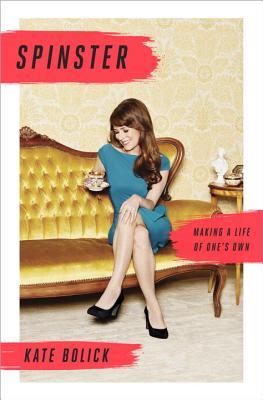
Spinster By Kate Bolick.
Crown| April 21, 2015|308 pages |$26.00| ISBN: 978-0-385-34714-3
Rating: ****/5*
FTC Disclosure: I received this book for review from Penguin Random House.
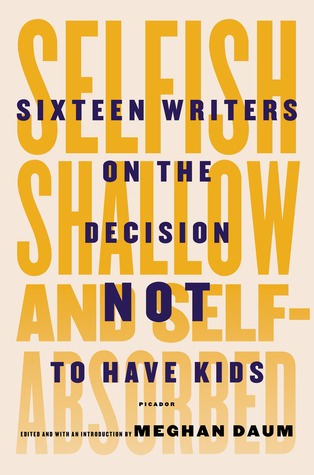
Selfish, Shallow and Self-Absorbed: Sixteen Writers on the Decision Not to Have Kids Edited by Meghan Daum.
Picador| March 2015|288 pages |$26.00| ISBN: 978-1-250-05293-3
Rating: ****/5*
–review by Amy Steele
FTC Disclosure: I won an ARC on Goodreads.
“After all, artists—especially writers—need more alone time than regular people. They crave solitude whereas many people fear it. They resign themselves to financial uncertainty whereas most people do anything they can to avoid it. Moreover, if an artist is lucky, her work becomes her legacy, thus theoretically lessening the burden of producing a child to carry it out.” –Meghan Daum
Being 45 never married and childfree I could write an essay on both these books. I have written essays on these topics. At an early age, I knew I never really wanted to marry or have children. It wasn’t something I sought out in relationships i.e. a guy I would end up marrying. I never wanted to own a house. I never felt any maternal urges. I didn’t play with dolls or fantasize about weddings. I rode horses. I wrote poems.
Selfish, Shallow and Self-Absorbed approaches the topic with fresh voices. Much superior to No Kidding: Women Writers on Bypassing Parenthood. It’s not the usual “I’m too busy/my career got in the way and I forgot about children” argument that many people use. Many people feel plenty fulfilled with pets, careers, volunteer work, hobbies, partners, lovers and yeah, just being alone. This idea of being single or being a spinster is exactly what Kate Bolick investigates in Spinster. It’s much more acceptable to be single and over 35 these days. However there remain misconceptions and stereotypes [crazy cat lady anyone?]. In fact there are 158.3 million women in the United States and 105 million are single. Sometimes it doesn’t seem that way surrounded by wedding rings and couples.
Bolick explains: “Not until colonial America did spinster become synonymous with the British old maid, a disparagement that cruelly invokes maiden (a fertile virgin girl) to signify that this matured version has never outgrown her virginal state, and is so far past her prime that she never will. If a woman wasn’t married by twenty-three she became a ‘spinster.’ If she was still unwed at twenty-six, she was written off as a hopeless ‘thornback,’ a species of flat, spiny fish—a discouraging start to America’s long evolution in getting comfortable with the idea of autonomous women.” Bolick mixes her personal experiences and thoughts with research on literary inspirations—Edna St. Vincent Millay; Maeve Brennan; Edith Wharton; Neith Boyce and Charlotte Perkins Gilman to examine the idea of pursuing not just a room of one’s own but a life of one’s own choosing.
Danielle Henderson [“Save Yourself”] writes: “But to me, the lack of desire to have a child is innate. It exists outside of my control. It is simply who I am and I can take neither credit nor blame for all that it may or may not signify.” Geoff Dyer [“Over and Out”] admits: “It’s not just that I’ve never wanted to have children. I’ve always wanted to not have them.” He continues: “Of all the arguments for having children, the suggestion that it gives life ‘meaning’ is the one to which I am most hostile—apart from all the others. The assumption that life needs a meaning or purpose! I’m totally cool with the idea of life being utterly meaningless and devoid of purpose.”
Laura Kipnis [“Maternal Instincts”] states: “It’s only modern technology’s role in overriding nature—lowering the maternal death rate, inventing decent birth control methods—that’s offered women some modicum of self-determination.” She adds: “Though no one exactly says it, women are voting with their ovaries, and the reason is simple. There are too few social supports, especially given the fact that the majority of women are no longer just mothers now, they’re mother-workers.”
Unfortunately due to societal expectations and pressures it does make one feel a bit of a freak, an outsider that one doesn’t have a ring on one’s finger. That one isn’t coupled up. That one doesn’t have children. For a while you get the “you might change your mind” or “it’s not too late” or “you just haven’t met the right guy yet” when someone hears of your supposed dilemma. At 29 I had to have a laparoscopy and wanted tubal ligation but my gynecologist refused because I might change my mind I was young. Then a few months later I turned on The Today Show and see a 20something guy talking about his choice to get a vasectomy. Just because I have a vagina doesn’t mean I want to breed. I’m happy solo. I’d be a great aunt but no one wants to forge that relationship probably due to my mental illness.
Oh, that’s another thing who would want to inflict mental illness knowingly on a child. I belong to DBSA [Depression Bipolar Support Alliance] and in groups I hear person after person talking about their own children being diagnosed with a mental illness. They themselves are here in a group because they struggle with mental illness every day. Someone once said that her babies were what made her get out of bed because of her depression. Yeah, get a cat. That’s a lot of pressure for a child to be your reason to get up in the morning and not kill yourself. As Lionel Shriver writes [“Be Here Now Means Be Gone Later”]: “The odds of children making you happier are surely no better than fifty-fifty.” Elliott Holt discusses her depression and mental breakdowns in “Just An Aunt.” She writes: “I offer my three nieces an entirely different female model: a career-focused artist, with no financial security, who will probably never own a house.”
Both my brothers married college girlfriends at age 23. My older brother had all three daughters before he turned thirty. His daughter married at 21 before even graduating from college. Who knows who one is or wants to be or is a fully formed individual until age 30? Sometimes it takes a while to figure ourselves out both professionally and personally. Anna Holmes [“Mommy Fearest”] writes: “These days, as I enter my forties, I find that I am now beginning to feel comfortable in my own skin, to find the wherewithal to respect my own needs as much as others’, to know what my emotional and physical limits are, and to confidently, yet kindly, tell others no.” Kate Bolick notes: “Austen never married, Wharton didn’t fully come into her own as a writer until she’d divorced her husband, and Mary Eleanor Wilkins—a wildly successful fiction writer in her day; who like Maine’s never-married Sarah Orne Jewett before her, often chose spinsters as her subjects—did in fact produce her best work before she married at age fifty.”
An ex once told me that marriage and having children was “the thing to do.” Another high school friend said that she and her boyfriend thought about whether they wanted to be the type of couple who had children or the type who didn’t. Sounded weird. Think of first time fathers Jeff Goldblum at 60 and Steve Martin at 70. Having a child can be just as selfish an act as not having a child—- to pass on your genes; to keep your lineage flourishing; to have someone to love unconditionally.
We’ve all seen those couples who work out together or those who call each other from the grocery store to consult on what they need. Then there are those people who cannot see films alone or go to a concert. They miss out on so much for fear to go alone. Bolick, who doesn’t go much longer than a few months without a boyfriend, writes: “though marriage was no longer compulsory, the way it had been in the 1950s, we continued to organize our lives around it, unchallenged.” However on the flip side: “Having nobody to go home to at night had always seemed a sad and lonesome fate; now I saw that being forced to leave the house for human contact encourages a person to live more fully in the world.”
If you’re feeling the need for kinship, both Spinster and Selfish, Shallow and Self-Absorbed are compelling reads. If you don’t understand how someone could choose to be single or choose not to have a child, then you need to read them also. If you’re a feminist [and if you’re reading one of my reviews you should be], these are required reading.
Kate Bolick will be at Harvard Book Store tonight, April 23 at 7pm.

purchase at Amazon:
Spinster: Making a Life of One’s Own

Selfish, Shallow, and Self-Absorbed: Sixteen Writers on the Decision Not to Have Kids

Share this:

book review: Your Health Destiny
Posted by Amy Steele in Books on April 20, 2015
Your Health Destiny By Eva Selhub, M.D.
HarperOne| April 2015|245 pages |$26.99| ISBN: 978-0-06232-7789
Rating: ****/5*
Merging Eastern philosophies and alternative treatments with Western medicine, Eva Selhub, M.D. effectually discusses essential body systems in a systematic manner by dividing this book into chapters on the immune system; the heart; the lungs; the gastrointestinal system; the musculoskeletal system; the spine and the brain. She writes: “Modern medicine focuses on getting rid of symptoms and managing body parts, so that you can continue on with your life; it does not address the real core issues of why you are in the state you are in to begin with or the reason the body is reacting the way it is in the first place.” The Mind-body connection is important. Many people have a basic understanding that eating well and exercising makes them feel physically and emotionally better. Selhub adds: “Simply put, you have the power to transform your mind and improve the functioning of your body. The key to this power lies in your ability to bounce back from illness, manage life’s stress efficiently and effectively, and truly believe in the possibility of good.”
Dr. Selhub uses the acronym POWER to help people figure out why their body isn’t in homeostasis. PAUSE to clear and open your mind. OPTIMIZE awareness of body parts and how they function. WITNESS you body’s language and physiology “so that you can further your awareness and move into acceptance, understanding how your body speaks to you.” EXAMINE deeper emotions and beliefs. RELEASE negative habits and beliefs, RELIEVE your body of stress and RESTORE the power to bring your mind and body into balance. In each section she provides an anatomy and physiology review/lesson, points to contributing factors to issues with that system, red flags that you need to get checked by a doctor, then brings in some Eastern philosophy to tie everything together. An example: “It is believed in many wisdom traditions that breath is a metaphor for life and breathing represents the essence of our being.”
The takeaway:
–Don’t worry. Be happy. A University of Kansas 2010 study found that “optimism was a significant predictor of positive physical health outcomes.”
–the Journal of Neuroscience recently found that environmental factors [stress, drug abuse, poor sleep] “compromise the circadian rhythm, causing the genetic landscape of your ‘clock genes’ to change its shape.”
–Think positively. “Your thoughts, emotions, and beliefs, and therefore your perception of yourself and your world, are directly connected to your body’s biochemistry and physiology.”
–95% of the body’s serotonin lies in the gut
–allergies are the fifth leading cause of chronic diseases in the United States in all age groups
–Autoimmune disease is one of the top ten leading cause of death in girls and women up to sixty-four years of age.
–60% of your immune systems exist in the lining of your gastrointestinal tract.
–studies show that eating more cruciferous vegetables like broccoli, cabbage, kale and cauliflower reduces risk of getting lung cancer
–as you age, the acidity in the stomach decreases and low acid levels hinder digestion
–more than 34 million Americans are afflicted with diseases of the digestive system
–studies show that those who feel they have a purpose in life are healthier and live longer
–CDC recommends 150 minutes per week of moderate exercise or 75 minutes of vigorous exercise.
–Drink Water. According to The Institute of Medicine the adequate intake for a male is 3 liters [13 cups] of total beverages daily and for women it’s 2.2 liters [9 cups].
–“While the left side of the cerebrum enables you to be more detail oriented and logical, the right side is more responsible for your artistic tendencies and your ability to think abstractly.”
–One in four adults suffers from a mental illness in a given year
–“Not only do mental health issues affect one’s ability to fully engage in life’s activities, but they also negatively affect families and loved ones. Mental health problems affect emotions, thoughts, behaviors, and often physical health.”
–review by Amy Steele
FTC Disclosure: I received this book for review from Harper Collins.
Eva Selhub, M.D. will be at The Brookline Booksmith on Tuesday, April 21 at 7pm.
purchase at Amazon: Your Health Destiny: How to Unlock Your Natural Ability to Overcome Illness, Feel Better, and Live Longer


Share this:

STEELE INTERVIEWS: Shireen Jilla
Posted by Amy Steele in Books, Interview on April 15, 2015
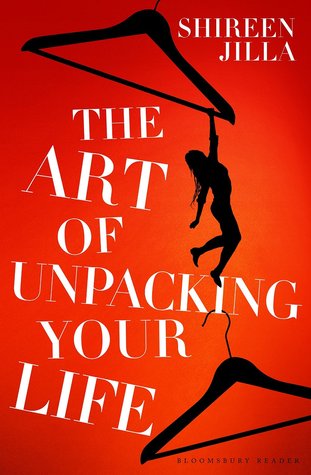
I recently wrote a review of the wonderful novel The Art of Unpacking Your Life by Shireen Jilla. It centers on a group of college friends who take a trip together 20 years after college. Much happens while they’re on holiday–births, deaths, love, scandal and affairs. It’s a topsy-turvy read. Highly recommended. Ms. Jilla worked as a journalist before writing novels. This is her second novel. Her first is a psychodrama called Exiled.
Recently Shireen Jilla answered a few questions via email.
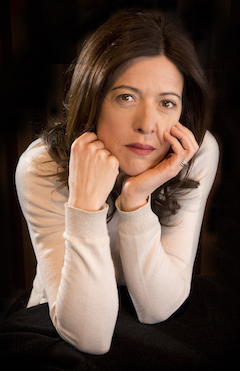
photo by Francesco Guidicini
Amy Steele: How did you get the idea for this novel?
Shireen Jilla: I was like a schizophrenic for years, muttering to the main characters, who wouldn’t leave my mind.
I wanted to write about a generation that didn’t all end up married with 2.4 children. By 40, some are single, divorced, gay, with children, without. To me, it is no longer clear cut.
Amy Steele: It’s your second novel. What did you do differently in writing this one than the first?
Shireen Jilla: My last novel, Exiled, was a psychological thriller set in New York. Like Rosemary’s Baby. So the plot came first. It was the very immediate story of one woman, so I decided to write it in the first person.
With Unpacking, my starting point was altogether different. I had been thinking about the six main characters for a long time. I was equally interested in each of their stories. So I eventually decided to use a ‘roving’ third person perspective inspired by Virginia Woolf’s Mrs Dalloway.
Amy Steele: How does your work as a journalist affect your novel writing?
Shireen Jilla: It makes it easier and harder. I am used to settling down to write, but a 1,00-word newspaper feature with a clear beginning, middle and end, is ver different from facing the mountain of 100,000 words of fiction. Once I had worked out what I wanted to do with Unpacking, I wrote it very fast.
The first draft was completed in five months. I spent six weekends working from Friday through to Monday, practically without sleeping.
I am not precious about getting the scenes down and I don’t prevaricate. I think that’s because I am also a journalist.
Amy Steele: Why did you decide to set this in the Kalahari? How did you recreate the settings?
Shireen Jilla: I tried setting it in Sardinia, but it wasn’t a remote or extreme enough to allow the characters to unravel in such a short space of time. When my brother took me on this trip of a lifetime to the Kalahari, my first ever to Africa, I realised it was the perfect setting.
I kept a diary, took hundreds of photos, some of which are on my website, bought books, and talked extensively to the guides. All the detail is accurate.
Amy Steele: As they seem to be the main characters, what do you like best about Connie, about Luke and about Sara?
Shireen Jilla: I am incredibly fond of all the characters in the book. I admire Connie’s strength, love her doubt. I was drawn to Luke because of his unspoken vulnerability. And Sara is highly intelligent and funny, but ultimately a loyal friend.
Amy Steele: Why did you pick three guys, three women?
Shireen Jilla: I wanted Unpacking to be about a group of friends, close but disparate. And I wanted it to be written from a male and female point of view. Both reasons led me to have six main characters. In a literary sense, six main characters is considered a handful. And the editor at my literary agency encouraged me to reduce them.
Amy Steele: Are you still close friends with college friends? Would you take a safari trip together?
Shireen Jilla: Yes! I would love to do it.
Amy Steele: What do like best about writing novels?
Shireen Jilla: I love the actual process. It’s probably escapism. Still, I am never happier than when I am in the middle of writing a novel.
The Art of Unpacking Your Life [Bloomsbury Reader] by Shireen Jilla is available now.

Share this:

Bailey’s Women’s Prize for Fiction 2015 Announces Shortlist
Posted by Amy Steele in Books on April 14, 2015
The Baileys Women’s Prize for Fiction – the UK’s only annual book award for fiction written by a woman—announces its shortlist. The winner of the Baileys Women’s Prize for Fiction 2015 will receive a cheque for £30,000 and a limited edition bronze award known as a ‘Bessie’ – both are anonymously endowed.
The winner will be announced June 3, 2015.
shortlist:
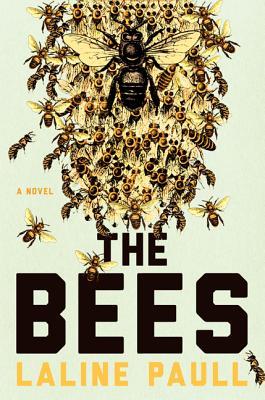
The Bees by Laline Paull [Ecco]
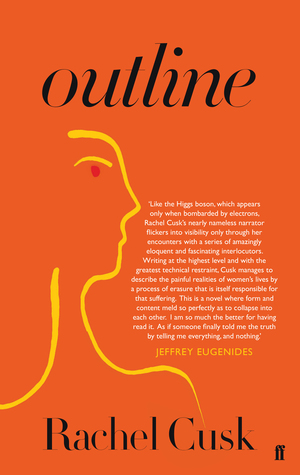
Outline by Rachel Cusk [Faber & Faber]
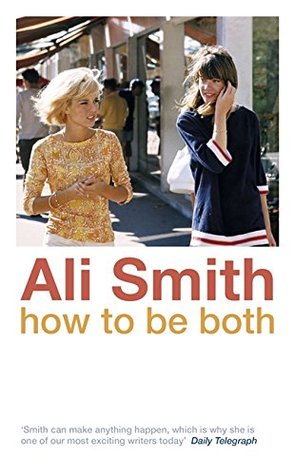
How to Be Both by Ali Smith [Penguin]

A God in Every Stone by Kamila Shamsie [Bloomsbury]
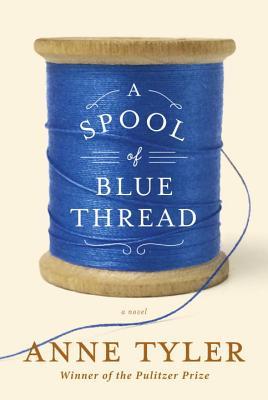
A Spool of Blue Thread by Anne Tyler [Knopf]
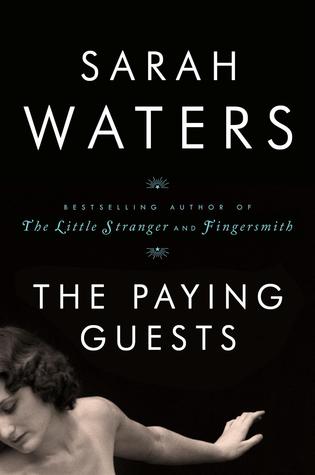
The Paying Guests by Sarah Waters [Riverhead]
Share this:

book review: Girl Runner
Posted by Amy Steele in Books on April 14, 2015
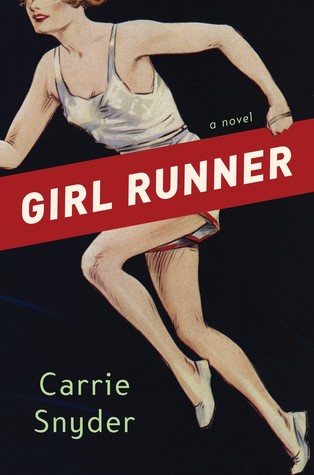
Girl Runner By Carrie Snyder.
Harper| February 2015|288 pages|$26.99| ISBN: 9780062336040
Rating: ****/5*
At the 1928 Olympics, distance runner Aganetha Smart wins the gold medal for Canada. It was the first Olympics in which women could compete in track and field events. It also was the last year for decades that the 800 meter run existed for women. Officials deemed it too taxing for women. Men continued to race in the event. Smart gained glory, enjoyed some years of celebrity and modeling contracts [likely the equivalent of endorsements today] then disappears from the national conscience until a young runner seeks her out when she’s making a documentary film about her own running career.
While author Carrie Synder created the character of Aganetha Smart, she conducted extensive research into the period and into female runners during that time. It starts a tad slow but it’s a fascinating novel about a woman who despite not competing continues to run well into her 80s. She adores the free feeling, escape and bodily endurance. Snyder writes: “Motion comes lightly to me. Maybe this is how others feel about calculations or equations, or about words, or about their feelings, about choices, about right and wrong.”
Traveling from present day to the 1920s, Snyder allows us to learn about Aganetha Smart’s life—her mom performed discreet abortions in their home and helped birth babies as a midwife– and her experience training and competing in the Olympic Games. There’s a scene where they’re traveling by boat to the Olympic Games in Amsterdam. The boat serving as an athlete’s village of sorts. Smart thinks: “I quietly agree with Glad. I am thinking myself quite sophisticated. I don’t need a boy, and besides, we girls are chaperoned up to our ears. Picture this: nearly seventy young people in top physical form confined on board a ship for a little more than a week.”
Girl Runner is about a determined woman who lived life by her own standards. “I am a woman unattached, a single woman of a certain age. I’m spared some complications. No one to nurse in declining years, for example. Also, no one to check my little eccentricities, developed over years of solitary habit.” When her running career ends she works for a newspaper and settles in writing obituaries until she moves back home to live in the family home with her sister.
–review by Amy Steele
FTC Disclosure: I received this book for review from Harper Collins.
purchase at Amazon: Girl Runner: A Novel

Share this:

book review: The Art of Unpacking Your LIfe
Posted by Amy Steele in Books on April 11, 2015
The Art of Unpacking Your Life By Shireen Jilla.
Bloomsbury Reader|March 2015| 316 pages| ISBN: 9781448215201
Rating: ****/5*
Connie invites her university friends on a trip to the Kalahari to celebrate her fortieth birthday. The story mostly centers on Connie. The other friends have side-stories. The novel is a sharp and rich depiction of college friends in later life. “They had been close at university, but their friendship had drifted as their lives had taken them in different directions.” Do they have the same bonds as they did at 20 that they have now not seeing each other daily? Over several days in a vast environment thousands of miles away from their comfort zone and homes, the group reveals secrets and encounters surprising challenges.
Connie’s four children [“No one had four children anymore.”] are in secondary school and her politician husband Julian continues to have affairs. His latest dalliance might break them up forever despite the family and image to uphold. For years after every affair, Connie stands by her man. Sara is a single, strong barrister who just completed a major case in London and prefers to keep men at arm’s length to avoid any emotional entanglements. “There was something fundamentally wrong with the men she dated. Too talkative, too vain, too stupid, too nasal, too egotistical.” Lizzie isn’t quite sure what to do personally or professionally. “Nothing measured up to their time together at Bristol University for Lizzie. She hadn’t moved on.” Lizzie “didn’t have a man, or own her own flat and her career was going nowhere.” The recently divorced Luke, Connie’s college boyfriend is on the trip. Is there still something between them? Should they have remained together all along? Matt shares the news that he and his American wife Katherine [“She was fragile and feminine compared with his English women friends.”] used a surrogate for the baby they’re expecting after years of IVF treatment. Dan isn’t happy in his relationship with a younger, not-too-serious boyfriend Alan. “The group never believed that Alan was good enough for Dan.”
Jilla writes splendidly about the bold wildlife and African landscape— “A wide, wild range of beautiful, even rare and endangered, species would be waking up in this safe haven, magically far away from the destructive nature of the human world. All because of her grandfather’s understanding and commitment.” It’s refreshing to read about adults who may still be figuring things out. The superb writing and multifaceted characters draw you in from the beginning and keep you riveted throughout the novel.
–review by Amy Steele
FTC Disclosure: I received this book for review from the publisher through NetGalley.
purchase at Amazon: The Art of Unpacking Your Life

Share this:

book reviews: Divorce is the Worst and Picture of Grace
Posted by Amy Steele in Books on April 9, 2015
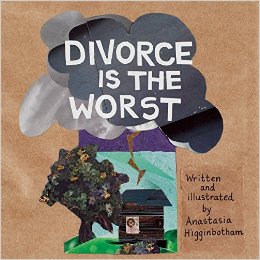
Divorce is the Worst By Anastasia Higginbotham.
Feminist Press| April 14, 2015|64 pages |$16.95| ISBN: 978-1-55861-880-0
Rating: *****/5*
FTC Disclosure: I received this book for review from Feminist Press.

Picture of Grace By Josh Armstrong.
256 pages |$18.99| ISBN: 978-0-9862370-0-3
Rating: ****/5*
FTC Disclosure: I received this book for review from the author.
While I choose not to parent, I was a child once and I understand both divorce and grief. If you want books to help guide a child through these difficult and often traumatic situations, these are two wonderful options. These children’s books should help ease some broken hearts and answer questions in an effective, fun manner. Both books are told from the child’s viewpoint.
Author and artist Anastasia Higginbotham empowers children to understand that divorce is never their fault in Divorce is the Worst. She utilizes collage pictures, humor—“You’re getting a horse? Um, no. A divorce.”—and empathy. This book is the first in Higginbotham’s feminist children’s book series Ordinary Terrible Things. The book effectively moves through a child’s feelings- confusion, betrayal, guilt, sadness– when the parents decide to divorce. She notes: “Other divorce books try to make kids feel better about the divorce. Mine supports kids to find out how they feel about it all. The truth of their experience is the only thing that matters.”
In Pictures of Grace, author Josh Armstrong writes about a girl losing her painter grandfather. He’s a famous landscape artist who spends quality time with his granddaughter. When he dies suddenly, Grace decides to finish his current painting adding her own style and flourishes. It stresses remembering happy times and a person’s life when they die. The illustrations by Taylor Bills remind me a bit of a Disney film but prove effective.
Share this:

APRIL Boston-area Book Readings of Note
Posted by Amy Steele in Books on April 3, 2015
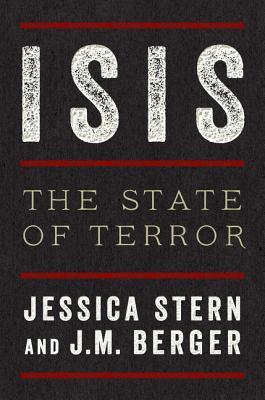
Jessica Stern
J.M. Berger
ISIS: The State of Terror
Harvard Book Store
Monday April 6 at 7pm
Helen MacDonald
H is for Hawk
Harvard Book Store
Tuesday April 7 at 7pm
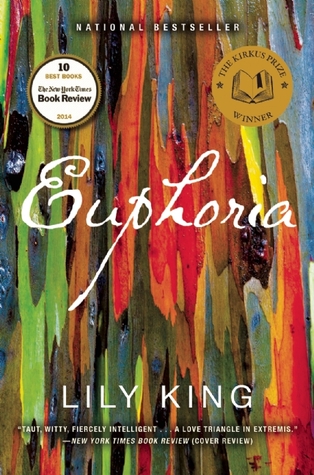
Lily King
Euphoria
Portersquare Books
Tuesday April 7 at 7pm
Peter Slevin
Michelle Obama: A Life
Brookline Booksmith
Wednesday April 8 at 7pm
Lydia Davis
Can’t and Won’t: Stories
Harvard Book Store
Wednesday April 8 at 6pm

Tracy K. Smith
Ordinary Light: a memoir
Harvard Book Store
Thursday April 9 at 7pm
Philip Kerr
The Lady from Zagreb
Brookline Booksmith
Thursday April 9 at 7pm
Malcolm Gladwell
David and Goliath: Underdogs, Misfits, and the Art of Battling Giants
Harvard Book Store
Monday April 13 at 7:30pm
Marge Piercy
Made in Detroit: Poems
Brookline Booksmith
Tuesday April 14 at 7pm
Nina Maclaughlin
Hammer Head
Porter Square Books
Wednesday April 15 at 5pm
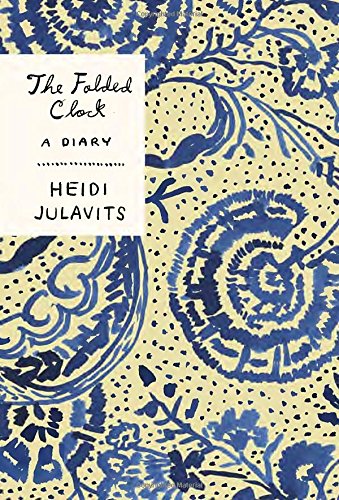
Heidi Julavits
The Folded Clock: a diary
Harvard Book Store
Wednesday April 15 at 7pm
Goran Rosenberg
A Brief Stop on the Road from Auschwitz
Brookline Booksmith
Sunday April 19 at 5pm
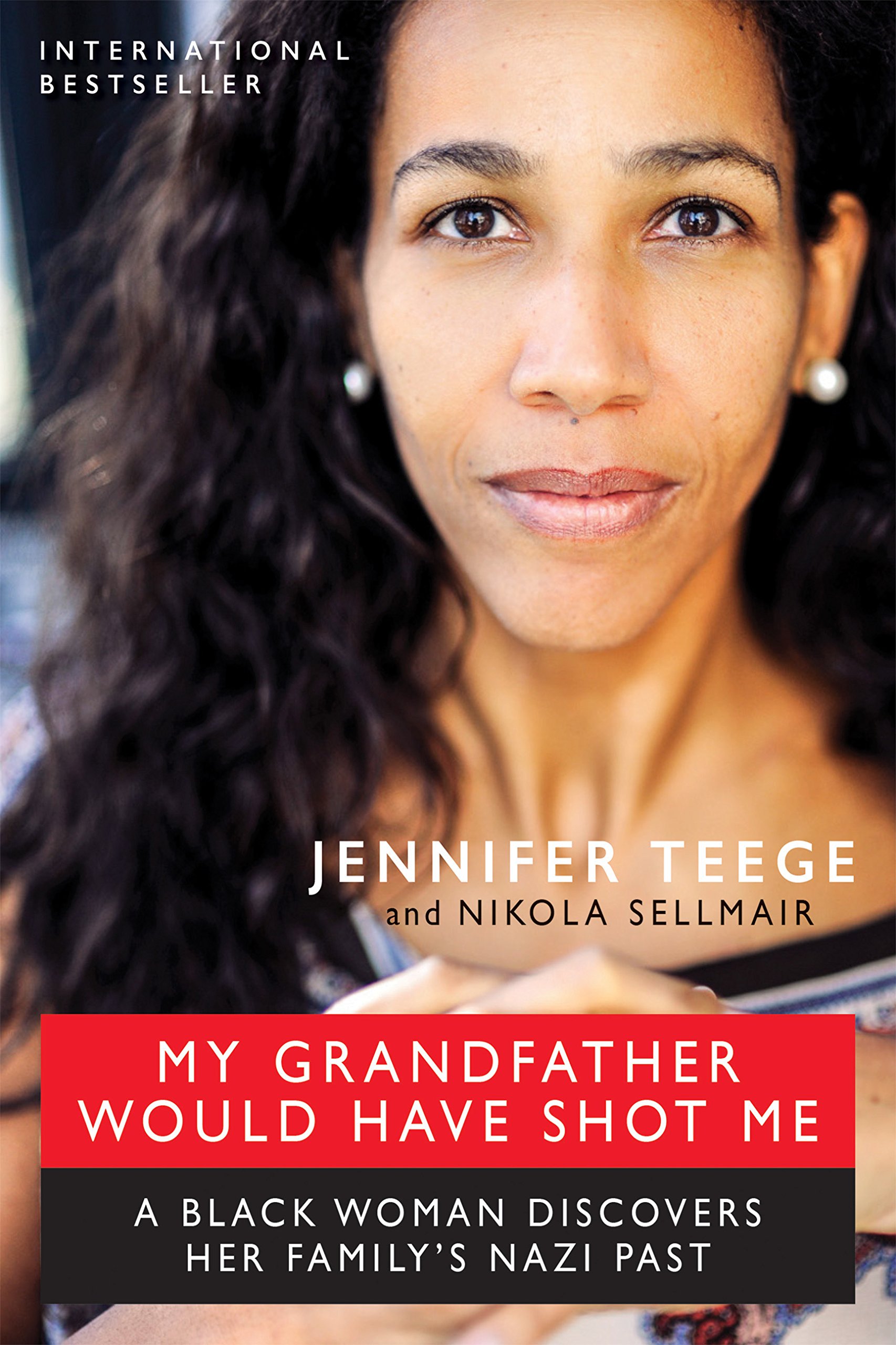
Jennifer Teege
My Grandfather Would Have Shot Me: a Black Woman Discovers Her Family’s Nazi Past
Harvard Book Store
Tuesday April 21 at 7pm
Eva Selhub
Your Health Destiny: Take Control of Your Body’s Innate Ability to Heal Itself
Brookline Booksmith
Tuesday April 21 at 7pm
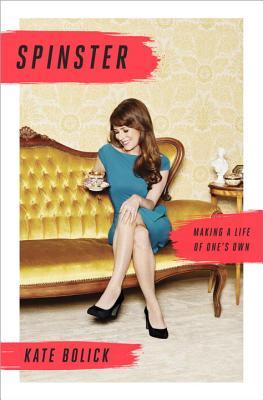
Kate Bolick
Spinster: Making a Life of One’s Own
Harvard Book Store
Thursday April 23 at 7pm
Marge Piercy
Made in Detroit: poems
Porter Square Books
Thursday April 30 at 7pm
Share this:

STEELE INTERVIEWS: Robin Black
Posted by Amy Steele in Books, Interview on March 31, 2015
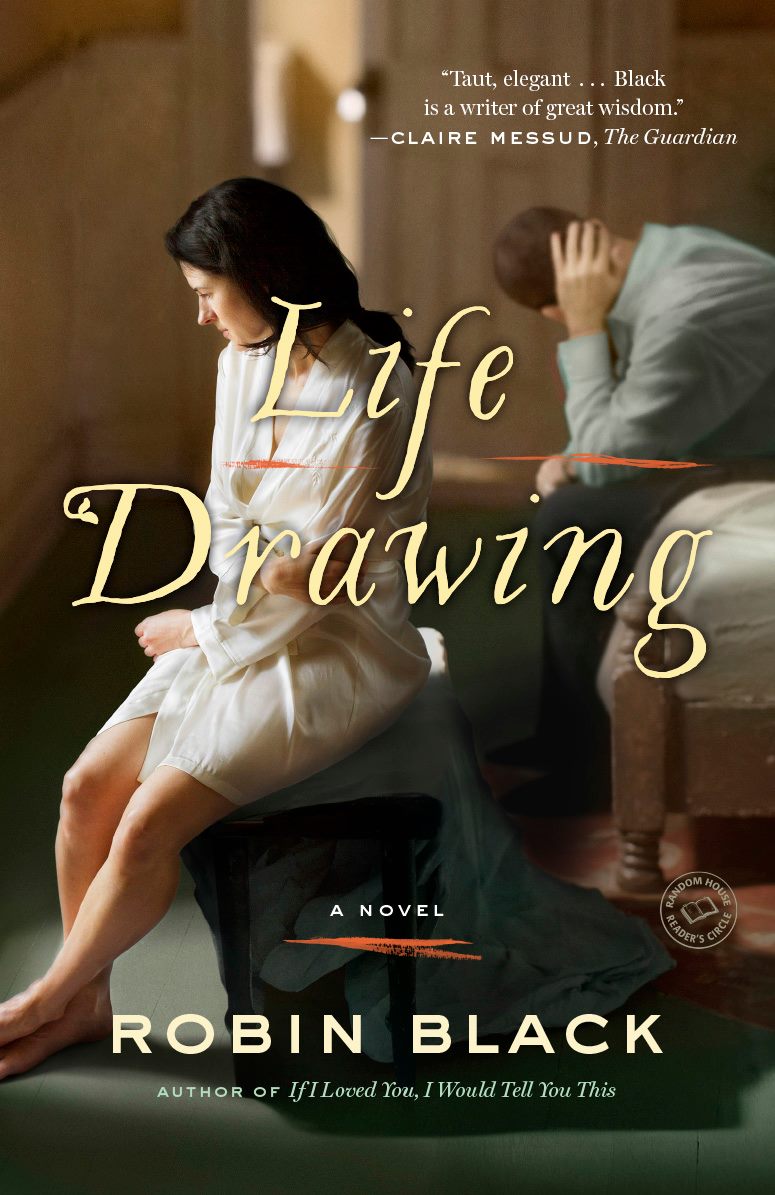
I’ve been a Robin Black fan since the publication of her short-story collection If I Loved You, I Would Tell You This five years ago. Her debut novel Life Drawing made my 12 Best Novels of 2014 list. Life Drawing comes out in paperback on April 14, 2015. So we discussed the novel about a marriage between an artist and a writer and its challenges when the couple moves to a house deep in the suburbs.
Amy Steele: Phenomenal novel. You examine marriage and art with this engrossing story and these layered characters. Marriage doesn’t sound promising. It sounds like too much work with only minimal rewards. Where did the idea come from?
Robin Black: Oh, I don’t know about the minimal rewards. I think that Owen and Gus have earned a role in each other’s life that is pretty glorious – bumps and imperfections at all. But having said that, I don’t think marriage is for everyone, and I recognize this definitely isn’t a very shined up view of the institution.
The idea really came from me wanting to look at a couple who don’t have kids, challenge that relationship, and then explore what would – or wouldn’t – keep them together. I’ve spent my adulthood around people with children who are always weighing splitting up with the impact of the kids – whenever tough times arise, I mean. I wanted to look at the matter of commitment without that consideration.
And I’m so glad you liked it! Thank you for saying so and for this interview.
![Robin Black [photo credit: Nina Subin]](https://entertainmentrealm.com/wp-content/uploads/2015/03/croppedrblack-249x300.jpg)
Robin Black [photo credit: Nina Subin]
Amy Steele: What I thought would happen didn’t happen and I was shocked several times by events that occurred in Life Drawing. So it’s a completely unpredictable read. How did you develop the characters? Where did they come from?
Robin Black: I think it’s unpredictable in part because I make things up as I go along. I’ll take a strand of it: From the start I had no idea who if anyone would have an affair with whom. There were points at which I thought Alison and Owen would, points at which I thought maybe Alison and Gus would. . . So even though I certainly revised once I had all the major actions in place, I think that maybe there’s a lingering fluidity that’s the result of my not having had a set course of events in mind.
Amy Steele: Why did you decide to write a novel about a creative couple. A painter and a writer.
Robin Black: I am married to a lawyer, and every single artist who isn’t married to an artist wonders what it would be like. There’s always that fantasy of the shared bohemian life, the deep philosophical discussions of one’s work. . . I wanted to play with that idea a bit. And maybe it’s sour grapes on my part, but I ended up being glad I am married to a lawyer. I admit, I didn’t make the artist/artist marriage look like huge fun.
Amy Steele: This is a beautiful paragraph: “There are moments in a creative life when you understand why you do it. Those moments might last a few seconds or maybe, for some people, years. But whatever the actual time that passes, they still feel like a single moment. Fragile in the way a moment is, liable to be shattered by a breath, set apart from all the other passing time, distinct.”
Do you feel like this with writing? Is it worth the moments?
Robin Black: Yes. Absolutely. I feel incredibly fortunate to be able to experience that kind of complete mesh with who I am and what I do. It’s worth all the times when it isn’t quite working so well.
Amy Steele: Why did you decide to reveal the ending at the beginning and then work back to how Augusta got there? Was that always your plan?
Robin Black: It was always the idea, from the second I put that opening sentence in place. I think that it gave me a kind of goal and also relaxed me a little bit on the subject of plot. I can’t say that plot is my strength – though I’m getting better I think. And having so dramatic a fact shaping the book relaxed me in a way. I didn’t know how Owen’s death would occur, but I knew I had to get there. And that also provided a kind of intellectual challenge, like putting a puzzle together.
Amy Steele: Did you have a favorite character to write and why?
Robin Black: I suppose it’s Gus, my narrator. I love her, flaws and all. Self-delusions and all. My favorite moments of hers are when she describes her own limitations, as when she talks about not being naturally good at comforting people who are distressed, about having to relearn that every time. I see such earnestness in those admission. Like, Owen, I am prepared to forgive her a lot in exchange for that kind of hint at really trying to understand herself and improve.
Amy Steele: How important are fellowships and writing colonies to your process? Sounds lovely and idyllic.
Robin Black: I haven’t been to a writing colony in nine years, and the only other Fellowship I’ve ever had was six years ago. So I guess the answer better be “not very important.” I’m in a stage of life, my kids adults, my husband still working full time, when I have a lot of time for work, so I don’t know that I need the escapes.
I do miss the conversations though, especially with non-writers, visual artists and musicians. And I miss not having to cook dinner every night. But I have a child with special needs and even though she doesn’t live at home full-time, it’s still hard for me to plan many months out, which those all require. So I just try to be grateful for the freedoms I have.
Amy Steele: Another lovely part: “Life. It begins and begins and begins. An infinite number of times. It is all beginnings until the end comes. Sometimes we know it and sometimes we do not, but at every moment life begins again.” This sounds like it could have been the impetus for Augustus and Owen and Nora and Alison to cross paths and become involved in each other’s lives as they did.
How was the transition from writing short stories to writing a novel? What was the greatest challenge in writing the novel? What’s been the greatest reward?
Robin Black: The greatest challenge was overcoming my sense that it was somehow an entirely alien task, distinct from what I’d been doing for a decade by then. That and also being overly self-conscious about being under contract, so I was inordinately tense for years. Years!
The greatest reward, honestly, is having a piece of work of which I’m proud. Of having found a way to say some things I believe – even if in an indirect form. And I do love having creating characters. That’s like giving yourself the gift of new people in your life. Or anyway, in your imaginary life. . .
Amy Steele: Thank you Robin.
Robin Black: Thank you so much, Amy! I’m so happy to have this chance to chat.
purchase at Amazon: Life Drawing: A Novel


Share this:

book review: Master Thieves
Posted by Amy Steele in Books on March 28, 2015

Master Thieves By Stephen Kurkjian.
Public Affairs| March 2015|272 pages |$25.99| ISBN: 978-1-610394239
Rating: ***/5*
“In many ways, the trail I followed in the Gardner case was uniquely Boston, a historic but small city where bank robber and bank president can live side by side in the same neighborhood, or, as with the infamous Bulger family, where the notorious gang leader and Senate president were brothers.”
In the winter of 1990 when thieves posed as police officers and stole thirteen works of art with a value of $500 million from the Isabella Stewart Gardner Museum [ISGM]. I was merely blocks away immersed in my junior year at Simmons College. Not only sad for the Boston arts community but for the world this theft remains unsolved. Author Stephen Kurkjian writes: “Twenty-five years later the artwork remains missing, and the empty frames and unfilled spaces on antique desks at the museum still stand as grim reminders of the poor security and futile investigative work that followed the theft.” Now the ISGM bears a new wing and new entrance. Not sure if Ms. Gardner would approve of this extension. However to its beautiful construction, gorgeous views of Boston and the ability to showcase new artists undoubtedly Ms. Gardner, an ardent patron of the arts, would approve.
The ISGM is truly a hidden gem in the Fens. While it’s right around the corner from the Museum of Fine Arts it’s not visited as often or known as well sometimes I think the development and marketing for the museum could use great improvement but they’ve failed to hire me in a development communications role though I’ve applied. Kurkjian writes: “One option [Gardner director] Hawley hasn’t tried is using the Internet and social media to maximize awareness of the specific pieces that are missing and encouraging the public’s involvement in the search.” This is true. I’ve never seen the Gardner museum tweeting information. This year on its Instagram account there was a hashtag #GardnerTheft25 and pictures of the rooms with empty frames but no pictures of the missing artwork. However if you go to the museum website, there’s an in-depth feature on the missing thirteen pieces.
“Thirteen pieces of artwork were stolen from the Isabella Stewart Garner Museum on March 18, 1990, and many weren’t well known to the public at large. For twenty-three years there had been no “proof of life” of a single piece, and while people might recall what the two most valuable pieces—Rembrandt’s Storm on the Sea of Galilee and Vermeer’s The Concert—looked like, the lesser works were largely unknown.”
Pulitzer-prize winning journalist and former The Boston Globe investigative reporter Kurkjian writes about the most likely theory for the theft: it was carried out by Boston gangsters and the art remains somewhere on the East Coast. He and others believe that Bobby Guarente, David Turner and Robert Gentile carried out the heist. It’s now been 25 years since the theft and while several years ago the FBI announced it was close to making an arrest and recovery, nothing’s occurred. Ms. Gardner’s art remains at large. I wrote a children’s book about Isabella Stewart Gardner and having completed extensive research for the project I know what she went through to curate her collection and create the one-of-a-kind private museum in the Fens.
Kurkjian chronicles his role in covering the theft as a journalist as well as in doing research for the book. He interviewed countless mob associates as well as museum security and FBI. Thoroughly researched, Kurkjian sufficiently corroborates the theory that it was a gang job. Back as far as 1981 gangsters such as Louis Royce knew about the weak security system in the Gardner museum. In fact as a child, Royce slept overnight in the museum. “During his ensuing years as a criminal, Royce had hatched a plan to rob the Gardner of some of its most precious artifacts.” However Royce didn’t need the paintings for a trade like some gangsters use art to secure the release of associates. “Instead, he had riches in mind. Royce and his fellow gangsters put the word out, seeking a commission from a wealthy art collector connected to the underworld.”
The opposing gangs and gangsters confused me. Who is connected to whom and who works for whom unfortunately bogs down reading. While there’s a cast of characters at the start it gets complicated to keep referring to it. Also Kurkjian repeats theories as if each chapter serves as a stand-alone piece but they don’t quite read that way. It’s not a longform news article. Or I’d just read that as I have. I’ve read nearly everything about ISGM and the theft. Not sure why anyone, even a gangster, would want paintings ripped out of the frames hanging on the walls. Even private art dealers I don’t quite understand unless they lend their art for others to view. Isabella Stewart Gardner created this museum to share her art with the masses.
Some interesting information culled from Master Thieves:
–The FBI has never sought assistance from the Boston Police or the Massachusetts State Police. Many officers would know Boston’s crime world rather well.
–Being close to the museum entrance, the Yellow and Blue Room galleries were easiest rooms to steal paintings from.
–After the theft an art critic for the Boston Globe wrote about Gardner’s inability to raise enough funds during the 1980s—“The trustees, traditionally a self-perpetuating Brahmin board of seven Harvard-educated men, acted as if fund-raising were tantamount to begging.”
–In 1989 it was reported that only two police officers in the United States investigated art thefts full-time. One in Los Angeles, the other in New York. On the other hand, Italy’s art theft unity has eighty agents.
–A Cezanne stolen in 1978 from Stockbridge, Mass. was recovered twenty-one years later.
–review by Amy Steele
FTC Disclosure: I received this book for review from Public Affairs.
purchase at Amazon: Master Thieves: The Boston Gangsters Who Pulled Off the Worlds Greatest Art Heist


Share this:

-
You are currently browsing the archives for the Books category.
About Me

covering mostly music and books. focus on alternative/indie and women in music, literature and the arts. feminist. vegan. mostly alternative, a bit bohemian. Masters in journalism from Boston University. BA from Simmons College.



Entertainment Realm by Amy Steele is licensed under a Creative Commons Attribution-Noncommercial-No Derivative Works 3.0 United States License.
Based on a work at entertainmentrealm.comCopyright © 2009. All writing, unless otherwise noted, by Amy Steele.
 ENTERTAINMENT REALM
You must be logged in to post a comment.