Archive for category Books
Boston-area book readings of note in April
Posted by Amy Steele in Books on March 26, 2016

Nathalia Holt
Rise of the Rocket Girls
Brookline Booksmith
Tuesday, April 5 at 7pm
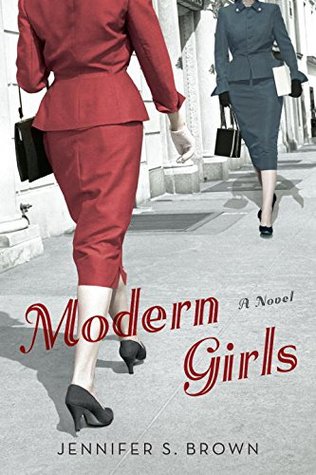
Jennifer Brown
Modern Girls
Porter Square Books
Wednesday, April 6 at 7pm

Juliette Kayyem
Security Mom
Harvard Book Store
Thursday, April 7 at 7pm

Baz Dreisinger
Incarceration Nations
Brookline Booksmith
Wednesday, April 13 at 7pm

Jessica Knoll
Luckiest Girl Alive
Brookline Booksmith
Monday, April 25 at 7pm

Ann Neumann
The Good Death: An Exploration of Dying in America
Harvard Book Store
Tuesday, April 26 at 7pm

Matthew Pearl
The Last Bookaneer
Brookline Booksmith
Tuesday, April 26 at 7pm
Share this:

book news: cover reveal for Joanna Basford’s Magical Jungle
Posted by Amy Steele in Books on March 25, 2016
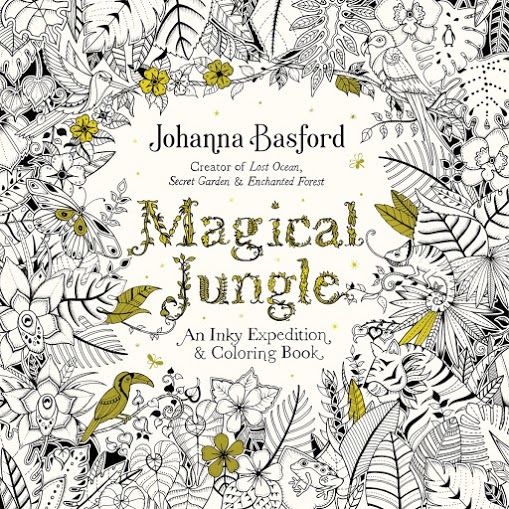
MAGICAL JUNGLE: An Inky Expedition & Coloring Book by Johanna Basford| Penguin Books| August 9, 2016| $16.95| ISBN: 9780143109006
Adult coloring calms, soothes and helps us embrace mindfulness in a fun manner. The popular Johanna Basford [Enchanted Forest, Secret Garden] has sold 16 million copies of her adult coloring books worldwide. Her new adult coloring book MAGICAL JUNGLE: An Inky Expedition & Coloring Book will be released in August. MAGICAL JUNGLE features intricate pen and ink illustrations as those coloring will explore an exotic rainforest overflowing with creatures large and small.
pre-order at Amazon: Magical Jungle: An Inky Expedition and Coloring Book for Adults

Share this:

book review: Incarceration Nations
Posted by Amy Steele in Books on March 22, 2016
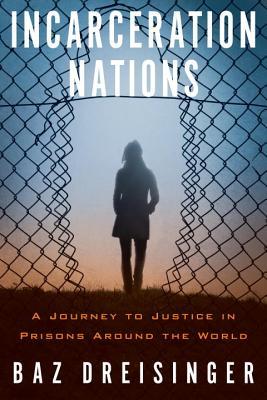
Incarceration Nations by Baz Dreisinger. Other Press| February 2016| 241 pages | $27.95| ISBN: 978-159051-727-7
RATING: ****/5*
“Privilege cannot be discarded when convenient, however many barbed-wire fences one crosses. In fact, denial of privilege is the ultimate mark of it.”
Our criminal justice system needs a substantial overhaul. People receive lengthy prison sentences for nonviolent crimes and first-time drug offenses. It’s rather ridiculous. Death row wastes time and money. Solitary confinement deprives people in a cruel manner. The death penalty itself remains inhumane and barbaric.
Does prison work? Author Baz Dreisinger wanted to answer the question: She decided to examine what works and what does not work in prisons throughout the world. She also wanted to use these varied prisons to compare and highlight what’s wrong with the United States penal system, Dreisinger traveled to Rwanda, South Africa, Uganda, Jamaica, Thailand, Brazil, Australia, Singapore and Norway to find out what works, what doesn’t work and the state of the prisons throughout the world.
Dreisinger helps establish a prison visiting program in Rwanda, a country torn apart by genocide. People practice forgiveness. Dreisinger writes: “Ultimately, revenge cannot undo; it merely does again. It arises from a feeling of helplessness, from the need to re-create a painful situation with roles reversed.” She teaches a creative writing class in Uganda. She examines the music program in Jamaica. She notes: “Singing along, I come to the depressing conclusion that music in prisons is the sweet sound of a salve. Because ultimately Uganda’s prison library and Jamaica’s prison music studio add up to the same thing: a Band-Aid on an amputated limb.”
In South Africa at the Pollsmoor prison, Dreisinger assists with a restorative justice program. South Africa remains an extremely violent country in the aftermath of colonialism and apartheid. “South Africa’s rate of violent death for men—in 2012, some 16,000 cases were reported—is eight times the global average, while the female homicide rate is six times it. Over 40 percent of men report having been physically violent to a partner and more than one in four report having perpetrated rape, three-quarters of them before age twenty.” The prisoners focus on forgiveness in the restorative justice program. “Restorative justice literature outlines the four needs of victims: truthful answers; empowerment; restoration of respect, usually achieved by the repeated telling of their stories of harm; and restitution, what can be a statement of responsibility or a literal payback.” She observes the prisoners practicing scenarios in which they speak with their victims and assists in writing narratives about their crimes and the consequences of the crime.
She works on a drama workshop for female prisoners in Thailand. Globally more than 625,000 women are in prison and 70% incarcerated in the United States are in prison for nonviolent offenses. Dreisinger notes: “In Thailand about 21,000 of the 25,231 convicted women in prison are in for drug charges and a mere 550 for violent offenses.” “Thailand is a major transshipment point for heroin from neighboring Myanmar, the world’s second-biggest producer of opium, after Afghanistan.” There are vocational training classes in food catering, sports, beauty and arts. Prisoners can access yoga, massage, salons and meditation. She notes that this prison “has in some ways managed to piece together a sisterhood– a commune and community. It’s a fragmented family, rife with cracks and haphazardly glued together but a kind of family nonetheless.”
In Singapore, she learns about the prison reentry program. In Singapore prisons, the prisoners work in the bakery or the laundry which serves many hospitals in Singapore. “The result is a movement and, conveniently, a labor force. Prisoners have been the backbone of Singapore’s labor force since the country’s inception.” In Australia she visits private prisons. She investigates solitary confinement in Brazil and model prisons– focused on correction–in Norway.
A few facts about United States prisons culled from Incarceration Nations:
–2.3 million people are incarcerated
–25% of the U.S. prison population is mentally ill
–160,000 people are serving life in prison in the U.S.
–73% of incarcerated women are mentally ill
–75% of imprisoned women are mothers
–2.7 million children have parents in prison
–80,000 live in solitary confinement
–recidivism is 60%
In her travels, she meets and converses with prisoners in each country. Dreisinger shares some moving and surprising stories and interactions. In volunteering at these prisons she examines the prison structure and system in these countries. She writes: “My journey has taken me to global hellholes, and being a witness there has changed me irrevocably. It’s made me a far better teacher, enabling me to connect the dots and map injustice from one side of the world to another.”
Dreisinger is an Associate Professor in the English Department at John Jay College of Criminal Justice, CUNY and the Academic Director of the Prison-to-College Pipeline [P2CP] program. The P2CP program offers college courses and re-entry planning to incarcerated men in New York State. Incarceration Nations explores humane treatment, redemption, rehabilitation and re-entry into society and the workforce. It’s fascinating and intense. A must-read.
–review by Amy Steele
FTC Disclosure: I received this book for review from Other Press.
Baz Dreisinger will be at Brookline Booksmith on Wednesday, April 13 at 7pm.

purchase at Amazon: Incarceration Nations: A Journey to Justice in Prisons Around the World

Share this:

book review: Disgraced
Posted by Amy Steele in Books on March 15, 2016
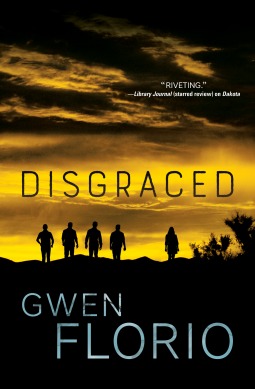
Disgraced by Gwen Florio. Midnight Ink | March 2016| 288 pages| ISBN: 9780738747668
RATING: ****/5*
Disgraced is the third Lola Wicks mystery [Montana, Dakota] by Gwen Florio. This time around, Lola’s off on a road trip to Yellowstone with her five-year-old daughter Maggie and stumbles upon quite the interesting story. Her co-worker and friend Jan asked her to drive her friend Pal home from the airport. Pal just returned from Afghanistan. At the airport, she witnesses a soldier’s suicide. No one wants to talk about it. What could possibly be the reason? Pal remains sullen, reserved and takes to heavy drinking. She just won’t discuss anything. While she just returned from war she’s still remarkably closed off. This young woman holds many secrets that will slowly be revealed.
Using her investigative journalism skills she digs into this immediately. It involves a group of friends from a local Native American reservation who just returned home from Afghanistan. Until she moved to Montana, Lola worked as a foreign correspondent. She’s familiar with Afghanistan. There’s not much about the suicide in the local paper although Lola notices some connected stories—another soldier killed while on duty. She notes to herself that in most places this many casualties and ruined lives would spark further questioning—“But this was the rural West, with its staunch and unquestioning patriotism.” Author Gwen Florio always excels with establishing sense of place. She writes: “In fact, she thought, throw in a few flat-roofed mud houses, some flocks of shaggy, fat-bottomed Arabi sheep, and bearded men in pajama-like shalwar qamiz toting AK-47s, and Wyoming would look just like Afghanistan—a fact not inclined to endear the state to her.” You can almost feel the sand in your teeth.
Florio writes from own experience as an international war correspondent and someone who relocated from an Eastern city to a less-inhabited state in the West. She knows the journalism business so when Lola pitches this story to an online publication, Florio writes: “She’d have blown her first and almost certainly her last chance to write for one of the few organizations that paid freelancers real money for serious pieces.” Ah, journalism. Such a fickle but necessary professional field. No one goes into it for the money. It’s about truth, providing information and highlighting the fascinating aspects of our culture.
“The war in Afghanistan wasn’t noted for big body counts. But other things were just as insidious. The constant twanging threat that each new footstep could be the one that tripped a mine, that each madly beeping Toyota pickup could be the one that bore a bomb, that each new face could be that of a potential friend—or killer. And the faces themselves, gaunt with hunger and desperation and resentment.”
Although Disgraced deals with serious subject matter, I chuckled at Lola in her new role as mother—“she never though of herself as anyone’s caretaker.” It was something I wasn’t sure I wanted to happen when I read the two earlier books. I appreciated Lola’s single-woman/ independent status. But the bribing her daughter and inability to answer certain questions and having this smarty pants five-year-old along for the ride provides needed levity. And Lola does as Lola wants, child or not. Lola Wicks is my favorite fictional feminist journalist. She remains unmarried to Charlie, her boyfriend and Maggie’s father. She’s brave, outspoken and extremely independent. That’s why this potential story involving soldiers returning from Afghanistan appeals to Lola.
I will always read this series. One day I will visit Gwen Florio and we will ride horses amid the beautiful landscape. Read my interview with Gwen here.
–review by Amy Steele
FTC Disclosure: I received this book for review from Midnight Ink.

purchase at Amazon: Disgraced (A Lola Wicks Mystery)

purchase at Amazon: Montana

purchase at Amazon: Dakota

Share this:

book review: Terrible Virtue
Posted by Amy Steele in Books on March 15, 2016
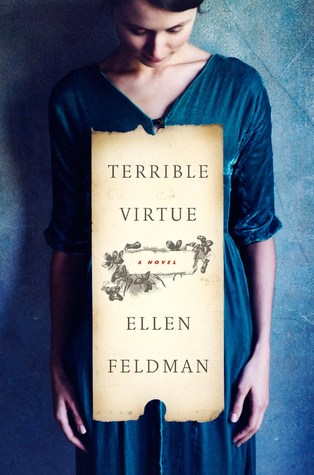
Terrible Virtue by Ellen Feldman. Harper| March 22, 2016| 272 pages | $25.99| ISBN: ISBN: 9780062407559
RATING: ****/5*
“It wasn’t enough to teach a handful of desperate women specific methods. I needed to overthrow archaic laws, reshape public opinion, and enlighten, or at least outsmart, the men in power who were determined to keep us in chains. But how? Should I break the laws in order to win judgments in the courts or lobby legislators to write new laws? Should the issue be free speech or women’s rights or public health, which was just beginning to garner attention?”
How infuriating that there’s no Equal Rights Amendment and abortion and women’s health remains under attack almost as much now as in the early 1900s! Terrible Virtue is the perfect novel to read for Women’s History Month. Written like an autobiography in first-person and then commentary/testimonials from various people in her life—her husband, lawyer, sister, son—at first jarring but by one-third of the way through the novel it worked. This is one engrossing novel.
A sign of quality historical fiction for me is when I want to know more. I want to read Margaret Sanger’s autobiography. I learned many things in this fictionalization but I have many questions. A historical fiction novel’s author must choose which aspects of the person’s life to focus on. If it veers in too many directions, it’s confusing. Author Ellen Feldman succeeds with Terrible Virtue by providing a colorful and detailed characterization of women’s rights and women’s health activist Margaret Sanger. She’s bold. She’s unapologetic. She’s a trailblazer. She’s an independent spirit.
Sanger was one of 11 children. Her mother died at age 50 from tuberculosis after 18 pregnancies in 22 years. Her alcoholic free-thinking father did not believe in birth control. Her upbringing led her to want more and to want to change the status quo for women. She chose to assist impoverished women in avoiding pregnancy. It became her mission. Although she and her sisters declared they’d never marry, Sanger married artist Bill Sanger. Together they join the socialist party. Of marriage to Bill she said: “Perhaps that was another reason I married Bill, to break silly rules and defy foolish prejudices. My marital status would have no effect on my nursing ability.” At the time Sanger is in nursing school. She gets pregnant and cannot complete the program however becomes a birth control advocate traveling the world to research various birth control methods. She started clinics where poor women could be treated. She and Bill had two children (one dies) but Margaret was accused of neglecting her children to focus on her career.
After a brief stint in the suburbs, the couple moved back to New York. “We told people we wanted to be at the heart of the radical movement and the world of art. That was true. Ideas and isms raced through the city faster than the flames that had whipped through the Triangle Shirtwaist Factory. On street corners, labor leaders and anarchists and socialists climbed up on soapboxes and made the ground tremble beneath their feet.”
Sanger insisted on an open marriage, perhaps more so than her husband. Many gossiped about her numerous affairs but as long as it didn’t interfere with her goals she just didn’t care. “Ours would be a different kind of union, a melding of two equals based on love, mutual respect, and total freedom. We were committed to sexual equality.”
She began talks for women about birth control and the connection between their bodies and minds. “I merely explained the facts of life. It’s shocking how few women are acquainted with them. They know about demanding husbands and agonizing deliveries and painful menstruation, but they understand little of the connection among those things.” Soon Anita Block of the Socialist Party asks Sanger to write a series of articles for the Call, the New York socialist daily which leads to her publication of a magazine. The Society for the Suppression of Vice began to monitor and censor Margaret. Her Captain Ahab was a man named Anthony Comstock, described as “a big brutal bully with a dirty little mind.” Sanger was arrested in 1914 for distributing a pro-contraception magazine, The Woman Rebel, through the mail. Then in 1916 she was arrested for running a clinic to disseminate the information. She’s arrested many more times. Sanger escapes to Europe but does serve some jail time once back in the states. She also finds ways around the regulations. A superb read!
–review by Amy Steele
FTC Disclosure: I received this book for review from Harper Collins.
Share this:

book review: Alligator Candy
Posted by Amy Steele in Books on March 13, 2016
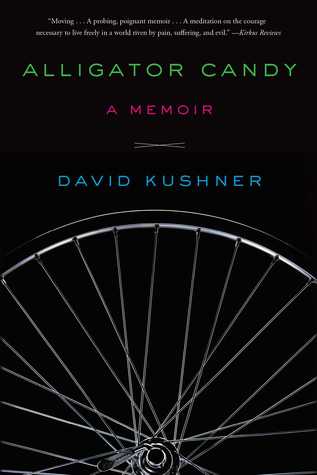
Alligator Candy: A Memoir by David Kushner. Simon & Schuster| March 15, 2016| 256 pages | $26.00| ISBN: 9781451682533
RATING: *****/5*
Two people I was once close to vanished into the marshy expanses and dark creature-infested waters of Florida. My deadbeat daddy more or less disappeared after divorcing my mom when I was in elementary school in the mid-70s. Then my childhood friend was abducted on a walk while attending University of Florida at Gainesville in the late 80s. Case semi-solved but not definitively. Her body has never been found. Florida is the type of state where falling off the map isn’t that surprising. I’m not particularly a fan of the state. My intent isn’t to malign an entire state but it’s beyond argument that weird things go down in Florida.
“It was the early seventies. The Age of Aquarius had given way to the “Free to Be You and Me” generation. We were unbuckled and unrestrained, free from seat belts or helmets or meticulously organized playdates.”
David Kushner’s older brother Jon disappeared one day on a bike ride to get candy and two men savagely murdered him, sodomized him postmortem and mutilated his body. It’s a horrific event to happen in one’s family. Only four at the time, Kushner didn’t quite understand the full impact. He missed his brother but didn’t know the complete details. Now a journalist, he decided to revisit the case and provide a voice for and memory of his brother. Through compelling prose and devastating emotion this memoir potently addresses murder and its effect on the family.
For nearly 40 years, questions swirled in Kushner’s mind. When people ask Kushner how many siblings he has does he say one or two but one died? How does he assuage the guilt he feels that his brother was buying him candy that day? How many should’ve, could’ve, if onlys are there to answer for the Kushner family?
Both parents are quite remarkable. Gilbert Kushner is an anthropology professor and Lorraine Kushner taught Lamaze before it was hip and cool and everyone embraced the practice. Both remained politically and socially active. They moved to Tampa so Gilbert could take a professor position at University of South Florida. Of Tampa, Kushner notes: “But it didn’t take long after they arrived in Tampa to realize this wasn’t a city of liberal New Yorkers.” Au contraire. Quite a strange and conservative place.
After Jon’s death, they embraced the Kubler-Ross Death and Dying movement. Kushner writes: “But for my mother, the death and dying movement seemed like a natural extension of the social action she and my father had taken part in over their lives. The denial of death had created a kind of mass oppression, a culture of silence that left mourners feeling alienated and ill-equipped.”
In revisiting his brother’s case, Kushner reads through old newspapers and interviews detectives, school teachers and childhood friends. He talks with his brother Andy and details the experience when they both had to address a parole board for one of Jon’s murderers. He discusses as much as possible with his mother and reads through a journal she kept after Jon’s murder.
Everything’s changed since the 1970s and even 1980s. After Jon’s murder, there were tons of child abductions and Murders in the 70s and 80s -i Adam Walsh, which led to John Walsh hosting America’s Most Wanted and led to the establishment of the Center for Missing and Exploited Children. Now a parent, Kushner looks upon his brother’s death with a different perspective.
The passage of time, changes within our society to protect children from predators and Kushner’s personal and professional experiences ameliorates his ability to analyze, process and endure the details he couldn’t understand as a child. Divulging details about his family and Jon’s short life and brutal murder, Kushner composed an astonishing mediation on life, loss and family.
David Kushner is a Ferris Professor of Journalism at Princeton University. He’s a contributing editor of Rolling Stone [if only I could write for that publication; every music journalist’s dream]. His other books include Masters of Doom: How Two Guys Created an Empire and Transformed Pop Culture and How a Gang of Geeks Beat the Odds and Stormed Las Vegas.
–review by Amy Steele
FTC Disclosure: I received this book for review from Simon & Schuster.

Share this:

book review: We Love You, Charlie Freeman
Posted by Amy Steele in Books on March 9, 2016

We Love You, Charlie Freeman by Kaitlyn Greenidge. Algonquin| March 8, 2016| 326 pages | $25.95| ISBN: 978-1-61620-467-9
RATING: *****/5*
We Love You, Charlie Freeman stands out as a thoughtful and provocative novel which effectively and creatively winds together numerous subjects from coming-of-age, first love, adolescence, sisterhood, race, anthropology, history and family dynamics. In 1990, a family relocates from Dorchester, Massachusetts to the Berkshires to teach sign language to a chimpanzee at the Toneybee Institute for Great Ape Research.
Mainly Laurel, the mother, will work with Charlie, the chimpanzee. Both daughters– teenager Charlotte and 11-year-old Callie– know sign language and the entire family with live with Charlie as if he’s another member of the family, sort of a brother. That’s the intent. Charlotte and Callie went to a “black, deaf overnight camp in the backwoods of Maryland.” Charlotte surmises it was for the two to make friends. She notes: “In Dorchester, our constant signing, our bookish ways and bans from fast-food restaurants and booty music, assured that me and Callie were unpopular on the block.” Debut novelist Kaitlyn Greenidge grew up in Boston and accurately describes Dorchester, the Berkshires and race in Massachusetts. The family soon learns about the institute’s notorious reputation, insidious rumors and unusual history.
Greenidge rotates points-of-view between the family members as well as a black woman name Nymphadora with an unusual association with the institution in 1929. Nymphadora describes herself: “I am a thirty-six-year-old unmarried, orphaned Negro schoolteacher, in charge of a room full of impressionable young colored minds and every night, I sing a dirty nursery rhyme to help me go to sleep. It is enough to laugh, if I did not always feel like weeping.”
Nymphadora lives in the mostly black Spring City. Back then researcher Dr. Gardner hires Nymphadora as a model to sketch. He sketches her nude and asks her to pose in unusual style. One day Nymphadora comes across the sketches Dr. Gardner made but instead of her face they contain the face of one of the chimpanzees. Appalled and upset, Nymphadora takes one of the sketches with her and writes to Dr. Gardner. Attempts and fails to collect an explanation or apology. The layers to Dr. Gardner’s shocking studies highlight misconceptions and stereotypes about race. Greenridge writes beautifully about the relationship that develops between Nympahdora and Dr. Gardner. She’s naïve. She trusts him enough to expose herself fully to him. He takes advantage and embarrasses her as well as many others.
In her new high school, although she’s one of few black students, Charlotte enjoys being rather anonymous. She notes: “Here, in Courtland County, I had the benefit of being unknown. Back home in Dorchester, I had been with the same kids since kindergarten and they all remembered me as the know-it-all who got uppity and insulted everyone in a secret language she spoke with her hands.” Charlotte’s dealing with a crush at school on another black student named Adia Breitling who teaches her many things about black culture, its history, the music and provides her information about what’s rumored about the institute. Charlotte notes that according to the Breitlings: “Black people could love Joni Mitchell but still claim to hate white singers. According to them, these were the things black people did not do: eat mayonnaise; drink milk; listen to Elvis Presley; watch Westerns or Dynasty; read Time magazine; appreciate Jack London; know the lyrics to Kenny Rogers’s songs; suffer fools; enjoy the cold or any kind of winter.”
One day Charlotte even finds her mom breastfeeding Charlie which leads her to question the entire situation. It’s clearly upsetting and weird for her. She also comes across information about the experiments conducted on black people by the institute in the 1930s. She speaks out at a dinner with Ms. Julia Toneybee-Leroy one evening and throws everyone into a frenzy. I preferred and appreciated Charlotte’s point-of-view most of all and it might have been as effective if she told the Freeman’s story.
Immediately bonding with Charlie, Laurel carries him around like a baby. He’s instantly attached and rather protective of their relationship. He wants no one to come between him and Laurel. This position at the institute training Charlie could change everything for Laurel. She’s always insisted on using black sign language versus white. “She should have started signing white again, at least get a shot at the better jobs, but Laurel was stubborn. She truly believed that she could win people over to her side of things. They only had to see black sign language, she was certain, to understand that is was special.” And Laurel does in the end choose Charlie over everything and everyone.
Callie grows jealous that her sister has a new friend and that her mom spends most of her time with Charlie. She starts over-eating and gains lots of weight. Charles, the father—who teaches at the school Charlotte attends–begins to grow apart from Laurel, abhors the entire experiment and decides to move out. This once close-knit family feels increasingly strained and pushed by Charlie the chimpanzee and Laurel’s fervent devotion to him. Eventually everything implodes.
–review by Amy Steele
Kaitlyn Greenidge will be reading at Porter Square Books on Thursday, March 17, 2016.
FTC Disclosure: I received this book for review from Algonquin Books.
purchase at Amazon: We Love You, Charlie Freeman: A Novel

Share this:

STEELE INTERVIEWS: Illeana Douglas
Posted by Amy Steele in Books, Film, Interview, Women/ feminism on March 4, 2016
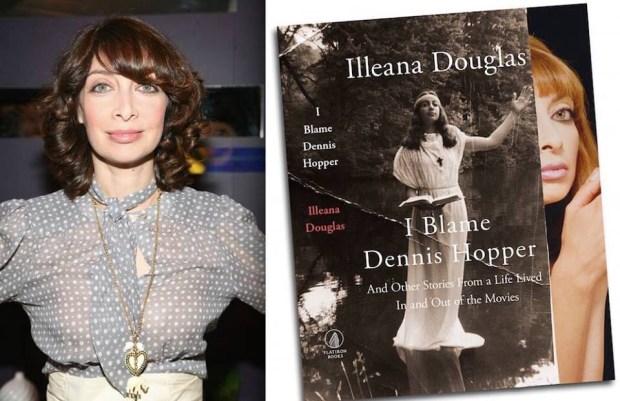
Do not expect to find gossipy stories in Illeana Douglas’s memoir I Blame Dennis Hopper: And Other Stories From a Life Lived In and Out of the Movies . Instead this reads as a genuine love story with film. Infused with passion and enthusiasm, actor/director/producer Illeana Douglas discusses her journey to become an independent voice in cinema. Illeana reveals disappointments and achievements with equal parts humor and honesty. She recounts her early and ongoing love for classic films and the art of film-making itself. She writes: “That’s how movies change us: in ways we cannot even remember. Those images of movies stay in our brain; those fragments become shards in our memories.” She recalls working with directors such as Gus Van Sant, Martin Scorsese and Allison Anders. Illeana has starred in a ton of films including Grace of My Heart, Picture Perfect, To Die For, Goodfellas, Wedding Bell Blues [check this one out. it’s so much fun], Ghost World, Return to Sender, She’s Funny That Way, Factory Girl, Happy, Texas, and Cape Fear. She directed Illeanarama and Easy to Assemble as well as several short films.
Not only did she study acting but she questioned every moment while on a film set and dissected various films to completely absorb and comprehend the film-making process. She voraciously read books about film. Illeana explains: “To me, a movie is like a roulette wheel with a series of problems where the numbers should be. The wonderful mystery of a movie is that you can never predict those problems, so fixing as many things beforehand as possible, such as answering questions in the script, is a good idea.”
I truly enjoyed this memoir. It provided so much insight and Illeana possesses such a passion for film and a respect for the entire process. She’s a great storyteller and she remembers details about everything. We met briefly when she screened Devil Talk at The Coolidge Corner Theatre in Brookline. Grace of My Heart is my all-time favorite film so I ask Illeana lots of questions about it.
Illeana took the time to answer some questions by email.
Amy Steele: Why did you decide to write this book now?
Illeana Douglas: We are in a period where-although movies are readily available to see-we have no context with which to talk about them. I was lucky that I had my grandfather Melvyn Douglas talking to me about working with Greta Garbo and Peter Sellers. Now that’s context! I always saw and wrote about movies-but it wasn’t until I started working with Turner Classic Movies that folks became aware of it. Yes, I’m an actress, and I do talk about my own career/life story in the book but the focus is that I am a fan of movies as much as being in them. These are 15 stories about movies or movie stars that changed my life.
Amy Steele: Why the title?
Illeana Douglas: It’s called I Blame Dennis Hopper because I wanted to tell a memoir through the movies because the movies have defined who I am. In 1969 my parents saw Easy Rider. After seeing the movie they rejected their middle class life style and became hippies. The title pays homage to him because it’s how the power of that film– Easy Rider— changed my destiny. I am an actress because of Dennis Hopper—because as a child I was raised on his philosophies—which were based on the film Easy Rider. Later on of course I met and worked with Dennis Hopper—in the movie Search and Destroy— and had my own profound experience which is what I write about in the book.
Amy Steele: You talk about films at the drive-in being a major part of your childhood and teen years. Is that how you developed such an interest in classic film and film-making in general?
Illeana Douglas: I learned about classic film I think because I was spending time with my grandfather and sitting across from Myrna Loy or Robert Anderson or Diane Baker at the dinner table. I knew they were in the movies. I wanted to be able to impress my grandfather so I started reading more about classic film so I would have something to say at the grown ups table! Then when he brought me to the set of Being There I started to get an interest in the behind the scenes making of films. He picked up on my eagerness to learn, and started sending me movie books.
Amy Steele: Your childhood did surprise me. The hippy factor and uncertainties. How did this influence your acting and shape you as a person?
Illeana Douglas: My childhood seemed like a movie. It was all out of my control. I became obsessed with movies—somehow I knew this was my way out. Movies were—when I was growing up—how you could define yourself. You looked to the movies. I wanted to be Liza Minelli, or Ruby Keeler, or Richard Dreyfuss. I looked up to these icons– still do. I knew if I could be in the movies I would be happy and that has been very true!
Amy Steele: Your grandfather [Melvyn Douglas] was a well-known and Academy-Award winning actor [Being There, Hud]. What kind of relationship did you have with him and how did he influence your decision to act? Did he know that you wanted to act and what kind of advice did he give you?
Illeana Douglas: He was of course my first mentor and my first fan. He believed in me. He gave me structure. He encouraged me to read and to learn. He said, “When you find someone to learn from don’t let go of that person”. I have tried to honor that. To respect the craft and the history of acting. He also pushed me to write. So writing has been my way of making him happy.
Amy Steele: Then your grandmother was the first democratic woman elected to Congress from California. What did you learn from her?
Illeana Douglas: She was so confident. She believed strongly in her principles-which were very liberal. Politically- it was her opinion or you were on the wrong side. She also had great taste in art, music, and antiques. These are all qualities I admire. She also loved to hear little poems or songs I had written. Pictures I had painted. She created a world that I very much wanted to be a part of.
Amy Steele: How has acting influenced your directing?
Illeana Douglas: I love acting-love it-but my heart lies in directing. Acting made me want to be a director. When I work with actors I obviously know through experience what they are going through. I have a certain empathy. They are not in control. My goal as a director is to tell the stories of emotional triumph.
Amy Steele: As with many industries (journalism for one), film is quite white-male dominated, what has been your greatest challenge as a woman in the industry?
Illeana Douglas: The greatest challenge is that an “actress” will always be treated with gender bias. It’s sad because I love acting and actresses but you will never get respect as an actress if you have opinions. Shirley Maclaine has said she’s played a hooker 8 times in movies. What does that tell you about being an actress in Hollywood?
Amy Steele: Hollywood also has issue with aging actresses. Seems once you’re over 40 you get the mom roles. What do you think could change that?
Illeana Douglas: I don’t think generally it will change. All you can do as a woman is write a great part for an older woman and try like hell to get it made. In the meantime there are other areas in show business you can work in and a lot of actresses—I’m one of them have branched out to writing and directing.
Amy Steele: As Grace of My Heart is my all-time favorite film, I adored that section and found out many things I didn’t know like that you and Allison wanted to make a film about Anne Sexton. Is there no possibility to make that film?
Illeana Douglas: We would love to collaborate on a film. I don’t think it will be Anne Sexton.
Amy Steele: Of you and Allison you said: “Allison and I both felt like female artists who didn’t quite fit in a mold.” I would think that’s a good thing. Can you explain how that shaped the film as well as your relationship with Allison?
Illeana Douglas: I wanted a collaboration with a female director in the way that male actors did with male directors. Allison is so knowledgeable about films. That was the surprise. We just clicked because we both loved movies—especially melodramas. We wanted Grace of My Heart to be a musical melodrama and I think we achieved that. We got that movie made, and I am awfully proud of it. We are friends to this day. I love her. I loved co-hosting with her on TCM and the Trailblazing Women series.
Amy Steele: You’ve worked with mostly male directors. How are things different working with a female director?
Illeana Douglas: I have actually worked with many female directors. Allison Anders, Nancy Savoca, Kathy Bates to name a few. I sought a collaboration with Allison Anders. She was the quintessential female director I wanted to work with because I felt she would bring out the best in me and she did. What I have found is that once you are on set everyone is very supportive– it’s getting to the set.
Getting a female-driven film set up and made that is the challenge. I know when I am directing a project—I get more personally involved in the hiring of women in all departments. There are more women physically on set. I have also worked with two female D.P.s [cinematographer/Director of Photography and I have found no sexism directed towards them once they are on set. Again it’s getting the job that is the problem.
Women directors tend to write their own material. It usually feels, as in the case of Grace of My Heart that the story is very personal and very real. Everything I have written for film and directed—my shorts etc. are all based on real experiences or feelings and I have turned them into a narrative. I’ve said this before and it’s widely quoted but I believe women shoot better sex scenes than male directors. They are just prettier to look at, and certainly more arousing. Some of the male depictions of sex scenes turn my stomach a little—they seem about power—not so much about love.
Amy Steele: As you worked in the Brill Building for one of your first jobs how cool was it to make a film about its history?
Illeana Douglas: I worked in the Brill Building in 1987 and continued to work there throughout the 90’s and became fascinated by its history. I’m a big music buff—so the idea that this was Tin Pan Alley fascinated me. I started to read a lot of books about it as my grandfather’s parents were actually song-writers themselves. There were so many stories of these great song-writing teams at the Brill Building. Of course the Carole King story resonated with me—as it did Allison Anders. She’s an expert on the girl groups. I was merely a fan. We would have loved to film in the actual Brill Building.I did film there with the movie Picture Perfect. The halls are square and have linoleum on them so you could move pianos around. I liked the idea of that much creativity happening in one building. We tried to create what it would have felt like to be a singer/songwriter in that era. One of my favorite scenes is writing a song with Howard (Eric Stoltz). It felt very organic. Of course it helped that Elvis Costello had written the song for us.
Amy Steele: You also stated that the 90s was the “height of independent film-making”—how and what has changed with independent film since then?
Illeana Douglas: We don’t have enough time! The 90s represented the best of that mid-range indie film—3 to 5 million dollars. Now you can either make a big budget movie that will have to have big big stars or make a movie for under a million. It might get into a festival and it will not be released in theaters, it will be VOD. We are making a lot of movies– not as many people are seeing them. Also it was filmed. Everything now is digital. Doesn’t have the warm quality of film.
Amy Steele: Why do you think you’re more of a comedic actress than a dramatic actress?
Illeana Douglas: I enjoy satire and irony. I think funny. Situations in life I find comic. I find life absurd—like a Fellini movie. I really enjoy making people laugh, it makes me happy.
Amy Steele: Illeanarama is so funny and so is Easy to Assemble –where did those ideas come from and what has doing a web series allowed you to do these days?
Illeana Douglas: I had a couple of pilots that I made that didn’t go anywhere and then I was approached by IKEA in 2007 to create some branded interstitials. Easy to Assemble came out of my feeling of wanting to do more comedic writing. I had made a number of shorts but my directing was always put on hold so I could act. Easy to Assemble which came out of Illeanarama was a way to act in projects I had written and to have a voice comedically. I had five years to write/produce/direct because of IKEA. I was able to learn how to produce, handle budgets work with actors and write scripts without the pressure of failing. I knew I would be writing and directing films and this was a fantastic training ground. We were pioneers and I will always be proud of that and thankful to IKEA.
Amy Steele: You stated: “I’m a bit of a rebel. It’s true. I challenge the system and I question authority.” I am the same way and it hasn’t helped me much. People don’t appreciate that. Has this been problematic or beneficial for you?
Illeana Douglas: I do not like unfairness, and when something is wrong I will speak up. Does it rub people the wrong way to be outspoken– yes it does. You also have to question authority because they want to corral everyone into the same thinking. I am for the individual. Women have to rebel and risk not being liked. There is no other option for a woman than to have the attitude of “I got this” but that rubs folks the wrong way.
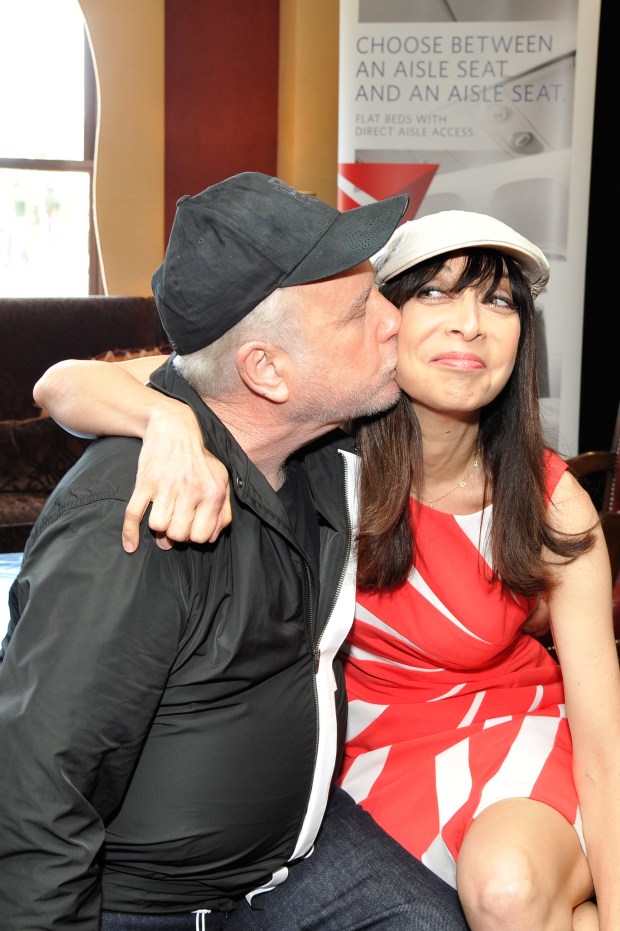
HOLLYWOOD, CA – APRIL 11: Actors Richard Dreyfuss (L) and Illeana Douglas attend a conversation with Richard Dreyfuss at Club TCM at the Hollywood Roosevelt Hotel during the 2014 TCM Classic Film Festival on April 11, 2014 in Hollywood, California. (Photo by John Sciulli/WireImage)
Amy Steele: Richard Dreyfuss seems to be the actor you’ve always admired. What do you like about him?
Illeana Douglas: Everything. He’s one of our finest amd most thoughtful actors. His films in the 70’s shaped a generation. There is no performance like Jaws or The Goodbye Girl. His energy and drive is palpable and yet underneath is strong vulnerability. And he’s DAMN funny. I like what I wrote about Richard Dreyfuss, “Was he cocky… yes… was he right? Always.”
Amy Steele: You developed a special relationship with Roddy McDowall. How much did he mean to you?
Illeana Douglas: Roddy got me into keeping journals and autograph books. He was a student of film history and was one the first people to talk about film preservation. He was gracious and kind and just the epitome of class. Everyone loved him, and he was also a very talented photographer. I never saw him complain or be sad about any blow that life dealt him. His picture is on my desk, and he is always in my thoughts.
Amy Steele: What do you like best about working at TCM?
Illeana Douglas: Working with Turner Classic Movies is a dream. There is not a person who works there who has an agenda other than to celebrate movies, movie makers and to put on a pedestal the giants of the cinema. I have great respect for Robert Osborne who gave the channel a face. They are also in tune with the fans. The fans make TCM a family, and I don’t know a TV channel today that actively thinks about pleasing the fans. I have had the opportunity to interview luminaries like Richard Dreyfuss, Jerry Lewis, Eva Marie Saint.
When I was going to write a book it aligned with what I was doing with TCM—which was shining a light on the importance of films. Our Trailblazing Women series set the agenda for female filmmakers and the contributions of female filmmakers going back to 1896. Many of the films we highlighted are now being recognized –Ida Lupino, Shirley Clarke, Barbara Loden– no one was talking about them– now their films, and the films of many other female filmmakers are being recognized.
Amy Steele: What inspires you?
Illeana Douglas: Amarcord means “to remember” I am the rememberer.
purchase at Amazon: I Blame Dennis Hopper: And Other Stories from a Life Lived In and Out of the Movies

Share this:

book review: The Other Woman
Posted by Amy Steele in Books on March 2, 2016
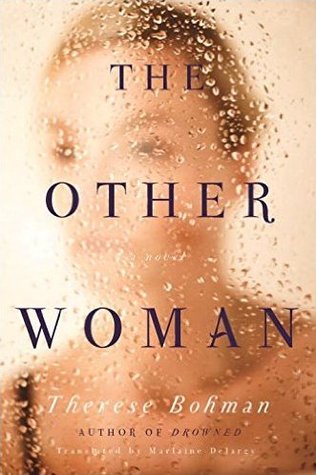
The Other Woman by Therese Bohman. Other Press| February 2016| 201 pages | $15.95| ISBN: 978-1-59051-742-7
RATING: *****/5*
This novel bursts with intellectual prowess. It’s witty, provocative and thoughtful about money, class, what it is to have less and desire more, to be educated and smart but not particularly suited to anything. Swedish author Therese Bohman examines societal expectations of what makes a complete life: a good job; a happy coupling; a nice place. All the things by which we define ourselves but realize the innate superficiality of it all. If we focus on the having and not the feeling and the experiencing then we lack integrity, depth and strength of character.
A young woman works at the bottom of a hospital hierarchy as a kitchen aide. Of interacting with her co-workers, she comments: “To them I am someone who has been to college, unlike them, and that creates a distance.” She meets and begins an affair with an older married doctor named Carl Malmberg. While there’s passion and connection, she knows that he thinks her beneath him and will always feel that way. While this independent woman remains resolute in her thoughts and convictions, the relationship causes her to doubt herself and her future goals.
“Perhaps I ought to become a teacher or a librarian, surely not everyone who follows those career paths can feel passionate about them, they have simply chosen a route and followed it through, that is how people live: they make a choice and stick to it, whether it is a matter of education and training or a job or a partner. I have never been able to do that. I always think that I have an uncompromising attitude to life in that respect, an attitude that makes things difficult to me, but which I cannot talk myself out of. I have the same attitude about everything: people, clothes, literature.”
In embracing and exploring her femininity, this young woman questions feminism. Understandable that many young women think that to be a feminist one cannot also be feminine. She seems at odds with her peers in their revolt of certain “feminine” things. By such conscious questioning she’s defining her own version of feminism as every woman should do. It’s a myth that’s been carried throughout the years. She notes: “Femininity was an intricate network of rules with a minimal amount of leeway, where everything was unspoken in the bargain.” Then she says this: “I am a failure as a feminist woman. I am a failure as a perfectly ordinary woman as well, I am too clever—I said that to Emelie once when I was drunk, she got angry with me, really angry, she looked at me as if I was a traitor.” She may think this but in living as she’s living and in desiring equality and certain standing she’s without doubt a feminist. When a woman questions herself and her feminism, she’s inherently a feminist.
She makes an intriguing new friend named Alex. She confides in her about the affair. She remarks: “Talking to her about it feels sexy too, I like Alex’s smile because it is hungry and inviting, not in terms of eroticism perhaps but in terms of life, or adventure . . .” In both the affair and this friendship she’s discovering herself and blooming. Perhaps re-thinking her present situation and contemplating a writer’s lifestyle.
This is the best novel I’ve read so far this year. As someone who has yet to find her path, I completely relate to this character. She’s somewhat stuck at the moment but not accepting and not giving up. Isn’t that why we often read novels? If not to escape, then to find kindred spirits. She notes: “I am an expert when it comes to being alone. I have always been alone, because no one else is like me.” I think to myself: me too. It’s not the standard, predictable novel about an affair. It’s twisty and existential. I dare not give away too many details.
–review by Amy Steele
FTC Disclosure: I received this book for review from Other Press.
Share this:

cookbook review: Protein Ninja
Posted by Amy Steele in Books, vegan/ vegetarian on February 29, 2016
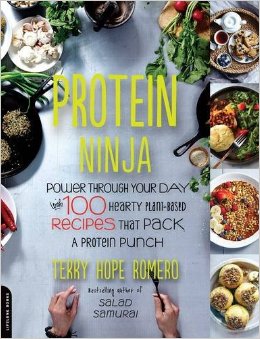
Protein Ninja by Terry Hope Romero. Da Capo Press| February 2016| 232 pages | $22.99| ISBN: 978-0-7382-1849-6
RATING: ***/5*
If you’re a vegan, you’ve definitely been asked where do you get your protein or do you get enough protein. Always questions on a vegan’s protein sources but never asking about vitamins, nutrients or fiber. But that’s another thing entirely.
Terry Hope Romero writes in the introduction: “These recipes are my current answer to the new question ‘How ELSE will I get my protein?’ in the midst of an overbooked life. Booked with fun and important stuff (usually), but still in control of someone who loves food, loves to cook, and would rather spend a little extra time in the kitchen one night for several days of better breakfasts, lunches, snacks, and even dinners.”
I’ll definitely make the delicious steamed seitan recipe [I use her Salad Samurai cookbook]. Also she includes lots of yummy burger recipes to try as well smoothie bowls which are quite popular these days and an easy way to boost your protein level. Romero uses various protein powders—brown rice protein powder, hemp protein powder pea protein powder– in her recipes, something I haven’t used or been able to afford. Pea and brown rice protein powder are less expensive, on Amazon, for $16.00 for a two pound container. Hemp protein power runs $16.00 for a 16 oz. container. Most recipes call for 1/4 cup or more of protein powder. And if protein powders aren’t included the recipes require other pricey items such as dates, cashews or hazelnuts.
There’s the Chocolate Avocado Smoothie Bowl and Strawberry ‘N’ Protein Chia Pudding. For baked goods I want to try Hempy Corn Bread. Instead of the super popular avocado toast why not try Chickpea Pesto Tomato Toast or Garam Masala Red Lentil Toast. Can’t have a vegan cookbook without burger recipes. Find recipes for Super Hemp Protein Beet Burgers, Sunny Oat Burgers and Green Goddess Burgers. Have you noticed that grain and noodle bowls are all the rage? Five-Spice Chickpea Peanut Noodle Bowl sounds appetizing. For dessert I’d make Black Bean Hemp Brownies or Hazelnut Chip Navy Blondies. So hit the gym and power up!
Protein Ninja is divided into these sections: Stealth Vegan Protein: a Protein Ninja Primer; The Protein Ninja Pantry; Ninja Basics; Unstoppable Smoothie Bowls and Granola; Stealthy Protein Pankcakes, Waffles, and Much Much More; The Protein Bakery Basket; Super Toast: Savory and Sweet; Protein-Packed Patties and Burgers; Better than Ever Burger Bowls; Grain and Noodle Bowls; Sweet Treats.
Terry Hope Romero is author of Salad Samurai, Vegan Eats World and co-author of Veganomicon–the best vegan cookbook and essential must-have for all vegans. She lives in Queens, New York.
FTC Disclosure: I received this for review from Da Capo Press.
–review by Amy Steele
purchase at Amazon: Protein Ninja: Power through Your Day with 100 Hearty Plant-Based Recipes that Pack a Protein Punch

Share this:

-
You are currently browsing the archives for the Books category.
About Me

covering mostly music and books. focus on alternative/indie and women in music, literature and the arts. feminist. vegan. mostly alternative, a bit bohemian. Masters in journalism from Boston University. BA from Simmons College.



Entertainment Realm by Amy Steele is licensed under a Creative Commons Attribution-Noncommercial-No Derivative Works 3.0 United States License.
Based on a work at entertainmentrealm.comCopyright © 2009. All writing, unless otherwise noted, by Amy Steele.
 ENTERTAINMENT REALM
You must be logged in to post a comment.