Archive for category Books
book review: A Certain Age
Posted by Amy Steele in Books on July 17, 2016
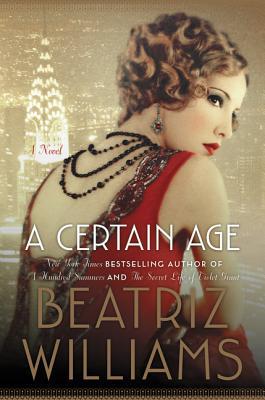
A Certain Age by Beatriz Williams. William Morrow| June 2016| 241 pages | $14.99| ISBN: 978-0-06-240353-7
RATING: 3.5/5*
My summer reading doesn’t vary all that much from my reading the rest of the year. Who are these summer readers? People who only read in the summer, on a beach, outside or on vacation? People who only want to engage in activities that do not require much thought? I read A Certain Age quickly. Now a few weeks later I cannot recall details without consulting the book’s jacket. I’m thinking that this then classifies as a beach read.
New Yorker Theresa Marshall falls in love with her much younger paramour Captain Octavian Rofrano who becomes enchanted with a young woman, Sophie Fortescue, engaged to his lover’s brother. Theresa won’t divorce her husband because she’s comfortable and they have an understanding. Sophie is one of new money. Author Beatriz Williams explains: “Money. They had loads of money now: exactly how much, Father wouldn’t say. Virginia had a better idea, but she wasn’t talking either. All Sophie knew was that her sister’s pocketbook contained five hundred dollars, a sum almost beyond the reach of her imagination a single year ago, and that these five hundred dazzling dollars represented no more than a crumb or two of the daily bread that was now theirs, thanks to the ingenious simplicity of Father’s pneumatic oxifying drill.”
It is that time when one married more often for money and position than love. The novel swings back and forth between the two women as the love triangle becomes increasingly more complicated. Theresa amuses with her attitude and general joie do vive. Author Williams writes: “Naturally I put the whole episode behind me and plunged into a relentless week of—well, of whatever it is I did, before the Boy and I became lovers. I visited friends, I read books, I swam in the ocean, I went to every damned cocktail party between West Hampton and Montauk Point. I believe I compete in a horse show—if memory serves—on my favorite mare, Tiptoe. We won second place over the jumps. The ribbon’s hanging in the stable somewhere.”
–review by Amy Steele
FTC Disclosure: I received this book for review from William Morrow.

Share this:

book review: Bukowksi in a Sundress
Posted by Amy Steele in Books on July 13, 2016
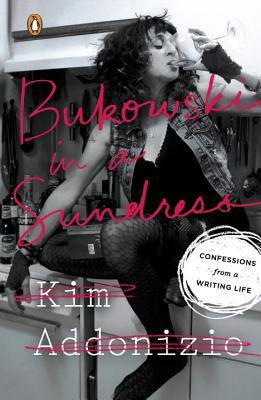
Bukowski in a Sundress by Kim Addonizio. Penguin Original| June 21, 2016| 205 pages | $16.00| ISBN: 978-0-14-312846-5
RATING: ****/5*
“How to Succeed in the Po Biz,” she writes: “Humans who are writers are a devastation. Writers plunder, excavate, and strip-mine without regard for the consequences to others. They suck their loved ones dry of vital fluids, revealing their deepest fears and yearnings. They expose the most precious secrets of their friends and families, then take all the credit and get all the applause.” –Kim Addonizio, “How to Succeed in Po Biz”
Reading this wonderful essay collection from poet/author Kim Addonizio I realized I’d not read any of her work and I’m remedying that tout suite. I want to read more modern poets and this essay collection suggests I’ll relate to much of her material. She titled this essay collection Bukowski in a Sundress because that’s how a judge for the National Book Critics Award once described her and it wasn’t a compliment. She explains: “Given the level of regard Bukowski enjoys in prestigious literary circles, it’s hard to believe this was meant as a compliment.” She’s bold and audacious in this memoir where she writes about a range of subjects including binge drinking, one-night stands, family caretaking, men, dating, writing and the artist life and all it entails. What more could one want in an essay collection? She’s smart, candid and a strong writer. Whether she’s writing about men in “Penis by Penis” or writing in “The Process,” Addonizio presents an honest account. If you’re over 40 and dating you’ll particularly appreciate this essay collection. If you’re a writer you’ll appreciate Addonizio’s dexterous ability to express herself. In “Plan B,” she writes: “I find it’s important to have a plan, to keep some sense of control, some belief that even if there’s no order to the universe, even if it’s all chaos and darkness, you can navigate your way through it with some existential dignity.” In the essay “The Process,” she offers thoughtful advice including this beautifully worded gem: “Have an uncomfortable mind; be strange. Be disturbed: by what is happening on the planet, and to it; by the cruelty and stupidity humanity is capable of.; by the unbearable beauty of certain music, and the mysteries and failures of love, and the brief, confusing, exhilarating hour of your own life.”
–review by Amy Steele
FTC Disclosure: I received this book for review from Penguin.
Share this:

book review: The Sun in Your Eyes
Posted by Amy Steele in Books on July 8, 2016
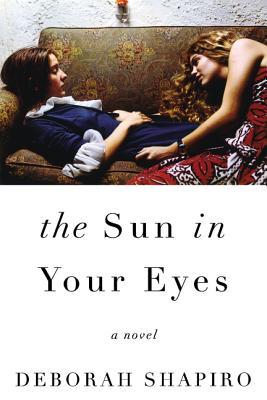
<em>The Sun in Your Eyes</em> by Deborah Shapiro. William Morrow| June 28, 2016| 279 pages | $25.99| ISBN: 9780062435583
<strong>RATING: *****/5*</strong>
There’s that saying that you can’t tell a book by its cover. Book covers visually connect a potential reader to the book. The cover image makes you wonder what the book will be about. A beautiful, cool book cover sets expectations. On the cover of The Sun in Your Eyes is a photo of two women with a definite 70s rocker chic. What’s going on between these two women? It’s a 1974 photograph by William Eggleston and drew me right in. I’d also just seen the photo in the documentary Big Star: Nothing Can Hurt Me which features this photo. The blonde was Alex Chilton’s girlfriend.
In this novel, two former friends reconnect to take a road trip. In college, Vivian Feld met Lee Parrish—the daughter of famed singer/songwriter Jesse Parrish, who died when Lee was four years-old as well as model-turned-fashion designer Linda West. Vivian didn’t really know anything about Jesse Parrish but their other roommate Andy quickly introduced her to his music. Author Deborah Shapiro provides poignant, visceral descriptions of Jesse’s music: “Melancholy strumming of an acoustic guitar and a voice: boyish and bell-like but one that easily slipped into a gritty, growling lower register, occasionally within the same phrasing.” Then there’s Lee’s fascinating and successful mother Linda West. Shapiro writes: “Linda’s candor and freedom, the space she luxuriously floated in, amazed me. My own parents seemed so constrained in comparison. They had done such an excellent job shielding from me their inner lives that I had naturally concluded they didn’t have very rich or complicated ones.”
During college, Lee introduces Vivian to an impressively rock star lifestyle. More than a decade later when Lee contacts Vivian she’s married to Andy. Lee is in search of some unpublished music. “The tapes. The last, lost tapes of Jesse Parrish. One of the mysteries attendant to her father’s puzzling and premature death, only enhancing his cult status. The legend that illuminated Lee and enshrouded her.” This might be what it’s like to be Frances Bean Cobain, connected to the genius musician father you never particularly knew. Lee struggles with depression, identity and finding her independence. To these topics I could particularly relate even if I didn’t have a famous parent. At one point Lee states: “It sucks when you’ve aged out of the time when it’s still socially acceptable not to have things figured out. And you haven’t yet reached the age when it’s socially acceptable that whatever you thought you had figured out starts to unravel.” Exactly. Such truth. Not everyone knows what they want to do with their lives. Not everyone figures everything out or follow a linear path.
Of the two women I could most related to Lee. While I appreciated the women’s connection, Vivian’s relationship with Andy and her TV writing career didn’t particularly interest me. Shapiro delves into the women’s college friendship and its connection to the present. She offers insight, detail and vivid descriptions that allow the reader to understand each woman, their bond and reliance upon one another. Women’s bonds often become broken due to relationships with men (or marriage and families). To this many women (and likely men) will relate. Vivian’s relationship and later marriage to Andy created a rift between the friends. The road trip allows the women to examine their friendship and determine whether or not they should rekindle their friendship, however tumultuous it may have been at times. Jealousy and differing goals certainly pushed and pulled at its core. Glowing descriptions and striking writing comparable to Lionel Shriver propel the story. It’s witty and observant and poignant. This novel swirls and engulfs you like a good song. If you are a music fan or you are a GenXer you’ll likely truly enjoy this novel as I did.
–review by Amy Steele
<em>FTC Disclosure: I received this book for review from William Morrow. </em>
Share this:

best books of 2016 so far
Posted by Amy Steele in Books on June 28, 2016
Best Books of 2016 so far. I read a lot of historical fiction and memoir so not surprisingly that’s mostly what makes my list. These are listed more or less in the order read.
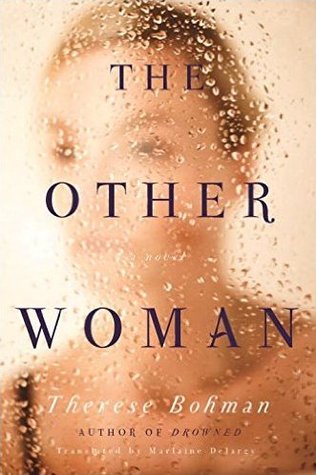
The Other Woman by Therese Bohman [Other Press]
–from my review: This novel bursts with intellectual prowess. It’s witty, provocative and thoughtful about money, class, what it is to have less and desire more, to be educated and smart but not particularly suited to anything. Swedish author Therese Bohman examines societal expectations of what makes a complete life: a good job; a happy coupling; a nice place. All the things by which we define ourselves but realize the innate superficiality of it all.
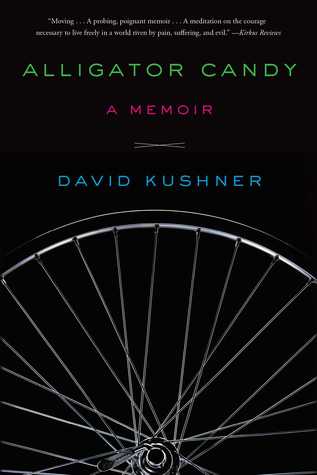
Alligator Candy: a memoir by David Kushner [Simon & Schuster]
—Through compelling prose and devastating emotion this memoir potently addresses murder and its effect on the family. review.
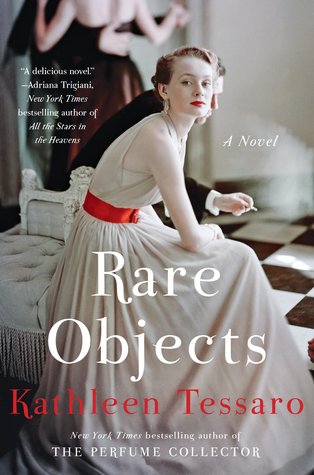
Rare Objects by Kathleen Tessaro [Harper]
–Author Kathleen Tessaro adeptly describes both the immigrant North End and wealthy mansions with vivid detail. Superb writing and research merge to tell this wonderful story. Rare Objects is a page-turner about class, friendship and the things and people we value most. full review.
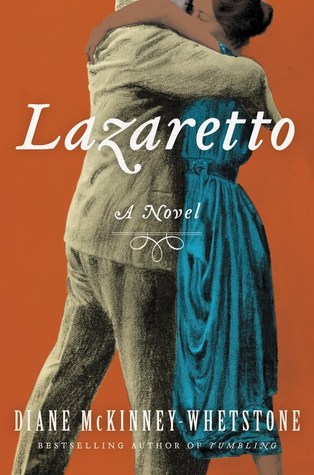
Lazaretto by Diane McKinney-Whetstone [Harper]
–Set in post-Civil War Philadelphia, this historical novel beautifully explores race, class, gender and family. complete review.
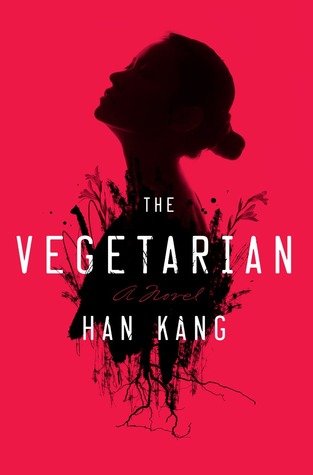
The Vegetarian by Kang Han [Hogarth]
—The Man Booker International Prize 2016 Winner . It’s dark and suspenseful. Entirely original and engrossing. I’ve been a vegan for nearly 10 years and am not too thin. I stopped eating red meat at 12 and everything but fish at 18. So the being deprived and malnourished because she’s not eating meat is bothering me a tad.
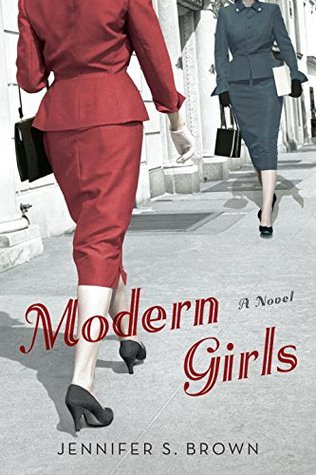
Modern Girls by Jennifer Brown
Clear your schedule and make a big pitcher of iced tea. Once you start this wonderful, detailed novel you’ll want to read straight through. review.

We Love You, Charlie Freeman by Kaitlyn Greenidge
—We Love You, Charlie Freeman stands out as a thoughtful and provocative novel which effectively and creatively winds together numerous subjects from coming-of-age, first love, adolescence, sisterhood, race, anthropology, history and family dynamics. complete review.
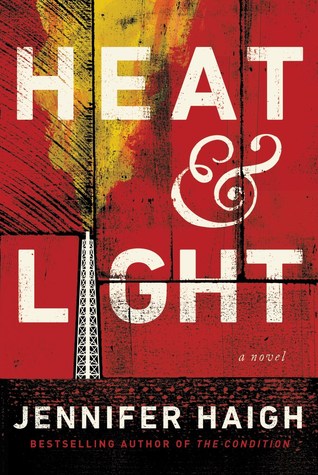
Heat & Light by Jennifer Haigh [Ecco]
—At turns fascinating, sad, infuriating, provocative and authentic, Heat & Light pulls in the reader from the jump. This well-researched, impressive novel exposes many angles of fracking. In order to capture this present day dilemma, Haigh effectively dips into the past with the Three Mile Island disaster as well as coaling. The novel generously addresses an important hot-button topic with sharp prose and a stellar cast of characters as well as an intriguing story-line. complete review.
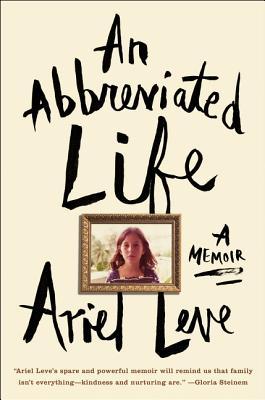
An Abbreviated Life: a memoir by Ariel Leve [Harper]
–stunning memoir about an adult daughter coming to terms with her childhood and relationship [or lack of] with her mother..
The Sun in Your Eyes by Deborah Shapiro [William Morrow]
–from my review: Shapiro delves into the women’s college friendship and its connection to the present. She offers insight, detail and vivid descriptions that allow the reader to understand each woman, their bond and reliance upon one another. Women’s bonds often become broken due to relationships with men (or marriage and families). To this many women (and likely men) will relate. Vivian’s relationship and later marriage to Andy created a rift between the friends. The road trip allows the women to examine their friendship and determine whether or not they should rekindle their friendship, however tumultuous it may have been at times. Jealousy and differing goals certainly pushed and pulled at its core.
Share this:

book review: Lacombe, Lucien (the screenplay)
Posted by Amy Steele in Books, Film on June 17, 2016
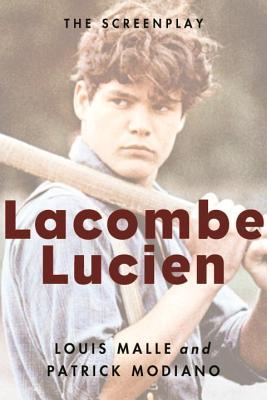
Lacombe Lucien: the screenplay by Louis Malle and Patrick Modiano. Other Press| May 2016| 160 pages | $14.95| ISBN: 978-159051-765-9
RATING: ****/5*
I adore books and film but I don’t often read screenplays. Lacombe Lucien is a film about the evils at play among French Nazi collaborators during WWII. It’s an early work by Nobel Prize winner Patrick Modiano and director/screenwriter Louis Malle. Apparently the film was quite controversial at its release as it depicted the dark underside of war, showing some French nationals doing despicable things to other French nationals. It’s harsh and raw.
Lucien Lacombe, a poor boy in Nazi occupied France, becomes involved with Fascist collaborators who join the Gestapo and inform on their fellow countrymen in horrific ways. There’s torture, murder, imprisonment. Lucien wanted to join the Resistance but his teacher rejected him. He told him he was too young. He added: “And anyway, this is serious business. It’s no lark, Lucien, like going out and poaching . . . . It’s like being in the army, you know. . . .” So Lucien joins up with the bad guys. He carried out small tasks for the Gestapo. This makes the young man feel powerful and indomitable. He’s rather content with the brusque lifestyle and its payouts until he falls for a Jewish girl named France. Will Lucien betray her and her family?
There are some callous remarks about Jewish people. Jean-Bernard: “There are some Jewish girls who are incredibly beautiful. . . . Compared to them, other women look like mares. . . . (Turning to Lucien) That’s right, old boy: mares. . . . I had a Jewish fiancée once, some time back. . . . Incredibly stacked, and incredibly wealthy. . . .” Marie: “Dirty Jew! . . . They all have the syph! . . . Do you hear that? . . . She’s going to give you a case of syph!” Then France herself, likely echoing the sentiment of those persecuted at that time: “Lucien. . . I’m so tired. I can’t stand it anymore. . . .I’m so tired of being a Jew. . . .”
Reading the screenplay definitely makes me want to watch the film. Seeing the film will add vividness. I need to see these characters interacting. The arch in which Lucien and France fall in love seems incredibly quick although I cannot judge without seeing the actors chemistry.
–review by Amy Steele
FTC Disclosure: I received this book for review from Other Press.
Share this:

book review: A Mind of Your Own
Posted by Amy Steele in Books on June 16, 2016
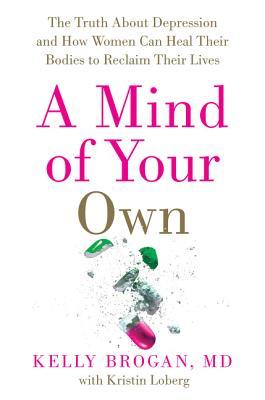
A Mind of Your Own: The Truth About Depression and How Women Can Heal Their Bodies to Reclaim Their Lives by Kelly Brogan, MD. Harper Wave| March 2016| 352 pages | $26.99| ISBN: 9780062405579
RATING: ****/5*
“We are engaged in lifestyles that are not compatible with what our genome has evolved over millions of years to expect. We eat a poor diet, harbor too much stress, lack sufficient physical movement, deprive ourselves of natural sunlight, expose ourselves to environmental toxicants, and take too many pharmaceuticals.”
My psychiatrist at Mass General Hospital recommended this book. A colleague recommended it to her. At my last visit she still hadn’t read it so we couldn’t discuss it. However we have discussed the mind-body connection; that I do not want to be dependent on Klonipin or my current SSRI [I am tapering off Lexapro]; that I believe in homeopathic treatments and see an acupuncturist; that I do yoga and I am a vegan. Going into this book I felt I was doing lots of things right but I still am miserable and low functioning. I don’t take a lot of medications outside my daily psychiatric meds, vitamins and supplements. I listen to my body. I feel fairly connected. My psychiatrist said that there’s a disconnect between my level of education and my level of function. That’s not easy to hear. But I know that it’s likely the truth as I cannot find work and struggle to get paid for anything at which I feel I excel. Writing reviews for example.
This book isn’t without controversy. For one thing Kelly Brogan, MD is an anti-vaxxer. I’ve worked as a healthcare professional and get my flu shot every year and have done so for the past decade or longer. Dr. Brogan believes that mental illness is not a chemical imbalance but a symptom of imbalance in our body. It is NOT a disease. I only recently started thinking that mental illness was a disease and a disability because I attended DBSA Boston meetings and that’s what the majority of people at DBSA and NAMI believe. Many receive SSDI.
Dr. Brogan writes: “Depression is merely a symptom, a sign that something is off balance or ill in the body that needs to be remedied.” This is much more complicated to both comprehend and accept. For how many years have we been told that we have some sort of chemical imbalance in our brains and with the right medication we might be able to stabilize it? She adds: “[sic] there has never been a human study that successfully links low serotonin levels and depression. Imaging studies, blood and urine tests, post-mortem suicide assessments, and even animal research have never validated the link between neurotransmitter levels and depression. In other words, the serotonin theory of depression is a total myth that has been unjustly supported by the manipulation of data.”
She also states something that’s way easier to understand: “So many patients today who are being shepherded into the psychiatric medication mill are overdiagnosed, misdiagnosed, or mistreated.” If you are like me, you’ve been to quite a few psychiatrists who churn out the prescriptions – one pill to wake you up, one pill to make you sleep, one to calm you down. And for some people they can handle side-effects such as weight gain and cognitive impairment. Some even seem resigned that they will always have that extra weight because they will always be on medication. Then there are the psychiatrists who speak to you for two minutes and give you an out-of-left-field diagnosis. That’s their interpretation of the symptoms with which you present combined with your lifestyle. You could likely get a different diagnosis depending where you go and who you see. I speak from experience. Brogan explains that over time antidepressants lose their efficacy and can result in chronic and treatment-resistant depression. Instead of helping us, medications make us feel worse. Of course Big Pharma controls the medical industry. It’s all well and good to want to be treated holistically but few insurances cover that. A script for another drug? Absolutely. Transmagnetic Stimulation [TMS], acupuncture, light therapy and cranial stimulation? Not so fast. What’s in it for Big Pharma? How can pharmaceutical companies make money? That’s the bottom line.
What can you do? Dr. Brogan focuses on diet, exercise, sleep, eliminating environmental toxins and meditation. If you’ve read Moody Bitches by Julie Holland, M.D. and/or Your Health Destiny by Eva Selhub, M.D. [which I HIGHLY recommend] this is somewhat familiar territory. Everybody knows that we feel better after a great workout, a good night’s sleep or a big salad. Dr. Brogan believes that inflammation causes depression symptoms and to get rid of inflammation you should eliminate gluten, dairy, GMOs, artificial sugars, NSAIDs and antibiotics. She’s also not a fan of birth control, statins, acid-reflux medications, fluoride and vaccines. Take what you choose from this book. There are definitely some thoughtful and useful tips and explanations. Embracing the mind-body connection remains the best treatment. Of course when you’re completely unmotivated, anxiety-ridden or too tired to move it’s tough to hit the gym and make yourself a healthy meal.
In one chapter, Dr. Brogan explains the importance of quality food to fuel the body. She suggests not eating processed food and to eat whole foods. So consuming products with fewer ingredients and eating more produce, legumes and grains will make you feel much better. In another chapter Dr. Brogan explains the importance of meditation, sleep and exercise. On lack of sleep, she writes: “Otherwise balanced, rational women are rendered near psychotic by the trauma of insomnia and disrupted sleep cycles. Their bodies and minds have “forgotten” how to do it. It turns out that one of the many poorly elucidated lasting effects of antidepressants is their interference with normal sleep patterns.” There’s an entire chapter focused on detoxifying our environment. She discussed everything from tap water to cell phones to cleaning products to dust. Admittedly some of what she claims to do seems unrealistic for many. Who is dusting every single day or using a body brush four times a day (to stimulate the lymphatic system)? In the chapter on tests and supplements, Dr. Brogan suggests certain tests such as thyroid functioning, MTHFR (methylation), and various vitamin levels. To my psychiatrist’s credit [I switched to MGH Psychiatry for a reason], the phlebotomist withdrew about eight vials of blood so I could be tested for a bevy of things including MTHFR. As for supplements, Brogan writes: “Magnesium, zinc, iodine, and selenium are essential to the body’s functionality.” You can read details about these supplements as well as many others. And yes, that can get expensive and insurance does not yet cover supplements. In summation, much of your mental and physical health remains in your control. You need to ask questions, conduct research and remain vigilant. Listen to your body.
Before she received her MD from Weill Cornell Medical College, Dr. Kelly Brogan earned a B.S. in cognitive neuroscience at MIT. She’s board certified in psychiatry, psychosomatic medicine and integrative holistic medicine. This book contains a plentitude of valuable information which may or may not be successful for you and your mental illness. I take zinc, magnesium and a multi-vitamin but may consider adding other supplements. I also want to try to go gluten-free although I adore toast! Mental health might be that element I can control in order to realize my goals.
–review by Amy Steele
FTC Disclosure: I received this book for review from Harper Collins.


Share this:

book review: Rare Objects
Posted by Amy Steele in Books on May 31, 2016
Rare Objects: A Novel by Kathleen Tessaro. Harper| April 2016| 378 pages | $25.99| ISBN: 978-0-06-235754-0
RATING: *****/5*
Set in 1932 Depression-era Boston, this novel wonderfully sets the scene for first generation Irish immigrant Maeve Fanning who recently moved back from New York after some struggles and setbacks. She’s living with her widowed mother, a rather strict Irish Catholic. The young woman straddles between her cloistered upbringing and her true desires. She wants to be independent and not married and pregnant like many of her peers. Here’s a scene in the small apartment: “Next to that, displayed on the dresser shelves, were my mother’s most precious possessions: a photograph of Pope Pius XL, a picture of Charles Stewart Parnell of the Irish Nationalist Party, and in the center of this unlikely partnership, a small wooden crucifix. Below, my framed diploma from the Katharine Gibbs Secretarial School took up the entire shelf.”
While in New York, Maeve struggled to find her place and find her identity. She couldn’t find a secretarial position as expected and worked in an unsavory club as a taxi dancer. She felt: “My life was full of cracks, ever-widening gaps between the person I wanted to be and the person I was. When I first came to this city, they used to be small enough to laugh off or ignore. But over the past year they’d grown wider, deeper. I’d fallen in one again last night.” While institutionalized she meets an intriguing, troubled young woman who seems out of place and also remarkably similar in attitude. Both women wanted freedom and the ability to shun convention.
Back in Boston, the fiery redhead dyes her hair blonde, calls herself May and lands an assistant position at an antiques shop that caters to Boston’s wealthy elite. She’s working for a retired anthropology professor and a mysterious English archeologist who travels most of the time but corresponds with the young assistant in enigmatic, clue-filled letters. These moments in the shop working with these two brilliant and strange men fill pages with adventure, treasures and wit. Add to that Maeve’s adventures with the aristocracy and it’s an unforgettable, enchanting read.
While delivering a purchase to a wealthy family, she meets lovely socialite Diana Van der Laar who she recognizes as the same young woman she met in the hospital. Diana takes an interest in Maeve and introduces her to high society as well as some dangerous situations. The two become rather inseparable at parties and events, Maeve blending in among the Boston Brahmin. In the beginning it’s glamorous fun. But soon: “The Diana I knew was a hard-drinking, rebellious prankster who had practically blackmailed me into being her friend. But to the outside world she was an elegant, accomplished society beauty with admirable philanthropic ambitions.” Dark secrets and betrayal extend beyond that idyllic façade. Maeve finds herself caught up in the deceit until she gains confidence to realize what appears perfect may not be the life that she wants. However it’s this symbiotic relationship that she finds difficult to relinquish: “There was sanity in our madness together that I couldn’t find with anyone else. So I ended up walking away. I needed her, apparently more than she needed me. But it was her refusal to even acknowledge me, her complete and utter disregard, that wounded me the most.”
Author Kathleen Tessaro adeptly describes both the immigrant North End and wealthy mansions with vivid detail. Superb writing and research merge to tell this wonderful story. Rare Objects is a page-turner about class, friendship and the things and people we value most.
–review by Amy Steele
FTC Disclosure: I received this book for review from Harper Collins.
purchase at Amazon: Rare Objects: A Novel

Share this:

book review: Lazaretto
Posted by Amy Steele in Books on May 27, 2016
Lazaretto by Diane McKinney-Whetstone. Harper| April 2016| 352 pages | $26.99| ISBN: 9780062126962
RATING: *****/5*
“Sylvia flinched when Nevada said she was pleasing to the eye. She thought her smarts and her sincerity her best qualities, not her looks. She was oak-toned of complexion with a pouty mouth and polite nose and slender build. She had a wide smile that opened her lean face and rounded the severity of her cheekbones. She was often complimented on her smile. Still, she thought her appearance average; certainly didn’t think herself pretty like Nevada was pretty in a way that grabbed men by the collar and said keep your eyes peel on me Mister Sir.”
Set in post-Civil War Philadelphia, this historical fiction novel beautifully explores race, class, gender and family. At the novel’s start, a teen-aged Sylvia assists a young black woman named Meda give birth to a child fathered by her wealthy white employer. The man plans to take the infant away and forces Sylvia to lie to Meda that her newborn died. The event affects both women for the rest of their lives. Sylvia becomes consumed by her medical career while Meda takes care of two orphaned white boys as if they were her own. When the boys grow up and leave the area they maintain a strong bond with each other and with Meda.
Author Diane McKinney-Whetstone creates layered, intriguing characters with flaws, aspirations and strength. She expertly weaves the stories of several families throughout the novel. Sylvia’s friend Nevada isn’t as educated as Sylvia and lives in a rougher neighborhood fueled by booze and gambling. This allows for a stunning contrast with vivid scenes. These descriptions allow readers to understand characters and their temperament and attitude. Sylvia proves to be a dedicated nurse– “She’d get a rush at times when she’d conjure up a cure, often absent the doctor. She thought that marriage, keeping house, would hinder her ability to work; might curtail it completely.” –as well as a loyal friend. Sylvia absorbs her surroundings and effectively adapts as needed: “She called on her innate sense about people as she watched the mostly white people coming and going. They glanced at her as if they were glancing at a barrel, a cart, a post, some inanimate thing that did not breathe or think or feel.”
Sylvia decides to take a position at Philadelphia’s immigrant processing and quarantine station, Lazaretto. Of the new opportunity: “She thought the position beneath her abilities, she was a fully trained nurse after all, but the possibilities inherent in the position enthralled her. Since every ship hoping to enter the Port of Philadelphia had to be cleared through the Lazaretto during the summer months, she might see firsthand the exotic diseases she’d only read about. She would live there for months at a time. She especially welcomed that. The Lazaretto might prove an escape hatch from a conventional life.” When two staff members plan to marry on the compound, a discriminatory attack disrupts the weekend. People discover themselves confronting long-ignored truths, secrets and their place in the world with Lazaretto on lock-down. A superb read and one of the best novels I’ve read this year.
–review by Amy Steele
FTC Disclosure: I received this book for review from Harper Collins.
purchase at Amazon: Lazaretto: A Novel

Share this:

book review: A Perfect Life
Posted by Amy Steele in Books on May 24, 2016

A Perfect Life by Eileen Pollack. Ecco| May 2016| 375 pages | $26.99| ISBN: 9780062419170
RATING: ***/5*
I wanted to like this novel more than I did. Unfortunately there’s no such thing as clam chili at Legal Sea Foods or anywhere in New England. It’s not a thing. We eat New England clam chowder. This made me nearly stop reading early on. We drink frappes not frappés. Either include factual details or fabricate everything. McLean hospital isn’t spelled MacLean. That’s an egregious error on page 298. Sylvia Plath and Anne Sexton spent time there! Everyone knows about the Harvard Square pit and the vagabond kids that hang out there. Author Eileen Pollack also makes sure to mention the famed Citgo sign in Kenmore Square. I’m not proprietary. I’m a realist. If you’re writing about Cambridge, MIT and New England you need to know a few details.
Fortunately the science makes this novel interesting and kept me reading. The novel focuses on a hereditary neurological disease and a woman’s quest to discover the gene responsible for it so that she might help her own family. Using the search for a genetic marker for Huntington’s chorea as an inspiration, the novel focuses on Jane Weiss who lost her mother to Valentine’s disease. She and her sister have a 50/50 chance to get it. While Jane toils for answers, her sister Laurel travels the world partaking in one extreme adventure after another. She’s also part of a dance company. “But whenever I looked in a mirror, I saw my father’s humped nose. I was his daughter, after all. Or so the family myth had it. I was plain, clever, and ambitious, while my younger sister, Laurel, was blessed with our mother’s beauty and charm but doomed to die young.” Feminists will rejoice in reading about a female scientist; feminists might cringe at the personal storyline.
Pollack, who holds a bachelor’s in physics from Yale [as well as an MFA in fiction from the Iowa Writers’ Workshop], describes working in a lab quite effectively. She writes: “Vic sent our technicians to Star Market to buy rolls of Saran Wrap to mummify our gels, paper towels to wick them, toothpicks with which to transfer bacteria from one plate to the next. We ordered Seal-a-Meal bags from the company that made them for the Jolly Green Giant. Every six months, the labs on our floor held a Tupperware party, at which we badgered the hostess about whether her trays were resistant to formamide and whether or not they would buckle when autoclaved at 120 degrees.” The lab scenes show the strangeness, humor, drudgery and revelations. There’s this: “Achiro, our postdoc from Japan, was slicing mouse brains as thin as a butterfly’s wings and using chopsticks to mount the samples on glass slides.”
Years ago I worked in communications at a biotech company involved in the Human Genome Project. This novel takes place around that time in the late 90s. I’ve also worked in development and Pollack writes exceptional scenes about fundraising efforts. When the novel turns to more personal matters it falls short. Maybe the quest for a genetic marker isn’t enough to sell novels. There needs to be soap opera plot lines. A pregnancy from a one-night-stand and its implications, complications and philosophical implications grows tiresome. Focusing on the sisters and their approach to life knowing they might get a debilitating disease interested me more than any love story. If you want to read the most gorgeously written and riveting novel about science, read Allegra Goodman’s Intuition.
–review by Amy Steele
FTC Disclosure: I received this book for review from Ecco.
Share this:

book review: Labor of Love
Posted by Amy Steele in Books on May 22, 2016
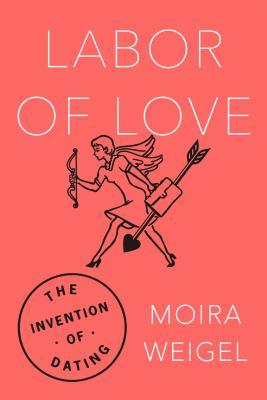
Labor of Love: The Invention of Dating by Moira Weigel. Farrar, Straus and Giroux| May 2016| 304 pages | $26.00| ISBN: 978-0-374-18253-3
RATING: ****/5*
Why do we date? How do we date? Who do we date? Where do we find dates? Dating can be exhausting. People can make dating a part-time job. You need to “put yourself out there” and make an “effort” to meet people. College provided a built-in social life. But if you weren’t ready to settle down then one found it increasingly more difficult to meet and pair off. Work and social life blur as technology makes it easier to feel connected to other people even in a virtual manner. In the past, dating meant marriage and a family. Today women want sex as much as men although women who remain single still garner negative judgment while men who remain single take on the cool bachelor persona.
Author Moira Weigel explores our quest for intimacy and understanding in this fascinating and illuminating read. Covering an immense time span from calling cards to going steady to hookup culture, Weigel answers these questions with thorough research and a keenly academic focus and tone. She writes: “Today, the average millennial spends no more than three years at any job, and more than 30 percent of the workforce is freelance. Hooking up gives you the steely heart you need to live with these odds. Like a degree in media studies, it prepares you for anything and nothing in particular.” She culls information from varied resources. She explores how feminism, civil rights, the HIV/AIDS epidemic and technological advances affected dating.
She writes of 1960s free love: “the sexual revolution did not take things too far. It did not take things far enough. It did not change gender roles and romantic relationships as dramatically as they would need to be changed in order to make everyone as free as the idealists promised. It tore down walls, but it did not build a new world.” In a story in the 1980s about video dating an author in Chicago Tribune stated the stark reality for women; it works “as long as you’re either (a) A gorgeous woman, under 35, with a glamorous career, or (b) An average-looking man, under 65, with an ordinary job.”
Attitudes haven’t changed since then. It’s just as difficult for women over 40 to find dates never mind finding the ideal match or a longtime companion. Online dating might seem easier but nothing compares to communicating with someone in-person, face-to-face. Texting and emailing can be misconstrued innumerable ways. Weigel explains present day dating: “The custom of dating developed under a particular order. It came from an era when life was supposed to divide cleanly into work and leisure. Even the word “date” comes from the idea that there is a point in time when you will meet up with a love interest. So too, does “going out” assume that there is a world of entertainment, separate from the world of home and work, for you to go out into.” Dating seems rather outdated in the Netflix and chill era. Smart writing and impeccable detail makes Weigel’s history of dating a provocative worthwhile read.
Author Moira Weigel writes about gender, media and culture. Her writing has appeared in The Guardian, The Nation and The New Republic. She’s a PhD candidate in comparative literature at Yale. Moira Weigel will be at Harvard Book Store on Monday, June 23, 2016 at 7pm.
–review by Amy Steele
FTC Disclosure: I received this book for review from Farrar, Straus and Giroux.
purchase at Amazon: Labor of Love: The Invention of Dating

Share this:

-
You are currently browsing the archives for the Books category.
About Me

covering mostly music and books. focus on alternative/indie and women in music, literature and the arts. feminist. vegan. mostly alternative, a bit bohemian. Masters in journalism from Boston University. BA from Simmons College.



Entertainment Realm by Amy Steele is licensed under a Creative Commons Attribution-Noncommercial-No Derivative Works 3.0 United States License.
Based on a work at entertainmentrealm.comCopyright © 2009. All writing, unless otherwise noted, by Amy Steele.
 ENTERTAINMENT REALM
You must be logged in to post a comment.