Posts Tagged historical fiction
book review: The Art of Unpacking Your LIfe
Posted by Amy Steele in Books on April 11, 2015
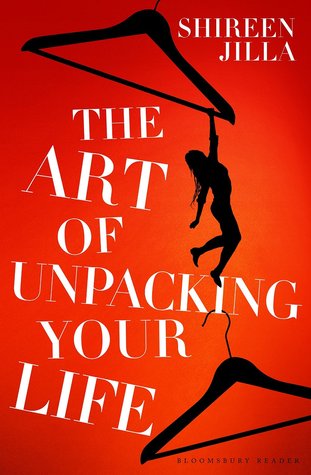
The Art of Unpacking Your Life By Shireen Jilla.
Bloomsbury Reader|March 2015| 316 pages| ISBN: 9781448215201
Rating: ****/5*
Connie invites her university friends on a trip to the Kalahari to celebrate her fortieth birthday. The story mostly centers on Connie. The other friends have side-stories. The novel is a sharp and rich depiction of college friends in later life. “They had been close at university, but their friendship had drifted as their lives had taken them in different directions.” Do they have the same bonds as they did at 20 that they have now not seeing each other daily? Over several days in a vast environment thousands of miles away from their comfort zone and homes, the group reveals secrets and encounters surprising challenges.
Connie’s four children [“No one had four children anymore.”] are in secondary school and her politician husband Julian continues to have affairs. His latest dalliance might break them up forever despite the family and image to uphold. For years after every affair, Connie stands by her man. Sara is a single, strong barrister who just completed a major case in London and prefers to keep men at arm’s length to avoid any emotional entanglements. “There was something fundamentally wrong with the men she dated. Too talkative, too vain, too stupid, too nasal, too egotistical.” Lizzie isn’t quite sure what to do personally or professionally. “Nothing measured up to their time together at Bristol University for Lizzie. She hadn’t moved on.” Lizzie “didn’t have a man, or own her own flat and her career was going nowhere.” The recently divorced Luke, Connie’s college boyfriend is on the trip. Is there still something between them? Should they have remained together all along? Matt shares the news that he and his American wife Katherine [“She was fragile and feminine compared with his English women friends.”] used a surrogate for the baby they’re expecting after years of IVF treatment. Dan isn’t happy in his relationship with a younger, not-too-serious boyfriend Alan. “The group never believed that Alan was good enough for Dan.”
Jilla writes splendidly about the bold wildlife and African landscape— “A wide, wild range of beautiful, even rare and endangered, species would be waking up in this safe haven, magically far away from the destructive nature of the human world. All because of her grandfather’s understanding and commitment.” It’s refreshing to read about adults who may still be figuring things out. The superb writing and multifaceted characters draw you in from the beginning and keep you riveted throughout the novel.
–review by Amy Steele
FTC Disclosure: I received this book for review from the publisher through NetGalley.
purchase at Amazon: The Art of Unpacking Your Life

Share this:

STEELE INTERVIEWS: author Laura Lane McNeal [Dollbaby]
Posted by Amy Steele in Books, Interview on September 11, 2014

Dollbaby by Laura Lane McNeal. Publisher: Pamela Dorman Books/Viking. Historical fiction. Hardcover. 337 pages.
“New Orleans was like that. A live-and-let-live attitude was ingrained into the fabric of the city; no one cared who you were or what you looked like—you had a place and everyone respected that.”
Laura Lane McNeal’s debut novel focuses on several generations of women looking out for one another and learning about each other in 1964 in New Orleans. Ibby grew up in Portland, Oregon. After her father dies in an accident, her mother drops her off at her grandmother Fannie’s grand old house in New Orleans. A bit of culture shock for this girl. Ibby expects her mother to return for her but it soon becomes clear her mother never planned to return for her daughter. Ibby settles in with Fannie and her black caretakers Queenie and Dollbaby. Queenie cooks and her daughter Dollbaby cleans and sews clothes for Fannie and many others. They also watch over Fannie as she’s prone to suffering breakdowns. Ibby’s never seen black people before moving in with her grandmother and she learns to adapt to this new, diverse environment as best she can. She comes to live with Fannie in 1964 as a wide-eyed twelve-year-old and by 1972 she’s seen and experienced enormous changes and grown into a smart, confident teenager.
“Ibby put her hand on the gate to Fannie’s house and wiped the sweet from her forehead. She remembered when her mother had dropped her off for the first time. The house had seemed so ominous and uninviting. It gave her a much different feeling now, like that of an old tattered blanket: it wasn’t much to look at, but it made you feel safe just the same.”
Fannie’s bottled up her past and every so often it bubbles over and causes her to need institutional tune-ups. Her long kept secrets slowly unfold among the walls of this old mansion with its locked rooms and mysterious history. Actively involved in civil rights protests along with her brother, Dollbaby envisions a brighter future for her daughter Birdelia. Ibby grows up under the care of these women. At first she’s unsure about her living situation but grows to care deeply for all these women and their unique perspectives on life’s challenges. Told from the perspectives of Dollbaby and Ibby—an insider and outsider point-of-view, it’s a wonderful, meticulously researched novel about creating your own family and support systems wherever you end up. McNeal includes details about eccentric and curious elements that make New Orleans such a vibrant, unusual city.
McNeal grew up in New Orleans where she received degrees in marketing and journalism. She ended up working in banking, later earned her MBA and worked in advertising and as a freelance writer. After Hurricane Katrina, McNeal decided to reinvent herself and focus on something she’d always wanted to do: writer fiction. For three months, eight hours a day while her son was at school she wrote the novel’s first draft. She work-shopped the novel at literary festivals with several editors. When her agent sent out the full novel to five or six publishing houses she received offers from all of them.
I recently spoke to Laura Lane McNeal from her home in New Orleans.
Amy Steele: I read that Hurricane Katrina inspired you to write a novel. How?
Laura Lane McNeal: I had gone to a small school in New Orleans that was very art oriented. They had this shelf of books of authors who’d gone to that school. I studied journalism but I always wanted to (write a book). Life got in the way. I got married, had kids. Katrina hit and the first time in our life we had mandatory evacuation. Someone called us and said your whole house is flooded, the whole city is flooded you can’t come back to the city. We drove up to North Carolina because my parents were there in a small town. We got an email from my kids’ school that schools were closed indefinitely and enroll in school wherever you are now. We stayed up there for five months.
My life had been ripped out from under me. My husband had to return to New Orleans because he’s a lawyer and was working with the oil companies. I didn’t know where he was half the time. I’m sitting in a foreign place watching the news of what’s going on down here. There’s talk of the rebuilding the city or that you can never go back. It was a strange feeling. I decided if I was going to start my life over I was going to do what I always wanted to do and that was writing fiction. I was going to write about New Orleans as my way of preserving the city basically. Once our house was redone, I started taking writing classes at Loyola. Everyone who lives in New Orleans knows it never changed. For hundreds of years. Well now everything had changed.

author Laura Lane McNeal
Amy Steele: Why did you want to write about the 60s in New Orleans?
Laura Lane McNeal: I decided to go back to the 60s which was a changing time in the United States to capture what was there. It was kind of my love song to the city. To put it down on paper for eternity.
Amy Steele: What kind of research did you do?
Laura Lane McNeal: I researched the novel for two years and I was taking writing workshops. I’d written another book, a political thriller, and that’s how I got my agent. I decided I better hurry up and write this novel.
Amy Steele: How did you get the idea for Dollbaby?
Laura Lane McNeal: I wanted to write a classic novel. Southern gothic. Gothic meaning that there’s some kind of eerie aspect to the story. I wanted to write in third-person I wanted to write a classic novel that wasn’t vampires or Dystopian that was based on human relationships. I went back and read a lot of classics from the 30s. It started out as a story with the old house and the cuckoo grandmother and secrets in locked rooms. I don’t know how I can up with the dolls. I think I had just read PD James’ book Children of Men where these women had dolls in baby carriages because they couldn’t have children of their own.
I just picked 1964 at random because I remember the 60s were a very turbulent time. LBJ was getting ready to sign the Civil rights act. It was Freedom Summer in Mississippi. There were sit-ins at the counters and there was a lot of tension. I decided it had to incorporate everything socially that was going on at the time. That’s when I decided I was going to write from two different perspectives. From Ibby’s perspective and from Dollbaby’s or it would’ve been one-sided if I hadn’t done that. I wanted to include the five women’s different views and that’s how I chose to write from two different views.
Amy Steele: The voices of Ibby and Dollbaby sound like who you imagine them to be. How did you develop their voices?
Laura Lane McNeal: When my editor bought this book she said ‘I hate the name Dollbaby. It sounds tawdry and it’s not marketable.’ But you come down here and go to the grocery store and it’s “here’s your change baby.” Whatcha doin’ doll? It’s normal everyday life. New Orleans is 70-80% black. It’s just a way of life. When my editor came down for a conference last September when she got off the airplane the first thing someone said to her was ‘welcome to New Orleans baby.’ There are lots of different accents down here. This has always been a port city. There’s so many different cultures here—what I call a gumbo culture. It’s just all mixed up and together. After Katrina everybody wanted to talk about what it was like growing up and I listened. When I was developing the characters I was trying to incorporate all those different voices.
Queenie is the status quo, not wanting things to change. Dollbaby and her brother are fighting for change. Birdelia is expecting change. Ibby is an outsider and not knowing what to make of it. Fannie you think she doesn’t know what’s going on but she does and she does what she can. And Ibby not knowing what was going on around her and learning about it along the way. That’s why I wanted to make the character that way. New Orleans is a live and let live city.
Amy Steele: It’s really women-focused. You have all these women taking care of each other with no men around. Queenie’s husband is around but not that much.
Laura Lane McNeal: You can find family where you least expect it. Really the heroine of the novel is Queenie because of everything she undertakes and goes through. She says “you always gotta dance even when there’s no music.” Even after Katrina everyone has their joie de vivre. The French settled here around 1722 and around 1750 instead of giving over this territory to Canada they did a secret treaty with Spain. The French didn’t even know they had taken over. When the Spanish came in they tried to put a ban on all the French. Said we’re outlawing dancing but the French were screw you we’re going to dance even if there isn’t any music. The point is you have to celebrate life no matter what comes your way.
Amy Steele: What do you hope people take away from the novel about New Orleans?
Laura Lane McNeal: A lot of times when people write about New Orleans it takes over the story. I tried to stay away from the clichés. I wanted to stay away from The French Quarter. The wanted me to write about the French Quarter so that’s why I wrote that scene where Fannie takes Ibby to get the perfume. New Orleans is basically a character in itself and I didn’t want it to overshadow the story. I wanted to tell a side of the city that people didn’t know. That’s why I had it set up that way.
if you enjoy my interviews, please consider making a contribution so I can keep going. Every dollar appreciated. Make a Donation button at right side of website.
purchase at Amazon: Dollbaby: A Novel


meet Laura at book reading/event:
Thursday, September 11 – 6:00 PM
San Francisco, CA
Liquake Benefit: Viva La France
Dolby Chadwick Gallery
210 Post St., Suite 205 San Francisco, CA 94108
Saturday September 13 – Noon
Baton Rouge, La
Barnes & Noble at LSU
100 Raphael Semmes, Baton Rouge, La
Tailgating Book Signing at Barnes & Noble LSU
Wednesday, September 17 – 7:00 PM
Houston, TX
Blue Willow Bookshop
14532 Memorial Drive
281/497-8675
Friday September 19 – 12:00-2:00 PM
New Orleans, LA
Tulane University Book Store
Talk and Signing
Wednesday, September 24 – 7:00 PM
New Orleans, LA
E. Cordes Book Club
Sunday, September 28 – 4:00-6:00 PM
New Orleans, LA
Pirates Alley Faulkner Society Juleps Party
Wednesday October 1 – 7:00 PM
Metairie, LA
Jefferson Parish Library
4747 West Napoleon, Metairie, LA
Talk and signing
(504) 889-8143
Thursday, October 9 – 7:00 PM
Sausalito, CA
Why There Are Words
Literary Reading Series
Saturday, October 18 – 10:00 AM-5:00 PM
New Orleans, LA
New Orleans Museum of Art Book Club Day in association with the Women’s National Book Association
1 Diboll Circle, New Orleans, LA (City Park)
Monday, October 20 – 7:00 PM
New Orleans, LA
Tricia Hall Book Club
Tuesday, October 21 – 6:00 PM
Destrehan, LA
St. Charles Parish Library in association with the Friends of the Library Author Program
Talk and Signing
Wednesday, October 22 – 7:00 PM
Portland, OR
Annie Bloom’s Books
7834 SW Capitol Hwy, Portland OR 97219
Thursday, October 23 – 11:00 AM
Metairie, LA
Metairie Literary Guild
Saturday, November 1 – 10:00 AM-5:00 PM
Baton Rouge, LA
Louisiana Book Festival
Wednesday, November 5 – Time TBD
New Orleans
Stewart Clan Book Club
Friday, November 14 – 7:00 PM
New Orleans, LA
Patron Party
New Orleans Book Festival
Saturday, November 15 – 10:00 AM-5:00 PM
New Orleans, LA
New Orleans Book Festival
City Park, New Orleans
Wednesday, November 19 – Noon
New Orleans, LA
Margo Phelps Book Club
Saturday November 22- Sunday November 23 – Time TBA
New Orleans, LA
Pirates Alley Faulkner Society
Words & Music Festival
Thursday, December 4 – 11:00 AM
New Orleans, LA
Le Petit Salon (Private)
Monday, December 8 – 1:15 PM
New Orleans, LA
Sally Suthon Book Club
Share this:

book review: The Miniaturist
Posted by Amy Steele in Books on August 29, 2014
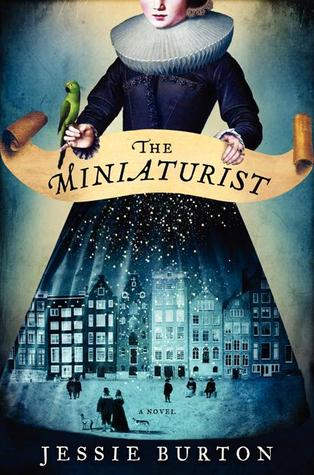
The Miniaturist by Jessie Burton. Publisher: ECCO (August 2014). Historical fiction. Hardcover. 416 pages.
Lots of buzz surrounding this novel: it was a BEA Book Buzz selection; an Indie Next Pick; A LibraryReads selection and a Barnes & Noble Discover Pick. Rights sold to 30 countries. Great work marketing this one. A gorgeous cover. A romantic, cool setting – 17th century Amsterdam. An intriguing concept—a young wife, shuttled in from the countryside to marry her 20-years-older merchant husband—begins commissioning a miniaturist to fill a cabinet-sized replica of her home her husband gave her as a wedding present.
The miniaturist designs items that Nella never requested and seem to predict a doomed future. It started to be creepy in a good way. Nella received items that she barely knew existed in the expansive home she inhabited. Then she received dolls depicting everyone in the household including her sister-in-law, the help and most tellingly her husband’s lover. A few months before Nella happened in on Johannes in flagrante delicto with his younger lover and quickly realized why the 38-year-old man decided to marry her. She felt betrayed and stuck.
“Someone has peered into Nella’s life and thrown her off-center. If these items aren’t sent in error, then the cradle is a mockery of her unvisited marriage bed and what’s beginning to feel like an eternal virginity. What sort of person would dare such impertinence? The dogs, so particular; the chairs; so exact; the cradle, so suggestive—it’s as though the miniaturist has a perfect, private view.”
Unfortunately there’s not enough about the miniaturist despite the novel’s title. I’d expected it all to be about that. I expected details about how a miniaturist designs and works. About the art of creating miniatures. Author Jessie Burton visited the Rijksmuseum in Amsterdam and saw Petronella Oortman’s elaborate dolls’ house filled with Chinese porcelain, oak, Italian marble, glass, oil paintings and tapestries. That’s what I wanted to know about. That’s the world I wanted this novel to allow me to enter.
When 18-year-old Nella Oortman arrives in Amsterdam to start her life as wife to renowned trader and merchant Johannes Brandt she doesn’t find the welcome or comforts she’d expected. She’s lonely and isolated. Her husband pays little attention to her. Sister-in-law Marin remains strict and secretive. Nella questions her decision to leave her family and small village yet had few options. How predictable and mundane for Marin to be wary of the young Nella and overly protective of her brother. Marin never married and she and her brother live together quite comfortably. Marin controls the household and now there’s this young woman setting foot in her territory.
“In Assendelft, there may have only been one town square, but at least the people sitting in it would listen to her. Here she is a puppet, a vessel for others to pour their speech. And it is not a man she has married, but a world.”
Of course there should be tension. Everything’s rather dark in this novel which is fine and has its place it just does not always work. Nella possesses little emotion for anything even her beloved parakeet she brought with her. There’s nothing to make the reader feel she truly cares for the bird. What drives Nella? Why is she doing what she’s doing? Is she really outraged by her husband’s behaviors or is she just a young woman who cannot yet understand? At that time she’s living in quite a religious society but she’s not a religious woman. Her sister-in-law’s the one who seems to be living her life based on religious doctrine. It’s infuriating because although Nella’s gained power in legal and societal terms by marrying a wealthy man respected in the community she allows her sister-in-law to continue to make the rules and force her to behave in ways that make Nella feel uncomfortable. Until many secrets reveal themselves and Nella and Marin must collaborate does Nella begin to gain her own voice and strength of character. By then it’s just too late to care.
The Miniaturist is a moralistic play on betrayal and survival and how one young woman conquers everything to come out intact on the other side. Her husband’s tried for sodomy. I skimmed many pages about his incarceration and trial. Johannes is a bore. There’s nothing striking about this character and that’s unfortunate. Her sister-in-law is pregnant with the black servant’s child and ends up committing suicide. While there’s some lovely writing and descriptions at parts, it lacks emotion, tension and intrigue. At the end I was left wanting more. The novel seems unfinished and it’s more than 400 pages.
RATING: ***/5
–review by Amy Steele
FTC Disclosure: I received this book for review from Harper Collins.
purchase at Amazon: The Miniaturist: A Novel

Jessie Burton will be at Harvard Book Store on Thursday, September 11 at 7pm.
Share this:

book review: Fallout
Posted by Amy Steele in Books on June 6, 2014
Fallout by Sadie Jones. Publisher: Harper (April 2014). Historical fiction. Hardcover. 416 pages. ISBN: 9780062292810.
This book. I fell in love with its characters and its premise immediately. A group of 20-somethings entangled in love affairs and the London theatre during the 1970s.
Fallout revolves around Luke Kanowski, a young man with a mother living in a mental institution and a a former Polish POW father who remained in England after the war. Both parents rely tremendously on Luke. Living in a rustic northern town, Luke escapes the familial strain and dead-end choices through a passion for theatre. He reads everything and remains updated on all theatrical goings on. One night he meets aspiring producer Paul Driscoll and theater student Leigh Radley who will influence his future in myriad ways.
Years later Luke decides to move to London to escape provincialism and pursue his dreams. Luke becomes housemates with Leigh and Paul. Leigh sustains an unrequited attraction for Luke but ends up settling with Paul. Working as a stage manager, Leigh manages to earn the most consistent income. Eventually the trio forms a theatre company where Luke falls for the dazzling married Nina Jacobs. She’s married to influential and manipulative producer Tony Moore. Luke and Nina start an affair but she’s reluctant to leave Tony despite his abusive nature.
When their theatre company fails, Luke moves out to his own place and one of his plays garners attention and a bidding war. He’s so attached to Nina that he wants her to star in it although she doesn’t possess the talent required for the role. Paul starts a new production company with a woman from New York. Drama ensues for everyone. Whether you know a ton about the theater or are an occasional theater-goer Fallout proves a fascinating read. Author Sadie Jones describes the challenges, the competiveness, the fleeting nature, insecurities and exhilarations for those involved.
Jones uses colorful imageries to craft this spectacular novel that captures the mindset and challenges these young men and women face. You’re taken into the wings, the dressing rooms, behind the sets and into the production stages—writing, directing and producing a play. Jones creates realistic and complex relationships these four people manage while navigating the competitive theatrical world. It’s a charming, clever novel in which you’ll become immensely engulfed.
RATING: *****/5
–review by Amy Steele
FTC Disclosure: I received this book for review from Harper Collins.
Share this:

book review: The Outcasts
Posted by Amy Steele in Books on January 11, 2014
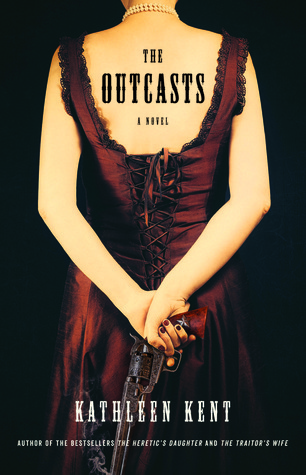
The Outcasts by Kathleen Kent. Publisher: Little, Brown (2013). Historical Fiction. Hardcover. 326 pages. ISBN 9780316206129.
Two stories intertwine on the Gulf Coast during the 19th Century. After she escapes a Texas brothel where she’d been held prisoner, Lucinda Carter travels south to meet her outlaw lover a merciless, violent man who has a plan to make them rich. At the same time Nate Cannon, a Texas policeman and two veteran rangers crisscross the state tracking a man who indiscriminately killed men, women and children who blocked his greedy intents in any manner.
The novel’s cover drew me in. Showing a woman’s back dressed in petticoat and pearls, holding a gun in her nail-polished hands. Just wonderful.
Nate’s a horse whisperer which adds a special quality to this Western. Author Kathleen Kent gives the reader this exemplary police officer– a particularly sensitive man who writes his wife frequent letters updating her on their quest. He cares deeply for horses and treats them well. He’s focused on getting the ruthless guy. As for Lucinda it’s hard not to feel some empathy toward her for her difficult past despite her poor choices. She’s clinging to a relationship with an awful, undeserving man. What does Lucinda see in her lover? He’s charming but a brutal, dishonest trickster. Eventually Lucinda and Nate’s paths cross. Lucinda hopes for a new life and Nate Cannon will stop at nothing to arrest this awful man before he hurts anyone else. Kent describes Texas and the plains quite beautifully. The Outcasts is an intriguing Western that gets quite bloody and horrific at times.
RATING: ***/5
–review by Amy Steele
FTC Disclosure: I received this book for review from Hachette Book Group.
Share this:

Bride of New France: book review
Posted by Amy Steele in Books on September 15, 2013

Bride of New France by Suzanne Desrochers. Publisher: W.W. Norton (2013). Historical Fiction. Paperback. 294 pages. ISBN: 9780143173380.
I’m pretty sure the gorgeous cover drew me to this novel. That and the Paris/ “New France” connection of the 17th century, something I’ve read little about. This title doesn’t suit it at all. The main character, a young strong-willed woman name Laure, doesn’t become a bride in Canada well until the final third of the novel. It’s hardly about that at all. I found the subject matter fascinating but the writing difficult perhaps too academic. Author Suzanne Desrochers says she based the novel on a thesis idea. She’s a PhD student. At times the novel dragged along. Clearly the author found her subject matter completely enthralling and couldn’t decide what to include and what to withhold in this fictional account of an 18-year-old orphan’s journey from Paris to the uncharted wilds north of Quebec.
At the time, the King of France wanted to keep men in Canada so shipped women over there and would reward those who bore children. Many men endured the three years required service in the harsh Canadian wilderness and jumped onto a boat back to France, others stayed when given their own land knowing they had nothing better to return to in their homeland. For the women they had no idea what to expect as the men were living on their own for such a long time. They’d become used to that lifestyle as well as seeking companionship with the local native American women, known as “savage women,” who unlike the French women would put up with almost anything from the Canadian men.
“Because most of the men only stay a short while in the colony before returning to France, there seems to be less concern for respecting superiors. There also seems to be little protection for women from foul-mouthed men like this fur trader. “
When Desrochers kept calling the Iroquois Indian (he’d been kidnapped by an Algonquin tribe as a child) who Laure ends up having an affair with ugly without providing a physical description of him it truly bothered me. She only said that he was uglier than Laure’s husband. Most of her descriptions were pretty decent up to that point so I was quite disappointed and almost stopped reading but I wanted to see how it ended. Laure found herself pregnant with the Indian’s daughter and forced to give her up to be raised by the Indian tribe. Lucky for her, the husband, who himself had been sleeping with Indian women all along, died en route home to see the birth of what he thought was his child.
Laure showed resilience throughout her tribulations though proved to be a mostly quiet, reflective character. The details about the orphaned women in Paris homes run by religious orders, comprising the novel’s first third, could be its own novel. The journey to Quebec, the second third, a harrowing trip at that time and finally dropping these women off in parts unknown and wedding them off to men they’d never met. What a nightmare! This isn’t the best historical fiction for its characters but for introducing readers to rare subject matter and the author deserves some credit for her efforts.
RATING: ***/5
–review by Amy Steele
FTC Disclosure: I received this book for review from W.W. Norton.

Share this:

book review: The Last Nude
Posted by Amy Steele in Books on January 22, 2012
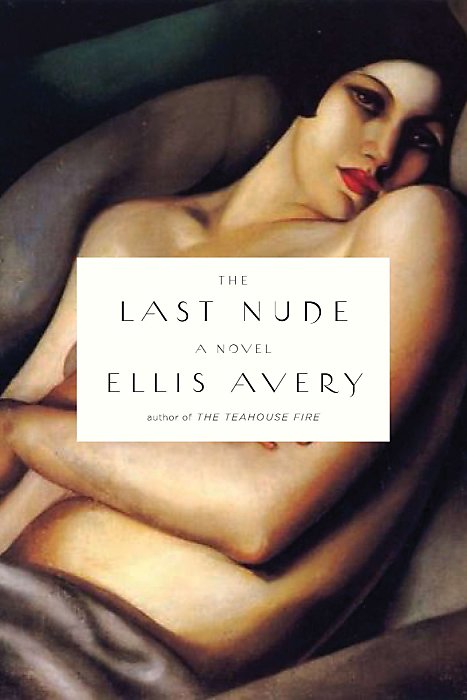
The Last Nude , by Ellis Avery. Publisher: Riverhead (January, 2011). Literary fiction. Hardcover, 320 pg.
The Last Nude transports the reader to 1920s Paris and the expat art world. It’s an impressive work of historical fiction as the place and the characters become so vivid and recognizable to the reader. This makes The Last Nude a book you are hesitant to put down. It’s immensely engrossing.
Above my desk I have a small framed print of Tamara de Lempicka’s “My Portrait,” in which she sits at the wheel of a bright green car in a gray hat, gray scarf and bright red lipstick. I also have “Saint Moritz”—a striking woman wearing a red and white turtleneck ski sweater. I’ve always been drawn to these art deco paintings. The colors, the attitude, the soft edges. All very appealing. So when I saw The Last Nude by Ellis Avery, I knew I had to read it. I wasn’t disappointed.
Avery’s descriptions of Paris are elegant and magical, yet also gritty. The reader should be enraptured by Paris. How can one not? It’s such an artistic, fashionable, beautiful city. I stayed in Paris for some time, many years ago and a novel as descriptive as this one brings everything right back to me in full color. It’s a true delight. Avery focuses on many ex-pats like Sylvia Beach, James Joyce, F. Scott Fitzgerald. Peripheral characters include the Seine and Sylvia Beach’s famed bookstore Shakespeare and Company.
The Last Nude imagines an affair between Tamara de Lempicka and one of her models– the one who sat for “The Dream” and “Beautiful Rafaela.” She’s a young woman of 17, recently arrived in Paris, naive to the ways of the art world and the excessiveness of the 1920s as well. Tamara seduces Rafaela and Rafaela falls quickly and intensely in love with Tamara. Of course artists can be selfish and cruel but Rafaela gives her whole heart before learning about Tamara’s shortcomings. This is a novel about the roaring, stylish 20s, art, survival, love and betrayal.
I marveled as I pulled the brown dress over my head. Sleek fashion plate, focused artist, resplendent lover, competent mother: I had seen four Tamaras in two days.
When Tamara finds Rafaela she’s turning tricks and surviving by any means necessary—in most cases trading her body for dinners, food, gifts. She’s a stunning young woman but also naïve and impressionable. She admires Tamara’s independence [or seemingly so because later we find out that Tamara, as most artists of the time, had a benefactor], talent and sexual freedom. Rafaela quickly becomes obsessed with Tamara and believes they’re in a mutually exclusive relationship. But it’s the twenties and Tamara is an artist. Who is Tamara really? Rafaela doesn’t find this out until later.
The Last Nude resonates with and enthusiastic first love and the reality of supporting oneself as an artist. In imagining the liaison between artist and muse, Ellis Avery crafts an engulfing novel. She makes life in the 1920s pop from the pages.

purchase at Amazon: The Last Nude

Share this:

About Me

covering mostly music and books. focus on alternative/indie and women in music, literature and the arts. feminist. vegan. mostly alternative, a bit bohemian. Masters in journalism from Boston University. BA from Simmons College.



Entertainment Realm by Amy Steele is licensed under a Creative Commons Attribution-Noncommercial-No Derivative Works 3.0 United States License.
Based on a work at entertainmentrealm.comCopyright © 2009. All writing, unless otherwise noted, by Amy Steele.
 ENTERTAINMENT REALM
You must be logged in to post a comment.