Posts Tagged book review by Amy Steele
book review: Recipes for Love and Murder
Posted by Amy Steele in Books on November 27, 2015

Recipes for Love and Murder by Sally Andrew. Ecco| November 2015| 432 pages | $26.99| ISBN: 9780062397669
RATING: ****/5*
“My mother gave me a love of cooking, but it was only when I discovered what bad company my husband was that I realized what good company food can be. Some might think food is too important to me, but let them think that. Without food, I would be very lonely.”
This book made me happy for two reasons: details bring readers right into Klein Karoo in South Africa and the characters pop from the pages. South Africa is one of the top three places I long to visit and I fear I’ll never get there. Reading novels set in South Africa allows me to travel in my mind and dreams.
Tannie Maria van Harten, a fifty-something widow, writes a recipe page for the Klein Karoo Gazette. She bakes pies and pastries and cooks stews and comfort food that everyone in town appreciates, particularly her colleagues at the newspaper. It’s clear that she keeps herself busy gardening, cooking, baking and writing. There’s that conception that those alone are lonely but loneliness and intimacy are two entirely different things. Many people, like Tannie, enjoy the solitary life. She’s convinced by her friend and editor Hattie Christie to write an advice column in which she doles out advice along with recipes. Tannie doesn’t believe she’s qualified as her late husband physically abused her. She decided that she’s finished with men.
A woman writes several letters about leaving her abusive husband and when someone murders this woman, Tannie feels responsible. She and determined journalist Jessie Mostert begin their own investigation. Tannie and Jessie become entangled in some dangerous situations and Tannie finds herself revisiting the abusive relationship with her own husband. A handsome police officer insists on providing Tannie with personal protection. While unsure about his attraction to her and still hurting from her awful marriage, as they spend more time together she realizes that she’s not completely opposed to another relationship.
While mostly light-hearted and amusing—particularly Tannie and the police officer’s budding relationship– author Sally Andrew includes domestic violence issues, fracking and a love triangle in this mystery. She spatters Afrikaans terms throughout [there’s a glossary at the end] which provides South African authenticity and a strong sense of place. While the novel might be a bit long and the plot forks off in too many directions, the engaging and warm female characters shine. If readers like Tannie Marie the planned series should be a popular read. It would be delightful to revisit.
FTC Disclosure: I received this book for review from Ecco.

Share this:

book review: Katherine Carlyle
Posted by Amy Steele in Books on November 6, 2015

<em>Katherine Carlyle</em> by Rupert Thompson. Other Press| October 2015| 304 pages| $16.95| ISBN: 9781590517383
<strong>RATING: *****/5*</strong>
“If I’m to pay proper attention, if this is to work, there’s no option but to disconnect, to simplify. From now on, life will register directly, like a tap on the shoulder or a kiss on the lips. It will be felt.”
Didn’t know what was sometimes happening and why but wanted to keep reading because of the writing quality. Rather haunting and definitely unusual. Katherine Carlyle was born through IVF. This haunts her throughout her life [“I tell him about my conception in a London hospital. I was an IVF baby. Does he know what that means? He nods. I tell him I was frozen. I was stored for eight years before I was finally implanted in my mother. I was put together– formed– but then I had to wait in the cold, with no knowledge of how long that wait was likely to be, or whether it will ever end.”] and as a college freshman she decides she’s going to disappear in an attempt to come to terms with this. Katherine leaves Rome for Berlin as a stop point to her end point. She’s not merely going to disappear, she plans to travel to an intensely cold climate in an attempt to get close to her own frozen, isolated beginning. It’s tough to describe except to say it’s part mystery and part personal exploration. A strange story –in a good way– with gorgeous writing and an intriguing story-line.
<em>FTC Disclosure: I received this book for review from Other Press. </em>
Share this:

book review: The Art of Memoir
Posted by Amy Steele in Books on November 6, 2015
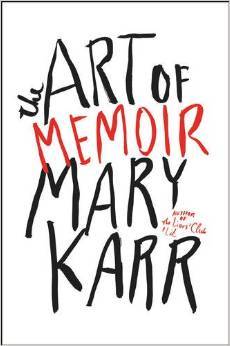
The Art of Memoir by Mary Karr. Harper.| September 2015| 256 pages | $24.99| ISBN: 9780062223067
RATING: ****/5*
If you ever wondered what it would be like to take a class on memoir writing or a class with Mary Karr, this book is for you. It’s based upon a class syllabus. I’ll admit I’ve yet to read LIT for some reason though I own a copy. I did immensely enjoy Cherry and The Liar’s Club. I also went to hear Karr speak and she’s wonderful. I imagine her being a thorough and thoughtful teacher.
The Art of Memoir reminds me of The Republic of Imagination by Azar Nafisi, who writes about three novels as they relate to America and the immigrant (and her immigrant experience)—Huckleberry Finn by Tom Sawyer, Babbitt by Sinclair Lewis and The Heart is a Lonely Hunter by Carson McCullers. The last is a favorite novel of mine. I’ve read Huckleberry Finn and have yet to read Babbitt. Karr discusses many memoirs which she teaches in class, some I’ve read, some I haven’t and many I’ve added to my to-be-read list. Karr provides an impressive required reading at the end. Some of Karr’s favorite memoirs include: Speak, Memory by Vladimir Nabokov [“Part of his singular skill—manifested in his voice—is translating philosophical ideas into physical or carnal metaphors; in this way he is not until Babel and Batuman. He’ll somehow smoosh ideas into unforgettable images.”] and Woman Warrior by Maxine Hong Kingston [“The two prongs of her massive talent mirror the two sides of the story’s conflict—her truth-hungry, feminist, Americanized self does battle with her mother’s repressive notions of Chinese ladylikeness and humility.”
She explains what makes each memoir special, what makes each stand-out and what makes each writer successful in writing memoir. It’s not a how-to-write book. Karr makes that quite clear. She writes: “No one elected me the boss of memoir. I speak for no one but myself. Every writer worth her salt is sui generic.” It’s a survey course in memoir writing. Here’s how Karr beautifully describes the heart of memoir, one’s memory: “Memory is a pinball in a machine—it messily ricochets around between image, idea, fragments of sense, stories you’ve heard. Then the machine goes tilt and snaps off. But most of the time, we keep memories packed away. I sometimes liken that moment of sudden unpacking to circus clowns pouring out of a miniature car trunk—how did so much fit into such a small space?” Karr includes an important chapter on why NOT to write a memoir—revenge, writing about those you vehemently despise and writing that will negatively affect a group of people.
In explaining the importance of voice, Karr states: “Voice isn’t just a manner of talking. It’s an operative mindset and way of perceiving that naturally stems from feeling oneself alive inside the past. That’s why self-awareness is so key. The writer who’s lived a fairly unexamined life– someone who has a hard time reconsidering a conflict from another point of view– may not excel at fashioning a voice because her defensiveness stands between her and what she has to say.” The point is: “Great memoirs sound like distinct persons and also cover a broad range of feelings,” Karr writes. Anyone who enjoys reading memoir can generally distinguish the good from the bad and it’s often based on voice. If you can get into a memoir whether it’s about drug dealing or being in prison or a hiking trip or mental illness or adopting a cat, there’s usually a distinguishing voice and emotions throughout, you’re going to keep reading. If it’s flat you’re likely to put it aside.
Karr stresses: “The best voices include a writer’s insides. Watching her mind feel around to concoct or figure out events, you never lose sight of the ego’s shape, its blind spots, dislikes, wants.” Some of the elements Karr writes about include choosing details to include, knowing how to edit, lying/ stretching the truth, finding your talent, dealing with loved ones both on and off the page and structure. This book includes tips for writers at every level. It’s much more academic than I expected. Although knowing it’s based on her Syracuse University class syllabus makes sense. However I’m ill-prepared because I have yet to read many works discussed. You might want to check the recommended reading list, read a few memoirs then read Karr’s The Art of the Memoir.
FTC Disclosure: I received this book for review from Harper Collins.

Share this:

book review: The Art of Crash Landing
Posted by Amy Steele in Books on September 6, 2015
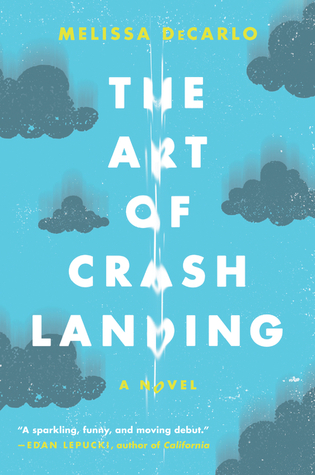
The Art of Crash Landing By Melissa DeCarlo.
Harper Paperbacks| September 8, 2015| 416 pages |$15.99| ISBN: 978-0-06-239054-7
Rating: ***/5*
Fantastic cover and title. Promising premise: 30-year-old Mattie Wallace fears that since she’s broke and pregnant she may become just like her alcoholic mother. Her only possessions she keeps in several garbage bags. When her grandmother dies, Mattie travels from Florida to a small town in Oklahoma to retrieve her inheritance. The introduction to Mattie: “I fire up the Malibu, put in a Black Keys CD, and light a cigarette with shaking hands. Three drags later I remember why I quit smoking. Slamming on the brakes, I open the car door and lean out to retch, depositing my half a Slim Jim and an earlier glass of orange juice in the middle of an oily puddle.” Pregnant, malnourished and brazen, she’s quite the scrappy fighter.
Mattie’s perception of small town Gandy: “I wake, sweating, the sun shining straight on my face. I check the time; it’s almost eight. Grabbing the pillowcase that holds my toiletries, I climb out of the car and look around. I’m on what seems to be the outer edge of one of those quaint, redbrick downtowns. The kind where it looks like you’re in a Leave It to Beaver episode until you notice that all the shop windows are covered in paper, and the only thriving businesses are attorneys, bail bondsmen, pawnshops, and payday loans places.”
While there she meets various people who may or may not figure into her mom’s downfall. Apparently Mattie’s mom hastily left the small town under mysterious circumstances. There’s the genuine paraplegic attorney, a librarian named Fritter, her grandmother’s abrasive neighbor JJ and the handsome alcoholic Father Barnes. Mattie begins to unravel details about her mother’s past and reasons for fleeing her small town and attempting to erase her poor decisions through excessive drinking.
Author Melissa DeCarlo moves into the past to explain Mattie’s experiences with her mother. It’s a rocky debut novel about a rocky life. Started slow, picked up and slowed again. Character development creeps along and little tension or suspense exists where it seems needed. Did I particularly care about what would happen? The novel requires more editing as it’s too long at 400 pages. I thought I’d relate to straightening oneself out after poor decisions and misfortunes. I skimmed it at parts but wanted to find out the facts.
Unless you planned some serious career at age 12 most people face challenges in their past. Single moms and divorced parents aren’t that unusual anymore. It’s not all negative. Despite several troubled connections, Mattie maintains an endearing relationship to her former stepfather Queeg. While rough around the edges and uneducated, Mattie’s as savvy as anyone from Florida, land of criminals and slackers, can be. She seems rather earnest in uncovering details about her mom’s life and its connection to her own.
–review by Amy Steele
FTC Disclosure: I received this book for review from Harper Collins.
purchase at Amazon: The Art of Crash Landing: A Novel (P.S.)

Share this:

book review: Love May Fail
Posted by Amy Steele in Books on August 5, 2015
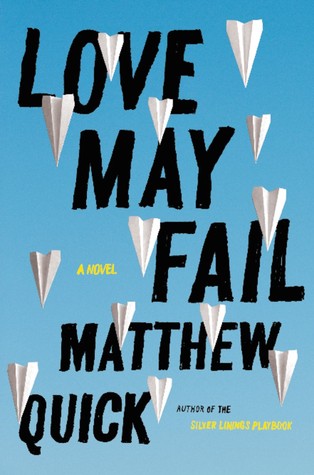
Love May Fail By Matthew Quick.
Harper| June 2015|401 pages |$25.99| ISBN: 978-0-06228-5560
Rating: ***/5*
This is my first novel by Matthew Quick. Having liked the film Silver Linings Playbook, I expected to enjoy this much more than I did. It’s a quick read with resonating themes of redemption and second chances. Portia Kane finds herself at a crossroads. She’s in her 40s living in Florida with her adult film director husband. Of her husband Ken, Portia admits: “He wants to be my emotional pimp—the owner of my heart.” Finally his dalliances with younger women drive Portia to head home to her hoarder mom in New Jersey. Fond memories of her high school teacher Nate Vernon instilled hopes in Portia that she might one day become a writer. He gave all his students ‘member of the human race’ cards at year’s end with inspirational messages which Portia always carries with her still. Life intervened and Portia finds herself miserable and unfulfilled. Is it too late for Portia to pursue her goals?
Portia Kane: “How did I end up so seduced by money, living in a tropical palace of marble floors, twenty-foot ceilings, cathedral archways, palm trees, crystal chandeliers, lap pool, hand-carved furniture, and high-end stainless steel appliances—all of which make my childhood dwelling look like a mud hut that barnyard animals would refuse to enter?”
Meanwhile a scandal drove Nate Vernon to retreat to the Vermont mountains. After meeting and later corresponding with a nun on her flight home, Portia decides that to re-align the universe, she must convince Mr. Vernon to return to teaching. In New Jersey Portia encounters her former friend’s younger brother, Chuck Bass, a sweet guy who ran into drug issues in the past and now also finds himself buoyed by thoughts of their high school English teacher. The ex-heroin addict currently pursues a teaching career complicated by his shaky past. Portia and Chuck bond with memories for 80s metal and this elusive teacher–“What do you do when the person you admire most literally turns his back on you?”
Love May Fail dragged at times. There’s a high school teacher in crisis and a nun –so religion in plenty which rarely interests me. I’m fine with unlikeable characters as everyone in the world isn’t likeable to everyone but I need these unlikeable characters to be well-written and compelling. I appreciated the characters of Portia Kane and Chuck Bass and would have preferred the entire novel told from their points-of-view. I found myself skimming the high school teacher and nun chapters. This isn’t the type of novel where the author writes short chapters from varying viewpoints. Instead we don’t get to Mr. Vernon until part two 100 pages in and carry on with him for about 100 pages. When Mr. Vernon thinks that his dog is Albert Camus reincarnated and begins talking to him, it’s a tongue-in-cheek existentialism moment for the novel and it just went too far. More moments could’ve been explored instead—Portia’s hoarder mom for instance.
–review by Amy Steele
FTC Disclosure: I received this book for review from Harper Collins.
purchase at Amazon: Love May Fail: A Novel

Share this:

book review: The Green Road
Posted by Amy Steele in Books on May 13, 2015

The Green Road By Anne Enright.
W.W. Norton| May 11, 2015| 304 pages | $26.95| ISBN: 978-0-393-24824-0
Rating: *****/5*
A perfect novel with imperfect characters that spans decades and continents. Dublin author and Booker prize winner Anne Enright [The Gathering] writes beautifully constructing plausible and faulty characters, of which one wants to read more, know more and become attached. The Green Road is where the family matriarch Rosaleen Madigan enjoys taking long walks. Rosaleen is strong-willed, unyielding and resilient particularly after becoming a widow. In Ardeevin, County Clare, Rosaleen raises four children—two daughters Hanna and Constance and two sons Dan and Emmet. The children move away from their childhood home and live varied lives throughout the world.
Dan becomes a priest but then moves to New York with a fiancée. He carries on a relationship with the handsome Billy lying to himself that he’s gay only for Billy. Enright writes: “Two nights later, at eleven forty-five p.m., Dan the spoilt priest was outside Billy Walker’s door, looking for sex. Again. And sex is what he got.” During the early 90s he’s in the midst of New York’s gay scene at the height of the AIDS epidemic. Later he finally admits he’s gay and marries a man in Canada. Emmet travels the world to aid the impoverished and fulfill his wanderlust. He never has to commit to any one place or one person for long. He travels to war-torn, medically inefficient countries to work to help improve their living conditions. At one point he’s living with a woman in Africa. His relationships are always tenuous and he cares more for his own happiness and the people he’s helping on his various missives than any long-term coupling. Constance remains close to home to raise a family after somewhat settling in marriage. She once considered moving to America but didn’t get on the plane. “Constance still liked Ireland, the way you could talk to anyone. I would not be the same in America, she thought, and tried to remember why she failed to get on the plane.” Hanna gives up her love of theater and the potential for a career when she gets pregnant. These are flawed, struggling children that Enright describes and develops with compassion.
In 2005, Rosaleen summons her children home for one last Christmas as she’s decided to sell the family home. “She had been waiting, all her life, for something that never happened and she could not bear the suspense any longer.” This brings out the inner child in the four siblings and makes for a messy homecoming. Enright writes: “The truth was that the house they were sitting in was worth a ridiculous amount, and the people sitting in it were worth very little. Four children on the brink of middle-age: They had no money. Dan, especially, had no money, and he could not think why that was, or who might be to blame. But he recognised, in the silence the power Rosaleen had over her children, none of whom had grown up to match her.” No one wants the family house sold. No one wants that disruption. Nobody wants the truth. As Rosaleen thinks: “Such selfish children she had reared.”
–review by Amy Steele
FTC Disclosure: I received this book for review from W.W. Norton.
Anne Enright will be reading at Harvard Book Store May 13, 2015 at 7pm.


Share this:

book review: Whatever . . . Love is Love
Posted by Amy Steele in Books on May 10, 2015
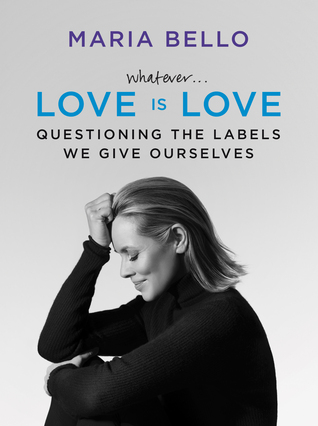
Whatever . . . Love is Love By Maria Bello.
Dey Street Books| May 12, 2015|256 pages |$25.99| ISBN: 978-0-062351838
Rating: ****/5*
Actress and activist Maria Bello is known for her roles on ER and in films like Coyote Ugly and A History of Violence. She wrote a much lauded and popular Modern Love essay for the New York Times entitled “Coming Out as a Modern Family.” Bello wanted to share her disdain for labels and illuminate how her perhaps unusual family situation works. She’d fallen in love with a female best friend yet remained close with her 12-year-old son Jackson’s father. While struggling from a parasitic infection after a trip to Haiti, Bello started reading her journals and decided she thoroughly need to tell her story.
“In the summer of 2013, while I struggled in the hospital, I realized that waiting to do something isn’t always an option. In a moment, everything could end, and my stories would be lost—stories of love, partnership, miracles, and madness that filled the hundreds of notebooks beneath my bed. During my months of recovery, I read through each one of my trusted journals, collections of my thoughts since I was a teenager.”
In Whatever . . . Love is Love: Questioning the Labels We Give Ourselves, Bello ponders many aspects of her life. She shares intimate details about failed affairs, insecurities, challenges growing up with an alcoholic bipolar father and her own bipolar diagnosis. She shares stories and thoughts on being labeled a humanitarian, a feminist, a mother, a daughter, a sister, an actress and a lover. In her memoir Bello answers questions such as am I a partner; am I perfect; am I a good mom; am I a humanitarian; am I a feminist; am I a writer. This is how she shares her stories and shares herself with the reader. She lives life on her own terms. While Hollywood and acting situations constantly change and flow, Bello strives to remain in the moment and be appreciative. She possesses a beautiful spirit and attitude. It’s an enlightening read that’s honest, smart and thoughtful.
On labels:
“Traditional labels just don’t seem to fit anymore. These labels are limiting the possibility for people to question more and become who they are meant to be. By asking questions and challenging our own beliefs, I feel we can update all of our outdated labels and realize that labels need to evolve just like people do.”
On the term partner:
“I have never understood the distinction of a ‘primary’ partner. Does that imply that we have secondary and tertiary partners, too? To me, a partner is someone you rely on in your life—for help, companionship, mutual respect, and support.”
On sex vs. love:
“To me, sexual desire and love are two different things. That certainly doesn’t mean that people inside of long-term committed relationships don’t have great sex. I know some who do. But not many, if I’m honest.”
Maria Bello has struggled with the sex/love connection like many women:
“I felt rejected. I knew he just wanted sex and what I really wanted was sex and love.”
She’s done humanitarian work in Nicaragua, many countries in Africa and Haiti. After the Haiti earthquake Bello returned to help: “Those of us who went in those days after the quake all experienced a deep despair, and an incredible joy, feelings that would bond us together for life. In those first few months after the earthquake, I saw the best and worst of what human beings, nature, and I are capable of. I saw moments of grace that I won’t ever forget. We were all challenged by what we experienced. When I left Haiti for the first time after the earthquake, all I could think of was returning.”
She expresses what many with mental illness feel and for an actress, celebrity, public figure to discuss mental illness so openly and bravely is wonderful for the rest of us who also grapple with mental illness every day: “I cried because no one would ever want me, because I was too messed up. And now, everyone knew. They knew that my father was sick in his head and that I was just like him.” And another reality: “Now and again over the years I’ve had to adjust my meds, just like my dad and others I know who have this or similar illnesses. I am dutiful about taking my pills every day. But once every couple of years, if I am triggered in some way or the medicine stops working, I find I’m not quite myself. I know it’s time to go back to the doctor. And I do. I know that without medication I would end up suicidal and eventually dead.”
On feminism:
“For me, calling someone a feminist is one of the highest compliments I can pay a woman, or a man, for that matter. It’s a label I give myself and I wholeheartedly accept others giving it to me.”
On being herself:
“I am already whole—just complicated, wounded, loving, difficult, and kind. I have finally discovered the joy that comes from hitting bottom and pushing oneself up to the top again.”
–review by Amy Steele
FTC Disclosure: I received this book for review from Dey Street Books.
Whatever…Love Is Love: Questioning the Labels We Give Ourselves

Share this:

book review: The Art of Unpacking Your LIfe
Posted by Amy Steele in Books on April 11, 2015
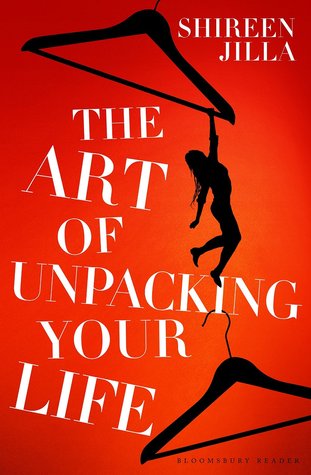
The Art of Unpacking Your Life By Shireen Jilla.
Bloomsbury Reader|March 2015| 316 pages| ISBN: 9781448215201
Rating: ****/5*
Connie invites her university friends on a trip to the Kalahari to celebrate her fortieth birthday. The story mostly centers on Connie. The other friends have side-stories. The novel is a sharp and rich depiction of college friends in later life. “They had been close at university, but their friendship had drifted as their lives had taken them in different directions.” Do they have the same bonds as they did at 20 that they have now not seeing each other daily? Over several days in a vast environment thousands of miles away from their comfort zone and homes, the group reveals secrets and encounters surprising challenges.
Connie’s four children [“No one had four children anymore.”] are in secondary school and her politician husband Julian continues to have affairs. His latest dalliance might break them up forever despite the family and image to uphold. For years after every affair, Connie stands by her man. Sara is a single, strong barrister who just completed a major case in London and prefers to keep men at arm’s length to avoid any emotional entanglements. “There was something fundamentally wrong with the men she dated. Too talkative, too vain, too stupid, too nasal, too egotistical.” Lizzie isn’t quite sure what to do personally or professionally. “Nothing measured up to their time together at Bristol University for Lizzie. She hadn’t moved on.” Lizzie “didn’t have a man, or own her own flat and her career was going nowhere.” The recently divorced Luke, Connie’s college boyfriend is on the trip. Is there still something between them? Should they have remained together all along? Matt shares the news that he and his American wife Katherine [“She was fragile and feminine compared with his English women friends.”] used a surrogate for the baby they’re expecting after years of IVF treatment. Dan isn’t happy in his relationship with a younger, not-too-serious boyfriend Alan. “The group never believed that Alan was good enough for Dan.”
Jilla writes splendidly about the bold wildlife and African landscape— “A wide, wild range of beautiful, even rare and endangered, species would be waking up in this safe haven, magically far away from the destructive nature of the human world. All because of her grandfather’s understanding and commitment.” It’s refreshing to read about adults who may still be figuring things out. The superb writing and multifaceted characters draw you in from the beginning and keep you riveted throughout the novel.
–review by Amy Steele
FTC Disclosure: I received this book for review from the publisher through NetGalley.
purchase at Amazon: The Art of Unpacking Your Life

Share this:

book review: Happy are the Happy
Posted by Amy Steele in Books on February 2, 2015
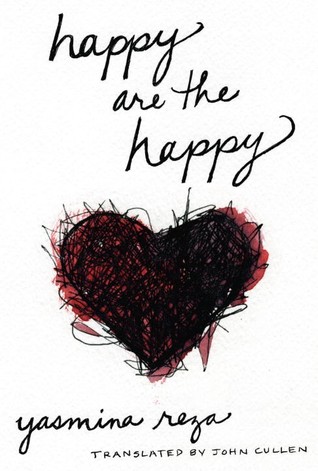
Happy are the Happy By Yasmina Reza.
Other Press| January 2015.|148 pages |$20.00| ISBN: 978-1-59051-692-8
Rating: 3.5/5*
Beautiful cover art. Superb concept. 20 short chapters focused on different characters. Some characters resurface in each other’s stories. Darkness. The reality of relationships. Complications of life, of work, of love, of contentment. In this short-story collection few characters feel blissful. Most feel displeasure, discomfort and remain in dysfunctional relationships. I’m not sure that I think of the French as being overly ebullient. There’s lovely art, architecture and scenery in Paris and throughout France but Europeans are a serious and deliberate bunch. I once read and liked that Germans only smile when they mean it. Not like some dumb happy Americans. Even so reading these stories makes me a bit jubilant not to be involved in a marriage or partnership.
These are short stories to be read slowly, savored like a glass of wine. It’s about the pacing. Yasmina Reza–Tony Award-winning playwright for Art and God of Carnage [I really liked the Roman Polanski film Carnage with Kate Winslet, Jodie Foster, Christoph Waltz and John C. Reilly]—has a knack for brevity and astute, quick, sharp observation. Statements such as: “A man’s a man. There are no married men, no men who are off limits.” And this quip: “To me, ballet shoes are a synonym for boredom and the absence of sex.” Intricate descriptions allow you a glimpse into the lives and thoughts of diverse people. Even for a moment. Secrets, dreams, disappointments. Affairs, heartache, destruction.
In a market, Odile argues with her husband Robert over cheese. Reza writes: “As soon as you run out of arguments, you say I’m out of here, you immediately resort to this grotesque threat.” And “That’s the secret, Ernest said, the child understood it: reduce your requirements for happiness to a minimum.” A few stories later more about the couple’s discord from Odile’s point-of-view: “I wonder if the word tired in Robert’s mouth hasn’t contributed more than anything else to our drifting apart. I refuse to give the word any existential significance. If a literary hero withdraws to the region of shadows, you accept it, but the same doesn’t go for a husband with whom you share a domestic life.”
Paola realizes the end of an affair. Her lover will never leave his wife. Reza writes: “He was so used to coming to my apartment that he couldn’t conceive an alternate idea. Men are totally immobile creatures. We women are the ones who create movement. We wear ourselves out invigorating love.” Magnificent phrasing. Then there’s Philip, a successful doctor who suffered abuse as a child and now seeks random anonymous hook-ups. “. . . the thing I’m really seeking is the smell of sadness. It’s an impalpable thing, deeper than we can gauge, and it has nothing to do with reality. My life is beautiful. I do what I like to do.” In another story a woman runs into a nearly unrecognizable former lover. She admits: “I’m a woman who doesn’t like photographs (I never take any), who doesn’t like any image, whether cheerful or sad, that’s capable of rousing the emotions. Emotions are frightening.” Exactly.
–review by Amy Steele
FTC Disclosure: I received this book for review from Other Press.
Share this:

book review: Almost Famous Women
Posted by Amy Steele in Books on January 24, 2015
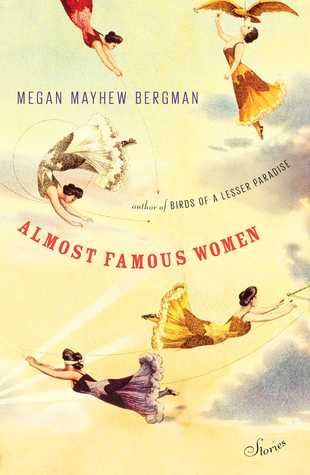
Almost Famous Women: stories By Megan Mayhew Bergman.
Scribner| January 2015.|256 pages |$25.00| ISBN: 978—1-4767-8656-8
Brilliant concept and exquisitely written. This short story collection focuses on intriguing, bold and remarkable women from history. It’s edgy historical fiction. These women lived life as they chose to live it which likely made them misfits and outliers during their lifetimes.
Author Megan Mayhew Bergman envisioned the voices and back-stories for some truly unique women. She conducted extensive research and utilized her extraordinary imagination and creativity. She gets into the psyches of these women. She provides a voice. She imagines their hopes, dreams, desires, triumphs and disappointments. She plays around with point-of-view. It’s all exhilarating and works amazingly well in this format. There’s brilliance, heartache and triumph throughout these pages.
Included are the tragic stories about Lord Byron’s illegitimate daughter and Oscar Wilde’s niece. Other stories tackle the final years of Gone with the Wind actress Butterfly McQueen; the heyday of daredevil and motorcycle trick-rider Hazel Eaton and interracial girl band the International Sweethearts of Rhythm.
In “The Pretty, Grown-Together Children” Mayhew Bergman writes of the conjoined Hilton sisters, Violet and Daisy–a side-show act for many years. One twin married, the other wasn’t allowed. Daisy recalls their story. How they were discovered. How they lived. How they were individual women but shared many aspects of the same body. “Our voices could be like one. I could feel hers in my bones, especially when she sang—a strong quicksilver soprano. We were attached at the hips and shared blood, but no vital organs. Four arms, four legs—enough to make a man give a second look.” These women remained mostly positive despite their circumstances. “There were no secrets. Imagine: you could say nothing, do nothing, eat nothing, touch nothing, love nothing without the other knowing.”
Cross-dressing Standard Oil heiress Joe Carstairs races boats and romances women in “The Siege at Whale Cay.” Told by her live-in lover: “What exhausted Georgie about Joe’s guests was that they were all-important. And important people made you feel not normal, but unimportant.”
In the tempered, melodramatic story “Norma Millay’s Film Noir Period,” the author creates a scenario for Norma Millay who lived at her sister’s estate for decades. Norma worked as a successful stage actress for quite some time. In the shadows? Jealous of her successful sister, poet Edna St. Vincent Millay. Unknown. Modern day example perhaps J. Lo and her sister Linda Lopez, a well-known New York disc jockey. “Norma curls next to her sister in the chair, as she often does, wriggling one arm behind Vincent’s back and laying a cheek on her bony shoulder. When she breathes in, her sister’s claret-colored hair falls across her face, and she feels deep love tinged with resentment, like the pure ice leaching red dye from the river.”
“A High-Grade Bitch Sits Down for Lunch” depicts the resilient and determined Beryl Markham, the first certified horse trainer in Africa. She’s struggling financially to start her new venture: “She never ate much. Meager eating was good for keeping her figure, and her figure was an asset, on a horse and in the bedroom. She wanted to look good in clothes and out of them.”
Rating: ****/5
–review by Amy Steele
FTC Disclosure: I received this book for review from Simon and Schuster.
purchase at Amazon: Almost Famous Women: Stories

Share this:

About Me

covering mostly music and books. focus on alternative/indie and women in music, literature and the arts. feminist. vegan. mostly alternative, a bit bohemian. Masters in journalism from Boston University. BA from Simmons College.



Entertainment Realm by Amy Steele is licensed under a Creative Commons Attribution-Noncommercial-No Derivative Works 3.0 United States License.
Based on a work at entertainmentrealm.comCopyright © 2009. All writing, unless otherwise noted, by Amy Steele.
 ENTERTAINMENT REALM
You must be logged in to post a comment.