Archive for category Interview
STEELE INTERVIEWS: Various Cruelties
Posted by Amy Steele in Interview, Music on January 10, 2013
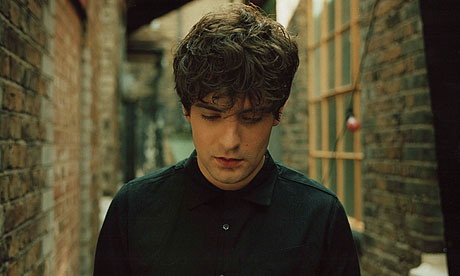
Liam O’Donnell grew up in Leeds, the son of a Scottish father and an Irish mother. They moved to London where Liam played around as a singer/songwriter for some time. In 2010, he formed pop group Various Cruelties which blends Britpop, mod and funk. The song “It Wasn’t for You” is featured in a holiday ad for Zales jewelry. The band supported Mumford and Sons and The Vaccines.
Debut album available for download now and on CD on February 26 in the U.S.
Amy Steele: Where did the name Various Cruelties come from?
Liam O’Donnell: The name Various Cruelties comes from a painting by the artist Ed Ruscha. I saw the picture on a wall and thought it looked like great and I really loved the name. It was a beautiful deep red colour and almost looked like dried blood. It was reminiscent of something like The White Stripes would have put up. It had a classic yet, darker, distressed feel to it.
Amy Steele: You look so young. When did you first become interested in music? Have you professional training?
Liam O’Donnell: My family was musical. So I can’t really remember not being interested in music. I don’t have any professional training except I used to play in bars when I was a kid. I could do an excellent rendition of “The Fairytale of New York” on violin at 12.30 a.m. or down the phone to someone.
Amy Steele: You started out a solo artist. What made you decide to get a band together?
Liam O’Donnell: It felt natural. It was a bit lonely being a solo artist sometimes. In the studio I could bring different colours and personalities to the songs I was creating. But playing them live on an acoustic guitar just didn’t hit the spot in the same way. When I met the other guys, we hit it off very quickly and were able to bring the songs to life in a live environment.
Amy Steele: What do you like about being in a band?
Liam O’Donnell: I like being able to hang out with my mates. I love people coming to and enjoying the shows. We get to meet our fans, make friends, all alongside the funny things that happen along the way. Such as our drummer being told he looks like “George Washington”. The amusing thing being that the guy who said he looks like “George Washington” meant “Denzel Washington”. Most people would think there’s quite a difference between the two individuals, but obviously not this guy.
Amy Steele: You are a big The Strokes fan. What do you like about the band?
Liam O’Donnell: I guess there’s always one band or musician that growing up you connect with. They are such a great pop/guitar band with timeless songs. I saw them when I was 15 and Julian sat on a chair, with his ankle in a cast but was still cool. Discovering your first band is a bit like falling in love for the first time. As you get older, you like other bands, but you never fall in love as much as you did the first time.
Amy Steele: I hear Britpop, folk, funk fused in your music. What other bands and musicians influence you musically?
Liam O’Donnell: I’m from Leeds. So we have a heritage of Northern British music. It’s not that we ‘totally invented pop music’ but so much has come out of this region. I couldn’t avoid not hearing The Beatles, The Smiths, Arctic Monkeys, growing up. I also developed quite an eclectic taste quite early. I became fascinated with musical scenes from Britain such as mod, goth and to a certain extent hip hop. I liked listening to old soul records and embracing culture of northern soul, ska and jazz nights that are quite prevalent in Yorkshire.

Amy Steele: I adore the song “Magnetic Fields.” What can you tell me about it?
Liam O’Donnell: “Magnetic Fields” is about a girl I used to hang out with. We weren’t very good for each other at certain points. Yet we had this strange connection.
Amy Steele: Tell me about the impetus for “Beautiful Delirium.”
Liam O’Donnell: “Beautiful Delirium” is about when you’re young and life is perhaps a bit changeable. Sometimes you feel thrilled but daunted at the same time. It’s about that. Sometimes I find those feelings to be quite intense.
Amy Steele: How about the song “Capsize?” There’s a cool Calypso-esque beat to it.
Liam O’Donnell: In all honesty. I had recorded the song in another style for the demo. Then shortly before recording the album I listened to aht ah mi hed by Shuggie Otis. Thought the “Calypso” vibe from that was pretty cool, so decided to try nick the vibe of that song for “Capsize.”
Amy Steele: What comes first the music or the lyrics?
Liam O’Donnell: I need to feel the music first to inspire the lyrics. I get to the point where I feel like I want to sing along. Then the lyrics just happen. Normally regarding the subconscious focus of whatever is on my mind.
Amy Steele: What inspires you?
Liam O’Donnell: Mainly things in day to day life. I’d be lying if I said all my ideas came from 19th Century Irish literature.
Amy Steele: If you weren’t a musician what would you be doing?
Liam O’Donnell: I did study for a law degree for a while. But I can’t see myself going back to that. I used to have a job where I maintained industrial dishwashers capable of washing an incredible 2000 plates an hour. I liked being able to fix them. So maybe something where I could take that to the next level. A dishwasher to support an army or something.
Amy Steele: What football team do you root for?
Liam O’Donnell: I have two to be brutally honest. I am from Leeds so Leeds United. But my Dad is a proud Scotsman and he supports Glasgow Celtic. But our manager’s first name is “Neil”. So let’s hope Leeds achieves promotion this year and Celtic beats Juventus in the last 16 of the Champions League. The final is at Wembley which isn’t that far from my house. I can but dream. Closer than going all the way up to Scotland anyway!
In terms of US sports I need someone to tell me about the history of all the big sports teams. Then I can pick one?
purchase on Amazon: Various Cruelties

Share this:

STEELE INTERVIEWS: Chelsea Wolfe
Posted by Amy Steele in Interview, Music on January 2, 2013

photo by Charlene Bagcal
One of my favorite singer-songwriters, the beguiling Chelsea Wolfe tours this winter in support of her Sargent House release Unknown Rooms: A Collection of Acoustic Songs. I play this repeatedly. I can’t get enough of her dramatic, haunting vocals and lush arrangements. Honest, heartbreaking, gorgeous, dark, lovely. And live, Chelsea Wolfe mesmerized the crowd with her aura and talent. Now living in Los Angeles, Wolfe grew up in Northern California.
Amy Steele: Your father played country music. How did that influence you?
Chelsea Wolfe: He had a home studio that I’d sneak into and record songs I’d written. Being around music and seeing him go to shows was of course what introduced me to the world of music, even though I wasn’t very involved back then.
Amy Steele: When did you start singing?
Chelsea Wolfe: When I was seven or eight years old.
Amy Steele: What type of musical training have you had?
Chelsea Wolfe: I’ve taken classes here and there but usually dropped out before they finished. I love learning but I’m not very good with institutions.
Amy Steele: Have you been in bands before?
Chelsea Wolfe: I’ve messed around with some rock bands but always ended up doing my own thing.
Amy Steele: What do you like about being a solo artist?
Chelsea Wolfe: I like it because there is a freedom to play alone or play with a group of musicians. And I’m really lucky to play and write with some brilliant people.
Amy Steele: Your music is beautifully dark and mysterious. Are you a dark person?
Chelsea Wolfe: Thank you. I can be. Sometimes I get on autopilot and just focus on the work, but then there will be a lull and I sort of stop and breathe and look around and sometimes it can get dark.
Amy Steele: What inspires your songs?
Chelsea Wolfe: The world around me and the world at large.. news stories, films, literature. A mix of reality and mystical or mythical elements. Love, life and death.
Amy Steele: When I saw you perform this past year at the Middle East in Cambridge, Mass. you captivated the audience and truly engulfed everyone in your music. What do you like about performing? How do you transform your music into a live performance?
Chelsea Wolfe: Performing is a challenge for me; writing and recording is a much more natural state for me. But I like the challenge of performing the songs live and I’ve come to enjoy the energies of the audience and meeting the people who come to my shows.
Amy Steele: What’s the greatest challenge about being a woman in the music business?
Chelsea Wolfe: I think because I present my music in an androgynous way I don’t have like, problems or challenges because I’m a woman. The one thing I’d say is that I get compared to other female artists that I have nothing to do with because critics love to group us all together, but my influences are mostly male artists actually. Not a big deal though.
Amy Steele: Why did you want to do this acoustic album?
Chelsea Wolfe: I started working with Sargent House earlier this year and they suggested I release an album of all my orphaned acoustic songs that I would play live or demo but had never actually released on an album. I was excited about the idea and as I gathered the old recordings I decided to re-approach most of them with new instrumentation and also wrote and recorded some new acoustic/folk songs for the record.
Amy Steele: What can fans expect on this winter tour?
Chelsea Wolfe: A much more intimate experience.. It’s going to be pretty stripped down, to guitar, vocals, synth and violin. Sometimes I get a little nervous about how personal it will be, but I’m also looking forward to experiencing it myself and pushing myself to do something I’m not completely comfortable with.

TOUR DATES:
Friday, January 11
Great American Music Hall
San Francisco, Calif
Sunday, January 13
Doug Fir Lounge
Portland, Ore
Monday, January 14
The Triple Door
Seattle, Wash
Tuesday, January 15
The Media Club
Vancouver, BC
Friday, January 18
Triple Rock Social Club
Minneapolis, Minn
January 19
Schubas Tavern
Chicago, Ill
January 20
Crofoot Pike Room
Pontiac, Mich
January 21
The Drake Hotel
Toronto, ON
January 22
Il Motore
Montreal, QC
Wednesday, January 23
The Sinclair
Cambridge, Mass.
Friday, January 25
First Unitarian Church
Philadelphia, Penn
Saturday, January 26
Music Hall of Williamsburg
Brooklyn, NY
Sunday, January 27
Rock and Roll Hotel
Washington, DC
Tuesday, January 29
Local 506
Chapel Hill, NC
Wednesday, January 30
The Earl
Atlanta
Thursday, January 31
Spanish Moon
Baton Rouge, LA
Friday, February 1
Fitzgerald’s
Houston
Saturday, February 2
Central Presbytarian Church
Austin, TX
Sunday, February 3
House of Blues – Cambridge Room
Dallas
Tuesday, February 5
Crescent Ballroom
Phoenix
Wednesday, February 6
The Loft @ UCSD
San Diego
Friday, February 8
First Unitarian Church
Los Angeles
Share this:

STEELE INTERVIEWS: author Nichole Bernier [THE UNFINISHED WORK OF ELIZABETH D]
Posted by Amy Steele in Books, Interview on November 3, 2012

THE UNFINISHED WORK OF ELIZABETH D is a wonderful novel about friendships, family and ambitions. It focuses on two women post-9/11. Elizabeth died prior to 9/11 and left a life’s worth of journaling to her friend Kate to figure out what she should do with them. The novel delves into both women’s lives prior to meeting each other as well as during their seemingly strong friendship. How well did Kate truly know her best friend? Nichole Bernier turns out a sharp, thoughtful novel with a twist.
Nichole answered some questions earlier this week via email.
Amy Steele: When I first heard the title of your book, I really thought it was going to be historical fiction. Where did you get the idea for the novel?
Nichole Bernier: I lost a friend in the September 11th attacks, a new mother who’d been on the first plane. That week I helped her husband by returning the media calls, so he wouldn’t have to describe over and over the person she’d been. I wondered for a long time afterward how she would have felt about the sound bites and how she would have perceived the eulogizing, and how well any of our obituaries represent the people we’ve been. It’s probably inevitable that there’s a difference in the way we see ourselves and the way we’re seen by others. We all die with part of our stories untold, the quiet fears and unfulfilled dreams.
My novel is in no way about my friend or her family, but is about the questions that stayed with me about identity women have as wives and mothers, sisters and friends. The difference between the faces we show the world and the aspects of ourselves we keep private. The “what-if” of the novel spooled off from there, and became about a woman who inherits the journals of a friend, and learns she didn’t know her friend as well as she thought — including where she was really going when she died.
Amy Steele: Why did you want to set it right after 9/11?
Nichole Bernier: There are several levels of trust and fear and trust in the novel, but the most literal fear is the anxiety for your family’s safety in an unsafe world. The summer of 2002 was such a horribly fascinating time. Watching CNN then, it felt as if anything could happen —anthrax, Mad Cow disease, sneaker bombs, why not poisoned reservoirs, mushroom clouds, detonating shopping malls? I think many people, myself included, felt for a while that anything was not only possible, but likely. Most of us moved on from that paralyzing place, but it was fascinating to me to create a character who became quietly obsessed with the unknowns and could not move on.
Amy Steele: You have a journalism degree from Columbia. Is it difficult to transition to a novelist from a journalist? Do you have any interest in writing non-fiction books?
Nichole Bernier: Initially, the hardest thing was permitting myself to write something I was not contracted to write, and no one was waiting for or paying me to do. For years. That was a hard indulgence not just because I was accustomed to the parameter of deadlines, but because I had three young children when I started the book, and five by the time I finished. Time spent working on my novel was time away from a family schedule that didn’t allow for much slipping away easily. And yes, I’d love to write a nonfiction book if the right idea grabbed me by the jugular.
Amy Steele: How did your journalistic training come into play in writing Elizabeth D?
Nichole Bernier: Funny, but the formats were not as different as you might think. I came from being a writer and editor at Conde Nast Traveler magazine, and for me, the features that make for the best, most transporting travel article have some of the best elements of fiction: a vivid sense of place and characters, a plot trajectory, and a sense of growth through journey.
Also, the research came naturally, the kind of digging you have to do to find out about the daily details of the protagonist’s career. My main character was a pastry chef, and though she was on hiatus raising her children, she helped out at a friend’s bakery. When she worked on a cream cheese-based tart I needed to know whether she’d fling open a foil package the way I do at home, or if it would be a 20-pound foil package, or if she’d scoop it from an industrial 50-pound tub. The same thing was even more true of accurately writing the husband who’d been a golf pro.
Amy Steele: Coming from the journalism world, how difficult is it to transition to fiction?
Nichole Bernier: From a business sense, and from a timeline of contract-paycheck-publication, it couldn’t be more different. The only thing fiction had in common with my magazine life is that it used the same alphabet. But I was surprised by how much I loved that learning curve — the query letters, the foreign rights process, writing marketing materials. Old dog with five pups learning new tricks.
Amy Steele: What do you like best about writing fiction?

Nichole Bernier: It’s like opening the throttle and letting it go. When I’m really going with a section of description I just stare at the wall and let my fingers translate. I took typing in high school, thank God, (do they even offer that anymore?), and I don’t have to think or look down. It’s more natural to me than writing longhand, and sometimes more than speaking.
But it’s equally true of writing essays, which I love as much as fiction, maybe more. I find when I’m chewing on a thought, or an issue in the news, I don’t really understand or process my thoughts until I write it through.
Amy Steele: Do you write journals? I’ve done so myself off and on since high school but did destroy some after I re-read them. Why do you think people write them and why do they save them?
Nichole Bernier: I’ve always been fascinated with why, exactly, people do this crazy thing, putting private thoughts to paper, and what they think will become of them someday. What if you’re hit by a Mack truck tomorrow? Who do you want to read them, or to take responsibility for them so that no one does?
I’ve kept a journal intermittently since I was a teen. I never thought of my journals as something for others to eventually read—or as a way to be fully known, or to have my final say —though I imagine some people do. I always thought they would be interesting for me to have and revisit someday or call back up some time of my life, and in fact, I did mine them for some details for the novel. There’s a scene about a new mother who calls 911 when she smashes a mercury thermometer in the baby’s room, and a HAZMAT team storms the house. It’s nerve-janglingly chaotic and slapstick at the same time, the way so many of those new-motherhood experiences can be. That came almost verbatim from my own experience written in my journal.
Amy Steele: You really successfully delved into the various facades that people keep, the appearances. What interested you about that? Was this based on experience or did you draw from other sources?
Nichole Bernier: I’ve moved a lot, both as a child and since I’ve married and had kids, and I’ve come to know the work of making inroads into a new community. It’s a bit of a dance, feeling out how — and whether — friendships can get beyond the day-to-day PTA machinery and reach more candid ground. My first experience in a playgroup as a new mother for the first time was a very positive one. But it was easy for me to imagine a situation for my book that wasn’t that way.
Amy Steele: What do you think the challenge is for most suburban moms?
Nichole Bernier: It depends on the person. Many would say, just getting in a shower. But probably finding common ground with likeminded people that is honest and doesn’t have to do 100 percent with your children. Finding people with whom you can be authentic and not worry about whether an admission of being frustrated makes you sound as if you aren’t a loving enough mother. People are so unforgiving of themselves as it is.
Amy Steele: What appealed to you about writing about a female friendship?
Nichole Bernier: In the beginning I didn’t think I was writing about women’s friendships so much as a wide range of influential relationships: spouses, children and siblings, our families of origin and how the ties in those early years shape our perceptions of ourselves. The friends we make and keep as adults are relationships of our own choosing, constantly, so one would think they’d be in some ways the most honest and mature.
But there are any number of reasons we become friends with those around us — including proximity, and children — and those relationships can be wonderful, or can even be somewhat destructive. I was interested in the middle ground: people who have experienced the same things but have perceived them differently, or people who hold back a bit because they don’t trust how they will be assessed. That caution is a kind of self-censorship that results in two potentially good friends passing like ships in the night.
Amy Steele: Kate seemed to think it strange that Elizabeth was SO different in her 20s as evidenced in her journals. Don’t you think that people use their 20s to find themselves and that she would be a bit different as an adult? People change yet retain many of the same inherent characteristics?
Nichole Bernier: I think it’s always a jolt when we learn that someone we think we know well has a surprising bit in their past that seems out of character. Though it may be simply that it never came up. Or perhaps it’s more complex than that, and a person harbors guilt about a past incident and would prefer not to talk about it. There are so many reasons why people don’t volunteer information about themselves. My motto has become, You just never know. Because you can’t imagine what people might be dealing with behind the scenes, and why people might behave the way they do.
Amy Steele: Why do you think readers can relate to this story, wherever they are in their lives?
Nichole Bernier: I hope they can. I think most people have struggled with how much of themselves to entrust to others, and have been surprised at one time or another by something unexpected in someone they’re close to. That to me is the common denominator in my book. Though if a reader has lost a close friend or struggled with issues of identity and personal aspirations while being a parent, those specifics might resonate in particular.
And yet I can think of any number of novels that have resonated with me even if the protagonists have wildly different lives than mine. I may not be able to relate directly to the things they deal with daily or agree with their choices. But the book was written in a way that puts me under their skin, or makes me so curious and invested that I care.
Amy Steele: Each woman has or had different types of careers that neither knew very much about as they met in a play group. What did you want to say about working mothers in this novel?
Nichole Bernier: There are so many ways mothers work — and by work I include volunteerism and community organizing, self-employment and creativity — and so many ways they try to juggle it with family. There is no one right answer; we all find our own way. And there can be subtle or not-so-subtle value judgments made about what others do or don’t do. I once heard a PTO member suggest, while room-parent positions were being assigned in a private committee, that so-and-so who’d put in her name worked full time and hadn’t been very involved before, so….perhaps we should find someone else who might have more time?
Well, that might be true. Or it might be her one time to be involved in her kid’s class, and she was going to work like hell to make it happen. Or maybe she’d just lost her job. Or maybe it’s none of our freaking business at all, and she was the first to volunteer for the position, so give it to her.
People size up the way others parent, and have opinions about how and why they juggling things a certain way and what gets lost in the process. But in most cases they really don’t know what they’re talking about. You simply don’t know what someone else’s world is like until you’ve walked in their shoes.
Amy Steele: You’re very blunt about the challenges in raising children and the special moments. Yet in a funny way. Even though I don’t have children I appreciate that. You made very real and varied characters. People will relate to each in some way. How difficult was it to create all the characters? How did you develop each character?
Nichole Bernier: In building a character you can take a germ of an idea, or something you’ve observed in someone, and use it as a launching pad to imagine what a character would be like if that were his or her motivating principle, or paralyzing flaw. That is fascinating to me. But it’s only the pencil sketch. They don’t become colorful and three-dimensional until you shade in the reasons they’ve become the people they are: the family in which this one grew up, the cad who broke that one’s heart. Life experiences are the building blocks that explain how a character came to be the complex collection of foibles and sensitivities that he or she is. That was the fun part behind the character building — figuring out the why behind the traits.
Amy Steele: Do you have a favorite character? Is any character most like you?
Nichole Bernier: Nope. That’s my story and I’m sticking to it.
Nichole Bernier is author of the novel THE UNFINISHED WORK OF ELIZABETH D. (Crown/Random House), a finalist for the 2012 New England Independent Booksellers Association fiction award, and has written for magazines including Elle, Self, Health, and Men’s Journal. A Contributing Editor for Conde Nast Traveler for 14 years, she was previously on staff as the magazine’s golf and ski editor, columnist, and television spokesperson. She is a founder of the literary blog Beyond the Margins, and lives outside of Boston with her husband and five children. She can be found online at nicholebernier.com and on Twitter @nicholebernier.


Share this:

STEELE INTERVIEWS: singer/songwriter Rebecca Loebe
Posted by Amy Steele in Interview, Music on September 28, 2012

photo by Kate Culver
On her new album Circus Heart, Rebecca Loebe showcases an impressive vocal range from bold and commanding on title track “Circus Heart” to gentle and sweet on “Georgia.” Unusual arrangements and varied instrumentation all add to her charm. This is alt-folk at its best. Rebecca took the time to answer a few questions while on tour.
Amy Steele: You went to Berklee College of Music and got a degree in music production and engineering. How has that helped your own singing and songwriting? What did you like about Berklee? What’s the most important thing you took away from your four years there?
Rebecca Loebe: I had a great experience at Berklee – I was a teenager when I enrolled, and I was incredibly inspired by all of the talent and passion that surrounded me there. The environment was bustling with creativity and drive, and I think that definitely sparked a fire within me that I am still fueled by. After school I worked as an engineer at a recording studio, which was really helpful work experience and gave me a deeper appreciation for the roles everyone has to play in order to get a project done. It also gave me access to a recording studio, which helped me get my first album Hey It’s a Lonely World together.
Amy Steele: What do you like most and dislike most about touring?
Rebecca Loebe: What I love most about touring, without a doubt, is the opportunity to meet and get to know so many people as I travel around the country. There are so many incredible people out there, and I feel really fortunate to meet a ton of them as I go about doing my job. I like to cook, and eat meals at home, and I don’t get to do that much when I’m touring, so I guess that would be my least favorite part.
Amy Steele: Where do you get ideas for songs?
Rebecca Loebe: Song ideas come at me from everywhere – conversations with friends or strangers, snippets of stories on the radio, weird dreams…
Amy Steele: What is your song-writing process like?
Rebecca Loebe: Unhealthy! Every song comes together differently, but in general I come up with one line (a few words with a melody) first. This line usually ends up being the first line of the song or some part of the chorus. Once I have that line, I try to find paper and write as many words as I can – rhyming, non rhyming, lists of concepts, everything I can think of that has anything to do with that topic. Slowly I mold the words into verses, kind of figuring out what it’s about as I’m going. Then I pick up the guitar again, and start working on chords and a melody for the lyrics I’ve come up with.
Amy Steele: What makes a good song?
Rebecca Loebe: Honesty.
Amy Steele: You said the first song you learned to play was “Joey” by Concrete Blonde. Who are some artists you admire?
Rebecca Loebe: Ooh, there are tons! I love: Randy Newman, Patty Griffin, Ben Folds, Gillian Welch, Regina Spektor, Matt the Electrician, Joni Mitchell, Crooked Still, Shawn Mullins, Devon Sproule, The Old 97’s…I could go on…
Amy Steele: Why did you decide to go on “The Voice?” What did you learn from the competition? What was the best part of it?
Rebecca Loebe: Honestly, the only reason I auditioned for “The Voice” is that I felt completely positive that there was no way in hell they would possibly pick me (the logic being that they don’t put folk singers on national network singing competition shows). I was very surprised when they asked me to come to the callback auditions, and then invited me to LA…I just sort of went along for the ride to see how far it would go. I admit that I was a bit cynical about it when I went out to the final auditions in LA – I’m not the biggest fan of reality TV and I was worried that it would be sleazy or negative. I was happily surprised to learn that “The Voice” was neither of those things – I really had an incredibly positive experience…I got to sing two songs I love in a style that I believe in, backed by an awesome band on national television. I feel like I played with fire and didn’t get burned.
Amy Steele: Who are you currently listening to?
Rebecca Loebe: I’m on the road right now, so I’m listening to a lot of music! I’ve been listening to a lot of Allen Stone, Milk Carton Kids and Alabama Shakes, after seeing them all at SXSW. Anais Mitchell, Cory Brannan and Nels Andrews all released albums earlier this year that I’m really enjoying, and most recently I’ve been wearing out Danny Malone’s upcoming release Balloons (I backed it on Kickstarter so I got it early!)
Amy Steele: What attracted you to folk music versus any other genre?
Rebecca Loebe: Funny you should ask that – I never really decided to be a folk singer. I just started writing songs and playing guitar to accompany myself doing it, and people call it folk. What I have come to appreciate about folk music is that it is an honest and unpretentious medium; I write about the world as I see it, and I offer my musings for people to enjoy or not, as it is useful to them.
Amy Steele: Have you had any major issues as a woman in the music industry?
Rebecca Loebe: Luckily, I haven’t had too many annoying run-ins that felt blatantly sexist.
I feel incredibly fortunate to be living and performing in this day and age with relative easy and equality. It seems to me that I’m able to do so because those 20, 30, 50 and 100 years older than me broke down a lot of barriers, and I try to live in a way that honors their efforts.
Amy Steele: What is your greatest challenge as a songwriter?
Rebecca Loebe: Remembering that I will write another good song again. I have trouble writing when I’m on the road, surrounded by people, not able to be alone with my thoughts…sometimes, when it has been months since I’ve written anything, I get scared that I’ll never write another song again!
Amy Steele: What is your favorite thing about being a singer/songwriter?
Rebecca Loebe: Watching the songs I write land on the faces of people in the audience – when I see that connection being made, I know that the songs are now out of my control and will have an entirely new life, and take on new meanings to every person who hears them. I love that.

Rebecca’s new album Circus Heart is out now.
check her website for tour dates.
purchase album at Amazon: Circus Heart

Share this:

STEELE INTERVIEWS: author Jennie Fields
Posted by Amy Steele in Books, Interview on September 16, 2012
Jennie Fields is the author of The Age of Desire, a novel that imagines the details of the affair between Pulitzer-prize winning author Edith Wharton and journalist Morton Fullerton when Edith was 45 years old. The affair took place mostly in Paris. It ultimately affected Edith’s relationship with her husband Teddy Wharton and her best friend and literary secretary Anna Bahlmann. The Age of Desire is told through Edith’s and Anna’s eyes.
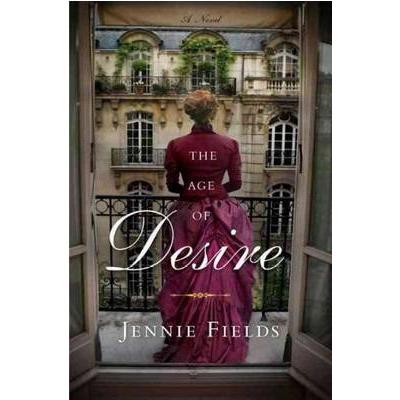
Fields received an MFA in creative writing from the University of Iowa Writers’ Workshop and is the author of three other novels, Lily Beach, Crossing Brooklyn Ferry and The Middle Ages. An Illinois native, she spent many years as an advertising creative director in New York and currently lives with her husband in Nashville, Tennessee. Jennie spoke with me by phone last week. Read more information on her website.
Amy Steele: When did you first become interested in Edith Wharton?
Jennie Fields: I was probably in my early 20s when I first discovered her and the minute I did, I felt this tremendous kinship with her. Her books thrilled me and I never tire of reading them and rereading them. I discover something new. There’s always something new. Now you can get e-books that haven’t been in print for years through the Guttenberg Project. I never ever run out of new things to learn from her work.
Amy Steele: Your agent gave you this idea for this novel when you were in Paris.
Jennie Fields: It’s all true. It’s one of those aha moments.
Amy Steele:She suggested you write about your favorite author Edith Wharton but how did you decide what to write about?

Jennie Fields: I knew only vaguely about her life at that point. I knew she’d had an affair. I immediately got every book I could find about her—there were a number of biographies. I just started reading everything. I narrowed down a part of her life. I clearly wanted to write about her relationship with Fullerton because not only were the letters available but her love diary was available. There was one part of her life where she wrote a diary on a daily basis where you could really get a sense of what she was going through.
Then I had a sense that you needed to see her from the outside as well. I decided I wanted a secondary character. I identified Anna Bahlmann and no one had really written anything about her. She clearly was important to Edith. She was with her for years on and off. It was serendipity that her letter came up for auction. I went to my computer and put in Anna Bahlmann and that week at Christie’s, letters that had been in an attic for over 100 years, that nobody had read from Edith to Anna, were going to auction. What a thrill. I ran over to Christie’s. They let me look at the letters. Everything I’d surmised about the relationship was true. It gave me insight into how Anna fit into Edith’s life. I loved that there was a counter-relationship not just with Morton (Fullerton) but with someone who loved Edith more than Morton ever did.
Edith couldn’t have been an easy person to live with. By many accounts Edith was very imperious and difficult. She was up against a world where women didn’t succeed and she was determined to succeed. Anna was a good way to look at that.
Amy Steele: I was confused with the finances in the novel. Edith married Teddy for money at the beginning but then he stole from her trust fund later on.
Jennie Fields: The majority of the money that built the Mount and that Teddy stole from was money from her books. She was tremendously successful with her books. People don’t really recognize how successful she was. Really stunningly successful. She had way more money than him. [Teddy] was never a wealthy man; he was just an appropriate man.
Amy Steele: That’s too bad because she should have married Walter Berry.
Jennie Fields: She really should have married Walter. And when you read the House of Mirth you know that Selden is based on Walter. He’s just a penniless lawyer. He clearly loved her but didn’t declare himself and he wasn’t wealthy enough. And when he was, she was married to Teddy Wharton.
Amy Steele: She did divorce Teddy.
Jennie Fields: She finally divorced Teddy, in 1911 or 1912, at Walter’s behest because he was so dangerous.
Amy Steele: Sounded like a manic-depressive with no treatment.
Jennie Fields: They said he had gout in the head. And hot springs was all they could recommend.
Amy Steele:Amy: So I’ve read A Backward Glance but no biographies on Edith Wharton.
Jennie Fields: What’s interesting about A Backward Glance is it’s how Edith wants others to view her. She cut out Anna. She said she taught herself everything and no one encouraged her to read. Now we know from these letters that Anna saved that Anna encouraged her to read all the time. Even her parents were much more encouraging of her as a writer than she ever let on. She wanted people to believe she was born from her own power and that nobody encouraged her. It really wasn’t true.
Amy Steele: What do you really like about Edith Wharton?
Jennie Fields: The thing that draws me to her is that she always writes about people who are caught in the net of society’s expectations. They fight against that and often they don’t win.
A good example of that is Lily Barth [The House of Mirth]. One of the reasons why that book is so beautiful is that the tragedy of it is it’s her better nature that kills her. If she was a better person she would have gone ahead and married someone wealthier. She was too bright and too good to marry these wretched people.
And Newland Archer in Age of Innocence. He is told he is supposed to marry May and stay with May and he falls in love with Countess Ellen Olenska. It’s not what he’s slated to do. But he can’t fight society. He’s exhausted and can’t fight society.
But Edith herself was told she couldn’t do what she wanted to do and she did it anyway. The only thing she never succeeded at was love until she was 45 years old. Of course how well did she succeed but at least she found passion.
Amy Steele: Do you think Edith was that insecure in her relationship with Morton Fullerton? It was so uncomfortable reading some of it.
Jennie Fields: Those were her real letters and if you read the diary and the letters just on their own you will find how she was tremendously insecure and she really abased herself in front of this man who was not worthy of her. It’s painful to read but it’s the truth. There were moments when it was hard to write that book because I had to make Edith less heroic. She also didn’t sleep with him for a very long time. Probably longer than I’d like to go with fictionally but I had to go with the truth.
A: She wrote such strong female characters. Vulnerable but strong.
Jennie Fields: It’s true. Her mother never made her feel she was attractive in any way which I think made her prey to his interest in her. She was extremely girlish in her figure. Had gorgeous hair and had tremendous bearing. She held her back straight, her neck long. And she was tall for that era.
Amy Steele: what do you think attracted her to Morton?
Jennie Fields: He was extremely charming, very intelligent and very attractive. He had lovers of both sexes who could hardly say goodbye to him and he kept the letters to prove it. He must have been incredibly charming. She’d never had anybody pursue her like that before. She was pretty intimidating as a woman. A lot of men were not attracted to a very intelligent woman. He was attracted to her, he wanted her. He paid attention to her. And that was pretty heady stuff to her.
Amy Steele: What do you think Morton saw in her?
Jennie Fields: She was older, successful. He was drawn to success, fortune, fame. He saw her as a mark.
Amy Steele: Why hasn’t much been written about Anna (Bahlmann) up until now?
Jennie Fields: Anna said in a letter to her friends and to her family that all she wanted in her life was to make Edith’s life easier. I started to wonder why Edith would say in one summer ‘I can’t function without Anna. Where is Anna?’ and then the following summer she sent her away and then she sent her away again. I had to make my own conjectures.
Amy Steele: How fun is it to do that?
Jennie Fields: Well it makes a whole cloth for those who want to read it. So I really enjoy that but I want to tread lightly and carefully because I don’t want to misinterpret things. I wish the whole story were there and I could tell it exactly as it was but I can’t. I have to create scenes that make you understand why something may have happened.
Amy Steele: What was your greatest challenge in writing this novel?
Jennie Fields: Trying to tell a story that was as close to history as possible but trying to make you feel it. Sometimes I had to create my own answers and had to make sure it was credible. It’s so telling that she could be so powerful in the world but in the face of love she was really cut down.
Amy Steele: From the novel it sounds like she left The Mount and became an ex-pat and wanted to live in Paris.
Jennie Fields: That’s what happened. They built The Mount and they ended up moving to the suburbs of Paris and she won the French Legion of Honor for what she did during WWI and was buried in Versailles. She spent the rest of her life in Paris. I think she believed that American life was stifling and so prescribed that there was no room for her especially after she divorced Teddy. She was afraid to go back to America. By the 20s things have changes tremendously and she went to Yale University to get an award and it was her last trip to America. She just thought it was provincial.
Amy Steele: How was she able to write about New York society so well?
Jennie Fields: In The Age of Innocence she writes about society in the 1870s so it’s the past. She asked her friends what was going on. But a lot of her later stuff she’s conjecturing and that might be why it’s not as popular because it’s probably not as accurate.

Share this:

STEELE INTERVIEWS: author Junot Diaz
Posted by Amy Steele in Books, Interview on September 12, 2012
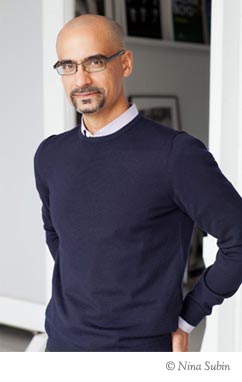
MIT professor and Pulitzer-prize winning author Junot Diaz kindly agreed to speak with me by phone earlier this week about his new collection of stories This is How You Lose Her. Diaz writes raw, visceral prose that bursts from the page with a gritty intensity. The stories revolve around Yunior, a young smug Dominican as he navigates love in New Jersey. My review here. He’s currently on a 30 city nationwide tour and will appear at Brookline Booksmith on September 19, Harvard Bookstore on September 26 and Concord Festival of Authors on November 3. For other area dates, see Diaz’s website.
Amy Steele: What attracts you to writing short stories?
Junot Diaz: There’s something about their fragmentation. There’s something about their awesome intensity that really just does it for me.
Amy Steele: What are the greatest challenges in writing short stories vs. writing novels?
Junot Diaz: When it comes down to it, they’re two entirely different forms. The novel is a marathon in many ways. At least what I’ve written is more of a marathon. The short stories, in my mind, require an entirely different calibration. The short story’s so much about silence and the novel’s so much about how much you put into your world.
Amy Steele: It seems that not many authors can do both short stories and novels well. And many choose to do one or the other.
Junot Diaz: I’m not sure, myself, if I’ll write anymore short stories. I think I’ve burned myself out for a while.
Amy Steele: Do you think writing short stories is a more difficult format?
Junot Diaz: I don’t know. It’s just time for me to go back to the novel. To spend more time in that longitudinal form, in that more expansive form.
Amy Steele: Did you set out to write thematically based stories for This is How You Lose Her or did it end up that way?
Junot Diaz: I started it from the beginning. A book like this does not come together by accident. You set yourself up right from the start. You try to get all the stories to work together, to get all the basic scenes in play and have the arc intact. I had the idea for the overarching story first and then I had to fit the other stories in.
Amy Steele: Why did you think it would work better as stories than as a novel?
Junot Diaz: I just think they’re totally different forms. It’s a different game. It’s like asking why kickball vs. hopscotch? In our minds we think of these forms as directly related but it’s not so clear when you’re creating them how connected they are. there was something very useful and constructive about all the silences between the stories. There is a way that a reader reads this collection that the reader is going to ask important questions. They’re going to provide a lot of answers themselves. In a novel, there’s a lot less fragmentation. A novel is less a game. A book like this is more of a game that asks a person’s help to participate in the assemblage.
Stories have a way at the end of reminding us of how short our lives our but also just how irrevocable some of the moments in our lives are. You can’t regain them. Stories have a lot of finality in them. Where novels save all of its finality until the end.
Amy Steele: When I read your stories or novels, I become immediately immersed in the culture, which I suppose is the point but I find it so impressive and not easily done. How did you develop such a contemporary structure that seems simultaneously simple and complex?
Junot Diaz: There’s a part of me that knows the interface and what lies behind it and there’s this voice, conversation, vernacular—that’s just interface. That’s what the reader connects with. If someone’s interested in narrative, in the way a story works, they look behind the mask. My approach is always to hide the complexity. To do everything possible to distract, to misdirect that this is an artifact. That it’s highly provisional, highly contingent. And there’s a part of me that’s just nerdy. I love puzzles.
Amy Steele: What do you like about Yunior?
Junot Diaz: He’s incredibly complex. I wrestled with him because he’s so difficult. He has a suite of charms. But in other ways he’s sort of brutal. There’s a sensitivity and an intelligence and a cowardice and a self-obsessiveness that works for me.
Amy Steele: How did you develop him as a character?
Junot Diaz: He’s been with me for a long time. I’ve always liked the idea of a character who would allow me to talk about the way that masculinity and the way that race and the way that culture and the way that American-ness works from the inside. He’s so smart and so honest. He’s a wonderful observer. He has kinda cool judgments. But all those credits means there’s gotta be a lot of hurt and a lot of damage.
Amy Steele: What makes a good story?
Junot Diaz: A whole combination of traits for me. What matters most is a believable human character by which we mean contradictory and conflicted.

Share this:

STEELE INTERVIEWS: author Jaden Terrell
Posted by Amy Steele in Books, Interview on September 7, 2012
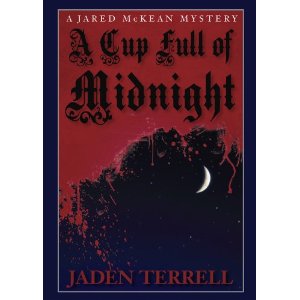
Jaden Terrell wrote A Cup Full of Midnight, a mystery/thriller set in Nashville, Tenn and the second mystery focused on PI Jared McKean. When McKean starts working a case involving vampires and the occult it strikes close to home. His teenage nephew had been involved with the older victim. My review here.
In addition, Terrell contributes to Now Write! Mysteries, a collection of exercises published by Tarcher/Penguin for writers of crime fiction. Terrell is the executive director of the Killer Nashville Thriller, Mystery, and Crime Literature Conference and a recipient of the 2009 Magnolia Award for service to the Southeastern Chapter of Mystery Writers of America.
Jaden answered some questions via email.
Amy Steele: What appeals to you most about writing mysteries?
Jaden Terrell: I think we often write about things that frighten us or things we don’t understand. In real life, justice isn’t always served. Criminals are released on technicalities. Crimes can go unsolved, and even when they are solved, we’re left wondering why they happened. Mysteries explore both the motivations behind criminal acts and the effects of crimes on the victims and their loved ones. In the conflict between good and evil, good ultimately wins, though often at great cost. It’s reassuring to think there are strong, brave people standing between evil and the rest of us. Writing about Jared, the hero of my private detective series, reminds me that those people exist.
Amy Steele: How difficult is it to come up with a new storyline?
Jaden Terrell: It’s very easy to come up with new ideas. They’re everywhere. But developing those ideas into full-blown story-lines is harder. Plotting doesn’t come naturally to me, so going from the seed of the idea to the fully realized story takes a lot of work.
Amy Steele: Do you base your stories on anything you’ve seen or heard in the news?
Jaden Terrell: It would be more accurate to say they’re “inspired by” rather than “based on” actual events. My books incorporate elements of news stories, but the real-life incident is more of a jumping-off point or something that provides texture. In A Cup Full of Midnight, the second book in the series, I drew from several incidents in which young adults using vampire personae committed murder, but beyond the initial idea, there’s little correlation between the events in the book and the details of the original cases. The third book, which is in progress, explores human trafficking, and the fourth involves the practice of soring in the Tennessee Walking Horse Industry (soring is the use of pain to give a horse an exaggerated gait). Both issues have been in the news, but the plot is independent of any one case.
Amy Steele: Have you developed a working relationship with the Nashville police or with any private investigators so that you can bounce ideas off them?
Jaden Terrell: I attended Citizen Academies for the FBI, TBI, and Metro Nashville Police, which gave me some great contacts in all those agencies. I’m also friends with a former private detective, and I took a firearms course from a firearms instructor for Metro’s police department. Both have been extremely generous with their time and knowledge. When I was researching A Cup Full of Midnight, I took a medical examiner to lunch and interviewed him about what an autopsy would reveal about a murder described early in the book, and later, I met with a homicide detective to see what the on-site investigation would have been like.
Amy Steele: How do you describe the death scenes so vividly? Have you been to some crime scenes?
Jaden Terrell: Thank you for saying they’re vivid. I haven’t been to a crime scene, but I’ve seen a number of mock crime scenes staged by the TBI (Tennessee Bureau of Investigation), and I’ve read a lot about crime scenes and crime scene investigation. When possible, I’ve looked up photographs or interviewed professionals. I think one thing that makes a scene like this seem authentic is the reactions of other characters. For those, I relied on interviews with investigators and observations of how we behave when people we care about are sick, injured, or have passed away.
Amy Steele: How important is a title to a mystery?
Jaden Terrell: I think the title is very important. If a reader already knows and loves your work, they may pick it up regardless, but for a lesser-known writer, it’s often the title that first catches a reader’s attention. Since most print books are shelved with the spine out, the title is often the only thing a reader sees. If it’s catchy or thought-provoking, there’s a better chance a browser will pause to take a look. With e-books, it’s a little different, in that you see the whole cover and not just the spine, but since they’re usually just thumbnails, the effect is similar. Of course, you can’t always control your title. Publishers often change writers’ titles, sometimes for better and sometimes for worse.
Amy Steele: Have you always been a fan of mysteries?
Jaden Terrell: I’ve always been an eclectic reader. Mystery, fantasy, thriller, western, horror, literary…I’ve never been much for romance, but everything else has always been fair game.
Amy Steele: Who are some mystery authors past and/or current who you admire?
Jaden Terrell: Timothy Hallinan, Dennis Lehane, Robert Crais, Michael Connelly, John Connolly, John Sandford, Lawrence Block, S.J. Rozan, Jonathan Kellerman.
Amy Steele: You belong to several mystery and writing organizations, how do these help you in your writing?
Jaden Terrell: I’ve met so many exceptional writers through these organizations (and through my work with the Killer Nashville conference). We give each other support and encouragement, and I learn more about the writing craft by reading their books. I try to open doors for those whose work I admire, and those who have read and like my work do the same for me, so we end up reaching more readers than any one of us alone could do. So I would say both my writing and my writing career benefit from being a part of writing and mystery organizations like Mystery Writers of America and Sisters in Crime.
Amy Steele: Where did the idea for A Cup Full of Midnight come from?
Jaden Terrell: In the first book, Jared’s nephew, Josh, runs away from home and becomes involved with a dangerous fringe of the Goth subculture. Much of what happens to him occurs offstage, but there’s an indication that he’s become involved with an older man, Razor, who calls himself the Vampire Prince of Nashville. He was a Machiavellian character, and I wanted to explore both his ability to manipulate others and the consequences of his behavior. I also wanted to look at the difference between role players (since I’ve been one for years) and people who are not playing but rather living their personas. One day, I read a quote by Wayne Dyer describing God as a vast ocean of love and goodness; no matter how much you scooped out, the ocean itself was never diminished. I had the thought that evil was no different, and got an image of Razor standing beside a sea of darkness and dipping in a chalice to scoop out a cup full of that blackness. I knew then that Razor’s dance with the devil would end in his death and that Jared’s attempts to solve Razor’s murder would unveil layer after layer of machinations and lead him and Josh into danger.
Amy: What type of research went into this book?
Jaden Terrell: I did quite a bit of reading, both online and in books, about the “real” vampire culture, including blogs by people who believe themselves to be vampires. I knew a lot already about roleplaying and role players, so I didn’t have to do much in that area. In terms of Jared’s investigation, much of what I learned from my general research came into play (though I made a rookie mistake with one of the firearms—I changed Jared’s handgun from a Glock to a Taurus and back again, and when I changed back to the Glock, I forgot to remove the safety). One of the challenges in writing a PI novel is keeping the police on the sidelines without making them seem incompetent. I spoke to several police officers about ways to achieve that.
Amy: Why did you want to write about vampires and the occult?
Jaden Terrell: I didn’t think of it that way. I started with the idea that Josh was into the Goth subculture but involved with someone much darker. The vampire subculture is the darker end of that spectrum, so it seemed like a natural fit. Because I had played the vampire role-playing game, I was both interested and appalled by the real-life murder cases in which vampire wannabes committed murder. How do you cross that line from pretending to be a supernatural monster to becoming a real one? In the book, the Storyteller in the game, Chuck, describes players whose characters are “sharks in people suits.” My friends and I always played “superheroes with fangs,” the whole point of which was creating characters who resisted the monster inside. Why would someone deliberately embrace it? And what would make a group of seemingly normal teenagers allow themselves to be drawn into such a dark and elaborate web?
Amy Steele: Let’s talk about your main character, the P.I. Jared McKean. Why did you decide to write a man and from a man’s perspective instead of a woman? How did you come up with this character? He’s strong but very sensitive as he has a special needs child and his best friend has AIDS. What made you add those additional characteristics?
Jaden Terrell: I was trying to write about a woman, and it wasn’t working. She was a stereotypical feisty female PI, and no matter what I did, I kept coming up with bad Kinsey Milhone knock-offs. I always ended up making her so different from me that I couldn’t identify with her or so similar to me that she refused to take any risks (“No, seriously, I’ll stay here and lock the doors and call 911. YOU sneak into the basement and take on the bad guys.”). I kept getting the image of this tall, handsome man in jeans and a leather bomber jacket leaning on a whitewashed wooden fence in front of a horse pasture. “I’m your guy,” he’d say, and I’d say, “No you’re not. I’m writing about this feisty female detective.” Eventually, I sat back and said, “Okay, let’s see what you’ve got.” I wanted him to be very strong, but also to have a depth of compassion. Because I had taught special education for twelve years, I gave him a son, Paul, with Down syndrome, and because I had lost a close friend to AIDS, I thought it would be interesting to explore a lifelong friendship between a straight, tough-guy, former cop and a gay man with AIDS. Both these relationships soften Jared and—I hope—give him depth and dimension.
Amy Steele: What do you like best about Jared?
Jaden Terrell: That’s a hard question! I love his loyalty, the way he never gives up on anyone he loves. His horse is almost as old as he is. His dog is ancient and arthritic. He’s still in love with his ex-wife. His best friend is gay and may be dying. He finds a way to make relationships work, even when it’s hard, even when making them work means redefining them. He’s flawed, but he tries to do the right thing.
Amy Steele: What is your favorite aspect of A Cup Full of Midnight?
Jaden Terrell: Some of the characters have very complex motivations. They have conflicting emotions, conflicting desires. Depicting that complexity was both challenging and rewarding.
Amy Steele: Why do you write?
Jaden Terrell: The usual answer to that question is, “Because I can’t NOT write,” but that’s not the whole story. If I stopped writing, I would still enjoy watching the movies in my mind. I would still be writing in my head. Sometimes it’s hard to make yourself move past that stage and actually write the story. But the movie in your mind is never really complete and therefore, enjoyable as it is, is never totally satisfying. It’s not until it’s written down that you see its real potential. Then, as you edit and revise, the layers and subtexts reveal themselves and the story becomes so much more than it was when you were only imagining it. There’s nothing like reading a scene and realizing that, while it seems familiar, there’s also something alien about it. It’s almost like it was written by someone else, and by Jove, it works.
Amy Steele: I’m fascinated that you’re a writer and a certified horse massage therapist. When and why did you become one?
Jaden Terrell: I’ve always loved horses and, at the same time, been a little afraid of them. I’m uncomfortable with riding, partly because of the danger and partly because I’m overweight and it seems unfair to the horse. But I love to brush and pet them. I love their company. I love the way they smell. When I first read about equine sports massage and realized I could take a course in it, it seemed like the perfect way to enjoy the company of horses without having to get off the ground. I’ve never done it professionally, but my palomino quarter horse, like Jared’s, is in his 30s, and massage is a gift I can give him in return for all the years he gave me and his previous owners.
Amy Steele: What’s the best advice someone’s giving you about writing?
Jaden Terrell: This came from my friend and fellow writer, Philip Cioffari, who wrote Catholic Boys and Jesusville. He said, “Be ruthless with your writing time. Protect it with your life.” I have trouble saying no to other obligations, so I have this posted in my calendar, on the notepad on my phone, and everywhere I write.
—30—

Share this:

STEELE INTERVIEWS: singer/songwriter Sara Jackson-Holman
Posted by Amy Steele in Interview, Music on July 26, 2012
One of my favorite albums this year is definitely Cardiology by Sara Jackson-Holman. It’s theatrical, innovative and intricately creative. Jackson-Holman’s distinctive voice propels the emotionality in each song. She’s a classically trained pianist from Portland, Ore. I recently interviewed her via email.

Amy Steele: Your songs are so dramatic and have so many layers to them. How do you develop a song?
Sara Jackson-Holman: It depends. Sometimes, it starts with a beat, sometimes with a melody, sometimes with a piano pattern. I keep adding things until I feel that it is conveying the right emotion–which is when I feel like the song is complete.
Amy Steele: This entire album is all about the heart—it’s basically a theme-based album? How did you
come up with this idea?
Sara Jackson-Holman: The process was very organic. I was writing songs in these separate little moments of my life throughout the course of a year, and when I compiled them to one list, they created a sort of journey through my emotional experiences.
Amy Steele: You started playing classical piano at a young age. What do you like about classical music?
Sara Jackson-Holman: Its diversity, its complexity. Its sense of melody, use of countermelodies. I love the drama, and the universality of it. It’s foundational.
Amy Steele: How did studying piano and writing in college affect your songwriting?
Sara Jackson-Holman: I think songwriting became a sort of escape, really. At that point in my life, I was really done with structure and so songwriting allowed me to do something that was completely my own, and to be creative on my own terms. To experience music this way was freeing. The performance aspect was also drastically different. Performing classically, the room is silent, the applause polite, and there aren’t many allowances for mistakes– there is this sense of your performance and interpretation of a piece constantly being compared to others. It’s a very rigid environment, whereas performing pop music is more relaxed. People smile at you when you perform, they are enthusiastic. I love that.
Amy Steele: Is it a difficult transition [from classical music to alternative or pop music]?
Sara Jackson-Holman: Not really– if anything, the structure of classical music has been really helpful to me in my songwriting. It’s been this process of meshing what I know with what I love listening to (dark pop/hip hop). Incorporating classical music in a modern and relevant way is fun for me.
Amy Steele: You have unusual vocals. How did you learn how to sing and/or gain the confidence to sing?
Sara Jackson-Holman: I didn’t actually sing for a long time. After being too shy to sing in my younger years, I was extremely involved in my high school’s choir, but not really as a soloist. I think when I first started writing songs, I felt that I could express myself in a unique way. The support I received from family and friends as I ventured into songwriting gave me the confidence I needed to really pursue music. I’m grateful for that support, I’m very fortunate.
Amy Steele: What inspires you to make music?
Sara Jackson-Holman: Aside from writing music to work through my feelings, I write music to communicate with people. I’m shy, I don’t care for superficialities, but if I can connect with someone in a significant way, or write a song that resonates with someone, that they can claim as their own, I feel I’ve been successful.
There is the sweetest couple who come to many of my shows, and they say “their song” is “When You Dream” off my first album. Which is definitely inspiring.

Amy Steele: Tell me about writing the songs:
“Can’t Take My Love”
Sara Jackson-Holman: I wrote this song in January, about a week after my grandfather passed away. It was written as a way to process my grief– this was the first of a few songs that I wrote (followed by Come By Fire, Freight Train, then For Albert), and is definitely the darkest of them. I honestly couldn’t really identify what I was feeling at the time, except through music.
“My Biggest Mistake”
Sara Jackson-Holman: This was actually the first song I wrote on Cardiology. It’s about the stages you go through (or at least, that I go through) after a break up– sadness, wondering if you’ve just wasted a part of your life, wanting to move on.
“Empty Arms”
Sara Jackson-Holman: This song takes me to July– 90 degrees, blue skies, the languid feeling of summer. I felt very relaxed and content while writing this song.
“To Be Bright”
Sara Jackson-Holman: This song took me the longest of any of my songs. I think the garageband version of the song had something like 45 tracks. I wanted to write a heavy pop song with orchestral elements, and To Be Bright was the result.
Amy Steele: What has been your favorite part of your music journey so far?
Sara Jackson-Holman: I’ve loved everything. I love the song-writing process, I love the recording process, I love performing. During each of these separate processes, I always say, “this is my favorite part, this is why I’m a musician”. So it’s hard for me to choose a favorite– perhaps performing because of the people, I love singing to people.
Amy Steele: Thank you Sara! See you on twitter. . .
Sara Jackson-Holman: Thanks Amy!
Sara Jackson-Holman website
purchase at Amazon: Cardiology

Share this:

STEELE INTERVIEWS: singer/songwriter Alex Wong [A City on a Lake]
Posted by Amy Steele in Interview, Music on July 18, 2012

37-year-old Alex Wong started to play piano as a preschooler. He studied classical music at college. After being in several bands, the Brooklyn-based singer/songwriter/producer decided to form this solo-fronted project called A City on a Lake. Eclectic arrangements and instrumentation, particularly percussion, drive the subdued techno beats of A City on a Lake. The self-titled debut released today. I spoke with Alex by phone last week.
Amy Steele: It sounds like you’ve always been involved in music or wanted to be part of music in some way?
Alex Wong: I think I always wanted to be part of music but I thought it would be in a more orchestral way. I never thought I’d be singing and writing songs. I didn’t really start writing music until I was about 25.
Amy Steele: How does the classical music influence your writing today?
Alex Wong: Instrumentation-wise, the multi-tasking of the live show I’m playing lots of things and switching between instruments. It’s very textural.
Amy Steele: How is the live show different from the album?
Alex Wong: The live show is played as a trio. The record has a lot of instrumentation and we’re not trying to recreate one or the other. I want the songs to work great live and I want them to work great on the record.
Amy Steele: How did you move away from classical music to playing more alternative music?
Alex Wong: There’s nothing like playing in a symphony with all those people where there’s all that power. And creating all that great music. I couldn’t control the song and the arrangement. It just made a lot more sense to me to be in a band. I had a lot more freedom creatively.
Amy Steele: Where are you from and how did you end up in Brooklyn?
Alex Wong: I grew up in Northern California. Then I lived in L.A. for a little while. Then I moved to Brooklyn specifically for the music. I was working with somebody. I wanted to be there. I wanted to be pushed more. I wanted to be intimidated more. I really felt that I was being pushed the way I needed to be pushed at the time. It made me grown a lot personally and musically.
Amy Steele: Why did you want to do this solo project—A City on A Lake?
Alex Wong: It was the natural next step for me. I had done two or three other projects that were co- or duo-projects. I love collaborating. I love feeding off another person. But I was also frustrated that there was nothing that I wanted to move in the direction that I wanted. At that time I wasn’t ready to do a solo project on my own.
Amy Steele: How is it different from your other projects?
Alex Wong: Musically I don’t think it’s drastically different. I think it’s just an evolution. It was a way of expressing myself that became more involved.
Amy Steele: As a singer, you have a very soothing voice with hopeful vocals.
Alex Wong: I was trying to do something more grown up with this record. I never considered myself a singer. I was always an instrumentalist and it too me a long time to get to the point where I felt comfortable singing leads.
Amy Steele: What do you like best about the album?
Alex Wong: I feel like I got what I wanted and I feel it’s something I can stand by.
Amy Steele: What makes a good song?
Alex Wong: For me, all the elements of the song are working together– the instrumentation as well as the melody and the mood are all part of songwriting. It’s all part of the emotional aspect of the song. It’s just something that makes you feel a strong emotion that makes a good song.
TOUR DATES:
July 18 NEW YORK, NY Rockwood Music Hall
July 19 BOSTON, MA Club Passim
purchase at Amazon: A City On A Lake

Share this:

STEELE INTERVIEWS: author G. Willow Wilson
Posted by Amy Steele in Books, Interview on July 13, 2012
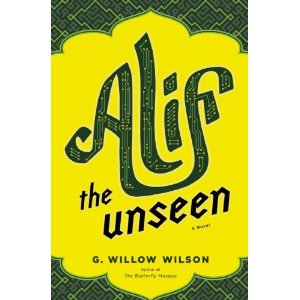
Alif the Unseen by G. Willow Wilson is a mesmerizing novel where politics, religion and technology collide in a complex setting. A 23-year-old Arab-Indian hacker in a Middle Eastern emirate simultaneously finds his computer breached by the state’s security force and jilted by his aristocratic lover. A jinn (or genie) and his kind, intelligent neighbor Dina help Alif find out how and why this happened to him. His problems deepen while he learns eye-opening information that will change his future. Alif the Unseen is a beguiling page-turner.
Alif the Unseen by G. Willow Wilson. Publisher: Grove Press (July 2012). Fiction. Hardcover. 440 pages. ISBN: 978-0082120205.

A graphic novelist and author of the memoir The Butterfly Mosque, A Young American Woman’s Journey to Love and Islam, Alif the Unseen is G. Willow Wilson’s first novel. She studied history at Boston University then taught at an English language school in Cairo for several years at the request of a retiring professor. I spoke with my fellow BU alumna by phone recently.
Amy Steele: Did you convert to Islam when you were in Egypt?
G. Willow Wilson: I had thought about converting [well before going to Egypt] but then 9/11 happened and I couldn’t seriously convert when these people had done this to my country in the name of religion. It took me several more years of research and study to reassure myself that they had acted in a way that Islam would consider abominable and that Islam rejected. I thought I could keep it a secret. But I didn’t know how I was going to get through 30 days of fasting every year without anybody finding out.
Amy Steele: Religion is a private thing but then there are so many facets of it that are impossible to keep private.
G. Willow Wilson: Especially in the Middle East, religion is not private in the way we think of it in the United States. Here it would be illegal to ask someone their religion on official documents such as a driver’s license or anything like that. But in the Middle East your religion appears on everything. So I was going from a place where it’s mostly private to a place where the state gets involved.
Amy Steele: In your novel, Alif is non-practicing isn’t he?
G. Willow Wilson: At least ambivalent. The Middle East is the birth place of so many world religions that religion becomes intertwined in almost every facet of life. He probably has small bits of the Quran memorized that most people have memorized who are practicing Muslims but he’s very ambivalent about religion. He’s not really practicing.
Amy Steele: I think when Americans and Westerners think of the Middle East you think of religion and the people and the government hand in hand.
G. Willow Wilson: There’s a lot of secularism in the Middle East and I don’t think people realize it. Some people would rather that religion play no part in public life and you see these debates unfold in places like Egypt where there’s a big secularist contingent.
Amy Steele: Alif is bi-racial. Would that be unusual?
G. Willow Wilson: It would be somewhat unusual. The book is set in the Persian Gulf and the Persian Gulf plays host to literally thousands of guest workers from Bangladesh, the Philippines and other parts of Southeast Asia. The guest workers actually outnumber the native-born Persian Gulfers and it’s created a very interesting social dynamic. For Alif, I imagined if a wealthier businessman had a secret or unsanctioned marriage with a woman who was a guest worker from the Indian subcontinent. I think that sort of marriage is still pretty unusual. People do see those two groups as being very separate.
In this case, I wanted him to be both an insider and an outsider. It seemed like an interesting way to have it play out.
Amy Steele: How did you get the idea to write Alif the Unseen?
G. Willow Wilson: It came to me in certain parts. The big driving force for me was the fact that there was so much interesting stuff going on in the social media world in the Middle East among activists online in how they were using the internet to get around censorship in print media. The internet was really allowing different factions of people who normally had no reason or method to talk to each other [secularists, traditionalists, feminists] to share a common platform and communicate with each other.
It was a very exciting thing for me to see it happening because instead of what you’d expect to happen which is that they were all at each other’s throats because they had different beliefs, they were struggling to find common ground because they had common enemies in these horrible, entrenched, dictatorial leaders in places like Egypt who’d been in power for 30 plus years.
It was at the time a very hard sell in the United States. People were very dismissive of social media. I could see the potential of what was happening in the Middle East and I wanted a way to highlight that. And that formed the basis for Alif the Unseen.
Amy Steele: When you say that this novel takes place in an undisclosed Gulf emirate, what type of government is in place? A dictatorial regime like Egypt?
G. Willow Wilson: It’s vague. There’s a point in the book when someone says he can’t believe the government has this sophisticated digital surveillance but no mail service. That is something I pulled straight from Egypt under Mubarak where if you were a blogger and talking about politics, eventually state security would show up at your door and that would be the last that people heard of you. But try to get a letter delivered. I didn’t want to set it in a specific country or tie it to a specific country so I set it in a fictional country.
Amy Steele: Can you tell me about the Arab hierarchy among the various countries—the Gulf states being at the top– that you describe in the novel?
G. Willow Wilson: They certainly see themselves that way. There seems to be a perception among certain people—I don’t want to paint too broad a brush—who think that they have the oil, they have the money, so that people that show up to work in the Gulf are there to serve them. It’s a very feudal mentality where you’ve got the Lords and the Ladies on the top and the serfs on the bottom. Poorer countries, like Egypt and Libya, aren’t seen as existing at the level of the wealthier nations along the Gulf. It makes for an interesting dynamic and it’s the cause for a lot of frustration for a lot of people who work in the gulf.
Amy Steele: In the novel, you also speak of old money, new money and no money. That there is no middle class. Immigrants send money home as they do in the United States too.
G. Willow Wilson: It’s true. It’s really a commentary for globalization.
Amy Steele: How much did you know about the grey hat world before writing this?
G. Willow Wilson: Very little. I’m a very picky end-user of technology. I’m one of these people who bugs my tech friends a lot for advice and I also like to know what makes [computers/technology] work. I picked their brains about Alif. I knew I’d have to break some rules in the world of fiction but I did go in with some basic understanding of computer culture.
Amy Steele: How did the fantasy aspect, the jinn and Vikram come in?
G. Willow Wilson: I wanted to write about how we think about the unseen whether it’s the unseen world of computers and technology and things we don’t understand. Or if it’s the unseen world of spirits and things we don’t talk about. The parallel between the unseen world of technology and the unseen world of spirituality provided some really interesting fodder for storytelling.
Amy Steele: Did you influence the character “the convert”?
G. Willow Wilson: She’s not me. As a white Western writer writing a character in the Middle East and thinking of all the foibles and the shortcomings and the heroism, it behooves me to turn around and be able to reflect myself as well. The convert is the kind of person I try not to be in many ways. She’s very academic, very rigid and she’s very earnest but it kind of gets in her way. She’s living in this country so very different from her own and she’s making a lot of mistakes and that’s something I can relate to. She’s my way of having a sense of humor as an outsider about these issues.
Amy Steele: What do you like about Alif, Dina and Vikram?
G. Willow Wilson: Writing an ensemble cast, I made sure each character had its own arc and went through its own issues that pertained to that character. In a way it was a lot like writing comics, which I do a lot of, it was a lot of fun for me. You’re able to do that, have such a wide range of characters and have them interact in a dynamic way. I don’t really have a particular character who’s a favorite.
Amy Steele: What is a particular characteristic about them that you like?
G. Willow Wilson: I thought Dina would be the most difficult character to write but she ended up coming really naturally. I liked her stubbornness. For Alif, I like his impulsiveness. I like that he grows up. He’s transformed by his experiences. Vikram was the most fun to write because he’s a genie. He’s not bound by our rules and moralities. It gives him an opportunity to tell the truth. I tried to make them all true to themselves.
Amy Steele: What’s your favorite aspect of the novel?
It was really fun writing the car chase. As writers of literature we’re supposed to take ourselves so seriously. Putting characters in a car and in a car chase across the desert was the most fun thing to write.

BOOK TOUR:
Friday, July 13, 2012 – Saturday, July 14, 2012
Comic-Con
Comic-Con, San Diego, CA
Monday, July 16, 2012
6:00 pm
Busboys and Poets
1025 5th Street NW
Washington, DC 20001
202-789-BBAP
Tuesday, July 17, 2012
7:00 pm – 9:00 pm
Powerhouse Arena
37 Main Street
Brooklyn, NY 11201
718-666-3049
Wednesday, July 18, 2012
7:00 pm
Harvard Book Store
1256 Massachusetts Avenue
Cambridge, MA 02138
(617) 661-1515
Thursday, July 19, 2012
7:30 pm
Tattered Cover Book Store
2526 East Colfax Avenue
Denver, CO
303-322-7727
Friday, July 20, 2012
7:30 pm
Boulder Bookstore
1107 Pearl Street
Boulder, Colorado 80302
303-447-2074
Share this:

-
You are currently browsing the archives for the Interview category.
About Me

covering mostly music and books. focus on alternative/indie and women in music, literature and the arts. feminist. vegan. mostly alternative, a bit bohemian. Masters in journalism from Boston University. BA from Simmons College.



Entertainment Realm by Amy Steele is licensed under a Creative Commons Attribution-Noncommercial-No Derivative Works 3.0 United States License.
Based on a work at entertainmentrealm.comCopyright © 2009. All writing, unless otherwise noted, by Amy Steele.
 ENTERTAINMENT REALM
You must be logged in to post a comment.