Archive for category Interview
STEELE INTERVIEWS: singer/songwriter Nadine Shah
Posted by Amy Steele in Interview, Music on July 20, 2013
Goth-folk singer/songwriter Nadine Shah grew up in a small English town called Whitburn Tyne and Wear. Born to a Pakistani father and Norwegian mother, she soon found herself in London singing jazz standards and soon started composing songs inspired by Billie Holliday infused with inspiration from the Hindu Ghazals sung by her father. Producer Ben Hillier (Blur, Elbow, Doves, Depeche Mode) helped add a sonic punch to songs mostly composed with just a piano.

I recently interviewed Nadine.
Amy Steele: You grew up in a small town in England. How did you become interested in singing and playing music?
Nadine Shah : Boredom! haha seriously though, I think it was just because it was apparent from a young age that I had a good voice and it just made sense to pursue that rather than something I wasn’t so good at.
Amy Steele: Were your parents first-generation immigrants? If so how does that affect your music?
Nadine Shah: Yeah my dad was born in Pakistan. I think maybe some of his culture may have influenced my vocal, but not so much the actual music. He has a great singing voice himself and sings these religious sufi songs called “Ghazals”, they’re beautifully sad love songs. People sometimes say my music reminds them of these songs but I don’t really see the similarity.
Amy Steele: What type of musical training did you have in your youth?
Nadine Shah: Not much, I was involved in a few amateur theatre productions. We were classically trained vocally but it wasn’t very intense training. It definitely taught me some good tricks and to get rid of lots of bad habits I had picked up vocally. It put a stop to me trying to imitate Mariah Carey 😦
Amy Steele: I read that you write songs in pubs. So you write the words first and then come up with a melody? What is your song-writing process?
Nadine Shah: I don’t really have one certain way of writing. Just whatever works. I write lyrics often and i write piano parts often too. Sometimes I’ll write both at the same time, I wish I could work out a simpler formula!
Amy Steele: When did you start performing out?
Nadine Shah: I’m been performing since a really young age, but i’ve only been performing my own compositions for 3 years.
Amy Steele: what was it like working with producer Ben Hiller?
Nadine Shah: Sensible, we start at a reasonable hour and finish at a reasonable hour haha. He’s great, he’s a really talented guy. He’s not only technically gifted but also creatively. I think the album is a real collaboration between the two of us.
Amy Steele: What influences you?
Nadine Shah: I think I’m mainly drawn to more macabre subjects, I heard a great quote by a poet named Philip Larkin the other day which I think sums it up nicely “Deprivation is for me what daffodils were for Wordsworth.”
Amy Steele: Does your darker music reflect your personality/ mood or is that just a style you prefer?
Nadine Shah: I really don’t know, maybe both but I’d prefer to think it’s just the latter.
Amy Steele: Have you heard Chelsea Wolfe? That might be a good double-bill.
Nadine Shah: I had heard the name but never actually listened to their music. Just Googled and her voice is beautiful, the music sounds wonderful. Thanks for the tip! Let’s give Chelsea a call..
Amy Steele: What makes a good song?
Nadine Shah: If I knew that I’d have golden monkeys typing this for me whilst me and Kanye West swam in my pool of dollar bills.
Amy Steele: What artists do you like to listen to?
Nadine Shah: All kinds, really ALL kinds. I’ll just give you a little list of what i’m listening to right now..Arthur Russell, Nick Cave and the Bad Seeds, Pixies, Diana Ross, Dirty Projectors, The Maccabees, Daft Punk, Retriever, Das Racist, Nina Simone.
purchase at Amazon: Love Your Dum & Mad

Share this:

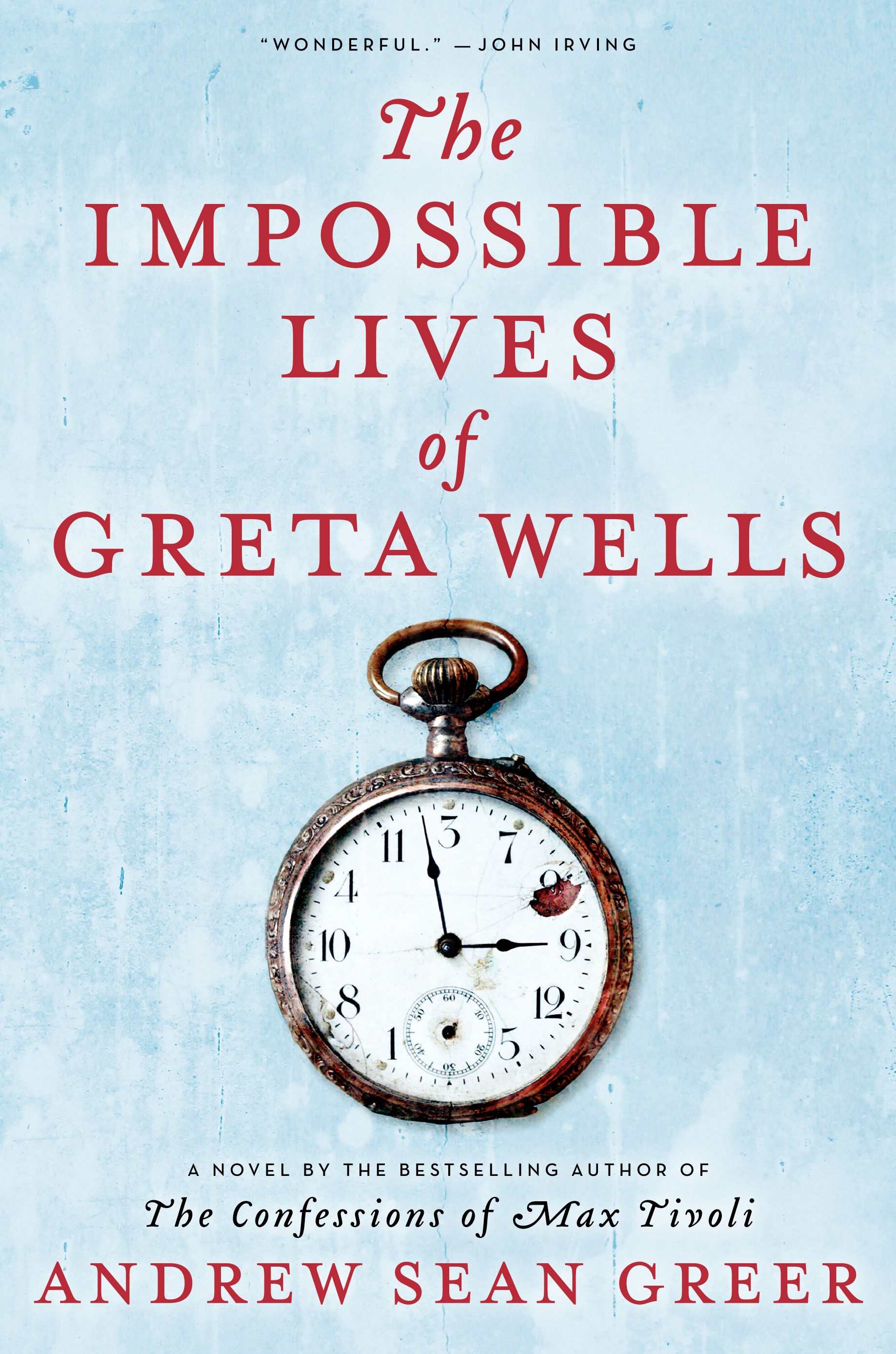
STEELE INTERVIEWS: author Andrew Sean Greer [The Impossible Lives of Greta Wells]
Posted by Amy Steele in Books, Interview on July 16, 2013
Amy Steele: How did you come up with the idea for this novel?
Andrew Sean Greer: In writing The Confessions of Max Tivoli and Story of a Marriage, the plots rely on the character being unable to make liberated choices, due to the times in which they live. That led me to be interested in how the same story would differ in three different time frames—same characters, same tensions, same situations, with only the year changed. I set out to write the book as a three-part novel, only to decide it would be intensely boring. That is when I decided to put all the stories on top of each other, and create a protagonist who would wake up in a different story every day, and be forced to adjust to how things were different. That person became Greta Wells.
Amy Steele: What interests you about time travel?
Andrew Sean Greer: Well, as the novel is about alternative realities, other worlds, I don’t think of it as time travel. It is more a novel of anachronism. Interviewers often ask me what time I would like to live in, and I have to say to them I’d like to bring my friend along, which means often my female friends would be unable to work, or vote, and my black friends unable to move freely, Chinese friends unable to reunite with their spouses. And as for me, as a gay man…well the past doesn’t look too pleasant. So I have an unromantic view of the past. Which allows me, I think, to enjoy it all the more in my writing.
Amy Steele: Why did you choose to set the story in 1984, 1941 and 1918?
Andrew Sean Greer: Gut feeling. Those time periods simply interested me. 1918 was always a fascinating moment, and I wanted a time period near the middle of the century. And I decided that, while I could put Greta’s world in the present day, if I set it in 1985, I would get an extra time period at no extra cost! Only then did their connections reveal themselves to me—two worlds at war, two worlds with plague, and so on. WIth this book, I followed and trusted my instincts far more than my brain.
Amy Steele: What do you like about Greta?
Andrew Sean Greer: She is stubborn and vulnerable, she is a mute Cassandra, and she is, though very sad, capable of bearing witness to the beauty of places others take for granted, and for recognizing the possibilities thwarted in lives of those she loves.
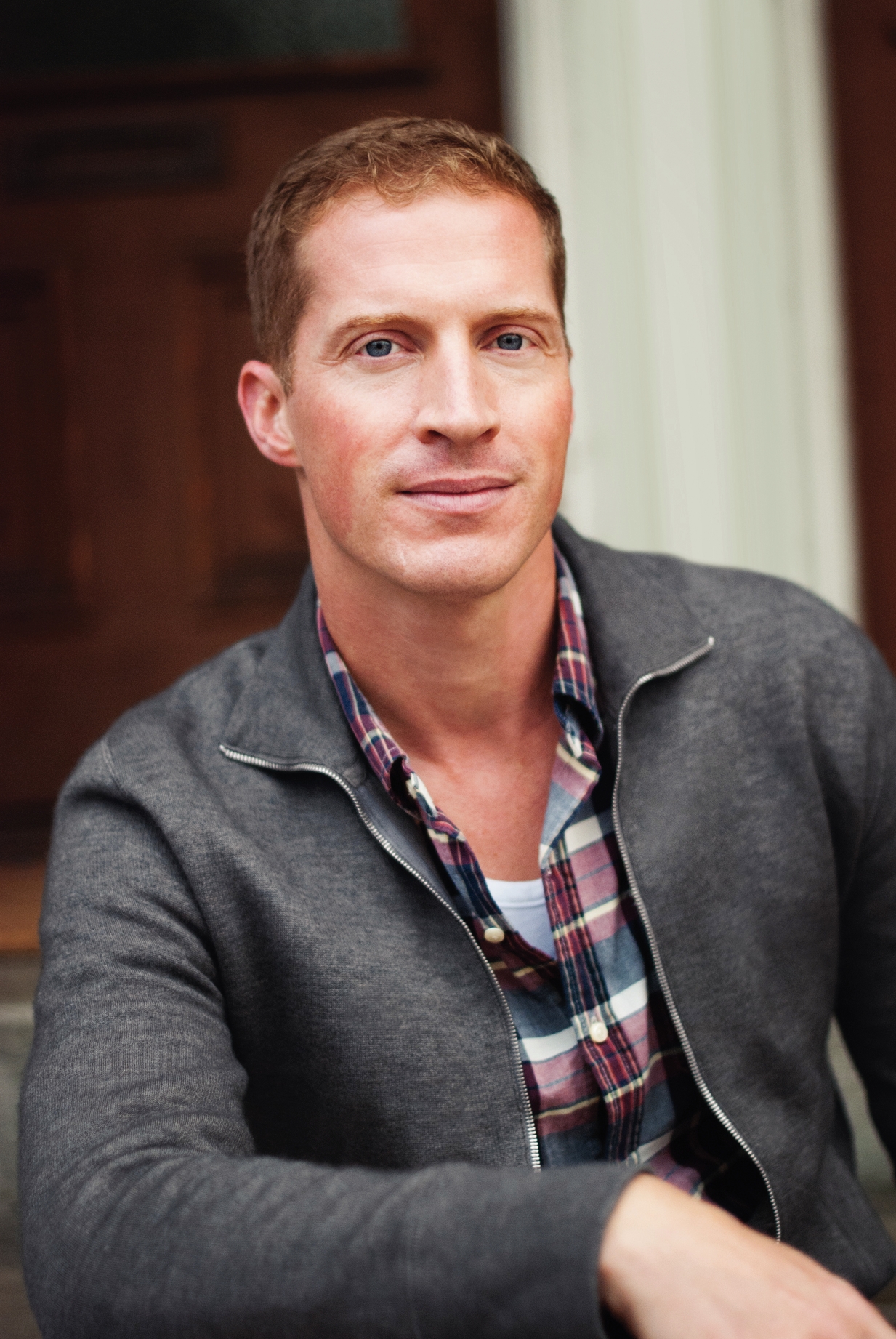
photo by Kaliel Roberts
Amy Steele: Greta’s twin Felix is a major part of her life. What interested you in writing about twins?
Andrew Sean Greer: I’m an identical twin 🙂
Amy Steele: How would you describe Felix?
Andrew Sean Greer: Well, there are three Felixes, in three different worlds. 1985 Felix, who we see only in memory (as he is dead when the novel begins), is funny, brash, driven by a thirst for life. 1941 Felix is secretive, desperate and about to have a nervous breakdown. 1918 Felix is a mask of smiles and pat phrases, hiding a tormented inner life. They are all the same man, in the way that our different moods from different moments are all the same us. And, in a way, they are all pieces of me.
Amy Steele: The twins also have this wonderful aunt. She’s so open-minded and independent.
Andrew Sean Greer: I LOVE HER! She was a great creation to be able to put on the page. I know quite a number of women like her, and they are not always celebrated for their independence! Strong women suffer. And Ruth suffers, though you only see it in small moments. She also will not indulge self-pity in Greta. She has seen a lot, and only gotten through it with will and making everything into a funny story at a party.
Amy Steele: The reason why Greta travels is that she’s receiving electroshock therapy for depression. Why don’t you mention her depression at all? There’s no way she would be instantly “cured.” [and I’m speaking as someone who has clinical depression.]
Andrew Sean Greer: I don’t understand the question—the first twenty-five pages of the novel are devoted to describing her depression. Look at page 13. I, too, suffer from depression, as do most of my friends. I can’t imagine claiming anyone is cured. But my god, waking up in a new world, she is certainly distracted!
Amy Steele: You’re the son of two scientists. What effect did that have on your world view and your own education and career plans?
Andrew Sean Greer: They were also two people who came from poor, rural areas of the South, and books were what brought them out of those worlds. So books were always held up in my house as the greatest, most accessible kind of travel away from pain, and also the way to understand it. Is it any wonder I became a writer?
Amy Steele: You received your undergraduate degree from Brown University. Did you become interested in writing in college?
Andrew Sean Greer: I became interested in writing when i was ten. I wrote stories until I was 16, when I wrote my first novel. So no, my interested started long, long ago!
Amy Steele: What did you do at Nintendo? What kind of place was that to work at?
Andrew Sean Greer: I worked for Nintendo Power magazine, which was dedicated to helping American kids get through the very difficult game levels (seen by the company to be too hard for Americans). I had to win the games and document, in kid-prose, how to beat the game! It involved hours of gameplay, and my godsons thought I was the most amazing adult ever! Then I’d write the articles. I was hardly ever at the Nintendo campus except to talk to the game developers, who gave me maps and tips. It was so long ago that I got the job after answering an ad in the local paper!
Amy Steele: Where do you write?
Andrew Sean Greer: I have been traveling for a year and a half, so I’ve learned to write anywhere. I have friends who write in cafe on yellow legal pads. I have friends who write on a treadmill office in their house. I seem to prefer a small quiet internet-free room with a couch to nap on. But relying on “needing” something to write is just another form of procrastination—so whenever I develop a habit, I try to break it!
Amy Steele: This is the first of your novels I’ve read. What would you suggest I read next? Do you have a particular favorite?
Andrew Sean Greer: Well I hope it was a nice introduction! I think the next most similar, if you liked Greta Wells, is The Confessions of Max Tivoli. It, also, has a small magical premise, an obsessive love story, and an historical setting. And, like Greta, it is built to make a certain number of readers cry
Amy Steele: Thank you so much for taking the time to answer these questions, Andrew. I will definitely add your other books to my reading list.
Share this:

STEELE INTERVIEWS: Marjan Kamali [author, Together Tea]
Posted by Amy Steele in Books, Interview on July 15, 2013
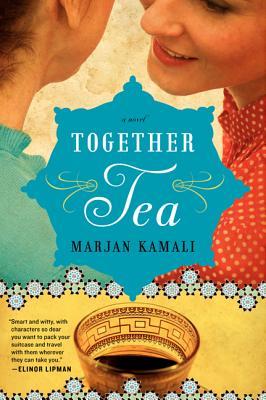
Marjan Kamali, an Iranian-American author, moved to the United States after the Islamic Revolution in 1979 though she’s lived in Kenya, Turkey, Switzerland as her father worked as a diplomat. She’s since lived in Massachusetts, New York, California, Switzerland and Australia. She received an MBA from Columbia and an MFA from NYU. Together Tea, a delightful novel about an Iranian-American mother and daughter striving to find what makes them happy after leaving one home and attempting to fit in to another. Read my review here.
Recently I met Marjan for coffee/tea to speak about the novel and her background.

photo by David E. Lawrence
Amy Steele: Have you always wanted to be a writer?
Marjan Kamali:I always wanted to write. I moved around a lot as a child. My dad was a diplomat so we moved around a lot. I never really had a sense of home. I learned to read in English from a Richard Scarry book. I loved to read. Books were my home. And then I wanted to write.
Amy Steele: When did you decide to write this book?
Marjan Kamali: I came to the U.S. as the child of immigrants. Writing wasn’t considered an option as a career because it wasn’t considered professional or stable or lucrative. The choice was a doctor, a lawyer or an MBA. So I pursued an MBA but the entire time I was there I wistfully looked at the MFA program. They wouldn’t let me do a double-major so that’s how NYU came about.
And because I had a liberal arts background when starting my MBA they put us in “Math Camp” and introduced us to Excel. I saw the spread sheets and thought what if a mother used this to find suitable matches for her daughter. I started writing the story. That was over 10 years ago.
I did put it aside because I was doing the double degrees and found I was having a baby and then went back to school and had another baby and we moved to Australia. So I put it aside for six years. After my youngest child was in kindergarten, I retrieved it and started revising it.
Amy Steele: How did the Islamic Revolution affect your family?
Marjan Kamali: I was living abroad because of my dad’s job. After the revolution in 1979 we went back because at that time it was considered a time of democracy but it soon became clear it wasn’t moving in the way many had hoped. It was becoming a theocracy and not a democracy. I was there between the ages of 9 and 10 ½. A lot of the scenes that occurred in the early 80s, I was there then so that’s how I got those scenes.
Amy Steele:: How autobiographical is the novel?
Marjan Kamali: I would say it’s semi-autobiographical. My mom never made spreadsheets to find me a husband but I was in Iran during the war so the schools changing and things like that.
Amy Steele: What do you think are the greatest misconceptions people have about Iran?
Marjan Kamali: I feel the biggest one is that people have a really short-term memory. 34 years in the history of Iran is very short. There are these Islamic fanatic and negative images on the media of people who hate America. I think the biggest misconception is that Iranians hate America because they don’t. They’re thrilled to see anyone from America. They want more of America and they can’t have it.
Amy Steele: You start out with Darya trying to set up Mina in a marriage. Is that common?
Marjan Kamali: Arranged marriages aren’t common. Even today it’s what you and I would call a blind date. There’s a word for it in Farsi and it means that if you’re a young person of a certain age and I know someone of a certain age who would be suitable, I set you guys up to meet. When it’s done by the parents, it’s more official. The man comes over to tea to meet the young woman. If they like each other, another meeting is set up. If not, nothing becomes of it. It’s matchmaking.
Amy Steele: Did you develop the story first or the characters?
Marjan Kamali: I developed the characters first. I wanted that mother figure and I wanted that daughter figure that was 25 and coming of age and trying to become independent. I came up with the spreadsheets because I thought it was a way to get to know the characters.
Amy Steele: What drew you to writing?
Marjan Kamali: I always read. Once I was in high school my English teachers encouraged me. I wrote a short story as a junior in high school that my mom sent to a contest. I kept getting feedback from really good teachers. It was never really a love of writing but a love of reading and others were encouraging.
Amy Steele: Why did you want to write this story?
Marjan Kamali: I believe there are two Irans. There is the Iran that we see in the media and then there is the real Iran. Adjusting to American life, trying to find a sense of home, and culture shock are common challenges for most immigrants. But Iranian immigrants have the additional charge of explaining or correcting negative representations of their home country. When I was an undergraduate, books like Maxine Hong Kingston’s “The Woman Warrior” and Toni Morrison’s “The Bluest Eye” made me understand the Chinese-American and African-American experience better through fiction. I wanted to find similar novels about Iranian Americans. So I decided to write a novel that shows the beauty, frustrations and joy in a Persian family. Iranians are often drawn with such a broad brush – I wanted to try and provide more nuanced, colorful strokes.
Amy Steele: this quote from pg. 67– “Mina knew how to study and work very hard. She knew how to swing her legs on that hyphen that defined and denied who she was: Iranian-American. Neither the first word nor the second really belonged to her. Her place was on the hyphen, and on the hyphen she would stay, carrying memories of the one place from which she had come and the other place in which she must succeed. The hyphen was hers—a pace small, potentially precarious. On the hyphen she would sit and on the hyphen she would stand and soon, like a seasoned acrobat, she would balance there perfectly, never falling, never choosing either side over the other, content with walking that thin line.”, as an Iranian-American Mina feels she’s on the hyphen. Can you explain that?
Marjan Kamali: This passage seems to have struck a chord with readers. It gets quoted in reviews the most and was read on NPR WBUR’s Good Reads program. It happens to be one of the autobiographical passages in the novel. I was putting into words how I had felt for so long. “She knew how to swing her legs on that hyphen that defined and denied who she was: Iranian-American. Neither the first word nor the second really belonged to her”. Mina, like many hyphenated Americans who live between worlds, is a foreigner when she goes to her “home” country and isn’t always quite at home in the U.S. either. She tries to find a balance for years. “The hyphen was hers – a space small, potentially precarious. On the hyphen she would sit and on the hyphen she would stand and soon, like a seasoned acrobat, she would balance there perfectly, never falling, never choosing either side over the other, content with walking that thin line.” Ultimately, Mina realizes that her sense of belonging doesn’t need to come from a place or ethnicity. Rather than being a limiting small space, that hyphen is actually a bridge between cultures and Mina finds her home on that bridge and in her art and in her relationships.
Amy Steele: How difficult was it to get out of Iran during the revolution? Some people stayed. Why?
Marjan Kamali: It was difficult especially after the revolution had succeeded because for a while the borders were closed. The new government wanted to make sure that no one who was a political anti-revolutionary left. Others stayed because they didn’t have the means to leave or had no choice. But many stayed because they did not want to leave. It’s difficult to leave the country you have known all your life and in which you have a strong family network in order to become a refugee or to just start anew in an unknown land. Also, people stayed because they just loved Iran too much – Iranians are very nationalistic and they wanted to see how post-revolutionary Iran played out. Others stayed because they wanted to contribute to making post-revolutionary Iran work. And some stayed because they couldn’t believe that anything negative or violent would last, that it would all blow over and things would go “back to normal”.
Amy Steele: Can you explain the title?
Marjan Kamali: The title is actually a phrase that my Farsi-speaking mother-in-law uses when she speaks English. She says “Would you like to have together tea”? I used this phrase as the title because tea is such a huge part of Persian life – it’s usually brewed (with great care) on a samovar and people drink it all day long. Throughout the novel, many characters meet over tea and pivotal conversations between Darya and Mina, Darya and Sam, Mina and Ramin, Darya, Parviz and Sam etc. are had over tea. Also, I wanted to use the word “together” to indicate the bridge between Iran and America. We have so much in common, despite the political rhetoric.
Amy Steele: Both Darya and Mina are strong women. What do you like about them?
Marjan Kamali: I love that Darya speaks her mind. She is judgmental and she knows it but she’s old enough to not care what others think. Her generation is one that was steeped in tradition and she was raised to respect her parents’ choices, to marry someone of whom they approved, and to establish a stable, secure life where one kept one’s head low and did not rock the boat. But she doesn’t suffer fools gladly and she is a very headstrong, determined, and talented woman. Because of Iran’s tumultuous politics, both Darya and Mina have experienced regime change (Darya’s generation were children during the ouster of Mossadegh and installment of the Shah in 1953 and Mina’s generation were kids during the 1979 Islamic revolution). Both know political upheaval first hand and see that stability and security are temporary. But whereas Darya’s response is to keep a low profile and hang on to safe and secure choices, Mina’s, due in large part to her exposure to Western culture, is to ultimately follow her bliss, despite the risks. This is where Darya and Mina differ the most. But I love and respect Darya’s decisions to keep her family safe and I think her choices in life show strength, even if they are choices of compromise. Mina, too, makes many compromises – but in the end she chooses her passion and I respect this greatly about her. I love that she manages to carve her own path without being a clichéd “rebel” who rejects her parents. Mina is trapped in a way, between her parents’ desires for her and her American opportunities. But she manages to balance both, hard as it is, and I love this about her.
Amy Steele: You mentioned potential unfulfilled and that this appealed to you as a writing topic. Why?
Marjan Kamali: I grew up aware that a lot of adults regretted not pursuing their passion. There was plenty of excellent talent that had not been put to use due to circumstance, revolution, war, laziness, what have you. It made me fascinated by the idea of not fulfilling your potential and living a life of regret. No person who has reached middle age is a stranger to unfulfilled dreams, failed ambitions, or missed opportunity. But the idea of having a true talent and not pursuing it, like Darya’s talent in mathematics or Mina’s talent in art– the idea of having to neglect your passion due to life’s circumstances or your own choices has always fascinated me. It’s what happens when lives are cut short and when lives are not lived to the fullest. It is what happens when people can’t muster up the courage to pursue their real desire or don’t have the circumstances that can make that happen. Potential unfulfilled is a great loss and if someone is able to actually live up to their potential, that is the greatest gift of all. That privilege, duty, and gift of living up to your potential is the theme I wanted to explore in Together Tea.
Many thanks to my new friend Marjan Kamali. Definitely add Together Tea to your summer reading list. You won’t be disappointed.
** ECCO/Harper has also agreed to give away one copy of the novel to U.S. residents, if interested please leave your email in the comments. Contest closes August 8.

Share this:

STEELE INTERVIEWS: John Moen [Perhapst, The Decemberists]
Posted by Amy Steele in Interview, Music on June 23, 2013
Perhapst is a side-project for The Decemberists’ percussionist John Moen. The songs on the sophomore album, Revise Your Maps, contain varied instrumentation, gorgeous arrangements and soothing vocals. It’s mellower, personal and intimate–a welcome departure from The Decemberists [one of my favorite bands]. No one wants someone’s side-project to sound too much like the band he’s been in for years. A side project is the time to stretch, experiment and to express one’s individuality and John Moen certainly does that. He steps out behind the drum kit and proves to be a lovely singer/songwriter.

Recently John took some time to answer a few questions about the latest Perhapst album.
Amy Steele [AS]: This is a beautiful album. It sounds so different from The Decemberists—one of my favorite bands– which doesn’t happen when a lot of people in bands go off on their own. What have you learned from being in The Decemberists and what enabled you to do a solo project?

John Moen [JM]: Hello. Thanks for taking the time- thanks also for listening! I have been dabbling with song writing for a very long time. This is the second Perhapst record, and I fronted a band called the Maroons prior to that. I was also in a band called the Dharma Bums that shared songwriting between all four members. There isn’t much chance to write for the Decemberists, so I continue to work on my own material when I get the time. I love Colin from the Decemberist’s writing, and it has been awesome to be a part of that band; to be inspired by the way he makes and sees music. I also played drums for Stephen Malkmus and the Jicks for several years, and took away a much different, but still inspiring way of looking at music from participating in that band. So, I’ve attempted to channel all these various inspirations without sounding too much like any one of them… I hope I have been successful in this.
AS: Did you grow up in Portland or move there for the music scene? How has the Portland music scene affected your development as a musician and your musical career?
JM: I was raised in Salem Oregon, less than an hour south of Portland. I moved to Portland after graduating high school in 1986. I was in a band then, and we wanted to move to where the action was… Needless to say, there is quite a bit more action here now! Staying in Portland has allowed me to meet many amazing musicians. I have definitely benefitted from this town being a draw to interesting people.
AS: How have you changed as a musician over the years?
JM: It is my hope that I’ve become a better listener over the years. I consider it to be a great quality in a musician… I’m sure there is still room for improvement.
AS: What was the first instrument you learned how to play? Are you a trained or self-taught musician?
JM: My first instrument was alto Sax in 5th grade. At the time, you could learn an instrument in public grade school! …no longer a given here in Portland. I had a few drum lessons when I was young, but am largely self-taught.
AS: Can you tell me about musical influences? Who are some artists/ bands you admire now?
JM: That’s a tough question. I find it hard to narrow it down to just a few. I loved heavy metal when I was younger, and am somehow still informed by that influence. Before that I was drawn to Bluegrass on my parents radio. Lately, I enjoy melodic psychedelic music and still have a big thing for Zydeco.
AS: Why the name Perhapst?
JM: It came to me while I was playing darts and drinking beer… It’s really hard to find a good band name.
AS: Can you tell me what inspired the following songs or something about writing/ recording them:
“Willamette Valley Ballad”
http://www.inmusicwetrust.com/pr/freemp3s/perhapst_willamettevalleyballad.mp3
JM: This song is a reflection on where I grew up. It’s a beautiful area. I attempt to commune with nature in this song. I am not sure that nature is reciprocating my desires. It’s all pretty perverted.
“Revise Your Maps”
JM: Another song about stage fright, basically.
“Find Me”
JM: This song is really personal- I can’t divulge too much on this one. Nate from the Decemberists plays a lovely bowed bass line on the recording, and I finally found a place for the recorder my Dad has always had lying around; it’s the flute-like sound in the middle section.
“Thousand Words”
JM: Somebody musing about their lover while looking through a photo album. Sounds perverted, but isn’t. Ha!
AS: What makes a good song?
JM: I like a strong melodic line, and good (If great is not available!) words. I would bet that a large percentage of songwriters are trying to include both of these elements… Unfortunately, one mans “hook” is another man’s forgettable assemblage of chords, so defining “good” becomes the trick. Luckily, there are many listeners, so pleasing everyone is thankfully not necessary.
Perhapst, Revise Your Maps release date: June 25, 2013
label: Jealous Butcher Records
purchase at Amazon: Revise Your Maps [Explicit]

Share this:

Choice Quote: Tina Fey
Posted by Amy Steele in Film, Interview, TV, Women/ feminism on June 20, 2013

“I know older men in comedy who can barely feed and clean themselves, and they still work. The women, though, they’re all ‘crazy.’ I have a suspicion — and hear me out, because this is a rough one — that the definition of “crazy” in show business is a woman who keeps talking even after no one wants to fuck her anymore.”
[from The New Yorker]
Share this:

STEELE INTERVIEWS: Erika Robuck
Posted by Amy Steele in Books, Interview on June 7, 2013
The engaging new novel from author Erika Robuck, CALL ME ZELDA, illuminates the fascinating and complicated Zelda Fitzgerald. Married to F. Scott Fitzgerald and a party girl in the 1920s, Zelda fought mental illness and thwarted creative endevours. See my review. Currently on a book tour, Erika took the time to answer a few questions.

Photo by Catherine Pelura of KC Photography
Amy Steele: Why did you decide to write about Zelda Fitzgerald?
Erika Robuck: My research on Ernest Hemingway for my last novel, HEMINGWAY’S GIRL, led me to Zelda. His dislike of her intrigued me, so I wanted to find out about her for myself.
Amy Steele: What interests you about the women involved with well-known writers?
Erika Robuck: I’m curious about spouses who support and endure their artistic partners. It takes a special person to marry a creative man or woman, and the experiences in the relationship often shape or inform the work. It is what comes from that intimacy that fascinates me.
Amy Steele: Do you think Zelda truly had an untreated or misdiagnosed mental illness or do you think the relationship with F. Scott Fitzgerald pushed her to a breakdown?
Erika Robuck: I think it was a combination of factors. Scott’s alcoholism and Zelda’s place in history as a woman had something to do with her troubles, but from hearing voices, to vision issues, to suicide attempts, to family members’ suicides, there is compelling evidence that she did have mental illness. Contemporary psychiatrists say she may have been bipolar or manic depressive.
Amy Steele: Sometimes it seems in the novel that you place blame on Scott and not a chemical imbalance. What type of research about her condition did you find or complete?

Erika Robuck: I hoped to show that he aggravated her symptoms, but I do not wish to imply that he is the cause of her illness. The two of them were toxic for each other, but still had enormous love and loyalty for the other.
What most informed my portrayal of Zelda were the Fitzgerald papers at Princeton University: Zelda’s medical records, journals, letters, and various other documents were essential to my understanding of the Fitzgeralds at that time and place.
Amy Steele: How did Scott hinder Zelda’s treatment?
Erika Robuck: This is a hard question. He worked himself to death to keep her well cared for in reputable psychiatric clinics, and clearly loved her. That said, physicians’ requests to him to curb his drinking were resented or unheeded, he thwarted her attempts at creative expression at times, and could be abusive. It seemed to be a classic co-dependent relationship.
Amy Steele: How did Zelda and Scott go from being such a celebrated and popular couple to becoming so unhinged and insolvent?
Erika Robuck: Like any celebrity couple who indulges in excess, the party has to end at some point. Zelda’s mental collapse corresponded with the economic crash and depression. Scott’s stories about the problems of the rich went out of fashion as families struggled to feed their children. Scott’s alcoholism and Zelda’s increasingly troubling mental episodes hindered their ability to recover.
Amy Steele: Why did you want the narrator of CALL ME ZELDA to be a psychiatric nurse?
Erika Robuck: I needed a character who would be intimately connected to the Fitzgeralds, and I kept noticing the reference to nurses as companions and escorts. Zelda didn’t have many close female friends but formed strong attachments to some of her nurses, so it seemed like the most natural choice for a narrator.
Amy Steele: How did Anna’s tragic life help you tell Zelda’s story?
Erika Robuck: I needed a nurse who would bond with Zelda more than her other patients, so there had to be a deeper connection. That connection came through loss of a husband and daughter—one from mental illness, the other from the war. I wanted my character, however, to bring redemption to the story. Scott and Zelda’s story is so tragic, I needed balance.
Amy Steele: What do you like about writing historical fiction?
Erika Robuck: Reading and writing historical fiction is my passion. The greatest challenge is remaining faithful to historic timelines while weaving in the stories of my fictional characters. I love experiencing history through the emotions of compelling characters. It’s what I hope to bring to readers.
BOOK TOUR:
Sunday, June 9, 3pm, Concord Bookshop, Concord, MA
Monday, June 10, 7 pm, River Run Bookstore, NH
Thursday, June 13, 7 pm, Common Good Books, MN
Saturday, September 7, 11-2:30 pm, Author Reception hosted by the Metastatic Breast Cancer Assoc.
Thursday, September 26, 7 pm, Broadneck Library, MD
Tuesday, October 8, 10 am, Linthicum Women’s Association, MD
Tuesday, October 15, 10 am, Crofton Library Book Club, MD

Share this:

STEELE INTERVIEWS: Super Water Sympathy
Posted by Amy Steele in Interview, Music on April 28, 2013

Shreveport, Louisiana-based energetic pop band Super Water Sympathy formed in 2010. The group consists of brothers Billy and Clyde Hargrove (bass and guitar, respectively), Ryan Robinson (drums), Jason Mills (keys), and Ansley Hughes (vocals). Hughes took the time to answer my questions about the band and the new album Hydrogen Child.
Amy Steele: How did you get together?
Ansley Hughes: I’ll try to make this short and to-the-point. 🙂 The only member of our band I knew personally before the band started was Ryan Robinson (drummer). Billy and Clyde Hargrove knew each other, obviously, since they came from the same womb, although Clyde has never admitted to being born a human. He says one day he just “was”, haha. Jason and Clyde were pals growing up. And I’m pretty sure Ryan didn’t really know any of them well. Although he says he did have lunch with Clyde once at Tacomania.
Clyde and Billy used to be in a band together called The Sidewalks. Billy played rhythm guitar, I think, and Clyde played lead guitar. Billy had to quit because of school (he’s the responsible one). The band then added a new member and changed their name to The Terms. Once everyone from that project parted ways, Clyde went on about his business… A few years later he and Billy decided they wanted to give the band thing another shot.
Ryan was recommended by their cousin, as was I. At the time I was working professionally doing outdoor theatre in North Carolina. Clyde called me and asked if I wanted to come sing with them, and I said, sure, why not? The day after I got back from North Carolina, we had our first “jam session”. It was August 16, 2010. It wasn’t until about our third practice when I realized we had something unique. I didn’t know if it was good, necessarily, but I knew it was definitely different. Jason joined the band about a month after that. His pads really glued our sound together.
Now when we practice, we cover ourselves in blue body paint and warm up by mimicking native birds of the Cayman Islands.
Amy Steele: Why do you call your music water pop?
Ansley Hughes: One of the hardest questions to answer is when people ask us what kind of music we play… because, well, we don’t really know. So one day we decided to come up with a genre. Something we could say, other than Billy’s famous, “We’re a mix between Marilyn Manson and Taylor Swift,” response. So we came up with “water pop”. First of all, it has a great ring to it. Second of all, I like to think it represents the fluidity of our sound. And coincidently, one day we realized every one of our songs on our freshman album (Vesper Belle) had some sort of reference to water, whether it be a waterfall or a tear drop. We like water. Bodies of water are great visual images… and considering we tend to focus more on painting pictures in people’s minds with our lyrics, rather than always trying to make perfect lyrical sense, it fits.
Amy Steele: How did you come up with the name Super Water Sympathy?
Ansley Hughes: Clyde has a really beautiful definition of our name.. It goes something like – “super water sympathy represents the recognition of the history of the world taking advantage of water.. And now, having the ability to sympathize with its abuse.” water is a necessity. Something everyone needs to survive… Yet we abuse it daily.. Water has the power to give life, and also take life… It’s origination came from lyrics to “Spain”.. A song off our first album. Clyde thought it had a cool ring. So we ran with it.
Amy Steele: What makes you work well together?
Ansley Hughes: We all have different strengths and weaknesses. Jason and Clyde are really good at composing. Billy has a great ear for bass parts that aren’t what you’d expect. Ryan is a brilliant poet. And I specialize in melodies and phrasing.. But even though we all have these strengths, we have all dabbled quite a bit in all aspects of songwriting. Every one of us writes lyrics. Every one of us composes. We collaborate, and I think that is very important in any band.

Amy Steele: What makes a good song?
Ansley Hughes: That’s a great question. One that we ask ourselves regularly. We listen to the radio, and we’re like “what makes THIS song a hit, and how can WE write something equally as classic?” it’s hard because no one really knows. I think it’s important to write music that ages well. If you follow some type of fad or formula, I feel like that’s less likely to happen. We focus on innovative lyrics, melodies and composition… And hopefully, there will end up being a classic tune in the midst of everything we’ve created thus far… Or in the future.
Amy Steele: Can you tell me about the following songs—what inspired them, how you wrote them, recorded them etc?—
Amy Steele: “Uh Oh”
Ansley Hughes: We wrote “Uh Oh” in an RV park in Oregon, I think. Of all the tracks on Hydrogen Child, I’d say “Uh Oh” was probably the most collaborative of them all. There are literally lyrics from every member of the band, as well as composition. All five of us hold an equal 20% of that song… It was inspired by all the uproar of the apocalypse happening in the coming months. (dec. 2013). It was a very fun song to write.
Amy Steele:“Purple Poppies”
Ansley Hughes: We actually wrote “Purple Poppies” before we went on tour (along with “Avalon”). Those were the only two songs we wrote prior to the tour. The rest (sans “Magnolia Parade”) were written on the road during our 2012 West Coast tour… We all have our own analysis of “Purple Poppies” so I’m not really gonna get too deep into that.. But I will say for me it’s about a struggle. A struggle to communicate for whatever reason.
Amy Steele: “Fire Me Up”
Ansley Hughes: The original idea of this song came up when Clyde and I stayed at my Aunt’s lake house for a couple nights about a year or so ago. We wanted to write a song about feeling cold and wanting to feel warm again.. Metaphorically of course.. But we wanted to make it very literal to create more of an image. I remember Clyde saying things like “what if we were saying we wanted to jump in a cold lake just to get out and feel warm again” which I thought was really cool.
We ended up only writing the chorus. And when we collaborated with the whole band, it took a turn for something I find much more relatable. I’ll go into this with a little more detail just because I think it’s a cool story… But the idea is a woman at her own wedding experiencing “cold feet”. She’s kind of watching it all unfold and realizing how silly it all is.. How mundane her relationship has become and just wanting something exciting to happen.
“I turn my back upon their faces as the ladies take their places, like a family of wolves” is one of my favorite lines.. It continues with “and my deception in these flowers makes the world of wedding showers for magnolia fools.”
I just visualize this terrified bride looking at this big catastrophe of a ceremony.. When all she really really wants is to feel warm again.
“Shadow”
Ansley Hughes: This tune is a bit darker than we tend to go.. But upon listening to it, you gather that the singer is not happy with whoever it is she’s talking about. It’s about seeking revenge.. But not necessarily in this life.. You could say that the subject is expressing that he/she would rather be dead than be in their current relationship… Because the afterlife has to be more fun than this. Whatever “this” is.
“You can throw me to the gallows, we can get down low, watching our bones dance in their graves”…
Its like get me out of here, man. I’m gonna party no matter where I go.
That’s what I Get from it at least. I know each band member would have their own interpretation of any of our songs.
Amy Steele: “Pistol”
Ansley Hughes: I’m not entirely sure what exactly this song means, to be honest. However, today it still marks, in my book, one of Clyde’s most clever lyrical moments.
We were writing one day.. And he was all, “hey, isn’t a pistol a part of a flower?” and I was like, “yeah, I mean, a pist-IL is part of a flower.. Where are
You going with this, you lyrical genius?!” I was so excited. Anyway, he was like, “what if we wrote a song about someone being a pistil in someone’s flower and, like, at any moment they will explode or something???” ..and from that, we constructed the chorus to “Pistol”, as well as the bridge in Sunday School Dress.. And as far as verses go, they’re just pretty words put together to make you feel on top of the world. That’s what I think.
Amy Steele: What can people expect when seeing Super Water Sympathy on tour?
Ansley Hughes: Bubbles and a killer light show. And hopefully some songs they want to listen to over and over. If we can sell at least one album per show, we will consider that a huge success. We’ve always said that… And if a new listener talks to Clyde Hargrove for more than five minutes, they’ll be hooked, regardless.
Amy Steele: thanks for taking the time to answer some questions! Hope to see you soon in Boston.
Ansley Hughes: Thanks so much!!!
Share this:

STEELE INTERVIEWS: Laura Dern
Posted by Amy Steele in Film, Interview, TV on April 18, 2013
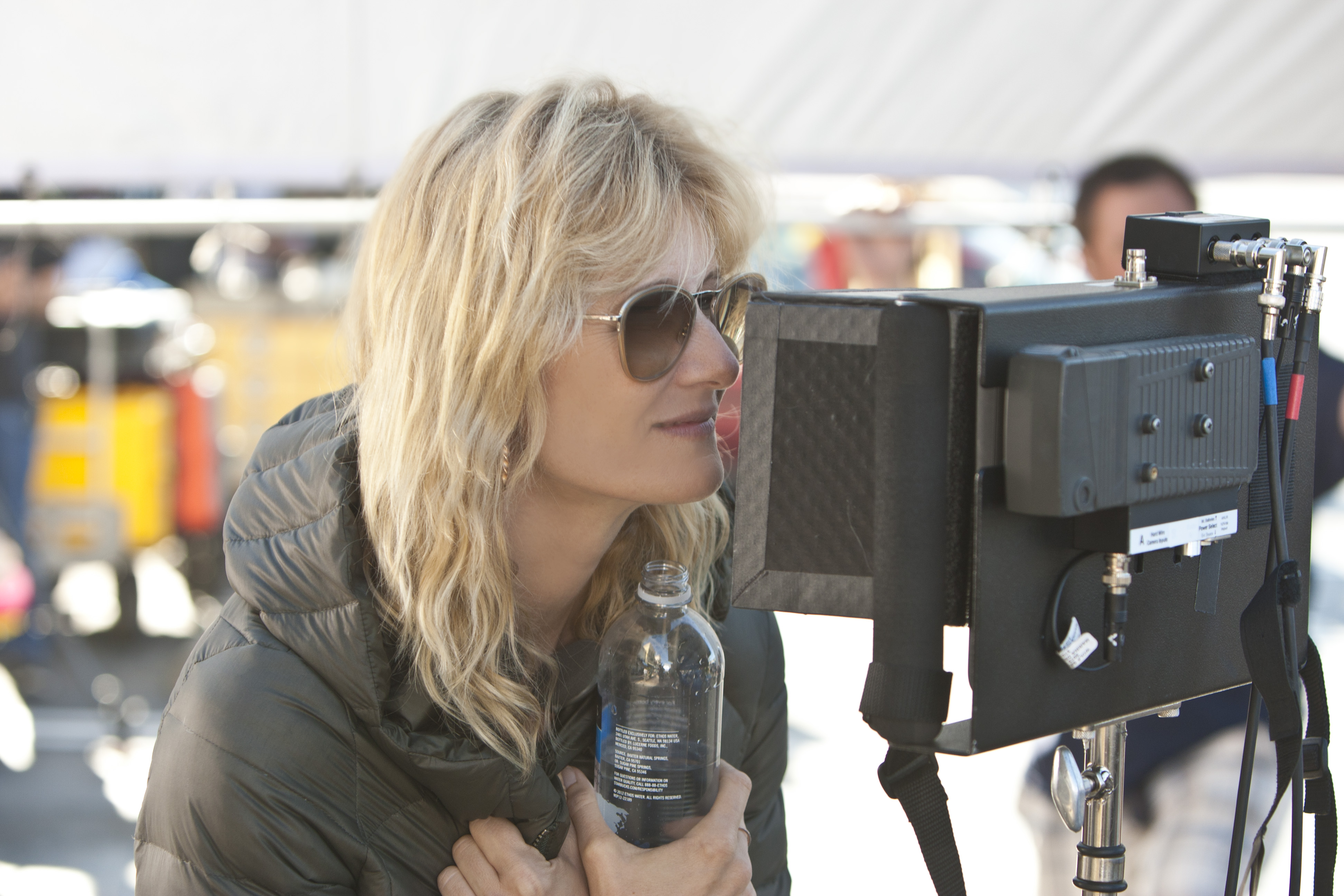
Laura Dern directed “Grace” one of the five short films which comprise CALL ME CRAZY: A Five Film. It airs on Lifetime Saturday April 18 at 8 p.m. This is the second film that Dern’s directed [her first film was a short back in the 90s]. She said she’s been contemplating directing for quite some time. Some of Dern’s films include Citizen Ruth, We Don’t Live Here Any More, Jurassic Park, Blue Velvet, Rambling Rose and October Sky. Most recently Dern starred in the fantastic series Enlightened on HBO.
Amy Steele: Hi Laura.
Laura Dern: Hey.
Amy Steele: I loved Enlightened by the way.
Laura Dern: Thank you Amy. That’s hilarious. Not that I’m saying there are any similarities, but every time I meet an Amy now I feel so close to them because I love the name so much because I love that character.
Amy Steele: So how did you prepare to direct?
Laura Dern: You know, I mentioned earlier it was really run and gun. We actually were finishing Enlightened in the middle of this, so it was a really insane time for me. It was literally a matter of days.
I got the call and they needed to start immediately. Mine was the first one up. So it was literally a matter of –I think– five days between, “hey can we send a script over” and needing to be on a set with a cast, a crew and a vision. So good news and bad news is I think I didn’t have time to even figure out what I needed to know. I just had to go for it.
I love working with actors. I’ve done it my whole life. I’ve been raised by them so I don’t have a lot of fear about that. It feels quite natural to me, I guess. I felt surprised by my awareness of where the camera should be. That seemed natural too oddly and luckily for me I had the brilliant DP, Gail Tattersall, who came and shot it. He and I were in sync about the vision as he supported me immensely.
The part that I think was hardest was just, you know, scheduling the day (time management), making sure actors had the time in something this emotional and shifting locations and all of that. Just the real producerial managing of getting your work done in a very, very short window is probably the area I learned the most from and had the most to learn about.
Amy Steele: There’s a clear difference between the manic and depressive scenes. Darker when she’s having depressive episodes and real quick scenes, brighter colors during her manic scenes when she takes the girls shopping and everything. What approach did you take for the different scenes?
Laura Dern: You know, relying on a totally brilliant actor like Melissa Leo. Really spending time talking through it before we started and spending time speaking to specialists and someone I know who has the disorder. Making sure that Melissa felt comfortable with really understanding the highs, the lows, and the in-between. You know, the medicated version which was important to me that when we did the un-medicated version, it’s not healed.
It’s all about degrees with the disorder and really trying to stay true to that, when someone comes off a manic episode like how they come down off of it. So in a very short time, there were scenes which dealt with every single one of those things, so I think it was more spending time with Melissa and making sure we knew exactly what that was and hoping to capture that in at least one take in each area so that people could really feel the differentiation.
Share this:

STEELE INTERVIEWS: Patrick Krief
Posted by Amy Steele in Interview, Music on March 19, 2013
The third album from Montreal musician Patrick Krief — Hundred Thousand Pieces—is out today on Rock Ridge. It’s a beautifully crafted alt-folk collection filled with hopeful, poignant, lush arrangements. Krief, guitar player for The Dears, played all the instruments, layering them for the self-produced album. At 10 years old, he got a guitar, playing what he’d hear on the radio. His musical family encouraged his artistic pursuits.

While on his current tour, Patrick and I spoke by cell [Rather unreliable coverage. We rescheduled by a week and then unfortunately I couldn’t hear the last few questions I asked. I’m blaming Texas.] as he drove through Texas en route to Austin and the South by Southwest Music Festival. The tour finishes up at O’Brien’s in Allston this Saturday March 23.
Amy Steele: Do you think you have a different approach and perspective being a self-taught musician?
Patrick Krief: I’ve always only been interested in writing my own music and I’ve never felt the need to actually be able to score it. With the technology these days I just bang out on a keyboard/ piano and the music sheet comes up. Whatever I’ve needed to communicated with musicians that do read I either sing what I want for them to play and they dictate it or I use software to translate what I’m playing on the keyboard onto manuscript paper.
Amy Steele: How has technology changed the writing process?
Patrick Krief: Sometimes you rely on your eyes more than your ears. When I write I try to get all my ideas out in my head on a guitar and arrange it there before I go to the computer to lay it down to execute it.
Amy Steele: What comes first music or lyrics?
Patrick Krief: I just wait. Songwriting hits me at random times. Whatever I happen to have around me, I’ll grab the voice recorder on my iPhone and a guitar or lyrics that come to me I’ll write down in a note pad. But I’ve never succeeded at sitting down and trying to write something. I’ll never be happy with that type of song. Usually a good one hits me like a lightning bolt and I’m rushing to find something to document the idea.
Amy Steele: It’s a beautiful album. Lovely songs. Really gorgeous. Some of the songs linger in my head after I’ve heard them.
Patrick Krief: I appreciate that.
Amy Steele: Why’d you want to do solo projects?
Patrick Krief: The idea of being a guitar for a band was more the why did you want to do that because I’ve always been doing this. The keyboardist and I have been playing music together for 10 years. Before joining The Dears I’d been reluctant to be a guitar player. I got something out of it that I didn’t think I would. It’s a focused, no-stress kind of vibe. I enjoy it. This is always something I’ve wanted to do and what I’ve been working towards. It’s a lot more stress and it’s a lot more rewarding.
Amy Steele: Who are you as a solo artist?
Patrick Krief: I’m just a fucked up guy like everyone else. I just want to be as real as possible and give people something they can relate to.
Amy Steele: What are the greatest challenges as a solo artist?
Patrick Krief: Being as strong as being able to be selfish and not caring what people like. Making art for yourself and it’s self-indulgent. Once it’s done you hope that it connect with people so that you can have a career. In the process you have to divide those worlds of career and artist.
Amy Steele: What’s the best part about being a solo artist?
Patrick Krief: When you feel like you’ve actually connected with anybody. When somebody talks to you and says “I love this song” or they get it, there’s no single greater reward than that.
TOUR DATES:
3/19 – Local 506, Chapel Hill, NC
3/21 – Rock Shop, Brooklyn, NY
3/22 – M Room, Philadelphia, PA
3/23 – O’Brien’s Pub, Allston, MA

Share this:

STEELE INTERVIEWS: MY GOLD MASK
Posted by Amy Steele in Interview, Music on February 28, 2013

Chicago duo My Gold Mask furnishes a trippy journey into resplendent darkness and emotionality. Dramatic, layered songs awash in goth splendor. Unique experimentation and textured melodies orchestrated with merely guitar, drums and vocals that present as a rich aural tapestry– bit of 60s and 70s psychedelia. Gretta Rochelle’s impressive vocal range —from vulnerable to intense— equates the music to Siouxsie and the Banshees. My Gold Mask released its second full length album Leave Me Midnight on February 19th.
I interviewed vocalist/drummer Gretta Rochelle and guitarist Jack Armondo by email.
Amy Steele: My Gold Mask’s been together since 2009. How did you get together?
Gretta Rochelle: Jack and I met at a party years ago. Right off, we started talking about music. Like two days later, we were writing together.
Jack Armondo : It was like serendipity in a way. Because almost immediately I knew we would be making music together. As far as My Gold Mask goes, it really started off with us just experimenting and playing around with new sounds. Pushing ourselves artistically.
Amy Steele: What makes you work well together?
Gretta Rochelle: haha, history I guess. We’ve been working together for a while. We both know what the other person is trying to do even before they do it at this point. We share similar aesthetic views and have similar writing styles.
Jack Armondo: We are on the same page creatively speaking. Even when we argue we come to an understanding fairly quickly. There isn’t a lot of disagreement about the overall direction of things. That’s not to say we don’t fight, because oh yeah we do.
Amy Steele: What challenges you about being in a two-piece band?
Gretta Rochelle: The fact that I couldn’t focus on one particular thing was challenging for me. I was splintered between vox and beats. I really like to give attention to what needs to be nourished and for me, the vocals were where I wanted to grow and spend more time. Now that we have a live drummer, I can focus more on the delivery that the songs demand.
Jack Armondo: For me, it was a challenge to fill the sound out. In the beginning we were more minimal and inspired by bands like Young Marble Giants. It taught us that taking something away can work just as well as adding something, if arranged properly. For “Leave Me Midnight” we wanted a bigger sound. I love synths but they’re not really my forte, so I try out different sounds with the guitar and make it almost otherworldly. But as we fill things out we also try not to forget the things you learn playing in a minimal band. Limitations can be inspiring.
Amy Steele: How did you get the name My Gold Mask?
Jack Armondo: We like masks. We like the idea of dual identity. We also just like how it sounds. It sort of popped out in a conversation we were having about luche libre masks.
Amy Steele: What do you like best about making music?
Gretta Rochelle: It’s gratifying to be able to convert raw emotion into something audible. It’s magic to me to be able to pull out the clutter from my head and make it into something musical.
Jack Armondo: I guess if I had to pick my favorite thing, it’d be performing live. There is an energy you don’t get in the studio. But really we love every aspect of making music and try and focus on what we are doing at the time. It’s exciting when something you’ve been creating really starts to come to life.
Amy Steele: Gretta, you have such an amazing vocal range. Haunting, powerful, delicate. . . what type of vocal training have you had? How do you protect your voice when you’re on tour?
Gretta Rochelle: Thank you, you’re sweet. I’ve had no formal training…just singing along to awesome vocalists like Bruce Dickinson, Kathleen Hanna, Robert Smith, Billy Holiday and Ma Rainey…yeah. I actually have a super sensitive voice. I’m allergic to everything and lose my voice from just talking too much. On tour, I keep quiet and drink a lot of water….in between some Patron and yummy beers, of course. Carrot juice, Slippery Elm and Throat Coat are my best friends on tour.

Amy Steele: Let’s talk about the song “Some Secrets.” Synth beats, precious vocals. What inspired this song?
Jack Armondo: It’s just about when someone is telling you too much. Either about themselves or people you know. Rumours, secrets, things like that. Whether truthful or not, it can be destructive. Sometimes you don’t want to know everything. Sometimes the mystery is more attractive.
Amy Steele: I also really like the song “I, Animal.” What is this about?
Gretta Rochelle: Thank you, I really like singing it. To me “I, Animal” is a primal seduction song. I play around with my voice a little bit more on this one. There’s an unpredictability about it that mimics a sort of crazy love affair that may even be more one-sided if anything. Then at the chorus, it’s asking for the lover to just roll with it, regardless of the danger or threat of anything insane happening.
Amy Steele: “Without” is a beautiful, slower song where you both sing. What do you like
about this song?
Gretta Rochelle: Everything. It’s so sad. Jack wrote this song. I love harmonizing with him. He has an incredible voice and I think our vocals really lay lovely over each other.
Jack Armondo: I literally dreamt this song up. I woke up from a very sad dream and it was in my head and I immediately recorded it on my phone. The lyrics are simple, it’s about the feeling of the melody. At one point we tried adding more to it but it just seemed to take something away, so we left it simple. Gretta liked it and decided to make it a duet , which gave it that something extra I think. Sanford [Parker– engineer/producer] told us it was one of his favorite songs while he was mixing it, which was pretty cool to hear. He mixed it perfectly, it sounds haunting to me like it was in my dream.
Amy Steele: On “Lost in My Head” at times it’s almost as if you get into another character, Gretta. Is that your intent or do you feel that certain emotions must be sung in certain keys?
Gretta Rochelle: This song is probably the most “me” song on the record. I suffer from major panic disorder and have incredible panic attacks daily. The song isn’t sung in different keys, but the voices are different from verse to bridge to chorus to translate the roller coaster effect as accurately as I can via song.
Amy Steele: What makes a good song?
Jack Armondo: There’s not really one particular formula. There are so many different types of songs that can work for so many different reasons. I like songs with hooks, but that has to be accompanied by some real emotion. We like songs that feel immediate but pull you in deeper the more you listen and can challenge artistically as well. It’s not easy to write a song that encompasses all of that. But when it does come together, it’s a great feeling.
Gretta Rochelle: Hitting that sweet spot. Usually a dark, sweet spot for me. A good song is one that stays for life. I become obsessed with the feeling it gives me. Wherever I am in life, if that song comes on, I stop what I’m doing and let myself remember why I fell in love with it, what was going on when I found it.
purchase at Amazon: Leave Me Midnight

TOUR DATES:
March 2nd – Milwaukee, WI – Mad Planet
March 9th – Chicago, IL – Schubas
March 16th @ Midnight – Austin, TX – SXSW (Hickory Street)
March 19th – Hot Springs, AR – Low Key Arts
April 13th – Cincinnati, OH – MOTR
April 26th – Des Moines, IA – Vaudeville Mews
Apr 6th – Kansas City – Middle Of The Map Fest
June 25 – Philadelphia, PA – Kung Fu Necktie
June 26 – Cambridge, MA – The Middle East
June 27 – Brooklyn, NY – Knitting Factory
Share this:

-
You are currently browsing the archives for the Interview category.
About Me

covering mostly music and books. focus on alternative/indie and women in music, literature and the arts. feminist. vegan. mostly alternative, a bit bohemian. Masters in journalism from Boston University. BA from Simmons College.



Entertainment Realm by Amy Steele is licensed under a Creative Commons Attribution-Noncommercial-No Derivative Works 3.0 United States License.
Based on a work at entertainmentrealm.comCopyright © 2009. All writing, unless otherwise noted, by Amy Steele.
 ENTERTAINMENT REALM
You must be logged in to post a comment.