Posts Tagged STEELE INTERVIEWS
STEELE INTERVIEWS: author Jenny Shank
Posted by Amy Steele in Books, Interview on March 8, 2011
She looked out the window at the little spruce that Salvador had planted on Ray’s first birthday. Patricia asked him not to. She was born with a foreboding of disaster, and so she avoided moments that seemed too idyllic, so as not to create memories that would come back to wound her later.
Because of her gloomy nature, her cousins from Pueblo had nicknamed Patricia La Llorona, after the weeping woman of Mexican folklore, and the nickname proved prophetic.
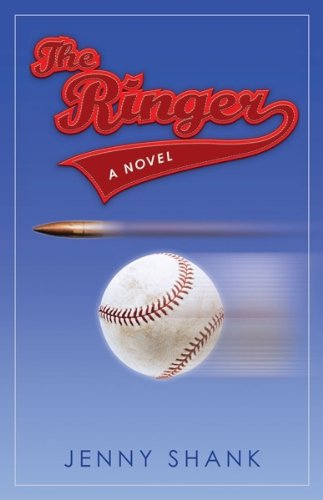
The Ringer, by Jenny Shank. Publisher: The Permanent Press (March 1, 2011). Literary fiction. Hardcover, 304 pages.
The Ringer creatively explores race relations in Denver through little league. A police officer shoots and kills a Mexican immigrant during a suspected drug raid. Tragically the commanding officer sent the unit to an incorrect address. Outrage and tensions surge in Denver’s immigrant and Latino community. The families of the officer who fired the lethal shot and the deceased man become the central focus. Author Jenny Shank effectively weaves together the stories of these two diverse families with one commonality: baseball. The two extremely likable yet fractured protagonists, Ed and Patricia, illuminate this story with verity making The Ringer memorable and engaging.
Jenny Shank worked on writing The Ringer for eight years. She’s the Books & Writers Editor of NewWest.Net. Her stories, essays and reviews have been published in McSweeney’s Internet Tendency, Prairie Schooner, Bust, Rocky Mountain News and The Onion. The Ringer was a semi-finalist for the James Jones First Novel Fellowship and the Amazon.com Breakthrough Novel Award.

Jenny Shank
We spoke by phone last week.
Amy Steele: Where did you get the idea for The Ringer?
Jenny Shank: In 1999, in Denver, there was an incident where cops shot a Mexican immigrant on a no-knock raid and it turned out they had the wrong address on the warrant, just like in my book. It became a really big incident in Denver because it was very shocking. There was also a lot of racial tension which I hadn’t seen before.
The thing that really interested me is that the cop who killed the man was not the same man who made the mistake on the warrant. So someone else made the mistake on the warrant and this other cop was carrying it out. He was just doing his job and I just imagined that his guilt must be really terrible and that kind of stuck with me.
I had an idea to do a book about baseball before that happened but it needed some kind of plot. I wanted to do little league baseball because that’s something I know a lot about watching my brother and my cousins played the intense little league that leads to going to play college ball and minor and major league ball. So when this incident happened I read all the newspaper articles and came up with a plot that combined those two things.
Amy Steele: I was wondering how you made the little league connection.
Jenny Shank: The shooting is such a sad story. I guess my short stories are funnier and this is more of a serious thing than my short stories are and so I wanted the baseball element to have something that added a lighter and more hopeful element to the story. When two things don’t necessarily go together, I figure out how they can be connected and that’s how I get my plot ideas.
My cousin is a left-handed pitcher like Ray in the book. He plays baseball for the Red Sox AAA team in Pawtucket. He just re-signed with the Red Sox and he’s been in the minor leagues for a long time. My brother is also really good. He was recruited by major league teams and colleges while in high school but had to get surgery on his knees. So that didn’t end up happening but I grew up going to their baseball games.
Amy Steele: How did you transition from writing short stories to a novel?
Jenny Shank: The Ringer is my third novel I’d say. I wrote one and a half novels before that. I had been writing short stories all along. The first novel I wrote, I had done half of it and it wasn’t going anywhere so I gave it up. My next goal was to finish one so I wrote it all the way through and I guess that took three or four years and I was tired of it at this point. I just didn’t feel like revising it to make it really good. So this third one I said I’d write it all the way through and then revise it. So it was a three-step process where I gradually learned to write it.
This novel I figured out that chapters are structured much differently than short stories. I don’t think there are any chapters in this novel that would stand alone as a story and I think that’s good. That helps the momentum in a novel. It was a 13-year training process.
Amy Steele: How does working as a reviewer affect your writing?
Jenny Shank: Well, first of all, that was my job. It’s good to have a job that’s fun to do. I think that’s how I learned really how to write. One of my favorite writing guides is Francine Prose’s Reading like a Writer. Basically she says that the best way to figure out how to do something you’re having trouble with is to go to someone who’s done it before and read their book. I think I owe what I was able to do to reading lots and lots of books.
I edited the Onion A.V. for eight years and simultaneously reviewed books for the Rocky Mountain News for ten years until it went under and then I started reviewing books for New West. I review at least a book a week and I think it helps you be an attentive reader when you know that you’re going to have to write about it. That’s really why I got into book reviewing.
In college I liked how you talked about a book and thought a lot about a book after you read it. I liked book reports and I liked writing about books in a conversational tone more than we did in school. It’s something I enjoy and I’ve learned a lot from it. I haven’t done as many writing classes as some people have because of having to work and take care of my kids but learning from books really helps me. I feel like it’s important to keep doing reviews. Book reviews are disappearing and people need help getting the word out about their books.
Amy Steele: What is the greatest challenge of writing a longer form story?
Jenny Shank: I have some ideas of characters and have an idea of the general thing I need to have happen in the chapter but coming up with a compelling action to portray that is always the trick. My early drafts were just describing what was happening and it wasn’t actually happening. Readers really like it and get involved when you create the scene for them. So I think the biggest challenge for me is always creating the scene.
Amy Steele: What interested you about writing about police officers?
Jenny Shank: I was actually hesitant because I’d never written about police officers before and it’s done so much—TV, movies and everything. The one thing I had going for me is that I don’t watch much TV so I’m not aware of it. I’ve never seen Law & Order so I don’t know what’s done on [those shows]. The one show I love, that I did watch, is The Wire. It’s one of my favorite works of art in any medium. I didn’t have a lot of the current clichés in my head. I have to spend so much time reading. I was hoping to avoid cliché and reading books helped me with that. [Shank used books such as Deadly Force Encounters: What Cops Need to Know to Mentally and Physically Prepare for and Survive a Gunfight by Dr. Alexis Artwohl and Loren W. Christensen and I Love a Cop: What Police Families Need to Know by Ellen Kirschman for reference.].
I also started talking to people. My cousin’s husband is a cop in Omaha. The reason why cops are written about so much, I think, is that they’re in a job where things happen, there’s action. That’s useful for anything. I discovered that in smaller cities there aren’t full-time SWAT units and I liked that idea because I wanted Ed to be involved in this incident that I read about but I also wanted him to be out in the city interacting with people. I liked that combination.
It was a lot of research but I was confident because I knew the baseball part, I knew the Denver part. I knew the other part I could explore and do research about it. That makes it fun. Write what you know half of the way and research something else to make it interesting.
Amy Steele: Having a non-fiction background, why did you decide to write fiction instead of non-fiction?
Jenny Shank: I don’t think my life is interesting enough to write a memoir. There are aspects of it that I could write stories about. As far as a researched book, I just had always written fiction. I always read it. I enjoy it. It’s what I want to do. I enjoy it the most and I don’t have personal material. If people have really big problems then that makes a good story.
Amy Steele: Why did you decide to write the story from the point of view of two characters?
Jenny Shank: The idea that there are two sides to the story is what the story is to me. The cop made a terrible mistake and then this horrible thing happened to this family who lost their dad. My characters are all completely different from the original people. I just took the action that happened and then purposely didn’t learn anything about the real people who were involved in the incident.
I went to the Denver public schools and I went to schools where white people were in the minority pretty much. Depending on the school, there would only be 20-30% white people. I went to some schools that were majority black and some that were majority Latino. From that experience I learned about everything having two sides. I was immersed in those different worlds and cultures that were different from my family and it just made sense to tell the story that way.
I enjoyed having two voices. That helped to make the plot as the plot gradually comes together as they become aware of each other’s existence. That was a drive for the plot. I liked switching back and forth. Working so much on the drafts, I had problems with both at different times and I think that they are equally imagined now in the book.
Amy Steele: Why is there a large Hispanic population in Denver?
Jenny Shank: Colorado was originally part of Mexico territory. Colorado was one-third Mexico, one-third Texas territory and one-third Louisiana Purchase. There are people that live in Colorado, especially southern Colorado, whose families have been here for hundreds of years. It’s deeply embedded in our state’s history and right now the population of Denver and the population of our state is at least 30% Latino. That consists of some people whose families have been here a long time and lots of immigrants. It is a big Latino city.
purchase from Amazon: The Ringer

Share this:

STEELE INTERVIEWS: singer/guitarist Stephen Ramsay
Posted by Amy Steele in Interview, Music on February 16, 2011
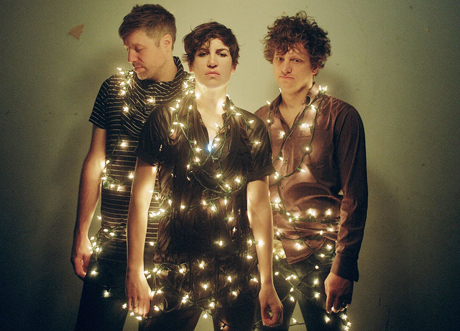
Dreamy/ shoegazing indie pop band Young Galaxy are Montreal-based Stephen Ramsay [vocals/guitar] and Catherine McCandless [vocals/keyboards] and Stephen Kamp [bass/vocals]. Stephen and Catherine formed the band as a duo in 2005. Young Galaxy released its third album, Shapeshifting, this month on Paper Bag Records. I interviewed Stephen Ramsey.
Entertainment Realm: Young Galaxy started as a duo with you and Catherine. What changed when you went from duo to trio?
Stephen Ramsey: It was the most convoluted move to gain one extra member ever I think! We were two, then six, then five, then four, then three. I guess I forgot that three comes right after two somehow. It would have saved us a lot of trouble! Actually, Stephen Kamp – our third member – was the first to join the band after Catherine and me. So in a way, it’s been the three of us for as long as the band has been around. And just recently, we’ve become a five piece again. Go figure…
Entertainment Realm: How has the band changed since you first formed?
Stephen Ramsey: How much time have you got for this answer? It’s changed immensely. As I have mentioned, we’ve seen many members come and go but I’m proud to say that we have remained focused on becoming a better band since day one. Along the way, we’ve learned how to be better in business, how to perform, etc. We’ve toiled away in the trenches while everyone else has been distracted by shitty music. Haha. Honestly, we’ve felt almost like we we’ve been training, getting ready for a title fight. We are very ambitious, and have very high standards creatively. I firmly believe most bands don’t hit their creative peak on their first one, two, even three records. Too bad the industry doesn’t invest in bands long term anymore – I think it means bands with promise are thrust into the limelight before they fully develop, and are used up very quickly before they can truly make their best music. Everyone’s looking for the new, big thing. For us, it’s always been a matter of sticking around, waiting until the timing is right, doing this long enough until we got really, really good at what we did. We want to be masters of our craft. I want to be a black belt in rock n’ roll, just like David Lee Roth!
Entertainment Realm: What is the Vancouver music scene like? What influence did that have on you as a band?
Stephen Ramsey: I have no idea really! Not because I wasn’t around it, I mean, I used to dj there for many years – but really, I dabbled with bands more than anything. I mostly did bedroom recordings. I haven’t lived there since 2005, and I think it’s become more vibrant now than it was. Back in the day, it was every band for itself. There was no galvanizing scene or momentum.
Entertainment Realm: What makes Young Galaxy work well together?
Stephen Ramsey: At the heart of the project are my girlfriend Catherine and I. We’re a couple and we’re best friends. We’re very close, there’s a kind of unspoken understanding about what we’re trying to accomplish musically that doesn’t need to be explicated much. It’s a very intuitive relationship. We make each other creatively braver than we would be on our own. Beyond that, we’ve built the band around the premise that people who are involved in it should be treated as friends and with respect. It’s not like we have many perks or much money to offer, so you might as well have a good time if you’re going to sacrifice your time and energy in the project, right?
Entertainment Realm: How do define a good song?
Stephen Ramsey: Whatever gets a best new music rating on Pitchfork.
Entertainment Realm: What’s your favorite song on Shapeshifting and why?
Stephen Ramsey: Honestly, I don’t have one. As Keith Richards once said, ‘don’t make me cut my babies in half’. Haha. I love Keith Richards.
Entertainment Realm: Can you describe your creative process?
Stephen Ramsey:
1 part sunset from the top of the ruins in Sintra, Portugal
1 part Manhattan cocktail at the Angel’s Share, NYC
1 part baby panda
1 part cherry blossoms falling off the tree and then filmed backwards so they appear to be going up (in slow motion)
I part watching the morning fog burn off while sitting on the dock at Sproat, Lake, Vancouver Island
The juice of one lemon
Shake well, pour over ice and serve.
Entertainment Realm: How did you get to work with Dan Lissvik [producer] of the band Studio in Gothenburg, Sweden? How did that affect the recording?
Stephen Ramsey: I stalked him! I contacted his band, Studio, on Myspace back when it was a useful tool still. After a few email exchanges over a year or two, he agreed to work on an album with us. It did affect the writing and recording, because we left a lot more space than we were used to. We knew he’d go in and do his own thing over top, so we were careful not to fill every inch of sonic space in the songs. We’d never done that before, so that was a very new process for us. It meant using a lot of restraint, which I am now a big proponent of in recording. It’s good to rein it in, to only commit the best ideas to tape, rather than every idea that comes to your head. Dan certainly influenced us this way – he preached this before we sent him anything we’d done. We tried to stick with it and be very economical in our choices, musically.
Entertainment Realm: What can an audience expect from a Young Galaxy live show?
Stephen Ramsey: I’m not sure yet! We’re rehearsing a new band now, one that I’m very excited about. It’s our best band yet in my opinion. I think if we apply ourselves, the sky’s the limit… we’ll be better than U2 in no time! Haha. Other than that, a lot of fake blood, baby pandas, cherry blossoms filmed falling upwards in slow motion, you know – the usual.
Entertainment Realm: What are you listening to now?
Stephen Ramsey:
Broadcast – Tender Buttons (R.I.P Trish Keenan)
The Streets – Computer and Blues
Cold Cave – The Great Pan Is Dead
Grimes – unreleased new material
Goblin – Suspiria Soundtrack
Fabio Frizzi – Zombi Soundtrack
Future Islands – In Evening Air
Entertainment Realm: What inspires you?
Stephen Ramsey: Impending doom.
Entertainment Realm: Why the name Young Galaxy?
Stephen Ramsey: It was my hotmail account name back in 1999 or something. I turned to a random page in an astronomy book and they were the first words I came across. I think I had a list of about a thousand names and that’s what I settled on. So it’s all pretty mundane actually!

Young Galaxy Tour Dates
3.17 Boston – TT The Bears
3.19 Brooklyn – Knitting Factory
3.21 Philadelphia – Ku Fung Necktie
3.22 Washington DC – Red Palace
3.23 Pittsburgh – Brillobox
3.25 Chicago – Empty Bottle
Share this:

STEELE INTERVIEWS: author Jenna Blum, The Stormchasers
Posted by Amy Steele in Books, Interview on May 28, 2010
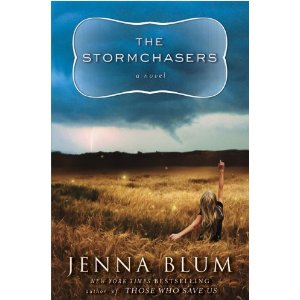
Title: The Stormchasers
Author: Jenna Blum
ISBN: 978-0525951551
Hardcover: 384 pages
Publisher: Dutton Adult (May 27, 2010)
Category: modern fiction
Review source: publisher
Rating: 5/5
Jenna Blum’s second novel, The Stormchasers, focuses on estranged twins Karena and Charles. After two decades, Karena follows a stormchasing group as a reporter in an effort to find her bipolar brother. Blum mixes a dark past, the bonds between twins [even those who’ve lived apart for many years], unpredictable often scary weather patterns and nearly almost more frightening vast territory- chasing tornadoes and violent storms– in the middle of America with a bold woman, Karena, and her dedication to find and possibly reconcile with her brother after so many years.
In my interview with Jenna, she discusses many of the topics addressed in The Stormchasers, her meticulous research, various aspects of writing, elements of the craft and her own propensity to seek out bizarre weather patterns. Recently, Oprah listed Jenna one of her top 30 favorite writers. Jenna lives in Boston.

Amy Steele [AS]: What appealed to you about writing a story about twins?
Jenna Blum [JB]: For THE STORMCHASERS, which is at its heart a novel about bipolar disorder and its consequences, I wanted to explore the relationship between siblings, one who has the disorder and one who doesn’t. Family members of people with bipolar disorder often feel guilty that they don’t have it themselves, and Karena’s guilt is exponential because her brother Charles, who’s bipolar, is also her twin. I’m not a twin—though I had an imaginary twin when I was a girl—but I had an amazing time researching the bond, reading and asking twins questions. I was interested too in how devastating it would be to be a “twinless twin,” or in the case of my characters estranged twins. How completely twinship informs twins’ lives! and often not in the ways we non-twins would expect.
AS: Why storm chasing?
JB: I’ve always been fascinated with storms. When I was a little girl, we used to visit my grandmother in southern Minnesota in the summers, and often, in the middle of the night, the tornado siren would go off and we’d have to run to the cellar. To me, a girl obsessed with The Wizard of Oz, this was terribly exciting. When I was four, I had the experience my heroine Karena has in THE STORMCHASERS: of seeing a tornado while everyone else was asleep. Like Karena, I hid beneath the living room couch and watched the black rope twister move across the picture window. I then spent much of my life trying to see another. My obsession with severe weather led me to stormchase as an adult, first as an amateur in Minnesota with my poor mom in tow, later with the professional stormchase group Tempest Tours (for description of what this was like, see Chase Diaries on my website). Like my characters, I’m still trying to understand the mysterious, majestic machinery behind big weather: how something as powerful and destructive as a tornado can happen so quickly, seemingly from a clear blue sky. And as a writer I’ve always been interested in how people put their lives back together after they’ve been devastated by huge forces beyond their control.
AS: What was the research like for this book—5 years with Tempest Tours—is that a long time to research?
JB: Not for me. Keep in mind that for my first novel, THOSE WHO SAVE US, I spent ten years researching the Holocaust, including interviewing survivors for Stephen Spielberg’s Survivors of the Shoah Foundation. So you’re talking to a girl who believes in getting the details right. But both THOSE WHO SAVE US and STORMCHASERS deal with complex subjects—the Holocaust, the mechanics of severe weather—and for ‘CHASERS, I was basically taking a crash course in meteorology. This was tough for somebody with no math brain whatsoever. Plus, the storms are so awe-inspiring that my first couple of trips out with Tempest—which is the best storm tour company in the business, by the way—I was basically just standing there with my mouth open. It has taken five years to be able to a) understand even some of what’s going on in the atmosphere and b) get used to it enough to be able to ignore it for a few minutes so I can gather the attendant details that make a scene come alive for a reader.
AS: Can you describe what happened?
JB: I got to see the greatest show on earth: the phenomenal sky sculptures known as supercells (rotating thunderstorms that sometimes produce tornadoes). I got to see some tornadoes! I got to see the stark, lonesome, majestic parts of this country you can get to only by driving, not to mention the World’s Largest Ball of Twine, the Mitchell, South Dakota Corn Palace, and Wall Drug. I got to eat a lot of road food. I now know how to make a healthy meal at a convenience store (string cheese, pretzels, V-8) and how to make a root beer float from A&W and an ice cream sandwich—while driving 75 mph.
AS: What was the best part of the research experience?
JB: I love everything about chasing: the beauty of the storms; the beauty of the landscape; the way chasing catapults you out of your everyday life and concerns and, because you’re playing a potentially deadly game of chess with severe weather, forces you to concentrate on the moment. What surprised me about chasing was the friends I made. I didn’t expect what I now think of as the “Band of Brothers” effect, but what happened was, I met total strangers who shared my passion for severe weather, and then we spent several days and nights on the road together, talking during down times, sharing the terrifying adrenaline-filled moments. Now half my closest friends are stormchasers who live on the Plains. And they will all be at my book launch!
AS: Karena is a journalist. Why did you pick that career for her?
JB: Karena was originally an on-air meteorologist—a weathergirl, and I tailed Pete Bouchard at Boston’s WHDH and Belinda Jensen at the Twin Cities’ KARE-11 news to get the details of her profession (they were so kind to let me crash into their studios). I loved being able to show readers what this was like, but I realized that Karena knew more about weather than the reader did, so much of the novel became “reader-feeder,” trying to find ways to wedge her knowledge in without being obtrusive. In the end, I couldn’t do it, so I gave Karena a profession that enabled her to ask a lot of questions about chasing—what most readers wouldn’t know but would want to know. Like: Why do people DO this? I’m lucky to have many friends who are reporters at the Globe, and they generously read and vetted Karena’s experience.
AS: What were your greatest challenges in writing The Stormchasers?
JB: The toughest thing was that because of the miraculous success of my first novel, THOSE WHO SAVE US, the ‘CHASERS was sold before it was written, when it was very much in the architectural stages. I had never written fiction on a deadline before, and it paralyzed me. For days and days I would get up, do my email, trawl Facebook, go shopping, walk the dog, then think, too late, I’ll try again tomorrow. I fantasized about running away from Boston, with all its distractions, and going somewhere really isolated to write; I went so far as to pack the car and sat in it the afternoons with the dog, eating road snacks and then going back inside for a nap. Finally my agent, who is French and fierce and doesn’t miss a trick, called me and demanded that I write her a scene by the end of the day. “Now?” I said. “But it’s naptime.” “Go,” she said, so I did. She continued to demand a scene a day, and she gave me permission to run away from home to do it. So I went to live in a motel in rural Minnesota, where the ‘CHASERS is set, with my dog, Woodrow. And we stayed there until the novel was done.
AS: When you write do you use your own experiences or completely separate yourself?
JB: A little bit of both. I don’t know any fiction writer who makes everything up completely. If they do, I envy their imagination. Then again, I am incapable of telling anything truthfully—even stories in my own life get a little embellished, according to my reporter friends. What happens is I take an emotional situation that fascinates me—usually having to do with people’s lives being wrenched out of socket by huge forces beyond their control. And then I plug it into a fictional situation. Any truths I start with, including characters “inspired by” actual people, as they say on TV—they become totally alchemized into fiction through this process.
AS: How do you manage to remove yourself and your opinions from a story? Do you/ is it possible?
JB: It is extremely important to me not to proselytize to the reader, to give my opinion or take a moral stance. To me, that’s not what fiction is for, and if I read fiction that seems preachy or obvious, it’s not doing its job. And particularly given the subject matter I work with—the Holocaust, mental instability—it’s actually a moral imperative for me to steer very clear of providing easy answers or platforms. In fact, quite the opposite: I give main characters opposing points of view and let the reader bring his or her own opinion to the table. It’s a Hegelian principle that drama consists not of right and wrong but two equally powerful points of view, both of which are right.
AS: What is the most difficult emotion to write?
JB: Fear, is my first response—but any emotion can be challenging to write because you don’t want it to be heavy-handed. There’s the struggle between wanting to personalize the emotion by making it physical—a character’s stomach knots when she’s frightened, for instance. Show, don’t tell. But a little of that goes a long way and can seem clumsy and disingenuous, too. I mean, you don’t want a character habitually sobbing, barfing, or getting an eye-twitch every time something exciting happens, for instance. I finally decided after trying to calibrate this delicate balance that the best way to do it, for me, was to be honest and direct about what the character is feeling. “Karena looks up at the black boiling sky. She is terrified.” And unless a specific physical symptom that’s organic to that character suggests itself, that’s it.
AS: Why do you write?
JB: I’ve always wanted to be a writer, ever since I can remember. I’ve never been good at anything but writing, talking about writing, teaching writing, and food service. This doesn’t really answer your question, though. Really, I write because I have to. I have people in my head and they have stories that need to be told, and if I don’t get them down, it makes me feel a little crazy.
AS: You teach a novel writing workshop at Grub Street? How does teaching impact your writing?
JB: I absolutely adore Grub Street, and it’s the reason I stay in Boston. I’ve lived in different cities and they’ve had their charms, but they didn’t have Grub—this friendly, dynamic, serious life-support system for such talented writers. I’m taking a break from my “Council”—my ongoing, 5-year master novel class—right now to promote THE STORMCHASERS, but I miss it powerfully, because one thing being among my Grub novelists allows me to do is talk writing. What’s working, what could be improved, why. The creative process, its magic and its balkiness. Talking about pure writing is an oasis for me amidst the business of writing, which is also amazing but a horse of a completely different color.
AS: What characteristics do you like best about Karena?
JB: Oh, goodness. It’s like asking, what do you like about your child? I love Karena—all my characters in this book! Well, I like how smart Karena is, and her sense of humor, and her persistence—although she’s scared a lot of the time, and who wouldn’t be given the things that have happened to her, she doesn’t give up. In fact, I think the trait I like best in Karena is her courage. She might not describe herself as courageous, but then again many courageous people don’t, because they feel fear. Karena has been through a lot of trauma and it has made her wary, yet she is willing to keep extending herself to other people—especially if it means finding and helping her twin brother, Charles. To be afraid and act anyway is the definition of courage.
AS: When do you know that you’ve developed a character enough and when do you know when a story has been completely told?
JB: I don’t really think in terms of developing my characters enough because to me, they’re real people, and as with real people, there’s always more you don’t know. Even the people I know best in my life have their mysteries—even the person you think you know best, yourself, can surprise you! I look at my characters through this window of time I’ve been given, the parameters of the story, and I get to know them as best I can for that duration. I probably know them better than anybody, but I like to give them the dignity of their own lives. As for the story, I’m an adamant structuralist, so before I set out to write anything—story, novel, scene—I’ve already charted where it’s going and why. That’s what “plot” means, in the strictest sense: “To chart out in points” (Webster’s). So I know when the story should end. As to when a book is done, slightly different question, I think when you’re dickering between word choices—“Gaze or stare? Gaze or stare? GAZE or STARE, damn it?”—you’re ready to release it into the world.
As I am about to do with THE STORMCHASERS. I hope everyone enjoys it!

buy at Amazon: The Stormchasers

TOUR DATES FOR JENNA BLUM:
May 27 (Thursday)
6:00 P.M.
THE STORMCHASERS LAUNCH
Reading: 6 P.M., Coolidge Corner Theater
Signing: 7 P.M. Brookline Booksmith (across street)
279 Harvard Street
Brookline, MA
*YOU MUST RESERVE TICKETS FOR THIS EVENT. PLEASE CALL (617) 566-6660*
June 1 (Tuesday)
7:00 P.M.
The Stormchasers reading/signing
Blue Willow Bookshop
14532 Memorial Drive
Houston, TX
June 4 (Friday)
7:00 P.M.
The Stormchasers reading/signing
Borders Bookstore
800 West 78th Street
Richfield, MN
June 5 (Saturday)
4 P.M.
The Stormchasers reading/ signing
Caledonia Public Library
231 E. Main Steet
Caledonia, MN
for directions: 507-725-2671
June 7 (Monday)
7:00 P.M.
The Stormchasers reading/signing
Prairie Lights Books
15 South Dubuque Street
Iowa City, IA
June 9 (Wednesday)
7:30 P.M.
The Stormchasers reading/signing
Women & Children First
5233 North Clark Street
Chicago, IL
June 10 (Thursday)
7:00 P.M.
The Stormchasers reading/signing
Next Chapter Bookshop
10976 N. Port Washington Road
Mequon, WI
June 11 (Friday)
4 P.M.
The Stormchasers reading/signing
Del City Library
4509 Southeast 15th Street
Oklahoma City, OK
June 13 (Sunday)
2:00 P.M.
The Stormchasers reading/signing
Full Circle Bookstore
1900 NW Expressway
Oklahoma City, OK
June 15 (Tuesday)
6:30 P.M.
The Stormchasers reading/signing
Rainy Day Books at the Kansas City Public Library
14 West 10th Street
Kansas City, MO
June 16 (Wednesday)
7 P.M.
The Stormchasers reading/signing
Borders Bookstore
1519 South Brentwood Boulevard
Brentwood, MO
June 19 (Saturday)
2:00 P.M.
The Stormchasers reading/signing
Arlington Barnes & Noble
3881 South Cooper Street & Parks
Arlington, TX
June 22 (Tuesday)
4 P.M.
The Stormchasers reading/ signing
Guymon Public Library
206 NW 5th Street
Guymon, OK
June 25 (Friday)
7:30 P.M.
The Stormchasers reading/signing
Tattered Cover Book Store
2526 East Colfax Avenue
Denver, CO
~June 28-July 5th: The Stormchasers Tour, Tempest 10/10, when I will actually be stormchasing! To sign up and come with me, please visit http://www.tempesttours.com~
July 6 (Tuesday)
6:00 P.M.
The Stormchasers reading/signing
The Bookworm Of Edwards
295 Main Street C101
Edwards, CO
August 24 (Tuesday)
7:00 P.M.
The Stormchasers reading/signing
RiverRun Bookstore
20 Congress Street
Portsmouth, NH
August 26 (Thursday)
7 P.M.
The Stormchasers reading/ signing
Gibson’s Bookstore
27 South Main Street
Concord, NH
September 4 (Saturday)
2 P.M.
The Stormchasers reading/ signing
Westwinds Bookshop
45 Depot Street
Duxbury, MA
September 14 (Tuesday)
5:30 P.M.
The Stormchasers reading/signing
Beacon Hill Author Series
The Hampshire House
84 Beacon Street
Boston, MA
September 15 (Wednesday)
5:30 P.M.
The Stormchasers reading/signing
Haley Booksellers at Stellina Restaurant
47 Main Street
Watertown, MA
September 16 (Thursday)
7 P.M.
The Stormchasers reading/signing
Andover Bookstore
89 Main St
Andover, MA
September 19 (Sunday)
2 P.M.
The Stormchasers reading/signing
Newtonville Books
296 Walnut Street
Newton, MA
September 26 (Sunday)
The Stormchasers reading/ signing
2 P.M.
Blue Door Books
501a Central Ave.
Cedarhurst, NY
September 29 (Wednesday)
7 P.M.
The Stormchasers reading/ signing
Watchung Booksellers
54 Fairfield St.
Montclair, NJ
September 30 (Thursday)
The Stormchasers reading/ signing
7 P.M.
Manhasset Barnes & Noble
1542 Northern Boulevard
Manhasset, NY
October 19 (Tuesday)
The Stormchasers reading/ signing
with author Jon Papernick
7 P.M.
Porter Square Books
25 White Street
Cambridge, MA
October 23 (Saturday)
The Stormchasers reading/ signing
2 P.M.
4745 Ashford Dunwoody Road
Dunwoody, GA
http://www.borders.com
Share this:

STEELE INTERVIEWS: author Anastasia Hobbet
Posted by Amy Steele in Books, Interview on January 2, 2010
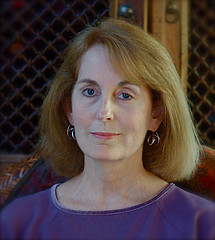 Anastasia Hobbet kindly answered some questions.
Amy Steele [AS]: Where did the idea for this story come from?
Anastasia Hobbet [AH]: The novel was born as a short story with Theo and Hanaan as the main characters. In bringing their cross-cultural romance to a crisis when her father objects, I was able to weave in a lot of threads about Kuwait, and I saw that I could write a bigger story—wanted to write a bigger story. The experience of living in the Middle East had been a very rewarding one for me, and in the aftermath of 9/11, when so much of what we heard about Arabs and Muslims in the US was dark and suspicious, I wanted to highlight the deeper, richer dimensions of the place.
AS: What kind of research did you do into the treatment of the servants in Kuwait?
AH: You can’t avoid observing servants at work in Kuwait. Foreign workers are everywhere: in homes, shops, offices, industry, education, and public works. Kuwaitis are far outnumbered by their foreign workers. The country’s population is about 3 million, and nearly 2 million of those are foreign workers: 65% of the population and 90% of the work force. That work force includes 280,000 domestic servants. That’s about one for every 5 Kuwaitis.
In private homes, where I had my closest contact with domestic servants, including my own home, I interacted almost daily with maids, gardeners, workmen, and their employers. I came to know many of them well—including their families in some cases; and because I had friends and acquaintances on both sides of the divide—Kuwaitis who employed servants as well as foreign workers employed by Kuwaitis—I got a good feel for their attitudes about each other, their backgrounds, and their life stories. Many international human rights organizations address the issue of maid abuse as part of their overall coverage of women’s rights, human trafficking and modern-day slavery. I also follow and admire writers like Nicholas Kristof of the NY Times, who writes frequently and passionately about these issues.
AS: How do you feel that the people of Kuwait really feel toward Americans? Helped them in Gulf War but for “own purposes” and Saleh sends his children to American school because learning English puts them at “great advantage.”
AH: Kuwaitis still have a fairly positive view of Americans, unlike much of the Middle East, where we’re not popular. To throw in a few stats: In 2007, the Pew Global Attitudes Survey found that 62% of Kuwaitis had a positive opinion of Americans in 2007. Compare this with 30% for Egypt, 20% for Jordan, 15% for Morocco, and even lower for the Palestinian territories. Even so, there’s a lot of ambivalence about the US, its international policies and goals. Kuwaitis were under no illusion that the US joined the first Gulf War in 1990 out of sheer altruism, and they fully expected the American government to exact some payment from Kuwait for the help in rescuing their nation from Saddam Hussein. This came, in their view, in the form of expectations–of special treatment for American military requests and business interests. The Kuwaitis weren’t cynical about this, just realistic: it’s the way the world works—and they’ve benefited since the 1950’s from a close association with the US, when oil was first discovered there by Gulf Oil, a US company. Wealthy Kuwaitis, like Saleh in the novel, want their kids to speak English—and French and German for that matter—because they understand the benefit of being world players. They want their children to feel at home on a wider stage than the Middle East alone can offer.
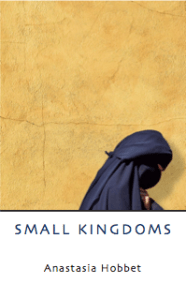
AS: Having lived in Kuwait for five years, what is your favorite thing about it and what did you like least about it?
AH: The best: Like Theo, the young American doctor, I relished the opportunity to live in a culture so unlike my own. It was a writer’s dream, to be plopped down in an exotic place, not as a tourist but as a resident of the country for a good long while. What hit me first was how many prejudices and stereotypes I’d brought along with me. Over the years, I felt a growing familiarity with Kuwait, began to understand its rhythms and its ways, and came to regard it as my home. The Kuwaitis made this possible. They’re exceptionally warm-hearted hosts. When you cross a Kuwaiti threshold, you’re no longer a stranger. You’re an honored friend.
The worst: The Kuwaitis in the 1990s, in the wake of the first Gulf war, were busy duplicating the very things I liked least about American culture—the gloss and glitter, the noisy consumerism, rather than pushing their government toward more democracy, offering suffrage to women, and crafting broader rights and protection for immigrant workers. In the novel, Kit’s husband builds fancy shopping malls. Many of my friends in Kuwait loved to go to these places, but I avoided them whenever I could. It seemed tragic to me that the wonderful, traditional Middle Eastern souks, one of the great treasures of the culture, were being replaced by American-style malls. The one thing I would have liked to buy at a mall—a glass of wine over lunch—wasn’t available because Kuwait is officially dry. This seemed a punitive combination to me.
AS: I really liked that you added that Mufeeda would not leave her daughters alone so early in life especially when “there was so much uneasiness in the world, especially for girls.” Can you expand on this for girls and women in the Middle East particularly Kuwait and more “forward-thinking” countries?
AH: The feminist movement has never caught fire in Kuwait. My sense is that many women fear the changes that it might bring, and think of it as a Western obsession not compatible with their culture and religion. A very few of the wealthier, better-educated Kuwaiti women are the standard-bearers for feminism in Kuwait, but it seems they talk mostly to themselves. A recent survey of Kuwaiti attitudes revealed that most educated white-collar Kuwaitis know next to nothing about the country’s feminist movement—and this is a small place, 3 million people total, including foreign workers. Nevertheless, things are changing for women, an osmotic process that can’t be stopped—you can’t seal out the world, especially when you invite it in via the internet, television, and US-style consumerism—and it’s this lack of control that undermines the confidence of women like Mufeeda. She becomes rebellious herself—distrustful of the old ways, critical of her husband and her own passivity. Her mother’s life seems quaint to her even at this short remove, a couple of decades, and she knows that if Saleh has his way, all her daughters will be educated in the West, which can only accelerate the change between generations. She fears that she’ll lose all her daughters to a way of life she doesn’t understand and doesn’t admire.
AS: Why was it so unusual that Theo would come to Kuwait to work as a Doctor?
AH: Most physicians in Kuwait are recruited, and some Americans, like Theo, decide to give the place a try. But during the years I lived there, it was so unusual to see a Western doctor that we Westerners felt instantly wary of them. A British doctor worked at one of the private clinics where many Westerners went for primary medical care, and his past was the focus of constant humorous speculation. Was he on the run from a dozen malpractice suits? Was he really a doctor at all, or just a mildly-clever imposter? His name, Dr. Magenta—his pseudonym, we assumed—seemed right out of Agatha Christie or Clue. (Actually, ‘Magenta’ is another pseudonym, which I chose to protect his innocence—in case he had any.)
AS: Why is the class-consciousness so poor in Kuwait? There is also the fact that each nationality bans together so much and that there are clans that stick together. Why is this? Of course, it also happens to a degree in the United States as well but not in such a cruel sense as you often depicted in Small Kingdoms.
AH: Class-consciousness is actually very strong in Kuwait. Why it’s that way is a question only a social anthropologist could answer well, but I’d guess it has partly to do with the tribal history of the Arabs, and the harsh environment of the Arabian peninsula. In the early days, survival in the desert depended upon wit, inventiveness, and frugality. Because the environment offered up so little, every natural resource was precious, and tribal wars were the rule. You had to be wary—even openly distrustful—of your neighbors in order to maintain your own people.
Another factor: the region has had few permanent immigrants since the Kuwaitis own historical journey as nomads into the area in the 1700’s, so there’s little sense of a melting pot. Guest workers come and go; some stay for long periods of time as non-citizens, such as Hanaan’s family, but they remain outsiders, and usually can’t qualify for citizenship. The British—also a very class-conscious culture—enforced that system in Kuwait. After the First World War and the fall of the Ottoman Empire, Kuwait became an independent sheikhdom under the protection of the British, and a British military colony sprang up here, which paved the way for subsequent trade and commercial development, including the exploration for oil in the 1940’s. There’s still a large British community in Kuwait.
AS: I’ve heard it before but what most Middle Easterners believe about Americans is what they have culled from television and film, truly for most?
AH: Sure, it’s true. It’s true for people all over the world, including some of us Americans. But Arabs generally know a lot more about the United States than Americans do about the Middle East. For generations, Arabs have come to the US as travelers, students, and immigrants. Few Americans have spent significant time in an Arab land. They spend three days seeing the sights in Egypt from air-conditioned busses and come home full of opinions. Our only regular source of information about Arabs and Muslims in this country is a sensationalist news media. This is one reason I felt motivated to write Small Kingdoms. But what we really need in the US is a good, constant supply of Arab novels in translation, both classics and contemporary fiction. Readers in the US need to hear about Arabs and Islam from Arabs themselves.
AS: Religion is a major part of the book and yet you have also kept it rather low key and not overwhelming. How did you achieve this balance? (For instance, only including the celebratory aspects of Ramadan)
AH: I’m not a religious person, but I do understand the drive many people feel toward faith. Maybe this is why I can write dispassionately about the topic, until the topic of evolution crops up, anyway. I limited my treatment of Ramadan because deeply devout Kuwaitis were not apt to discuss this solemn month of prayer and fasting with a Western woman in any significant depth, and secular Arabs talked about it in the same way many Americans do Christmas: it’s noisy, commercial, and has lost its true soul. I couldn’t get an in-depth view of Ramadan, so I didn’t try to portray it in intricate detail.
This may have been a gender issue, though. My husband had a different experience. He was often gently proselytized by Arabs—other men—and was sometimes drawn by them into religious debates. He feels that some of the men he talked to were keenly aware of the common American stereotype—that all Arabs are terrorists at heart—and wanted to prove this wrong, persuade him of their own, and Islam’s peaceful intentions.
AS: Hanaan is looked down upon in Kuwait, despite her intelligence and outspokenness and feminism for being a bidoon. How common is this in Kuwait? How common are women like Hanaan- torn between her own beliefs and those of her family?
AH: The character of Hanaan was inspired by a woman I came to know in Kuwait. She was an uncommon woman by any measure. She felt alone, misunderstood, and mistreated, both by her family and the nation and culture of Kuwait. She certainly had intellectual peers, some of whom I met in the literary circles I visited, but they were Kuwaiti women, not bidoons (officially stateless people, non-citizens, with few rights). They shared no society with this woman, considering her their social inferior. No doubt she exacerbated this separation with her acid pride, but given the low status of bidoons I could hardly blame her. She wanted to belong and she did not.
I can only speculate about an answer to your second question. As I mentioned earlier, conservative Kuwaitis were unlikely to share their cherished religious views with me. In addition, Kuwaiti family structures are generally very tight. Most Kuwaiti women live within the influence of their families, residing and socializing with the extended clan. Some women I met felt they had almost no time to themselves due to the demands of their very extended families, and true privacy was rare. The woman who inspired Hanaan, felt this lack of privacy painfully but told me that most Arab Muslim women did not and that they avoided solitude.
AS: Who is your favorite character?
AH: Of the minor characters, Dr. Chowdhury is my favorite. He’s inspired by a doctor I knew and admired in Kuwait, and when I started writing Small Kingdoms, he elbowed his way into the hospital scenes and took over the show. Of the main characters, Mufeeda claims my heart. She and I could hardly be more different in background, so she was a real challenge for me to bring to life. I didn’t like her much at first, but I came to like her, to respect and admire her.
AS: I think many Americans think of Kuwait as an oil-rich wealthy country with very tolerant people. In Small Kingdoms you show a much more diverse population and a darker side. How does your book compare to your own experience living there?
AH: Kuwait is a relatively tolerant and forward-looking Arab country, especially compared to its next-door neighbor, Saudi Arabia. My depiction in the novel of Kuwait’s enormous Christian population shows this, I hope. Kuwait has allowed the Christian community to flourish. The vast cathedral in the book is a real one. Take a look at this thing: http://www.catholic-church.org/kuwait/cathedral.htm
The three murders of housemaids are straight out of the newspapers in Kuwait. Some of the characters grew from my own relationships, and I’ve borrowed many stories and histories from friends and acquaintances, making them my own. As for the central action of the book, the imprisonment and abuse of the housemaid Santana: I stood very close to a similar situation and heard of many more, largely from housemaids who took me into their confidence.
The great diversity of the population in Kuwait was a surprise to me in 1995 when I first arrived, and to many incoming Westerners, I think. That was pre-9/11, though. We’ve heard a lot in the US about the Middle East since. Much of what we ‘know’ is still superficial, but we no longer think of all those little countries as indistinguishable, a big block of swarthy people all training to be terrorists.
AS: The servants being shipped in is very sad and I know it goes on globally. Have there been any regulations?
AH: Yes, Kuwait does have a few regulations, but they’re not well enforced. Nor are international resolutions and regulations, and chances are they won’t be as long as the source countries such as India, Pakistan, Sri Lanka, and the Philippines remain poor and heavily populated. Young people in these countries feel obligated to help their families prosper, much as do poor young men and women from Central America, who will brave any danger to make their way north.
AS: As a former journalist, how did you approach writing a novel?
AH: I wasn’t a good journalist. I was always frustrated by the gap between the facts I could nail down and the deeper, human story I knew was going on in the background. John McPhee can write journalism that nourishes like fiction, but he’s a rare man.
My first novel came about when I wrote a newspaper story in the Rockies about Bald eagles poisoned by ranchers in an attempt to protect their cattle and sheep. An okay piece, but everything I really wanted to know was left unsaid by the facts. I wanted to be inside the heads of the ranchers, to understand what they’d done and why, so I wrote a novel, Pleasure of Believing. Carl, the rancher in the book who poisons the eagles, was just as big a reach for me as was Mufeeda, the devout Muslim wife, in Small Kingdoms. I didn’t understand either one of them when I began writing—didn’t even like them. But I came to cherish them both. For me, this is the great power of reading and writing: I can live behind someone else’s eyes and see their world the way they see it. I can have dozens of personalities—and they deepen my sanity rather than throw it in doubt.
AS: What was your greatest challenge in writing Small Kingdoms?
AH: I had to dwell inside the heads of two Middle Eastern Arab women and an impoverished, uneducated teenage girl from India. The idea intimidated me at first, and I wondered how I could avoid offending a few people, whatever I wrote. However I framed my story, there was always the potential that I’d piss someone off—Muslims, Christians, Kuwaitis, Brits. It’ll happen. If it doesn’t, it’s because no one’s read the book. I’ll probably hear first from an American woman who has lived in the Middle East who thinks I was unfair to American women living in the Middle East.
AS: It’s wonderful how all these different types of people band together, how realistic is that and what makes it viable?
AH: Women are more communal by nature than men, and we all—regardless of nationality—recognize the inherent risks in being a woman: our relative weakness and vulnerability to men, especially when we have little control over our environment. This is the plight of the Indian housemaid Santana Small Kingdoms. She’s poor, far from home, and stranded in the home of an abusive couple. The three people who take the biggest risks to help her are all women. Once they recognize her situation, their sense of common womanhood far outweighs their considerable differences of class, background, and temperament. They toss everything aside except the need to help the girl.
AS: Mufeeda seems set in her ways based on generations of the same practice. Yet she’s caught between present and past. She’s very interesting. How did you create this character? What do you find most compelling about her?
AH: Mufeeda interests me because even as a young woman she straddles the past and the present, the past of her own insular Middle Eastern childhood, which is so close at hand, and the much broader horizons of her young daughters. She’s intelligent and well educated, and yet—in a way—she longs for ignorance when it comes to dealing with the brutal mistreatment of the house maid next door. She doesn’t want to know, doesn’t want to be obligated to intervene. I’m like this myself. I try to protect myself from too much bad news—which is everywhere these days, at every level of focus—or I fall into depression and inaction. Mufeeda comes to a critical moment when she can’t sneak away to hide. When I wrote the first draft of Small Kingdoms, I didn’t know what she’d do at that point. I had to find out.
AS: Middle Eastern servants are “cheap and expendable” yet how can the abuse be justified by the Kuwaitis?
AH: Not all Kuwaitis justify it, of course, and to be fair, a good percentage of Westerners accept it outright when they live in the Middle East. They say things like, “Well, it’s the way things are done here. Who am I to object?” Most Americans turned a blind eye for centuries to slavery in this country, and the goals of the Civil Rights movement have taken decades to sink in. The way a people have ‘always’ done things tends to seem right and proper to them. Even if it’s not right, how do you change it with any dispatch? How do you eradicate bribery in Mexico? It’s thoroughly integrated into the culture and the economy. The same goes for darker traditions. A Westernized Sudanese couple I know shrug at the continuing slavery in their country. It’s always existed, they say, and always will.
AS: Theo, the American Doctor, what is his role I the story—do you feel he is the participant-observer to help readers make sense of a new culture or just another person to add more cultural differences to the mix?
AH: I never thought of him in such a mechanical way. He was always a living, breathing man to me. He and Hanaan were the original two characters in the short story that launched the novel. His genesis is rooted in a story I heard from a Sunni woman I met in Kuwait. She had fallen in love with a Shia man when they both were going to college in London, but her father wouldn’t hear of the romance, threatened to exile her from her extended family, and she gave the man up. Several years later, she still mourned the loss and had never married despite considerable pressure to do so. In my naïveté about the deep divides of Islam, I found this outrageous, which amused her, I think. She educated me a little and we talked about relative transgressions for women in her position. Falling in love with someone like Theo would have been far worse, a non-Muslim, non-Arab, non-religious Westerner.
AS: Why is Kit so unwilling to hire a servant? Is she naïve or just wanting to keep her Americanism about her? Particularly that shopping scene where she embarrasses Mufeeda by treating Brazio as a peer.
AH: Kit comes from a white, working-class family in Oklahoma that has never known wealth. Her ancestors were dirt-poor Sooners, and the family lives on what had been a farm in better times. Her father now sells farming equipment. She’s never known anyone who employs domestic servants and the idea is foreign to her and a little repugnant, as if having a servant implies she’s not capable of doing the work herself. In her world back home, everyone is basically equal. For her to ignore Mufeeda’s servant Brazio in the souk, when he’s standing right next to her, would seem both rude and prejudiced, like intentionally overlooking one of her father’s seasonal employees because he happens to be African American.
AS: The Honor Code is so disturbing and arcane. I cannot believe it still exists. Why is it so persistent even in seemingly “progressive” Muslim countries?
AH: World wide, honor killing isn’t rare, and Western history isn’t innocent of the practice, either. As far as I know, it’s relatively rare in Kuwait and is thought repellent by most Kuwaitis, but it hasn’t been wiped out. It’s linked with societies that have strong communal traditions, where the idea of individuality holds less sway. Arranged marriage is one manifestation of communal tradition, and it’s still routine in places such as the Middle East and South Asia. A woman marries the man her family chooses, for the good of the family and its connections. When she refuses to obey this tradition, or she flaunts an independence her family doesn’t recognize, she brings disgrace down on the whole clan.
AS: Wonderful writing and riveting story. I don’t want to give away anything. Thank you so much for taking all these questions.
review source: The Permanent Press
Share this:

STEELE INTERVIEWS: author Katherine Howe
Posted by Amy Steele in Books, Interview on October 14, 2009
 Title: The Physick Book of Deliverance Dane
Author: Katherine Howe
ISBN: 978-1401340902
Pages: 384
Release Date: June 9, 2009
Publisher: Voice
review source: publisher
Rating: 4/5
Before retiring to one of the four-poster beds discovered upstairs, Liz had managed to crank open one of the windows in the sitting room, so the room’s overpowering mustiness was now tempered somewhat by the soft breath of summer. Outside Connie heard only the occasional sawing of crickets. After her years in Harvard Square, she found the quiet strangely foreboding. It roared in her ears, demanding her attention, where sirens would have passed by unheeded. She was accustomed to being kept awake by the whispering of her anxieties, but here the whispers sounded even louder than the pervasive, disquieting silence.
Phenomenal writing and splendid imagination propels The Physick Book of Deliverance Dane. History collides with present day [in the novel’s case that being 1991] through author Katherine Howe’s lovely storytelling and intricate details about the Salem witch trials of the 1690s and academia at Harvard University in 1991 [she painstakingly depicts the oral qualifying exam of a doctoral student]. The novel weaves back and forth between the past and present. In the past, ardent and empathetic Deliverance Dane is accused of witchcraft. In the present, rational and straightforward Connie Goodwin has been dispatched to Marblehead to prep her grandmother’s long-abandoned house for sale. Perchance, Connie discovers mysterious information about Deliverance Dane that causes her to launch into full-fledged historian mode. Connie delves into researching the often forgotten true frenzy that was the Salem witch trials. Interwoven with Connie’s unique challenges, Howe adeptly depicts the accusations of heresy, the societal fears, the strange “witch” tests and trials based on little more than rumors and innuendo. The Physick Book of Deliverance Dane chronicles Connie’s journey of self-discovery and illuminates the powerful connection between women and nature [whether external or internal].
I recently met Katherine Howe at Boston University where she’s completing her PhD in American and New England studies. I’m an alumna of BU. About a decade ago I received my masters in journalism.

author Katherine Howe/ photo from author's web site
In 2005, Howe was studying for her orals at BU. “And the orals are just colossal, really stressful. The way that they are represented in The Physick Book is 100% accurate. Most people get a little worked up before they take the exam. To chill myself out a little bit, I started to tell myself the story of The Physick Book just as a distraction. It was just that special project that I had on the side so I wouldn’t totally freak out about my real work.”
A former college roommate, who lives on the West Coast, e-mailed and suggested that they sign up for National Novel Writing Month. Though Howe liked the idea to do something fun and constructive with her friend her orals fell during the same month.
“The existence of National Novel Writing Month made me think that I could write a novel if I want to. [Writer’s note: must look up National Novel Writing Month] It’s funny that we sometimes need to give ourselves permission to do something.”
Once a week, Howe and her husband gathered for a literati/academia-filled poker game with a $10 buy-in. Author Matthew Pearl [The Dante Club, The Last Dickens] was part of the group. Her husband suggested she tell Matthew her idea for a novel. After some initial hesitation [“He’s a real novelist,” she recalls telling her husband.] she told Pearl her idea. Pearl liked it and encouraged Howe to work more on it.
“Then what happened was strangely cinematic. I took my orals and passed them. I started to work on my dissertation prospectus and sent it to my advisor and she emailed and said I had to think of another topic. It was like the rug being pulled straight up from under me. That very day Matthew called me from the train. He said: ‘Oh hey, I was just in New York; I hope you don’t mind but I told my literary agent about your novel idea and she’d like to talk to you.’ It was poker night that started it off.”
AS: How did your own studies influence the research involved for the Physick Book?
KH: My background is actually in Art History and material culture. It was only after I finished a draft of the book that I realized how many paintings show up. There are at least three or four that have some sort of plot element. I was very interested in the details of everyday experience and of the visual and architectural world of that time period. I think it’s also one of the great pleasures of historical fiction. I think a lot of us read it because we want to know what it really felt like in a different time. I feel like having a mastery of those kinds of details makes for a lot of the pleasure of history. I knew the basic grounding in the Salem episodes because of my background work so I just read a lot more of the secondary sources of witchcraft in North America and magic and religious belief in England. For me, being an academic at heart, stopping research was a really hard thing to do.
There’s a scene where a judge is distracted because of the infection in his toe. And all he can think of is that he’s got this terrible ingrown toenail. And I kind of think about history that way. One thing I was trying to do with The Physick Book is restore some of the muck to history.
AS: Why did you set the present day in 1991?
KH: Two reasons. We use a different calendar system now than they did in the 17th Century. So if you ever run across early modern dates that are written with a slash, that’s because the New Year started in March instead of January. So for the first three months the date would be written 1691/92. This is just nerd ephemera but I enjoyed it when I found it out. I liked that there was the 300 year symmetry between 1691/92 and 1991.
The other major and more important reason was that 1991 feels like it’s the present but it’s really the past. [Writer’s note: I graduated from college in 1991] For what Connie had to do I need her to not have cell phones. I needed her to actually have to go into the archives. I also wanted to have more liberties with the academic universe. I represent it as more byzantine than it really is today.
AS: You have what some might say is a quickly developing romance between Connie and Sam in the novel. Why did you feel like you had to put that in there?
KH: I didn’t feel like I had to put it in there. I felt like it belonged there. One of the things I was thinking of is: what are the things that really motivate us? And for most of us, I think those things are very simple. I think that ambition is a motivating factor in the story and in our everyday lives. But I feel like that’s vague and amorphous. When I thought of what would persuade Connie that much is love for somebody. Sam’s not just an object for her. He changes the way she thinks. I needed him to bring her into contact with history in a different way. To get her out of her head and more into the world. Also I could give a shout-out to the BU Preservation Studies department.
AS: Do you think that as Connie has these powers and uses them to save a guy that it can be perceived as being anti-feminist?
KH: Why would that be anti-feminist?
AS: Because she’s not empowering herself completely but is helping a guy [Sam].
KH: I think she empowers herself quite a bit and helping Sam is a pleasant after-effect. A lot of people have asked me outright if this is a feminist book. And it’s a loaded word so I tend not to supply it myself. But I think it absolutely is. I’d be a little disappointed in myself if it weren’t.
AS: I really like what you wrote in the postscript: I was moved both by how fully the past in New England still haunts the present, especially in its small, long-memoried towns, and also by how the idiosyncratic personhood of the early colonists seems to have been lost in the nationalist myth. Can you elaborate on that?
KH: The one thing I enjoy about New England is that it’s very old. And I am comparing it to New York which is just as old. But I feel like New York is focused on the future. I feel like New England clings assiduously to its past which I think can be both a strength and a weakness. I prefer to see it for these purposes as a strength. It gives you a sense, as you move through these spaces, that we are a part of a longer continuum than just ourselves right now.
AS: How do you feel about personally being connected to the Salem witch trials?
KH: I found out about it when I was a teenager because my aunt did this genealogy. Of course I was a 15-year-old girl so my response was, “Awesome!” It wasn’t really until we found ourselves in Essex County and I was living in this house in Marblehead. We were living on the second floor of a fisherman’s house that was from 1705. I was cooking dinner one night and everyone was in the other room. It was summer and I was boiling hot. We didn’t have air-conditioning. I had sweat dripping off me in sheets. I’m at the stove and there’s a fire going because it’s a gas stove and I’m holding a wooden spoon. I had this moment where I realized “This is how it feels. This is what women have been doing in this space forever.”
Katherine Howe will be part of the New Literary Voices Panel on November 1 as part of the Concord Festival of Authors.
Share this:

STEELE INTERVIEWS: director Stephan Elliott
Posted by Amy Steele in DVD, Film, Interview on September 12, 2009
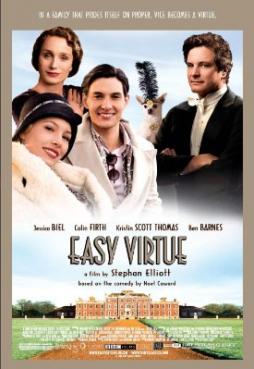
Easy Virtue is a biting British comedy from start to finish. It is sharp-witted, sassy, unpredictable, humorous and tinged with bitterness, sadness and regret. Everything one might expect from the British.
“It’s a dark melodrama,” explained director/ co-writer (with Sheridan Jobbins) Stephan Elliott [Priscilla, Queen of the Desert] by phone from London. “[The play] was so vicious and cruel to English. [It was] the second play for [Noel] Coward and in his biographies we found some misgivings he had and within that found license to go with it.”
It is the late 1920s and John Whittaker [Ben Barnes] surprises his family by marrying a glamorous, platinum blonde American motorcar racer from Detroit named Larita [Jessica Biel]. This is much to the horror of his proper British family. While it appears that everything is perfect at the country estate, it really isn’t. The mother, Mrs. Whittaker [Kristin Scott Thomas] is uptight and overbearing and the father [Colin Firth] spends the majority of his time “fixing” a motorcycle that may never work. John most likely married the free-spirited Larita [Biel] on a lark and in an act of rebellion. She’s independent, easy- going, athletic, charming, and smart. The complete opposite of his mother. Suddenly it is the elder Mrs. Whittaker vs. the new Mrs. Whittaker.
“It’s a culture clash and collision of women of different eras,” said Elliott. “Great Depression. Veronica Lake. Screwball element. Likeable yet screwball.”
Larita is a city girl. John is a country boy. The sooner the two realize this, the better. Mrs. Whittaker says: “Have you had as many lovers as they say?” Larita: “No. Hardly any of them loved me.”
Firth is scruffy, downtrodden and sad. It’s not the typical role for him. He’s not the usual brooding guy. “Colin is laconic,” Elliot explains. “His character is a dead-man walking. “He’s stopped fixing a long time ago. He’s really the arc of film. Larita brings him back to life.”
Biel steps out of the pretty girl role to play a woman with greater depth and character. She’s truly impressive and memorable in this femme fatale role. If you liked her in The Illusionist, you will like her even more in Easy Virtue. “Jessica was the big surprise, the big revelation,” Elliot agreed. “Something fresh and different. We didn’t expect it.”
And after seeing Kristin Scott Thomas so serious, and heartbreakingly poignant in I’ve Loved You So Long, she must have relished her role as an eccentric, overprotective mother-in-law. [“We were chasing Kristin and Colin for years. We wouldn’t deliver something they had done.]
I don’t want to give too much away but it’s a divine war of words and gestures. “This is a very subversive, naughty piece of work,” Elliot concluded. “You have expectations and you go into the film and have those expectations are crushed majorly and you can go on that ride.”
Easy Virtue does not disappoint.
<!–
document.write(' ‘);
‘);
//–>
Share this:

STEELE INTERVIEWS: Roberto Benigni
Posted by Amy Steele in Interview, Visual/ Performance Art on May 27, 2009
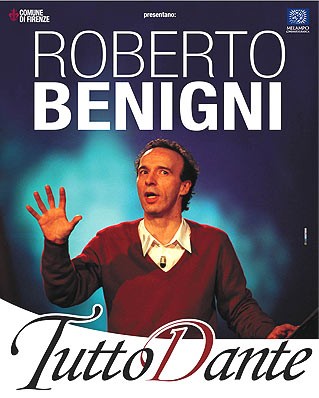
North American Tour of Benigni’s One Man Show– TuttoDante—
Begins May 26 in San Francisco and Ends June 12 in Chicago
For the past three years, two-time Academy Award winner Roberto Benigni [for 1999’s Life is Beautiful] has been touring in his native Italy with his one man show. TuttoDante is a celebration of the work of acclaimed Italian poet Dante. Benigni takes current events and interprets them and blends them through his own reading, study and love of the epic poem The Divine Comedy by Dante. During the final act, he recites the Fifth Canto in its original medieval Italian. The Fifth Canto recalls the tragic love story between Paolo and Francesca who are condemned to Hell for eternity for the sin of lust. His performances have now expanded to other countries such as Paris, London, Switzerland, and Greece.
I spoke with him by phone, from Rome, recently. His infectious spirit traveled through the phone and made me smile and feel energized. This theatrical project sounds like a remarkable work of love and generosity. Benigni is bringing Dante to people so that they will enjoy it as much as he does.
Amy Steele [AS]: How are you doing?
Roberto Benigni [RB]: Hi. We have to talk a little. Where are you right now?
AS: I’m in Boston, Massachusetts.
RB: Oh Boston. I envy you. I’ve never been there. I can’t wait to be there.
AS: You haven’t been here?
RB: No never. Never. But I know Boston is a marvelous, magnificent city.
AS: Well I haven’t been to Italy, so. . .
RB: No, really? Never?
AS: No. Only France.
RB: So we wait for you.
AS: So in Italy does everybody read The Divine Comedy very early as children or when do you first read it?
RB: Oh no, my goodness no. They start about age 15. They teach it in school this wonderful book and people don’t like it and they are forced to learn this book and they teach The Divine Comedy in a very particular way. Although it is so a popular book and full of mystery. Sometimes it is incomprehensible but we need sometimes to talk about incomprehensible things. It’s very healthy. It’s very healthy to talk about what is death, what is destiny, what is the Other World.
AS: What do you like about it?
RB: Oh what? Everything. There is not a single word in it that I don’t like. It is so perfect a poem that every single word, you know Amy, is perfect. Fleeing from The Divine Comedy is impossible. It is like fleeing from our own conscious. How can I say? There is no other human creation that places human conscious and human suffering at such a high point. And it is also the reach of The Divine Comedy’s beauty. Because it is beautiful. When you start to read Dante, you stop reading every other thing because it is the most glorious imagination.
AS: I haven’t read it yet. I know I need to read it.
RB: Yes it is really great. When I come to Boston I would really like to see you, because it is very rare in book. The flavor of happiness. It’s really something very special. In my opinion Dante is maybe the greatest poet of modern poetry.
AS: My boyfriend has read the whole thing and he’s an engineer and he doesn’t read that much. On his own time, he read it. We did go to a visual interpretation at a museum.
RB: Right it is a very visual poetry The Divine Comedy. You can touch The Divine Comedy it is a book that is alive. It comes to life from the nervous system. Something that appeals to the mind and the nervous system. It’s in the eyes of a woman and we will never forget this. Beatrice: So written you are eternal. He promised to write something for her that nobody did before. And he kept his promise. It is really unbelievable what he did this man.
AS: So why did you want to write a show from this?
RB: No it is a show, Amy. I am not a professor and I am not an intellectual and I am not a critic. The show is separated into two parts. The first part of the show is about our time. The second part is Dante’s Fifth Canto about lust and sex and passions and loves and they are related. We can see how the sentiments are related. This is one of the most popular Cantos. It is the story of Paolo and Francesca and why they are in Hell. We would like to understand why two people in love are in Hell. This passion that can guide us and is concerning us very deeply and profoundly. The beauty of the language, the sound of his Italian is a symphony. The old sounds like Beethoven, Bach and Jimmy Hendrix. It’s really something beautiful and unforgettable. It’s very beautiful in my mind.
I decided to make my show about Dante and thought I would lose some people. But you know what happened, Amy. I am doing what I really love. To present Dante is like a gift. To present the most luminous poem of Italian culture. So I try, and really I was so surprised because I thought I would make this about Dante for some months and now it’s been three years and I’m continuing to make the tour about Dante. Incredible. So beautiful, really moving.
AS: How do you keep it fresh?
RB: What I present is always different. I couldn’t say no because I’m changing the show. It is never the same. I cannot write because we cannot use subtitles. What I am saying is always different. I try to continue. Although I would like to make a movie now: a comedy. Without The Divine [Comedy] in it. The first part of the show is a moment of lightheartedness. It is carefree. I do some research. But little about the town where I am doing the show.
AS: So the main subjects are covered in Dante’s work that you are weaving through the whole thing?
RB: It is related and we can immediately feel that because Dante is a great poet. Everything you read about Dante is something that is concerning you deeply and you can feel that it is something that moves into your soul into your bone. He found words for sentiments we can hardly feel because we don’t have words for them.
AS: What should U.S. Audiences expect?
RB: [To see me on stage] conveying my passion for Dante. And also if only one person starts to read The Divine Comedy, this is wonderful. It is a big thing.
AS: I have an online Israeli friend who asked me to ask you a question that is not related to this but is related to Life is Beautiful. How do you respond to critics who state there’s nothing good that can emerge from the Holocaust?
RB: Life is Beautiful was a real tragedy and sometimes they were confused because I am a comedian. They said, “It’s a comedy about Holocaust, my God.” I never thought about comedy about Holocaust. Impossible. The movie was a real tragedy but was starting in a happy way and the ending was tragic. In making this movie I put all my love and respect. I couldn’t hold back the beauty of the idea. I had to say something about the Holocaust and this is my way. It was a comedy body in a tragedy.
AS: I look forward to coming to your show.
RB: Come visit me in my dressing room. I would like to know you Amy.
AS: Thank you for speaking to me. It has been a real pleasure.
North American Tour Dates:
Tues. May 26–San Francisco–Davies Symphony Hall
Sat. May 30–New York City–Hammerstein Ballroom
Tues. June 2&
Weds. June 3–Montreal, Quebec, Canada–St. Denise Theatre
Sat. June 6–Boston–Berklee Performance Center
Sun. June 7–Toronto, ONT, Canada–Casino Rama
Wed. June 1–Quebec City, Canada–Gran Theatre de Quebec
Fri. June 12–Chicago–Harris Theatre
<!–
document.write('‘);
//–>
Share this:

STEELE INTERVIEWS: Claire Danes
Posted by Amy Steele in Film, Interview on August 10, 2007
Youth, beauty, it all seems so meaningless now.
–Lamia [Michelle Pfeiffer]
“Hi Guys! Are you freezing? It’s so cold in here,” Claire Danes exclaims as she wraps her vintage jacket about her lithe frame. The jacket is tan which complements her long, honey blonde hair and it has cool orange swirls on it that gives it flair. Not that Ms. Danes needs any. She wears jeans, a gray shift and great clunky stone rings on her fingers. Actually, I take note of three on one finger.
She wraps her legs under her and sits down, bending forward, with a smile, to speak
about her latest film, Stardust, at a local Boston hotel a few weeks ago. Known for her roles in Romeo and Juliet, the summer’s very moving Evening, Shopgirl, The Family Stone, Les Miserables and forever as Angela Chase from television’s My So-Called Life, Danes will makes her Broadway debut in Pygmalion this fall.
Stardust is a wonderful, if sometimes goof-ball, fantasy film. It’s often Shakespearean in tone: think Midsummer Night’s Dream meets Princess Bride. This delightful escape relishes in clever and witty dialogue, off-beat, quirky, layered characters, unexpected moments and thrilling, dream-like sequences. Danes finds herself in good company: Michelle Pfeiffer, as an unattractive, deliciously wicked witch with piercing eyes who seeks everlasting beauty and youth brings an exuberance and fervor to her character. Robert DeNiro, in really not that much of stretch considering the Meet the Parent films, plays a cross-dressing pirate. Adding to the fun: British actors Jason Flemyng, Sienna Miller [nearly unrecognizable] and Charlie Cox. Danes plays a star, Yvaine, who fell to the ground and wants to go home. Who wouldn’t love this film and this role? A star personified! And Evie is happy but also a bit pensive being a star. You’d think she would be conceited and powerful but she’s at times insecure and very sweet. An endearing, bright-eyed gentleman named Tristam [Cox] travels across the barrier to this “forbidden” but special and magical land and finds Evie. Together they go on an amazing journey which, naturally, becomes one of self-discovery. Stardust really charms, remaining unique while it addresses: age/youth, beauty, love, and destiny with all the magic, intrigue, adventure and humor of any smart film.
What did you like about this project?
Claire Danes: “I loved the story. It’s charming and engaging. The dialogue is witty and wry and Evie has a trajectory. She changes which is appealing. She is knowing and wise because she’s ancient but unbelievably naïve.”
What do you like best about acting?
CD: Laughing: “The costumes are fun. I really like the challenge of imagining what it is to be another person and exercising empathy and stretching the imagination.”
What do you do for fun?
CD: walk my dog, draw [takes life drawing classes in down time], dance
Do you think you will always live in New York?
CD: “NY is home to me. I travel constantly for work.”
What is the best part of working on this film?
CD: “The rewarding part of this movie is working with Charlie [Cox]. He’s a special guy—appealing, honest, expressive and great person.”
What attracts you to a role?
CD: “exploring new territory and new genres. Characters with dimension and complexity and who undergo change. And grow and transform. Usually women exist to facilitate change and growth in male characters.”
What are some of your favorite films?
CD: “Waiting for Guffman, Sophie’s Choice, and I know everyone says it but, Citizen Kane.”
What are some favorite films of your own?
CD: “Romeo and Juliet, Stealing Beauty, Shopgirl and Brokedown Palace.”
–30–
<!–
document.write('‘);
//–>
Share this:

About Me

covering mostly music and books. focus on alternative/indie and women in music, literature and the arts. feminist. vegan. mostly alternative, a bit bohemian. Masters in journalism from Boston University. BA from Simmons College.



Entertainment Realm by Amy Steele is licensed under a Creative Commons Attribution-Noncommercial-No Derivative Works 3.0 United States License.
Based on a work at entertainmentrealm.comCopyright © 2009. All writing, unless otherwise noted, by Amy Steele.
 ENTERTAINMENT REALM
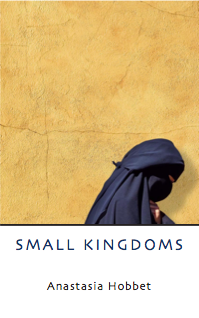
You must be logged in to post a comment.