Posts Tagged AMY STEELE interview
STEELE INTERVIEWS: Kenji Gallo
Posted by Amy Steele in Books, Interview on August 15, 2009

I was a pot dealer at thirteen, a cocaine user at fourteen, a stickup kid and coke dealer at sixteen, a coke smuggler for a Mafia drug trafficker at seventeen, a car-bomber and drive-by shooter at eighteen, the leader of a major narco-trafficking crew and an undercover FBI witness at nineteen, a club owner and accused murderer at twenty, a porn producer at twenty-one. Orange County had never seen the likes of me.
Nothing gets held back in Breakshot as Kenny “Kenji” Gallo provides readers with an unsettling, honest, straight-forward, un-censored version of life in the Mafia. It’s not glorified. It’s not cool. It’s awful. That is exactly what you find throughout the pages—the reader gets the bare bones, stripped down, harsh reality version of the mob lifestyle. This is not the Sopranos. What Gallo chronicles throughout the pages of Breakshot has not received a glossy Hollywood treatment. This mob informant is the real deal. Gallo wants the public to understand what he went through, the mistakes he made, and what he saw by infiltrating mob families in California, Florida and New York. Gallo, an Asian-American middle-class “kid” from Orange County, has a solid memory for his interactions with wise guys on all levels within numerous influential families. He had the charisma and talents to gain the confidence of major players in these different mafia families.
Now that I have been strictly crime-free for nearly five years, there is no other reasonable conclusion: I was a horrible, exploitative monster by choice, because I was happiest inflicting pain, misfortune and humiliation on others. I have no alibi, no excuses—I committed crimes for pleasure.
Breakshot is full of cringe-inducing violence, despicable behavior and attitudes, beyond crude language, and over-the-top racism and sexism. I could not read Breakshot without setting it aside for periods of time. Often, this memoir truly creeped me out. I don’t know what bothered me the most: the disregard for the value of life, the blatant lack of interest in anything but getting laid and making tons of money, the arrogance and bravado, the flagrant disregard for customs and standards, or constantly putting women down. Breakshot is almost a “scared straight” for Mafioso-wannabes. This is not an easy or enviable life. Once in, it is nearly impossible to get out except through prison, witness protection or a body bag. By sharing insight and minutiae of this lifestyle, Breakshot proves in the end that Gallo lost a lot to gain very little.
I spoke with Kenji Gallo by phone from his office in Orange County, Calif.
Amy Steele [AS]: Why did you decide to write the book?
Kenji Gallo [KG]: I just wanted to get my story out. I wanted to tell it like it is. I was tired of watching and reading all these other books and movies. Tired of it. They’re all just crap. People like the Sopranos because they think it’s so real. How would they know it’s so real? It’s not even close to be real.
AS: How do you think [The Sopranos] is not close to real?
KG: Nothing in the show is even close to reality. If they’re sitting in the same place every day, the Feds would already be arresting them. No one would be speaking to a shrink. It just wouldn’t happen. They’d just kill him. No one would listen to him. It’s just phony. I’ve watched like two episodes and I saw some guy beat up another guy at a bagel shop and I said, “This is just not for me.” Women have no say so at all. Not that I have anything against women but it’s a man’s gig. It’s a man’s life.
AS: What do you want readers to take away from Breakshot?
KG: The readers can see what a real criminal thinks like. What a real organized criminal is and how it is today. It’s not just some guy in Brooklyn going to a social club and playing cards. I was a real mobile 21st century criminal. I used computers. I used cell phones. It wasn’t a bunch of old guys dressed in suits. All of my friends are young. They can see that it’s a waste of life. All these music videos, everything that portray “the life,” all those that wannabe like that . . . people die. A lot of my friends are dead. It’s not cool. Hopefully people will see that. I wasted 20 years for no reason.
AS: That sometimes comes across but I had to put the book down a lot. It’s so violent and upsetting that I’d have to read something else and then come back and read a little bit. So I guess you did what you set out to do then.
KG: If you read any other organized crime book, [writer’s note: I have not and there is not one high on my TBR list.] it’s always a guy saying that he really didn’t do that much bad, he had a real bad childhood, he was beat by his dad or stepdad, he grew up in poverty, blah, blah, blah. And they’re all lying. They’re just making an excuse. I don’t make any excuse. Not even one excuse. I just did it because I wanted to do it. That’s it. It’s just right out there for everyone to see. Criminals aren’t nice guys. They aren’t funny. They’re ignorant. It’s a grind being around them. So it is upsetting.
AS: Why do you think the criminal lifestyle did have such an appeal to you when you were this “nice O.C guy”?
KG: I just get bored really easy and it just had this allure to me and I just thought I hadn’t got to the right point yet. I thought, ‘I’m not to where it’s going to be really glamorous.’ And it just never was. It’s not the lifestyle that people think it is.
AS: If you were so smart, you just never wanted to become more educated and go to college?
KG: I did go to college but I didn’t finish college. I also read about three to five books a week, anything I can get my hands on, on any subject. I really like history. In my lifetime, looking back, I really would have loved to have been a history professor or teacher. But I kind of just left home. That’s why I changed my name. My family has nothing to do with my life. Nothing to do with me.
AS: You’re so much nicer to talk to, not what I expected at all. In every chapter you say you are this “smart, clean-cut, well-spoken guy.” Why did you feel like you had to say that? Were you trying to point out the thuggishness of a lot of the other people? I think that’s one of the things I couldn’t take. The treatment of women. There was this one guy who said, “Oh Kenji you just have to treat women like crap, like property. They aren’t worth anything.”
KG: They’re really stupid. At the end, I couldn’t wait to get off the streets. I couldn’t wait for the FBI guy. I was so happy because I couldn’t take being around them anymore. I was never the kind of guy who cheated on his wife or cheated on his girlfriend. I just wasn’t that kind of guy. I’m a nice guy to women. I had a lot of women friends. I had gay friends, I had friends who were black, friends who were Mexican. It’s just not the norm for that kind of lifestyle. I wanted different things and that’s where a lot of the differences were. I wasn’t a big drug addict and drinker like the rest of these guys. I treated women different. And I read all the time. I’d have a book with me all the time and they would make fun of me. I held them in contempt. I kind of looked at the world like I was an anthropologist. I just watched, observed. The thing with me is I actually took notes just for my own purposes back then.
AS: So that’s how you could have such a good recall too to write the book.
KG: Oh yeah, I have a really good memory. I remember details of what we did that day. And I wasn’t high or drunk so it made things a lot easier.
AS: In the beginning though, you were dealing drugs and using them. Isn’t that sort of against the rules?
KG: I didn’t really use them every day. If we went out, I’d use drugs. If I was working, there was no way. My work ethic, everyone knows. Even now, I get up at 4 a.m. I go do cardio. I’m behind my desk by six. I’m working. I’m emailing. I’m doing this book and everything else. At 12, I do jujitsu for three hours. I come back and work for another hour and then I go home. I haven’t missed a day in two years.
AS: You had the top porn star lays list which I did not like. And you had your ex-wife Tabitha at five which I thought was pretty degrading. What was the point of putting that list in the book?
KG: Well, it’s not degrading if you knew my ex-wife. It is what it is. A lot of guys wanted that. I didn’t really care. I didn’t really want it in there but people ask about it all the time. I just put it there because it’s pretty well known the girls I hung out with. [Tabitha]’s really made a mess of herself. I did care about her a lot, honestly. I loved her. I wished I could help her. I still care about her. I don’t want anything bad to happen to her. She was special to me and I wish her the best. They [porn stars] are looking for attention. They are constantly seeking that father figure that they can’t find. Nothing is good enough for them and nothing ever will be until they find happiness within themselves.
AS: So you’re saying that you didn’t treat women that objectively? You can tell this really bothered me. At a lot of points in the book, women are demeaned and described in negative terms.
KG: I’ll clear this up. I was speaking negatively about the porn women because they don’t want to help themselves. They’re selling themselves and their bodies out for a few pennies. They make themselves look as bad as everyone else. That’s the point I’m trying to get at. I would never raise my hand to a woman. I treat every woman with respect as long as she treats herself with respect.
AS: You talked about the mafia code of honor and that you didn’t respect it. What are your thoughts on that?
KG: There is no code of honor and the rules only apply to those who they don’t like. They steal each other’s money. They steal each other’s wives. If a guy goes to prison, they rip off everything that he has. Out of sight out of mind. They don’t take care of anyone. And they all sell drugs and they all do whatever they can to make money. So there is no code of honor.
AS: So you said you were really ready to get out. How difficult was it to flip and work for the FBI?
KG: As soon as they asked me, I thought for like seconds and said, “Yeah, sure.” They said, “You don’t want to talk to a lawyer about it.” I said, “I made my decision. I’m on Team America.” They offered me a new life. I was over it. And I just wanted out. To leave the life, hasn’t been difficult at all. I don’t miss anyone in the business.
<!–
document.write(' ‘);
‘);
//–>
Share this:

STEELE INTERVIEWS: Rose Byrne
Posted by Amy Steele in Film, Interview on August 8, 2009

Many people know Rose Byrne for her role as Ellen Parsons on Damages for which is nominated for an Emmy award. She currently appears in the heartwarming, quirky film Adam as schoolteacher and children’s book author Beth, a calming influence and love interest for Adam [Hugh Dancy], an engineer with Asperger’s. Beth pulls Adam out of the window (as Jenny McCarthy refers to in her book Louder than Words) but throughout the entire film the pair must decide whether or not the relationship can realistically survive. Adam’s father has recently died and Beth soon becomes his sole support system, something which she ultimately finds too overwhelming. She has a close relationship with her own father (Peter Gallagher) who faces legal issues and Beth must choose between Daddy and her new boyfriend. Dancy creates more than a caricature and does a commendable job as Adam. However debut director (writer) Max Mayer does not push quite far enough in the script and film. The characters could be developed more. Adam is quite intriguing at the beginning and then his quirks and ticks get annoying and he uses his Asperger’s as an excuse at times. The film started to grow too drawn out at times. While Adam strives to prove that those with Asperger’s can function in society with empathy and tolerance, the film left me with more doubts than answers.
Recently, Rose Byrne stopped by the Ritz Carlton in Boston to talk about Adam. Byrne started acting in Australia professionally at 13 and began taking acting classes at eight-years-old. How does she master that American accent? “Growing up watching Alex P. Keaton and Family Ties,” she admitted.

You just came back from India. Did you do any yoga over there?
Byrne: No. I didn’t do any yoga. I desperately tried to find a place to do yoga. You have to be more organized and I wasn’t which was a shame. No, I was just sort of traveling around the country which is incredible if any of you have gone or plan to go. Do go if you get the opportunity. No I wasn’t planning on working. I had just finished working on this show called Damages [as if we hadn’t heard of it or seen it—fan here!] and then the script came and my agents were very encouraging for me to read it and I did and it was really good. This is really a clever, beautiful, moving, heartfelt script with a character that I’ve never been approached to play before. She wasn’t chasing zombies or in a spaceship or running from the end of the world or crying in a tent desperately before she gets attacked. She was a liberated, wonderful, complex woman and she also didn’t take her clothes off in the first five pages. It was really rare to come across something like this. She was a gift, I suppose.
When you take something from the written role to the performance, what did you bring to the role?
Byrne: It’s hard for me to be objective about what I myself bring to something but I guess I was definitely given such a gift with her. It was fun to go to a character who was so different in so many different ways. She has a tolerance about her and patience about her which I loved and of course the comedy in it was really fun. That was something that I’ve been wanting to try to do is something lighter and funnier.
What did Hugh bring to the film that surprised you?
Byrne: It’s a remarkable performance. Knowing someone with Asperger’s, he does a beautiful job. It’s very accurate, sensitive to it and yet compelling. Which is a hard thing to do, because we’re making a film, and you want it to be entertaining and all that stuff. And yet he makes you care about someone who’s kind of difficult to access. He does a really good job of that.
Is it hard being on TV and finding good film roles?
Byrne: Well, just schedule-wise because the show takes up 5-6 months of the year. The role I have on Damages is so good and better than most of the film roles out there that I would be getting access to that for me that it was a bit of a no-brainer for me to sign on once I had got the role. And working with Glenn obviously and it’s a very prestigious show. And I myself for one love series. I watch Mad Men. I think TV right now is having a renaissance especially for women.
What do you like best about this film?
Byrne: For a viewer, I guess I thought it was a very truthful story. I think truth is stranger than fiction. It put a fresh take on a romantic comedy as well which is a genre we’ve seen done so much. It always falls into nostalgic, sanctimonious, cheesy crap and it’s completely unrealistic. I thought this was a refreshing and realistic take on it without being boring. It’s a very accessible film.
<!–
document.write('‘);
//–>
Share this:

STEELE INTERVIEWS: Allison Winn Scotch
Posted by Amy Steele in Books, Interview on August 5, 2009

With Henry, I knew ambition. I knew the straight and narrow, and seven years later, it felt choking, claustrophobic almost. so whit time around, I pushed aside those lingering doubts about Jack, which, in days past, would spiral into needling nit-picking, which would escalate into full-blown arguments, which would culminate in one of use sighing in sarcastic relief at the fact that we weren’t in the relationship permanently. And then we’d apologize, and wash, rinse, repeat at least once a week.
Would you like a chance to make a different decision, to change something in the past, to pick a new career, or a new person to date? Do you wish you could take back harmful words or wish that you could go back and say something meaningful to someone that you never had a chance to say? Time of My Life addresses these types of questions when Jillian Westfield finds herself seven years in the past with her ex-boyfriend instead of her investment banker husband and 18-month-old child. This whimsical, unexpected, smart novel by Allison Winn Scotch will keep you constantly guessing what Jillian will do next. Before the time travel, Jillian lives the idyllic life of a perfect Martha Stewart disciple stay-at-home wife and mother. She schedules, outlines, and masterfully executes every aspect of her life which instead of making her life easier only adds more stress. She finds herself often pondering what life may have been like if she had stayed together with aspiring writer Jackson. Bingo. She’s jettisoned back in time as if she never left. How will it turn out this time around? Time of My Life proves to be a treasure trove for anyone who has ever wished for another chance. Winn Scotch creates an unforgettable cast of characters and moments that allow the reader to delve into Jillian’s life as she discovers herself and what she needs most to make herself truly happy. And it is not a man. Time of My Life is witty, well-crafted and charming.
Recently I interviewed author Allison Winn Scotch via email. Time of My Life is currently available in paperback.
Amy Steele [AS]: Smarty pants: UPenn with a BA in History and concentration in Marketing from Wharton. Did you work in business after you graduated and if not, why didn’t you go into business?
Allison Winn Scotch [AWS]: I actually did get a job in public relations after gradating, but I hated every second of it and ended up quitting nine months later. As far as business, I interviewed at the investment banks and consulting firms my senior year – per my parents’ wishes, as my older brother worked for Goldman Sachs at the time – but it was pretty clear that my heart wasn’t in it. In fact, I think one of the Goldman guys reported back to my brother that, “I’d be a great candidate but they could tell I wasn’t interested.” Hee. Very accurate. Fortunately, many years later, everyone involved – from my parents, to me, to probably those Goldman folks – are all very happy with my chosen path. Sometimes you have to try on a few hats to find the one that fits.
AS: Why did you become a writer?
AWS: I was always a writer, in that I enjoyed it so very much and kept diaries and such. In college, I had a bi-monthly Op-Ed column called “Allison Wonderland,” (get it?), and a lot of people told me I should consider getting into writing upon graduation but it just seemed ridiculous. I mean, how on earth does one earn income from writing?? At least, that was my initial reaction. But, as I said above, I tested a few different careers – PR, acting (got my SAG card, did commercials, etc), internet mogul – and the writing thing sort of fell into my lap, in that I was very good at it, and while I was doing the internet start-up thing, co-partners began to ask me to do their copy writing/press releases/web copy for them. From there, I was hired on retainer for a major PR firm in NYC to ghostwrite for celebs, which led to me landing a ghost-writing gig for The Knot for one of their wedding books. And from there, I landed my first national magazine piece in Bride’s. It all sort of snowballed – good timing, good luck, and I guess good writing too.
AS: For eight years you wrote for many women’s magazines as a celebrity and feature writer [and you still freelance]. What have you learned as a feature writer that you can translate to writing novels?
AWS: Well, for one, I am great with deadlines. You train yourself when you’re rotating various freelance jobs to know how long something will take you and how exactly you’re going to schedule your time to make that happen, and the same rule applies for me with fiction: if I’m in writing mode, even if I really, really don’t want to work that day, I do. Period. I also think that magazine work helped me understand the importance of research – particularly with my first book, in which I had to get the details of cancer just right – as well as the importance of really crafting a sparkling phrase. My favorite magazines to write for were those that let my own voice shine through, and I try to still honor that voice when I’m working on my fiction. In fact, I think it’s the most critical element in writing a good book.
AS: Where do you get this fantastic idea for Time of My Life?
AWS: I’d been contemplating doing a time-travel story, but I wasn’t quite sure how to go about it…I didn’t know how to sort it out in my mind. But then one afternoon while the idea was brewing, my best friend called while she was on vacation where her ex-boyfriend lived, and she said, “I’m so weirded out … I can’t stop thinking about what my life might have been like.”
Then we had one of those intimate life conversations that you can only have with your closest friends, about her what-ifs and my what-ifs, and I assured her that this was all very normal, even though people didn’t really talk about how much they wonder about what could have been. We hung up, and I headed out for a run, when I often do my best creative thinking, and BAM … the idea, characters and plotlines just presented themselves very clearly. I came home, wrote what are now the first 14 pages. I think, as so many of us get older and look back on our younger years with nostalgia, it’s very easy to consider what the other possibilities could have been – and I wanted to explore that.
AS: How did you come up with the character of Jillian and the other characters?
AWS: Jillian and Jackson and Henry just came to me immediately during that run. It’s sort of hard to explain but when I’m struck with a book idea, I can very clearly hear the protagonist’s voice…so I sort of knew Jillian before I even started writing her. The rest of the characters fill themselves in as I write: I don’t write with a master plan or an outline, but you know, you just surround the protagonist with people whom you’d have in your own life: friends, family, co-workers. Though, of course, because the key to a good book is conflict which propels the plot forward, these characters need to be embroiled in their own problems and/or create problems for your heroine.
AS: In Time of My Life, Jillian Westfield seemed thrilled to have a second chance in the past. After the initial shock of it, she really just jumped right in. What motivated her?
AWS: The possibility of having her “what if” fantasies be as good as she dreamed them to be. I think we all, every once in a while, envision this perfect other life, and when Jillian is granted that opportunity to possibly find that perfection, well, she opens up her arms and welcomes it.
AS: Why do you think so many women feel that they have to completely give up their careers to raise children as Jillian did?
AWS: Oh, this is such a tough question. I don’t know that women FEEL that they have to give up their careers rather that a lot of women feel as if they don’t have a better option. I have friends who work full-time who really miss their kids during the week, and I have friends who are full-time moms who wish they had some sort of intellectual stimulation. I’m not sure that either party wins. But for the moms who do leave their jobs, they want to enjoy those early years with their kids because, quite obviously, they’ll never get those years back…and their careers likely aren’t the types of jobs that will allow part-time or maybe they’re not the types of careers that provide enough satisfaction for those women to miss out on the time with their kids. Look, I don’t judge. I think that it’s a really tough situation for nearly all women who face this crossroads, and I just feel incredibly fortunate to have a job in which I get to enjoy both: the satisfaction and confidence boost of a thriving career and downtime to hang with my kids. I wish that for every woman if that’s what she wants.
AS: How do you think Jillian’s relationship with her estranged mother enhanced the story?
AWS: When you’re writing a book, you always need to go back and consider the “why” behind your character’s actions. I needed and wanted Jillian to offer readers a tangible, acceptable WHY as to why she’d leave her toddler behind to discover a new life. I also wanted to show in Jillian’s story arc how – without giving too much away – she comes to accept responsibility for herself and her actions, rather than her default of blaming her family history. I said earlier in this interview that I believe that a lot of us are shaped by our parents but I also believe in taking responsibility and owning your actions as an adult. There’s only so much blame to go around, and eventually, you can blame and blame and blame but it doesn’t matter! You’re still in the same place in your life. So I wanted to demonstrate that maybe Jillian had grown in her journey by taking an inward evaluation rather than constantly looking outward.
AS: When you thought of Time of My Life was Jillian always going to have a child? Could the story have worked if she didn’t have a child?
AWS: Yes, always. Part of Jillian’s conundrum – and that of a lot of women I know – is that motherhood is a tangled lot. Wonderful in so, so many ways you’d never imagine, but also boring, draining, occasionally frustrating, and all of these things lead Jillian to yearn for the earlier years when life was simpler or easier…or at least that’s how she remembered it.
AS: Jillian’s ex-boyfriend Jackson and her current husband Henry are opposites. How did you come up with these characters and what was your intention in making them so different/ very black and white? How would it affect Jillian?
AWS: Well, I actually tried NOT to make them as black and white as you read them to be, but that’s okay! Well, maybe not black and white, but I tried to make them each sympathetic in their own way because I’m of the belief that often times, there isn’t a bad guy (or girl) in a break-up, just that two people weren’t meant to spend their lives together. But Jackson represented – to me – more of the guy whom maybe I’d date in my 20s, the ones who I certainly fell in love with but for whatever reason, just weren’t the puzzle pieces to complete me. And Henry represented that more stable, responsible love that hopefully you marry but doesn’t come without its own foibles.
AS: The thought of a do-over is a pretty cool thing. The entire time, the reader has no idea whether Jillian will stay in the past forever or somehow end up back in the present day. How did you like her journey and what was your favorite aspect of it?
AWS: I’d say that the last 1/3 of the book is my favorite. Without giving too much away, I really just enjoyed when Jillian started making her transformation to her smarter, better self. It was fun to write, and even now, I think it’s fun to read. The Christmas and New Year’s scenes (again, without spoiling anything) are probably my favorite.
AS: Who are some of the authors that you have admired over the years?
AWS: Oh, so many. Elin Hilderbrand, Jonathan Tropper, Tom Perrotta, Laura Dave, Lolly Winston, Julie Buxbaum, Ann Packer, Jodi Picoult…I mean, I could go on and on.
AS: What was the last book you read?
AWS: I just finished Kissing Games of the World by Sandi Kahn Shelton, which I really enjoyed and have Elin Hilderbrand’s The Castaways on my nightstand right now.
AS: How do you keep your writing fresh? What motivates you?
AWS: I just really enjoy the creative outlet – as I said, I contemplated a career in acting, and I think writing is fairly similar. You dive into the minds of other people and get to envision an alternate world, and that’s a lot of fun for me. I also love getting feedback from readers – to know that I put something out in the world that resonates and connects us all to each other, it’s the most gratifying part of this job.
AS: What is the greatest challenge about being a novelist?
AWS: I have pretty high standards for myself, so I probably put a lot of unnecessary pressure on myself as a result. I want to improve on my ideas and my writing with every book, so the challenge to do that can be tough. But I’m trying! I just want to give readers a few hours that transports them away from their lives, and if I can do that, I’m pretty happy at the end of the day.
<!–
document.write(‘‘);
//–>
Share this:

STEELE INTERVIEWS: Roberto Benigni
Posted by Amy Steele in Interview, Visual/ Performance Art on May 27, 2009
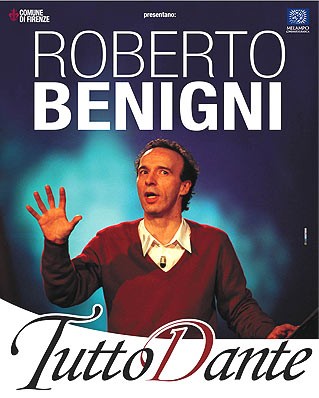
North American Tour of Benigni’s One Man Show– TuttoDante—
Begins May 26 in San Francisco and Ends June 12 in Chicago
For the past three years, two-time Academy Award winner Roberto Benigni [for 1999’s Life is Beautiful] has been touring in his native Italy with his one man show. TuttoDante is a celebration of the work of acclaimed Italian poet Dante. Benigni takes current events and interprets them and blends them through his own reading, study and love of the epic poem The Divine Comedy by Dante. During the final act, he recites the Fifth Canto in its original medieval Italian. The Fifth Canto recalls the tragic love story between Paolo and Francesca who are condemned to Hell for eternity for the sin of lust. His performances have now expanded to other countries such as Paris, London, Switzerland, and Greece.
I spoke with him by phone, from Rome, recently. His infectious spirit traveled through the phone and made me smile and feel energized. This theatrical project sounds like a remarkable work of love and generosity. Benigni is bringing Dante to people so that they will enjoy it as much as he does.
Amy Steele [AS]: How are you doing?
Roberto Benigni [RB]: Hi. We have to talk a little. Where are you right now?
AS: I’m in Boston, Massachusetts.
RB: Oh Boston. I envy you. I’ve never been there. I can’t wait to be there.
AS: You haven’t been here?
RB: No never. Never. But I know Boston is a marvelous, magnificent city.
AS: Well I haven’t been to Italy, so. . .
RB: No, really? Never?
AS: No. Only France.
RB: So we wait for you.
AS: So in Italy does everybody read The Divine Comedy very early as children or when do you first read it?
RB: Oh no, my goodness no. They start about age 15. They teach it in school this wonderful book and people don’t like it and they are forced to learn this book and they teach The Divine Comedy in a very particular way. Although it is so a popular book and full of mystery. Sometimes it is incomprehensible but we need sometimes to talk about incomprehensible things. It’s very healthy. It’s very healthy to talk about what is death, what is destiny, what is the Other World.
AS: What do you like about it?
RB: Oh what? Everything. There is not a single word in it that I don’t like. It is so perfect a poem that every single word, you know Amy, is perfect. Fleeing from The Divine Comedy is impossible. It is like fleeing from our own conscious. How can I say? There is no other human creation that places human conscious and human suffering at such a high point. And it is also the reach of The Divine Comedy’s beauty. Because it is beautiful. When you start to read Dante, you stop reading every other thing because it is the most glorious imagination.
AS: I haven’t read it yet. I know I need to read it.
RB: Yes it is really great. When I come to Boston I would really like to see you, because it is very rare in book. The flavor of happiness. It’s really something very special. In my opinion Dante is maybe the greatest poet of modern poetry.
AS: My boyfriend has read the whole thing and he’s an engineer and he doesn’t read that much. On his own time, he read it. We did go to a visual interpretation at a museum.
RB: Right it is a very visual poetry The Divine Comedy. You can touch The Divine Comedy it is a book that is alive. It comes to life from the nervous system. Something that appeals to the mind and the nervous system. It’s in the eyes of a woman and we will never forget this. Beatrice: So written you are eternal. He promised to write something for her that nobody did before. And he kept his promise. It is really unbelievable what he did this man.
AS: So why did you want to write a show from this?
RB: No it is a show, Amy. I am not a professor and I am not an intellectual and I am not a critic. The show is separated into two parts. The first part of the show is about our time. The second part is Dante’s Fifth Canto about lust and sex and passions and loves and they are related. We can see how the sentiments are related. This is one of the most popular Cantos. It is the story of Paolo and Francesca and why they are in Hell. We would like to understand why two people in love are in Hell. This passion that can guide us and is concerning us very deeply and profoundly. The beauty of the language, the sound of his Italian is a symphony. The old sounds like Beethoven, Bach and Jimmy Hendrix. It’s really something beautiful and unforgettable. It’s very beautiful in my mind.
I decided to make my show about Dante and thought I would lose some people. But you know what happened, Amy. I am doing what I really love. To present Dante is like a gift. To present the most luminous poem of Italian culture. So I try, and really I was so surprised because I thought I would make this about Dante for some months and now it’s been three years and I’m continuing to make the tour about Dante. Incredible. So beautiful, really moving.
AS: How do you keep it fresh?
RB: What I present is always different. I couldn’t say no because I’m changing the show. It is never the same. I cannot write because we cannot use subtitles. What I am saying is always different. I try to continue. Although I would like to make a movie now: a comedy. Without The Divine [Comedy] in it. The first part of the show is a moment of lightheartedness. It is carefree. I do some research. But little about the town where I am doing the show.
AS: So the main subjects are covered in Dante’s work that you are weaving through the whole thing?
RB: It is related and we can immediately feel that because Dante is a great poet. Everything you read about Dante is something that is concerning you deeply and you can feel that it is something that moves into your soul into your bone. He found words for sentiments we can hardly feel because we don’t have words for them.
AS: What should U.S. Audiences expect?
RB: [To see me on stage] conveying my passion for Dante. And also if only one person starts to read The Divine Comedy, this is wonderful. It is a big thing.
AS: I have an online Israeli friend who asked me to ask you a question that is not related to this but is related to Life is Beautiful. How do you respond to critics who state there’s nothing good that can emerge from the Holocaust?
RB: Life is Beautiful was a real tragedy and sometimes they were confused because I am a comedian. They said, “It’s a comedy about Holocaust, my God.” I never thought about comedy about Holocaust. Impossible. The movie was a real tragedy but was starting in a happy way and the ending was tragic. In making this movie I put all my love and respect. I couldn’t hold back the beauty of the idea. I had to say something about the Holocaust and this is my way. It was a comedy body in a tragedy.
AS: I look forward to coming to your show.
RB: Come visit me in my dressing room. I would like to know you Amy.
AS: Thank you for speaking to me. It has been a real pleasure.
North American Tour Dates:
Tues. May 26–San Francisco–Davies Symphony Hall
Sat. May 30–New York City–Hammerstein Ballroom
Tues. June 2&
Weds. June 3–Montreal, Quebec, Canada–St. Denise Theatre
Sat. June 6–Boston–Berklee Performance Center
Sun. June 7–Toronto, ONT, Canada–Casino Rama
Wed. June 1–Quebec City, Canada–Gran Theatre de Quebec
Fri. June 12–Chicago–Harris Theatre
<!–
document.write('‘);
//–>
Share this:

About Me

covering mostly music and books. focus on alternative/indie and women in music, literature and the arts. feminist. vegan. mostly alternative, a bit bohemian. Masters in journalism from Boston University. BA from Simmons College.



Entertainment Realm by Amy Steele is licensed under a Creative Commons Attribution-Noncommercial-No Derivative Works 3.0 United States License.
Based on a work at entertainmentrealm.comCopyright © 2009. All writing, unless otherwise noted, by Amy Steele.
 ENTERTAINMENT REALM