Archive for category Film
How much is an actress worth?
Posted by Amy Steele in Film on October 8, 2009
Forbes magazine has come out with its list of the Best Actresses for The Buck list.
 At the top is 41-year-old Australian Naomi Watts, who stars in many smaller indie films–notably The Painted Veil and Ellie Parker— but has also made a few bigger ones too– King Kong and The International. She’s super talented and confident in a variety of roles.
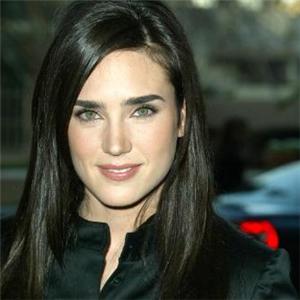 Second is 39-year-old American Jennifer Connelly, who chooses eclecticly. I’ve enjoyed her work in Requiem for a Dream, House of Sand and Fog and Blood Diamond. But do not know why she wasted her time in such tripe as He’s Just Not That Into You and The Day the Earth Stood Still. Everyone needs a paycheck and sometimes scripts look better than the final product, I suppose.
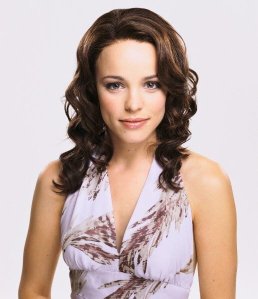 Third is a young talent: 29-year-old Canadian Rachel McAdams who charms in even poorly executed films [The Time Traveler’s Wife]. McAdams dazzled in The Notebook and the smaller, little seen thriller State of Play. She made The Red Eye, along with Cilian Murphy, much more entertaining and bankable. She soon stars along with Robert Downey Jr. and Jude Law in the much anticipated Sherlock Holmes.
To quote Forbes:
Based on our latest estimations of the actresses in Hollywood who offer studios the best return on investment, there are plenty who offer more bang for the buck than Jolie. The women who came out on the top of our list tend to be lower-profile stars who are happy earning paychecks of around $5 million and under.
Top-ranked Naomi Watts is a perfect example. The actress has yet to be involved in any kind of high-profile scandal and she usually shares equal screen time with a male lead, like in last year’s The International, which also featured Clive Owen.
Share this:

12 reasons to adore Whip It!
Posted by Amy Steele in Film on October 7, 2009
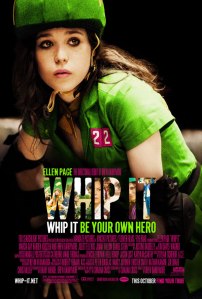
- Directed by Drew Barrymore– Whip It! is simultaneously edge-of-your-seat exciting and inspirational. Just like Drew has been all her life. Drew [who also plays Smashley Simpson in the film] chose a great project, script, cast for her directorial debut.
- Written by Shauna Cross based on her novel. Just the right mix of cool and touching.
- Organized sports are empowering for girls and young women. Being involved helps to build self-esteem and encourage female-bonding. [I played soccer from age 8 through college and also competed in equestrian events, often as part of a team, through Groton Pony Club.]
- Kristen Wiig as Maggie Mayhem—she’s the sweet “aunt” figure for Bliss. Charming performance. More of this Kristen, less SNL please. Juliette Lewis as Iron Maven—she’s scary fierce. You don’t want to mess with her but you also want to hang out with her.
- The realistic love-hate mother-daughter relationship between Bliss Cavendar [Ellen Page] and her mom, Brooke Cavendar [Marcia Gay Harden]. It is okay for a teen to love her mom and not like the choices her own mom made in her life. It is okay for a teen to disagree with her mom. It is okay for a teen to be someone different than who her mom envisions her to be.
- Departure from Juno for Ellen Page. Here she’s not so precocious and witty, but she’s smart and determined.
- Friendship between Bliss [Page] and Pash [Alia Shawkat of Arrested Development]. This is what high school friendships are like. You cry to each other. You disappoint each other. You hold each other’s hair when you puke for the first time at a party. You are honest.
- Women are not sex objects. Women are powerful as jocks. They kick ass on skates and that attracts the men. Sure, they wear fishnets but it has little to do with their overall appeal.
- Bliss falls for a band guy [unappealing and uncharismatic Landon Pigg] and he hurts her and she doesn’t take him back. After letting him know that he blew it. Big time.
- Bliss has a wonderful, loving, understanding Dad [Daniel Stern].
- Other derby girls: Eve as Rosa Sparks, Zoe Bell as Bloody Holly, Ari Graynor as Eva Destruction
- Feminist through and through. Girl power. Women power: directed by a woman, written by a woman, starring women and produced my women.
Share this:

film review: Bright Star
Posted by Amy Steele in Film on September 22, 2009
Bright star, would I were steadfast as thou art–
Not in lone splendour hung aloft the night
And watching, with eternal lids apart,
Like nature’s patient, sleepless Eremite,
The moving waters at their priestlike task
Of pure ablution round earth’s human shores,
Or gazing on the new soft-fallen mask
Of snow upon the mountains and the moors–
No–yet still steadfast, still unchangeable,
Pillow’d upon my fair love’s ripening breast,
To feel for ever its soft fall and swell,
Awake for ever in a sweet unrest,
Still, still to hear her tender-taken breath,
And so live ever–or else swoon to death.
–John Keats
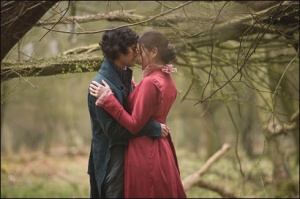
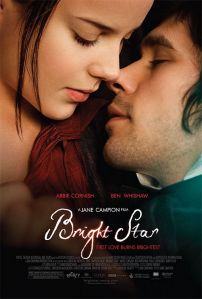
Bright Star, written and directed by Jane Campion (The Piano) is wondrously languid, romantic and exquisitely filmed. It tells the story of the tender and tragic love affair between poet John Keats (Ben Whishaw) and his muse and love Fanny Brawne (Abbie Cornish) as told through her eyes. She lives with her mother and two younger siblings. Quite popular among men, Fanny is known as a flirt and yet has not settled into marriage like many of her peers. Love seems much more important to Fanny than money. Fanny meets Keats when he and his boorish benefactor, Charles Brown (Paul Schneider), rent rooms at Fanny’s family home. At first, she’s unsure about Keats and even the value of poetry. She reads his first book of poems and finds that the young man has some promise. Fanny is an independent woman, for that era, who needs no man to be happy yet finds the love of her life right in her own home, right under her own roof. Fanny expresses her artistic sensibility through beautiful, elaborate dresses with detailing such as pleats or a “triple mushroom collar.” Perhaps this is why she and Keats strike up a harmonious connection. The more time the two spend together, the more fond they grow of each other. Unfortunately, Keats has no fortune and makes no money from his poetry.
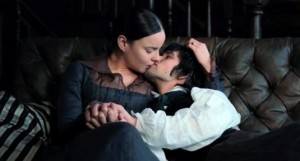
In Bright Star, Abbie Cornish, (Stop Loss) portrays nearly every emotion and it is a revelatory and devastatingly stunning performance. Fanny alternates between being achingly supportive and gently provocative. She remains extremely devoted to her family (her younger brother and sister often accompany Keats and Fanny on outings) despite the courtship. Their pure and honest love gently grows and the bond between the two becomes powerful and enviable. In his portrayal of Keats, Whishaw (Brideshead Revisited) turns in an introspective, yet commanding performance. His Keats is eyes and voice and empathy. Cornish and Whishaw have simmering chemistry. Campion has created an idyllic, artistic film which appears as beautiful as a watercolor painting. Each scene is so carefully executed and painstakingly acted that the audience shares in Fanny’s genuine journey with Keats. Bright Star is a serene, perfectly crafted film about the power of love.
Share this:

film review: In the Loop
Posted by Amy Steele in Film on September 17, 2009
The U.S. Government staff is filled with a Master race of highly gifted toddlers.
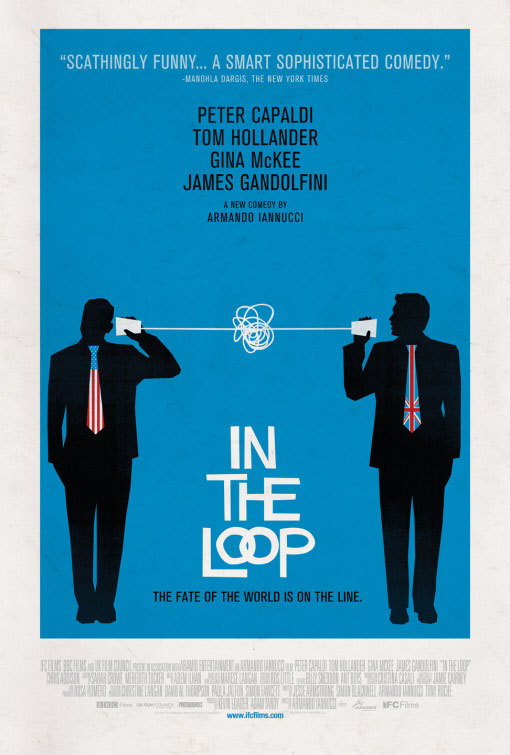
Hysterical, witty, brash British comedy the imagines the days behind closed doors at Downing Street and in other offices of the British and U.S. government leading up to the Iraq War. Basically the U.S. President and the British Prime Minister are gung ho [as history shows] to go to war but not everyone working for them is in agreement or in such a hurry to send the troops into harm’s way. In the Loop is about politicians who appear to be self-composed and put together and full of the perfect sound bites and then they collapse under pressure or are completely different away from the public and media. In the Loop is fast-paced and provides an insight into British politics as well as a bit of a viewpoint into what the Brits think of Americans [we are Rock Stars! in their eyes apparently].
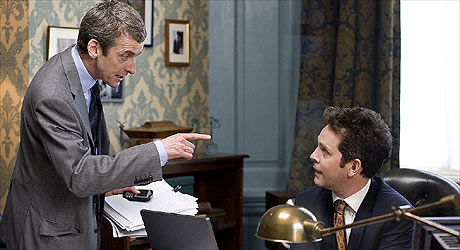
Directed by Armando Iannucci and written by Jesse Armstrong and Simon Blackwell. An impressive cast includes: Peter Capaldi [Skins, Torchwood], Tom Hollander [The Soloist, Valkyrie], James Gandolfini [The Sopranos, The Mexican], Gina McKee [Atonement], Steve Coogan [Hamlet 2, Tropic Thunder], Anna Chulmsky [all grown up star of My Girl, Blood Car]. You will laugh so much that you might miss some of the lines and will have to see it again or put it in your netflix queue!
STEELE SAYS: SEE IT IN THE THEATRE
<!–
document.write(‘ ‘);
‘);
//–>
Share this:

DVD review: Grace
Posted by Amy Steele in DVD, Film on September 16, 2009
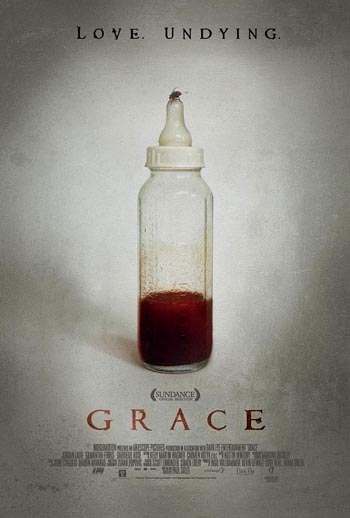
Grace is not a film where there’s tons of blood and gore for no reason. It’s not that type of horror film. This one is much more cerebral. Grace is creepy. It’s also feminist to its core. People are talking about Jennifer’s Body before it has even been released [that is written by Diablo Cody and directed by Karyn Kusama and stars Megan Fox]. Although written and directed by a man, Paul Solet, Grace manages to tap into feminist ideals. It hones in on a woman’s bond with a child. How far is a woman willing to challenge morality to provide her baby with the most basic of needs: food, shelter and safety?
For a long time, new-agey vegan and women’s studies graduate Madeline [Jordan Ladd] and her husband Michael [Stephen Park] have been trying to have a child and finally Madeline gets pregnant. Everything seems to be going quite well although Michael’s mother does not approve of the choice of a midwife for the birth and giving birth in a birthing pool instead of at a hospital. The midwife is actually Madeline’s former professor and lover. After a terrible accident, both her husband and the fetus she’s carrying die. She, however, decides to carry the baby to term. After the stillborn birth, the baby suddenly comes back to life. She names her Grace. Nothing terribly bizarre happens to Grace. She just has an insatiable appetite . . . for blood. Thus the creepiness ensues. Bugs are drawn to her. The cat is overly protective of the baby. And when Madeline breastfeeds Grace it is the ultimate horror show. A complete nightmare. In the end, though, Madeline will go to any means necessary to give her baby what she needs and to hide this fact from her mother-in-law and any one else who would take her child away from her. Ladd is excellent in her transformation from the easy-going, hippie chick to the anemic, obsessed, and unwaveringly devoted mother.
Grace is truly disturbing and will make you think for days after you watch it.
GRADE: B+
<!–
document.write(‘‘);
//–>
Share this:

film review: I Can Do Bad All By Myself
Posted by Amy Steele in Film on September 14, 2009
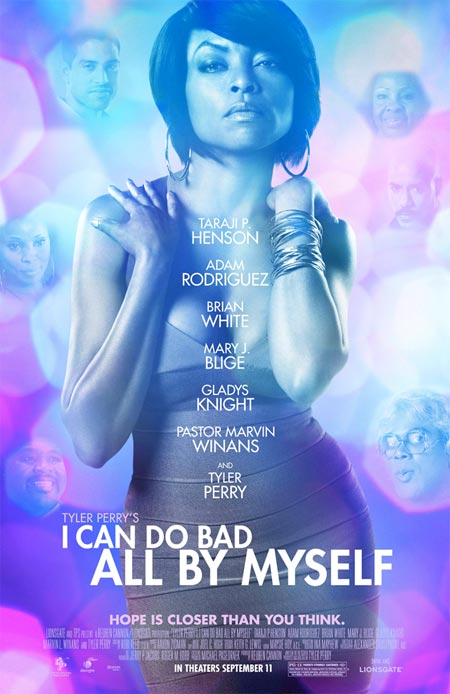
People say Tyler Perry’s films are formulaic, his films are sexist, and his films revolve around weak women relying on men and the church to save them. Well, I am not an expert on Tyler Perry films—I’ve only seen Diary of a Mad Black Woman and Why Did I Get Married?– but I am a feminist and I was not offended by I Can Do Bad All By Myself. I have not seen all the Madea films because that caricature just turns me off. I saw a Friday matinee of I Can Do Bad All By Myself in Boston. The audience was composed of mostly African-American women. I didn’t see any men and am almost positive I was the only white woman in the crowd. I’m not surprised. I’ve read that Tyler Perry’s demographic is African-American women over 30.
In her article “Tyler Perry’s Gender Problem” in The Nation, Courtney Young wrote: “Though Perry repeatedly references his admiration for and allegiance to African-American women as a foundation of his work, his portrayal of women of color undermines the complexity of their experience through his reductionist approach to the characters and his dependence on disquieting gender politics. Perry may see himself as crating modern-day fairy tales for black women, but what he may not realize is that fairy tales, in general, have never been kind to women.“
I agree with Young about women and fairy tales. There rarely is a happily ever after if you look beyond the sparkles, roses, and gowns. I disagree that I Can Do Bad All By Myself is an example of a fairy tale masquerading as another Tyler Perry film. It’s moving and effective. It focuses on a singer who is in a really bad place [and can’t at least a few people relate to this? I certainly could and so could apparently more than a few vocal audience members].
April [Taraji P. Henson], a nightclub singer, has fallen into a comfortable lifestyle with her abusive married boyfriend [Brian J. White] who supplements her income. She’s unmotivated to make life changes; she’s rather selfish and isolated from family and friends. Okay, so the woman needs much better self-esteem. It will either come to her or it won’t. She will realize that she herself can do it on her own at some point or she will self-destruct because the way she downs alcohol she is on her way down that road. Madea [Tyler Perry] catches 16-year-old Jennifer [a very talented Hope Wilson] and her two brothers breaking into her home, she brings them to the house of their Aunt April, who is not happy to see them. April soon finds out that her mother has died and these kids have no one else.
Yes, there’s another man in the picture: a cute handyman named Sandino [CSI Miami’s Adam Rodriguez] but he’s not there to sweep her off her feet. He’s just perhaps going to nudge her along a bit. He’s wonderful with children and has that easy-going, Zen nature. To think that she will improve her life solely due to the influences of a man is completely insulting to audiences. Relationships can help augment someone’s life but for anyone to think that April would not have decided what to do with her niece and nephews on her own time without meeting Sandino is downright insulting to April. She’s a strong woman who’s made some mistakes in the past. Henson is bold, and emotional in every scene. She acts with her eyes. Those wide, brown eyes are the windows into every emotion April feels. It works and she turns in a commanding, near tear-jerking performance in I Can Do Bad All By Myself. That Madea shows up ended up being okay because her scenes were few and far between and remarkably toned down. There was just enough Madea to provide comic relief from the seriousness at hand and not enough to engulf the audience in her absurdity.
Share this:

STEELE INTERVIEWS: director Stephan Elliott
Posted by Amy Steele in DVD, Film, Interview on September 12, 2009
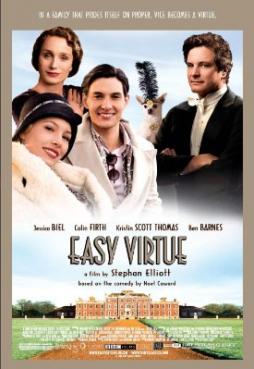
Easy Virtue is a biting British comedy from start to finish. It is sharp-witted, sassy, unpredictable, humorous and tinged with bitterness, sadness and regret. Everything one might expect from the British.
“It’s a dark melodrama,” explained director/ co-writer (with Sheridan Jobbins) Stephan Elliott [Priscilla, Queen of the Desert] by phone from London. “[The play] was so vicious and cruel to English. [It was] the second play for [Noel] Coward and in his biographies we found some misgivings he had and within that found license to go with it.”
It is the late 1920s and John Whittaker [Ben Barnes] surprises his family by marrying a glamorous, platinum blonde American motorcar racer from Detroit named Larita [Jessica Biel]. This is much to the horror of his proper British family. While it appears that everything is perfect at the country estate, it really isn’t. The mother, Mrs. Whittaker [Kristin Scott Thomas] is uptight and overbearing and the father [Colin Firth] spends the majority of his time “fixing” a motorcycle that may never work. John most likely married the free-spirited Larita [Biel] on a lark and in an act of rebellion. She’s independent, easy- going, athletic, charming, and smart. The complete opposite of his mother. Suddenly it is the elder Mrs. Whittaker vs. the new Mrs. Whittaker.
“It’s a culture clash and collision of women of different eras,” said Elliott. “Great Depression. Veronica Lake. Screwball element. Likeable yet screwball.”
Larita is a city girl. John is a country boy. The sooner the two realize this, the better. Mrs. Whittaker says: “Have you had as many lovers as they say?” Larita: “No. Hardly any of them loved me.”
Firth is scruffy, downtrodden and sad. It’s not the typical role for him. He’s not the usual brooding guy. “Colin is laconic,” Elliot explains. “His character is a dead-man walking. “He’s stopped fixing a long time ago. He’s really the arc of film. Larita brings him back to life.”
Biel steps out of the pretty girl role to play a woman with greater depth and character. She’s truly impressive and memorable in this femme fatale role. If you liked her in The Illusionist, you will like her even more in Easy Virtue. “Jessica was the big surprise, the big revelation,” Elliot agreed. “Something fresh and different. We didn’t expect it.”
And after seeing Kristin Scott Thomas so serious, and heartbreakingly poignant in I’ve Loved You So Long, she must have relished her role as an eccentric, overprotective mother-in-law. [“We were chasing Kristin and Colin for years. We wouldn’t deliver something they had done.]
I don’t want to give too much away but it’s a divine war of words and gestures. “This is a very subversive, naughty piece of work,” Elliot concluded. “You have expectations and you go into the film and have those expectations are crushed majorly and you can go on that ride.”
Easy Virtue does not disappoint.
<!–
document.write('‘);
//–>
Share this:

STEELE INTERVIEWS: Rose Byrne
Posted by Amy Steele in Film, Interview on August 8, 2009

Many people know Rose Byrne for her role as Ellen Parsons on Damages for which is nominated for an Emmy award. She currently appears in the heartwarming, quirky film Adam as schoolteacher and children’s book author Beth, a calming influence and love interest for Adam [Hugh Dancy], an engineer with Asperger’s. Beth pulls Adam out of the window (as Jenny McCarthy refers to in her book Louder than Words) but throughout the entire film the pair must decide whether or not the relationship can realistically survive. Adam’s father has recently died and Beth soon becomes his sole support system, something which she ultimately finds too overwhelming. She has a close relationship with her own father (Peter Gallagher) who faces legal issues and Beth must choose between Daddy and her new boyfriend. Dancy creates more than a caricature and does a commendable job as Adam. However debut director (writer) Max Mayer does not push quite far enough in the script and film. The characters could be developed more. Adam is quite intriguing at the beginning and then his quirks and ticks get annoying and he uses his Asperger’s as an excuse at times. The film started to grow too drawn out at times. While Adam strives to prove that those with Asperger’s can function in society with empathy and tolerance, the film left me with more doubts than answers.
Recently, Rose Byrne stopped by the Ritz Carlton in Boston to talk about Adam. Byrne started acting in Australia professionally at 13 and began taking acting classes at eight-years-old. How does she master that American accent? “Growing up watching Alex P. Keaton and Family Ties,” she admitted.

You just came back from India. Did you do any yoga over there?
Byrne: No. I didn’t do any yoga. I desperately tried to find a place to do yoga. You have to be more organized and I wasn’t which was a shame. No, I was just sort of traveling around the country which is incredible if any of you have gone or plan to go. Do go if you get the opportunity. No I wasn’t planning on working. I had just finished working on this show called Damages [as if we hadn’t heard of it or seen it—fan here!] and then the script came and my agents were very encouraging for me to read it and I did and it was really good. This is really a clever, beautiful, moving, heartfelt script with a character that I’ve never been approached to play before. She wasn’t chasing zombies or in a spaceship or running from the end of the world or crying in a tent desperately before she gets attacked. She was a liberated, wonderful, complex woman and she also didn’t take her clothes off in the first five pages. It was really rare to come across something like this. She was a gift, I suppose.
When you take something from the written role to the performance, what did you bring to the role?
Byrne: It’s hard for me to be objective about what I myself bring to something but I guess I was definitely given such a gift with her. It was fun to go to a character who was so different in so many different ways. She has a tolerance about her and patience about her which I loved and of course the comedy in it was really fun. That was something that I’ve been wanting to try to do is something lighter and funnier.
What did Hugh bring to the film that surprised you?
Byrne: It’s a remarkable performance. Knowing someone with Asperger’s, he does a beautiful job. It’s very accurate, sensitive to it and yet compelling. Which is a hard thing to do, because we’re making a film, and you want it to be entertaining and all that stuff. And yet he makes you care about someone who’s kind of difficult to access. He does a really good job of that.
Is it hard being on TV and finding good film roles?
Byrne: Well, just schedule-wise because the show takes up 5-6 months of the year. The role I have on Damages is so good and better than most of the film roles out there that I would be getting access to that for me that it was a bit of a no-brainer for me to sign on once I had got the role. And working with Glenn obviously and it’s a very prestigious show. And I myself for one love series. I watch Mad Men. I think TV right now is having a renaissance especially for women.
What do you like best about this film?
Byrne: For a viewer, I guess I thought it was a very truthful story. I think truth is stranger than fiction. It put a fresh take on a romantic comedy as well which is a genre we’ve seen done so much. It always falls into nostalgic, sanctimonious, cheesy crap and it’s completely unrealistic. I thought this was a refreshing and realistic take on it without being boring. It’s a very accessible film.
<!–
document.write('‘);
//–>
Share this:

film review: Julie and Julia
Posted by Amy Steele in Film on August 5, 2009

Nora Ephron wrote and directed an empowering film for women and it is all about food. The story focuses on world-renowned and beloved chef Julia Childs and Julie Powell, an unhappy cubicle-dwelling secretary facing thirty. Both women are at moments of self-discovery in their lives. Julie and Julia is about getting past obstacles, your fears, and reaching your goals. In the hands of veteran filmmaker Ephron, the film follows the two women, separated by a half-century, through challenges and triumphs.
In 1949, we find Julia Childs in Paris where her husband works for the U.S. government. She decides to enroll at the Cordon Bleu where she faces immense sexism and criticism amongst the men. One day, Julia’s husband arrives home and Julia is chopping a massive pile of onions for practice.
“Julia, you’re being a bit over competitive aren’t you?” he says.
In 2002, Julie Powell works as a secretary in Manhattan and lives in Queens. She’s facing thirty and feels that she has not accomplished the goals she had hoped she would be this age. Julie wants to be a writer. She tells her husband: “You’re not a writer unless someone publishes you.” She decides to write a blog about cooking her way through Julia Child’s cookbook in one year.
As Julie remarks: both she and Julia worked as secretaries; both married sweet men; and both women were “saved” by food. One major difference is that it took eight years for Julia Childs to write her first cookbook and Julie wrote her blog and received a book deal after one year. Julie also learns that 90 year-old Julia Childs does not like her blog. Julia’s book editor Judith Jones said: “Flinging around four-letter words when cooking isn’t attractive, to me or Julia. She didn’t want to endorse it. What came through on the blog was somebody who was doing it almost for the sake of a stunt…She didn’t suffer fools, if you know what I mean.”
As Julia, Streep lights up the screen with her mischievous smile, snappy comments and elegant style. Tucci brings a calming presence to the irrepressible Julia. Adams trades perkiness for determination and edge. As anyone who has cooked or baked knows, it is all about trial and error. You get better at anything with practice which is what we see with Julie and Julia. The film is fast-paced and upbeat. Ephron makes Julie and Julia entertaining without being silly, touching without being sappy, and just an overall charming, delightful film.
STEELE SAYS: SEE IT IN THE THEATRE
<!–
document.write('‘);
//–>
Share this:

STEELE INTERVIEWS: Charlyne Yi [Paper Heart]
Posted by Amy Steele in Film, Interview on August 5, 2009
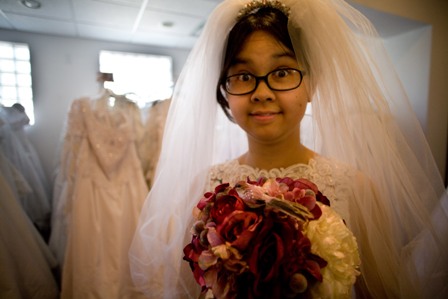
Paper Heart is a thoughtful, revolutionary and sweet examination of love. At the beginning of the film, 23-year-old Comedienne/ writer Charlyne Yi admits she does not know what love is and feels incapable of being in love. She says that she has never been in love.
“I haven’t been in that many relationships either for the reason of not feeling mutual about the person— them not liking me or me not liking them—or the idea of getting to know someone and not hating them in the end or it just not working out,” Yi elaborates. “Not even hate, it just doesn’t feel right. It takes so much time to realize that. I think when this idea occurred I was 18 and I was new to the world and I was like, “I don’t want to hit on people at bars.” I think it was just me scared of the world and having to dive in and meet strangers and meet them in a way that you are so comfortable that you can be yourself and to learn about them too and for them to be comfortable to a point where you either: A. feel the same way about them or B. have to grow apart and that’s kinda scary.”
Most likely, a lot of people can probably relate, including this critic, who has never been in true love [only unrequited] and is a decade older. This is why Paper Heart will move many people, hit a nerve, and win over audiences with its honesty.
“Do you believe in love?” Jake Johnson asks me during our sit down at Felt in Boston. “Do you believe in the ability to love? If this was an interview during Paper Heart, do you believe that there’s love?”
“Well, I’m pretty cynical about it now because I have this ex-boyfriend who broke up with me after two years and yet we’re still friends,” I explained. “It’s been eight years. We would have been good people to interview. Well, he’s an engineer so he doesn’t talk at all. He mimes things.”
“You’re not still in love with him are you?” Yi asks in a gentle tone.
“Yeah, I still love him,” I say. “It’s just this weird relationship and obviously he really cares about me. We go on dates. We do everything a married couple does except do anything intimate.”
“This is the best interview ever!” Johnson says excitedly while clapping his hands.
Yi takes her quest on the road to find all love-related answers. Her goal is to change the way she thinks. Johnson plays Nick [aka the director], someone whom Yi can confide in and someone who also can nudge her along here and there.
“It was weird because it was going to be a really small part but along the way we realized how essential this character was and we’re so lucky we had him,” Yi admits. “Otherwise, it would be a lot of me going [she uses a funny voice], “Ah, hey camera.” You know you’d never get any information or see the character growing.”
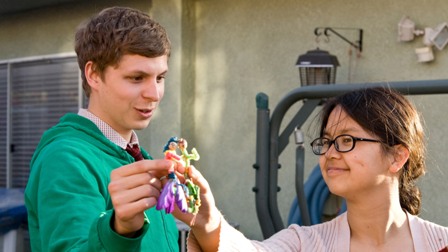
Interspersed in Yi’s pursuit for answers is a tender, evolving pseudo-relationship between Yi and all-around modest good guy Michael Cera, who in the film she meets at a party in Los Angeles. Cera tells Yi he’s seen her do stand-up and then asks someone about her saying she’s “mysterious.” Soon after the party, the two go on a first date. The budding romance is at times awkward but slow and gentle.
“There’s like 300 hours of footage for an hour and a half movie. I think I said the line, “So what’s going on with you and Mike?” probably no joke, 6,000 times in different takes,” Johnson stresses. “Because a lot of times we’d be in a beautiful location and [Nick] would say, “Let’s just do a scene.” And it would start with asking about Mike and where would it be in different points of the relationship so when they were editing it they could use any scene they wanted.”
A charming aspect of Paper Heart comes when Yi asks real people throughout the United States about love in its various modes. In Lubbock, TX, scientists literally explain the science of love: the biology, chemistry, biochemistry, physics, and mechanisms of the heart and brain that make a person feel like she or he is in love. Bikers in Oklahoma City explain their love/hate relationships, while in Las Vegas, Yi questions people at the quickie wedding chapels. At the L.A Zoo, she wants to film animals expressing love. Yi interviews older couples about their first dates.
“I think [Paper Heart] made me more hopeful in that sense,” Yi admits. “Love to me is doing the most boringest thing, like washing clothes with a person, and enjoying their company still and feeling the same way. And knowing all their faults and still accepting them and hopefully vice-versa.”
Yi then heads to Atlanta where in an adorable scene she talks to a group of rambunctious children about [icky] love and boyfriends and girlfriends. During an interview with interview with Sarah Baker, a romance novelist, the author explains the importance of HEA ending—happily ever after and states that one partner has to sacrifice for the other. Yi discusses divorce with a lawyer and judge in a family court and love and marriage with a gay New York couple.
During this entire exploratory trip, Yi has managed to IM Michael quite a bit and has gone on a few dates. At one point Yi says: “Nick I’m starting to really like Michael.” Since everything between Yi and Cera seem to be moving along quite well, Nick wants the documentary to end in Paris, the City of Love. Unfortunately, Cera is growing tired of everything on camera and ends it with Yi before this can happen. “I’m sad that he wants me to love him and I can’t,” Yi laments. They go to Paris anyway where Yi is visibly miserable the entire time. On their return, they head to Toronto because Yi missed Cera. She doesn’t allow the cameras to follow her inside this time.
“The reason we made the film is that love is universal and everyone wants to mean something to someone,” Yi explains. “I’ve met people who’ve seen the film and it’s made them appreciate what they have or if they don’t have that love it inspires them. It might make them less bitter about love. So that’s great.”
“I also think it is love told through the eyes of a 23-year-old girl,” Johnson adds. “So I think that’s a good way of looking at it. Obviously that’s just another perspective of it.”
Paper Heart is a revelatory delight not to be missed.
STEELE SAYS: SEE IT IN THE THEATRE
<!–
document.write('‘);
//–>
Share this:

-
You are currently browsing the archives for the Film category.
About Me

covering mostly music and books. focus on alternative/indie and women in music, literature and the arts. feminist. vegan. mostly alternative, a bit bohemian. Masters in journalism from Boston University. BA from Simmons College.



Entertainment Realm by Amy Steele is licensed under a Creative Commons Attribution-Noncommercial-No Derivative Works 3.0 United States License.
Based on a work at entertainmentrealm.comCopyright © 2009. All writing, unless otherwise noted, by Amy Steele.
 ENTERTAINMENT REALM
You must be logged in to post a comment.